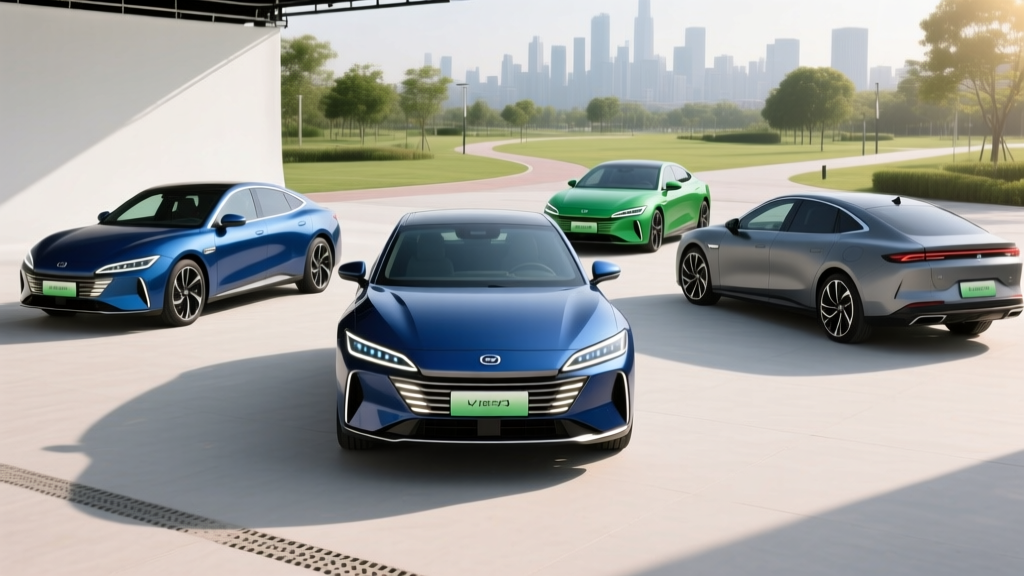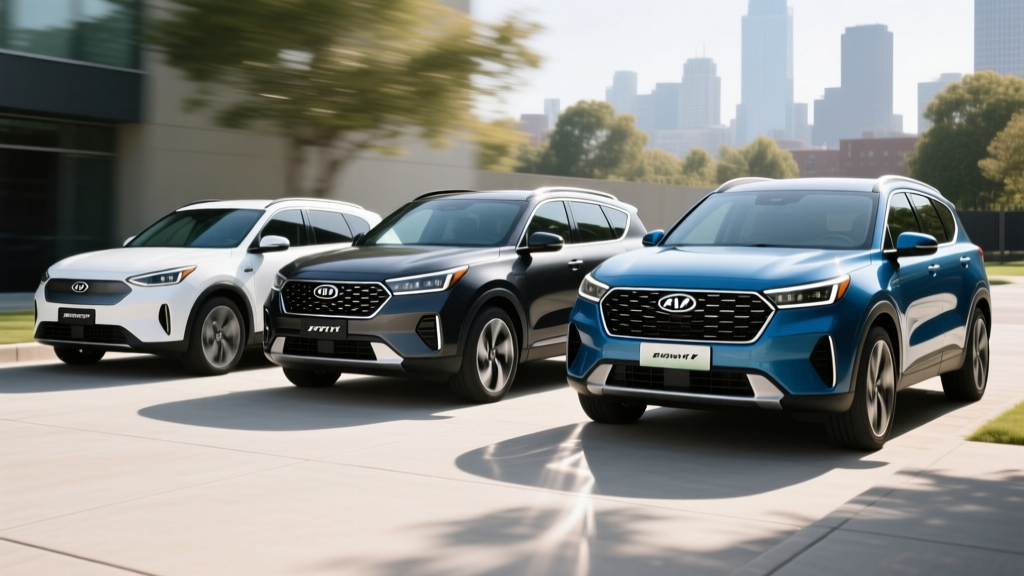
The 2026 Kia Hybrid Lineup at a Glance
Kia's 2026 electrified portfolio spans three core nameplates — Niro, Sportage, and Sorento — each offered in both conventional hybrid (HEV) and plug-in hybrid (PHEV) variants. For buyers hunting Kia hybrid deals, this breadth means there's a specific model for nearly every use case: a subcompact commuter, a compact family hauler, or a three-row SUV. But the differences between trims, powertrains, and pricing tiers are substantial enough that picking the right one requires looking past the brochure.
This guide breaks down every current Kia hybrid and plug-in hybrid with exact EPA figures, real-world efficiency observations, powertrain specs, battery warranty terms, and federal tax credit eligibility under current IRS §30D rules. We'll also clarify the HEV vs. PHEV decision — because choosing wrong here can cost you thousands at purchase or at the pump.
HEV vs. PHEV: What Kia Buyers Need to Know
Before comparing models, it's critical to understand the two hybrid architectures Kia uses. They serve fundamentally different ownership patterns.
Conventional Hybrid (HEV)
- How it works: A small battery (typically 1.5–2.0 kWh) paired with a gasoline engine and electric motor. The battery charges via regenerative braking and the engine — you never plug it in.
- Best for: Drivers without reliable home or workplace charging access; those who want better fuel economy with zero behavioral change.
- Economy: 35–53 MPG combined depending on model.
Plug-in Hybrid (PHEV)
- How it works: A larger battery (11–18 kWh) that you plug in to charge, providing 28–46 miles of pure electric driving before the gasoline engine kicks in as a conventional hybrid.
- Best for: Drivers with home Level 2 charging who commute under 40 miles round-trip but want gas-engine flexibility for road trips.
- Economy: 79–105 MPGe on electric; 34–40 MPG combined once the battery is depleted.
The key distinction: HEVs require no charging infrastructure and deliver consistent MPG gains. PHEVs can eliminate most daily gasoline use if you charge regularly, but without plugging in, you're just carrying extra battery weight and getting marginally worse fuel economy than the HEV equivalent.
2026 Kia Niro Hybrid and Niro PHEV
The Niro remains Kia's most affordable entry into electrification and one of the most fuel-efficient crossovers on the market. Redesigned for the current generation, it rides on a dedicated platform with improved interior volume and updated tech.
| Spec | Niro HEV | Niro PHEV |
|---|---|---|
| Powertrain | 1.6L GDI 4-cyl + 43 hp electric motor | 1.6L GDI 4-cyl + 83 hp electric motor |
| Combined Horsepower | 139 hp | 180 hp |
| Transmission | 6-speed DCT | 6-speed DCT |
| Battery Capacity | 1.56 kWh (lithium-ion) | 11.1 kWh (lithium-ion polymer) |
| EPA MPG (City / Hwy / Combined) | 53 / 48 / 51 | 40 / 36 / 38 (gas-only mode) |
| EPA MPGe (PHEV electric mode) | — | 105 MPGe combined |
| Electric-Only Range (PHEV) | — | 33 miles |
| Total Range (PHEV) | — | ~430 miles |
| Level 2 Charging Time (PHEV) | — | ~2 hours 45 min (7.2 kW onboard charger) |
| DC Fast Charge (PHEV) | — | Not available |
| 0–60 mph | ~9.3 sec | ~7.2 sec |
| Starting MSRP | $28,490 (LX) | $35,890 (EX) |
Real-World MPG: Niro HEV
The Niro HEV's EPA rating of 51 MPG combined is among the highest for any crossover. In real-world mixed driving, owners frequently report 48–55 MPG, with city-heavy routes often exceeding the EPA city figure — a common trait of hybrids, which recapture energy during stop-and-go braking. Highway-only driving at 75+ mph tends to drop to 44–47 MPG. In cold weather (below 30°F), expect a 5–10% reduction due to increased engine warm-up cycles and reduced battery efficiency.
Real-World Electric Range: Niro PHEV
The EPA rates the Niro PHEV at 33 miles of electric-only range. In moderate temperatures (55–75°F) on suburban routes under 45 mph, hitting 33–36 miles is realistic. At highway speeds or in cold weather, expect 25–28 miles. The 7.2 kW onboard charger means a full charge from empty takes under three hours on a Level 2 home station — no DC fast-charging capability, which is typical for PHEVs in this class.
2026 Kia Sportage Hybrid and Sportage PHEV
The Sportage is Kia's volume compact SUV, and its hybrid variants now account for a significant share of sales. The HEV focuses on fuel economy; the PHEV adds meaningful electric range and standard all-wheel drive.
| Spec | Sportage HEV | Sportage PHEV |
|---|---|---|
| Powertrain | 1.6L Turbo GDI + 64 hp electric motor | 1.6L Turbo GDI + 97 hp electric motor |
| Combined Horsepower | 232 hp | 268 hp |
| Transmission | 6-speed automatic | 6-speed automatic |
| Drivetrain | FWD or AWD | AWD (standard) |
| Battery Capacity | 1.49 kWh | 13.8 kWh |
| EPA MPG (City / Hwy / Combined) | 42 / 44 / 43 (FWD) | 38 / 38 / 38 (gas-only) |
| EPA MPGe (electric mode) | — | 84 MPGe combined |
| Electric-Only Range (PHEV) | — | 34 miles |
| Total Range (PHEV) | — | ~430 miles |
| Level 2 Charging Time (PHEV) | — | ~2 hours (7.2 kW onboard) |
| DC Fast Charge (PHEV) | — | Not available |
| 0–60 mph | ~7.4 sec | ~6.3 sec |
| Starting MSRP | $31,090 (LX) | $40,590 (X-Line) |
Real-World MPG: Sportage HEV
The Sportage HEV's 43 MPG combined EPA rating holds up well in practice. City-dominant commutes typically yield 44–46 MPG, while sustained highway cruising at 70–75 mph returns 39–42 MPG. The AWD variant drops roughly 1–2 MPG across the board. Compared to the gas-only Sportage (25 MPG combined per fueleconomy.gov), the HEV delivers a ~70% fuel economy improvement.
Real-World Electric Range: Sportage PHEV
The 34-mile EPA electric range is practical for most suburban commutes. Real-world results cluster around 30–35 miles in fair weather, dropping to 24–28 miles in winter conditions. The Sportage PHEV's 268 combined horsepower makes it noticeably quicker than the HEV, and the AWD system is standard — a meaningful advantage in snow-belt states.
2026 Kia Sorento Hybrid and Sorento PHEV
The Sorento is the only three-row SUV in Kia's hybrid lineup, making it the default choice for families needing six or seven seats without stepping to the all-electric EV9 or the larger, gas-only Telluride.
| Spec | Sorento HEV | Sorento PHEV |
|---|---|---|
| Powertrain | 1.6L Turbo GDI + 64 hp motor | 1.6L Turbo GDI + 97 hp motor |
| Combined Horsepower | 232 hp | 268 hp |
| Transmission | 6-speed automatic | 6-speed automatic |
| Drivetrain | AWD (standard) | AWD (standard) |
| Battery Capacity | 1.49 kWh | 13.8 kWh |
| EPA MPG (City / Hwy / Combined) | 36 / 36 / 36 | 35 / 35 / 35 (gas-only) |
| EPA MPGe (electric mode) | — | 79 MPGe combined |
| Electric-Only Range (PHEV) | — | 32 miles |
| Total Range (PHEV) | — | ~420 miles |
| Level 2 Charging Time (PHEV) | — | ~2 hours (7.2 kW onboard) |
| DC Fast Charge (PHEV) | — | Not available |
| 0–60 mph | ~7.8 sec | ~6.5 sec |
| Starting MSRP | $39,090 (S) | $51,090 (EX) |
Real-World MPG: Sorento HEV
The Sorento HEV's 36 MPG combined is competitive among three-row hybrids. Real-world observations show 34–38 MPG in mixed driving, with city-heavy routes occasionally touching 39–40 MPG thanks to regenerative braking. Highway towing or fully loaded driving (six passengers plus cargo) can drop this to 30–32 MPG. Towing capacity is rated at 2,000 lbs for the HEV.
Real-World Electric Range: Sorento PHEV
At 32 miles EPA, the Sorento PHEV covers most school-run and errand loops on electricity alone. Expect 27–32 miles in moderate conditions and 22–26 miles in freezing temperatures. The larger vehicle mass means the electric motor works harder, which slightly compresses range versus the lighter Sportage PHEV.
Battery Warranty, Reliability, and Replacement Costs
Kia Hybrid & PHEV Battery Warranty (2026 Models)
- HEV battery: 10 years / 100,000 miles (whichever comes first)
- PHEV battery: 10 years / 100,000 miles
- Hybrid system components: 10 years / 100,000 miles (inverter, motor, onboard charger)
- Bumper-to-bumper: 5 years / 60,000 miles
- Powertrain (engine/transmission): 10 years / 100,000 miles
Note: In states that follow California Air Resources Board (CARB) standards — including CA, NY, MA, WA, OR, CO, and others — PHEV battery coverage extends to 10 years / 150,000 miles for emissions-related components.
Hybrid Battery Longevity and Replacement Cost
Kia's hybrid batteries use proven lithium-ion polymer chemistry that has shown strong durability in real-world use. Data from long-term fleet monitoring suggests that Kia HEV and PHEV batteries typically retain 85–92% of original capacity after 8 years / 100,000 miles. The warranty guarantees replacement if capacity drops below approximately 70% during the coverage period.
If replacement is needed out of warranty, costs vary by model:
- Niro HEV battery: $2,500–$3,500 (parts and labor)
- Niro PHEV battery: $4,500–$6,500
- Sportage / Sorento PHEV battery: $5,500–$8,000
These figures are estimates based on current parts pricing and independent shop labor rates. Dealership replacement typically runs 15–25% higher. Third-party hybrid battery rebuild services are emerging as a lower-cost alternative, often $1,500–$3,000 for HEV packs, though availability varies by region.
Reliability Track Record
Kia's hybrid powertrains have matured significantly since the early Niro generations. The 1.6L turbo engine used in the Sportage and Sorento hybrids is a well-established unit. The 6-speed automatic and DCT transmissions avoid the complexity of CVTs. According to IIHS testing, current-generation Kia hybrids have performed well in crashworthiness evaluations, though buyers should verify specific trim ratings as headlight and crash-avoidance scores vary by equipment level.
Pricing, Incentives, and Federal Tax Credit Eligibility
Finding competitive Kia hybrid deals requires understanding which models qualify for incentives and how dealer pricing varies.
Federal Tax Credit: PHEV Models Only
Under IRS §30D rules, only the plug-in hybrid variants qualify for the federal clean vehicle credit. Conventional HEVs do not qualify — they have no plug and do not meet the minimum battery capacity threshold.
- Credit amount: Up to $7,500 for eligible PHEVs, depending on battery capacity and critical-mineral/battery-component sourcing requirements
- MSRP cap (SUVs/vans): Vehicle MSRP must not exceed $80,000 — all Kia PHEVs fall well under this
- Buyer income limits: Adjusted gross income must not exceed $150,000 (single), $225,000 (head of household), or $300,000 (joint filers)
- Battery sourcing: Phased percentages of critical minerals and battery components must be sourced from the U.S. or FTA-partner countries — this requirement tightens annually and may reduce the credit to $3,750 for some model years
- Point-of-sale transfer: Buyers can elect to transfer the credit to the dealer at purchase, receiving the benefit as an immediate price reduction rather than waiting for tax filing
Critical note: Kia PHEVs have faced partial credit eligibility in recent years due to battery-component sourcing rules. The Niro PHEV and Sportage PHEV may qualify for $3,750 (partial credit) rather than the full $7,500 depending on the current sourcing determination. Always verify eligibility on the IRS qualified vehicles list before purchasing. Consult a tax professional for your specific situation.
Conventional Hybrid Incentives
Kia HEVs (Niro HEV, Sportage HEV, Sorento HEV) do not qualify for the federal §30D credit. However, some states and utilities offer rebates for hybrid purchases — typically $500–$1,500. Check your state energy office or utility provider for current programs.
Dealer Pricing Strategy
Kia hybrid trims tend to hold value better than their gas-only counterparts, so aggressive discounting is less common. However, PHEV trims, with their higher MSRPs, sometimes see $1,000–$2,500 in dealer incentives, particularly on Sorento PHEV where inventory levels have stabilized. HEV trims, especially the Niro, often sell at or near sticker due to strong demand and limited allocation.
Hybrid vs. PHEV vs. Full EV: Which Kia Fits Your Life?
Choose a Kia HEV if:
- You rent or live somewhere without reliable charging access
- Your daily driving exceeds 50 miles with no predictable charging stops
- You want maximum fuel savings with zero lifestyle change
- Budget is a priority — HEVs start $5,000–$12,000 below PHEV equivalents
- You frequently take long road trips and don't want to plan around charging
Choose a Kia PHEV if:
- You can install a Level 2 charger at home (garage or driveway with 240V access)
- Your daily commute is under 35 miles round-trip
- You want to drive mostly electric on weekdays but need gas flexibility for weekends and road trips
- You qualify for the federal tax credit, effectively reducing the PHEV price premium
- You want stronger acceleration (PHEV powertrains produce more combined horsepower)
Choose a Full EV (like the Kia EV6 or EV9) if:
- You have reliable home charging and your daily driving is under 250 miles
- You want zero tailpipe emissions and minimal maintenance (no oil changes, no engine)
- You qualify for the full $7,500 federal credit (EV6 and EV9 eligibility varies by model year and sourcing)
- You want the lowest per-mile fuel cost — electricity at $0.14/kWh costs roughly $0.04/mile vs. $0.12–$0.15/mile for gasoline
Pros and Cons Across the Kia Hybrid Lineup
Pros
- Class-leading fuel economy in the Niro HEV (51 MPG combined)
- Industry-leading 10-year / 100,000-mile hybrid battery and powertrain warranty
- PHEV variants offer 32–34 miles of real electric commuting range
- Strong combined horsepower in PHEV trims (268 hp in Sportage/Sorento PHEV)
- Three-row seating available in the Sorento hybrid — rare in the segment
- AWD standard on all PHEVs and Sorento HEV
- Point-of-sale federal credit transfer available on PHEVs
Cons
- No DC fast charging on any PHEV (limits road-trip electric replenishment)
- HEV models do not qualify for federal tax credits
- Sportage and Sorento PHEV MSRPs push past $40,000–$51,000
- Electric-only range (32–34 mi) falls short of some competitors (Toyota RAV4 Prime: 42 mi)
- Niro HEV acceleration is leisurely at ~9.3 seconds 0–60
- PHEV battery sourcing rules may limit federal credit to $3,750 rather than $7,500
- Cargo space reduced in PHEV variants vs. HEV due to larger battery placement
Frequently Asked Questions
How many MPG does the Kia Niro hybrid get in real driving?
The Niro HEV is EPA-rated at 53 city / 48 highway / 51 combined MPG. In real-world testing, city-dominant drivers regularly see 50–55 MPG, while highway-heavy trips yield 44–48 MPG. Cold weather reduces these figures by approximately 5–10%. It is one of the most fuel-efficient crossovers available.
How far can the Kia Sportage PHEV go on electric only?
The 2026 Sportage PHEV has an EPA-rated electric-only range of 34 miles. Real-world results range from 24 miles (cold weather, highway speeds) to 35 miles (moderate temps, suburban driving). This covers most daily commutes without using gasoline.
Do Kia hybrid batteries need to be plugged in to charge?
No. Conventional Kia hybrids (HEV) charge their small batteries entirely through regenerative braking and the gasoline engine. You never plug them in. Only the PHEV variants require plugging in to access their electric-only range.
Does any Kia hybrid qualify for the $7,500 federal tax credit?
Only the PHEV variants (Niro PHEV, Sportage PHEV, Sorento PHEV) are eligible. Due to battery-component sourcing requirements under current IRS §30D rules, some Kia PHEVs may qualify for $3,750 rather than the full $7,500. Conventional HEVs do not qualify. Always check the IRS qualified vehicle list for the most current eligibility.
What does it cost to replace a Kia hybrid battery?
Out-of-warranty replacement costs range from approximately $2,500–$3,500 for the Niro HEV battery to $5,500–$8,000 for the Sportage or Sorento PHEV battery. However, Kia's 10-year / 100,000-mile hybrid battery warranty covers premature degradation, and most batteries retain 85%+ capacity well past the warranty period.
Is a Kia PHEV worth it if I can't charge at home?
Generally, no. Without regular charging, a PHEV operates as a slightly heavier conventional hybrid, and you'll see fuel economy equal to or marginally worse than the HEV version. If you lack home or workplace charging, the HEV variant delivers excellent efficiency at a lower purchase price. Consider a PHEV only if you can install a Level 2 charger or have reliable daily access to one.
How does Kia hybrid reliability compare to Toyota?
Toyota has a longer track record with hybrids (Prius since 1997), and its hybrid systems are widely regarded as the segment benchmark. Kia's hybrid technology is newer but has proven durable, supported by a longer warranty (10 years vs. Toyota's 10 years / 150,000 miles for hybrid battery in CARB states, 8 years / 100,000 miles elsewhere). Both brands show low hybrid-specific failure rates in current-generation models.