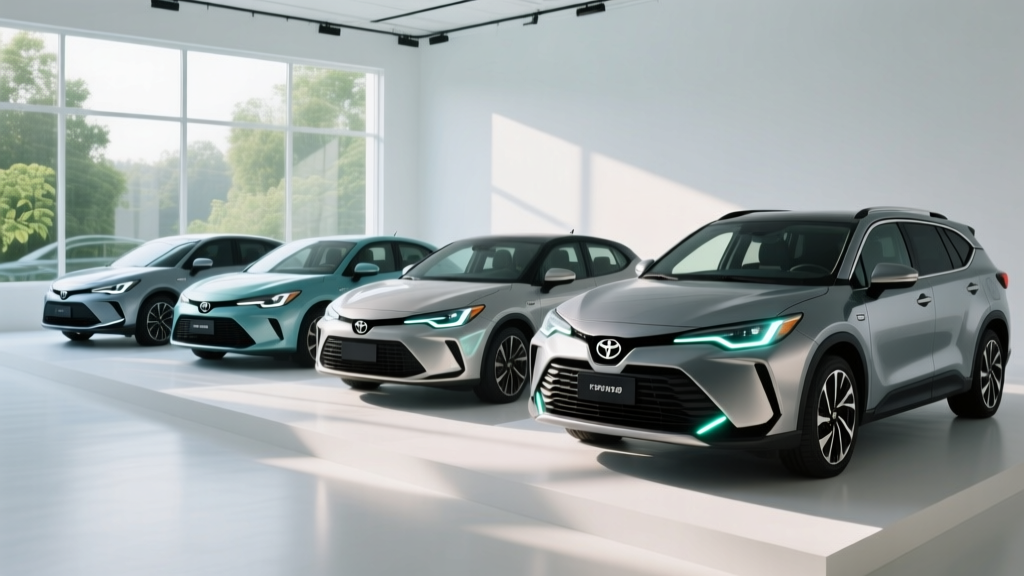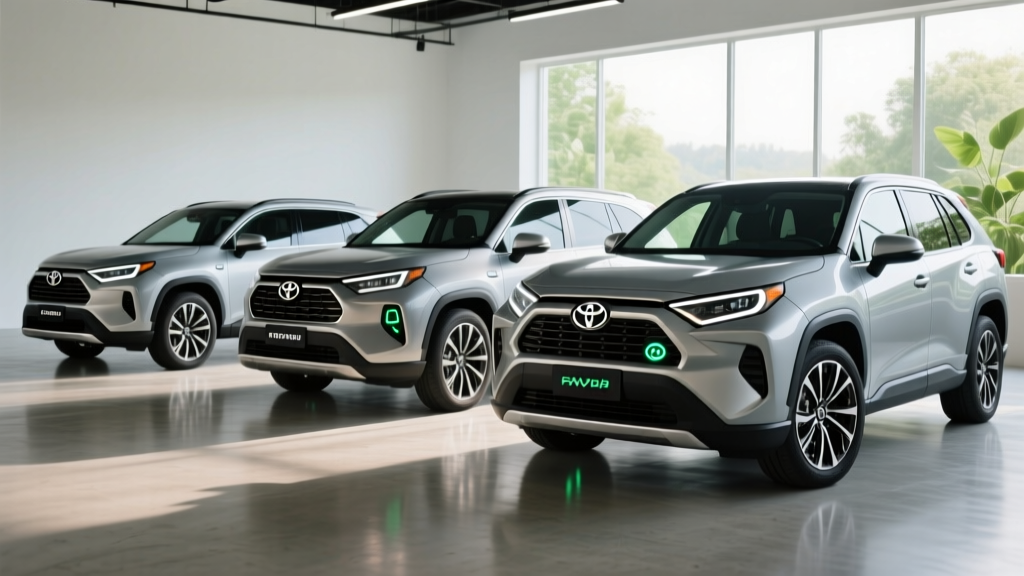
If you want the fuel savings of electrification without ever plugging in, Toyota's hybrid SUV lineup is the most mature in the industry. Toyota has sold millions of hybrid vehicles globally since the original Prius, and in 2026, nearly every SUV in its showroom offers a hybrid variant. But with five distinct hybrid SUVs to choose from — spanning compact crossovers to three-row family haulers — picking the right one requires understanding real-world MPG, powertrain differences, and total cost of ownership.
This guide breaks down every current hybrid Toyota SUV with exact EPA figures, pricing, and ownership considerations so you can match the right model to your driving habits.
Conventional Hybrid (HEV) vs. Plug-In Hybrid (PHEV): What Toyota Offers
Before comparing models, it's essential to understand the two types of electrified SUVs Toyota sells. Confusing them is the most common mistake buyers make.
Conventional Hybrid (HEV)
- How it works: A gasoline engine and one or more electric motors share propulsion duties. A small battery (typically 1–2 kWh) recharges through regenerative braking and the engine — you never plug it in.
- Electric-only driving: Very limited, usually under 1 mile at low speeds.
- Main benefit: 30–50% better fuel economy than a comparable gas-only SUV with zero behavior change.
- Toyota HEV models: RAV4 Hybrid, Highlander Hybrid, Grand Highlander Hybrid, Corolla Cross Hybrid, Venza (discontinued after 2024 but widely available used).
Plug-In Hybrid (PHEV)
- How it works: A larger battery (13–18+ kWh) that you plug in to charge, paired with a gas engine. Drive on electricity alone for a meaningful distance, then the gas engine takes over seamlessly.
- Electric-only driving: Typically 30–45 miles at full highway speeds.
- Main benefit: Daily commutes on electricity with road-trip range from the gas engine. Best of both worlds if you can charge at home.
- Toyota PHEV models: RAV4 Prime (the sole current Toyota PHEV SUV).
Bottom line: if you can charge at home or work and your commute is under 42 miles round-trip, the RAV4 Prime PHEV offers dramatic fuel savings. If you can't plug in or want simplicity, a conventional Toyota HEV delivers excellent MPG with zero lifestyle change.
2026 Toyota Hybrid SUV Lineup: MPG and Specs at a Glance
Here's the complete current lineup with EPA-verified numbers from fueleconomy.gov. All figures are for the most efficient AWD trim unless noted.
| Model | Type | EPA City MPG | EPA Hwy MPG | EPA Combined MPG | Combined HP | Starting MSRP |
|---|---|---|---|---|---|---|
| Corolla Cross Hybrid | HEV | 45 | 38 | 42 | 196 | $30,295 |
| RAV4 Hybrid | HEV | 41 | 38 | 40 | 219 | $33,575 |
| RAV4 Prime (PHEV) | PHEV | 94 MPGe (EV) | 84 MPGe (EV) | 94 MPGe / 38 MPG gas | 302 | $45,450 |
| Highlander Hybrid | HEV | 36 | 35 | 36 | 243 | $43,970 |
| Grand Highlander Hybrid | HEV | 37 | 34 | 36 | 245 (Hybrid) / 362 (Hybrid MAX) | $47,490 |
Note: The Venza was discontinued after the 2024 model year. If you're shopping used, it returned 39 MPG combined with 219 HP and remains a strong option.
Real-World MPG: What Owners Actually Report
Toyota's hybrid system excels in stop-and-go city driving, where the electric motor handles low-speed propulsion and regenerative braking recaptures energy. This means real-world city MPG often exceeds the EPA estimate — the opposite of most gas-only vehicles.
Real-World vs. EPA: What to Expect
RAV4 Hybrid (EPA 40 combined): Owners consistently report 38–44 MPG in mixed suburban driving. In heavy city traffic, 43–46 MPG is common. Highway-only driving at 75+ MPH drops to 34–36 MPG. Cold weather (below 30°F) reduces MPG by roughly 8–12% due to engine warm-up cycles and reduced battery efficiency.
Corolla Cross Hybrid (EPA 42 combined): Real-world reports cluster around 40–45 MPG. The smaller, lighter chassis helps it match or slightly beat EPA in city driving.
Highlander / Grand Highlander Hybrid (EPA 36 combined): Expect 33–38 MPG in mixed driving. These larger, heavier SUVs see more variation — a fully loaded Grand Highlander on a hilly highway route may dip to 30–31 MPG, while careful city driving can push 38+.
RAV4 Prime (PHEV): On electricity alone, expect 38–42 miles of real-world range (EPA rates it at 42 miles). Once the gas engine engages, 36–40 MPG is typical. Owners who charge nightly and commute under 40 miles report using gasoline only a handful of times per year.
The key insight: Toyota hybrids reward city and suburban drivers most. If your commute is 80% highway at high speeds, the MPG advantage over a modern turbocharged gas SUV narrows — but it never disappears.
RAV4 Prime Deep Dive: Toyota's Only Plug-In Hybrid SUV
The RAV4 Prime deserves its own section because it's fundamentally different from Toyota's conventional hybrids. With a 18.1 kWh lithium-ion battery and 302 combined horsepower, it's simultaneously the quickest and most efficient RAV4 ever built.
| Specification | 2026 RAV4 Prime |
|---|---|
| Battery Capacity | 18.1 kWh (lithium-ion) |
| EPA Electric-Only Range | 42 miles |
| Total Range (EV + Gas) | ~600 miles |
| Combined Horsepower | 302 HP |
| 0–60 MPH | 5.7 seconds |
| Level 2 Charging Time (0–100%) | ~2.5 hours (240V, 32A) |
| DC Fast Charging | Not supported |
| Gas MPG (after battery depletes) | 38 combined |
| Drivetrain | AWD (standard, electronic on-demand rear motor) |
| Starting MSRP | $45,450 |
Charging reality: The RAV4 Prime does not support DC fast charging — a notable limitation. Level 2 charging at home (240V) fully replenishes the battery in about 2.5 hours, which is practical for overnight charging and mid-day top-ups if you have a Level 2 outlet at work. On a standard 120V household outlet (Level 1), a full charge takes roughly 9–10 hours. For most owners, plugging in overnight is the routine, and the 42-mile electric range covers the vast majority of daily driving.
Tax credit eligibility: The RAV4 Prime may qualify for up to $7,500 under the IRS §30D Clean Vehicle Credit, but eligibility depends on current-year battery sourcing requirements, MSRP caps (SUVs: $80,000), and buyer income limits ($150K single / $300K joint). As of 2026, point-of-sale transfer is available, letting you apply the credit directly at the dealership. Always verify current eligibility on the IRS website or with a tax professional before purchasing, as critical-mineral and battery-component sourcing rules tighten annually.
Conventional Hybrid Toyota SUVs: Which One Fits Your Life?
If the RAV4 Prime's price or charging requirement doesn't fit, Toyota's conventional hybrid SUVs need zero plugs and deliver strong MPG out of the box. Here's how they break down by use case.
Corolla Cross Hybrid — Best for Budget-Conscious Buyers
Pros:
- Lowest starting price in the lineup ($30,295)
- 42 MPG combined — best fuel economy of any Toyota SUV
- Standard AWD with 196 HP — peppy for its class
- Compact size ideal for city parking
Cons:
- Smallest cargo area (25.5 cu ft behind rear seats)
- Rear seat is tight for adults on long trips
- Fewer available premium features vs. RAV4
RAV4 Hybrid — Best All-Around Choice
Pros:
- 40 MPG combined in a practical compact SUV
- 37.6 cu ft cargo space; 219 HP feels confident on highways
- Massive dealer network and parts availability
- Strong resale value — RAV4 Hybrid holds value better than most competitors
Cons:
- Wait times at some dealers remain long due to high demand
- Engine noise under hard acceleration (CVT drone)
- Base LE trim feels sparse — most buyers upgrade to XLE or above
Highlander Hybrid — Best for Midsize Families
Pros:
- 36 MPG combined in a three-row SUV — exceptional for the segment
- Proven hybrid powertrain with over a decade of refinement
- Comfortable ride quality for long road trips
Cons:
- Third row fits children only — tight for teens or adults
- Less cargo space than Grand Highlander when all rows are in use
- Being phased toward Grand Highlander as the primary three-row option
Grand Highlander Hybrid — Best for Large Families
Pros:
- Genuine adult-sized third row with 36 MPG combined
- Hybrid MAX powertrain option delivers 362 HP for those who want performance
- Up to 97.5 cu ft cargo volume with seats folded
Cons:
- Starts at $47,490 — the priciest Toyota hybrid SUV
- Hybrid MAX trims drop to ~27 MPG combined
- Larger footprint makes city parking and tight garages challenging
Battery Longevity, Warranty, and Replacement Costs
Battery reliability is the number-one concern for first-time hybrid buyers. Toyota's track record here is the strongest in the industry — the company has been refining its hybrid battery systems since 1997.
Toyota Hybrid Battery Warranty (2026 Models)
All 2026 Toyota hybrid SUVs come with a hybrid battery warranty of 10 years or 150,000 miles (whichever comes first). This applies to both HEV and PHEV models and is transferable to subsequent owners.
The hybrid battery warranty covers defects and capacity loss below a defined threshold. Toyota also covers the hybrid system components (inverter, transaxle, control modules) for 8 years / 100,000 miles.
How long do Toyota hybrid batteries actually last? Real-world data from millions of Toyota hybrids on the road shows that most original hybrid batteries last the life of the vehicle — typically 150,000–200,000+ miles. Unlike full EVs, Toyota's hybrid batteries are relatively small (1–2 kWh for HEVs, 18.1 kWh for the RAV4 Prime) and are never deeply discharged. The system maintains a charge buffer (never fully depleting or fully charging the battery) that dramatically extends cycle life.
Replacement cost if needed out of warranty:
- HEV battery (RAV4, Highlander, Corolla Cross): $2,000–$4,000 for a new OEM battery, plus ~$500–$800 labor. Refurbished/remanufactured options run $1,200–$2,000.
- RAV4 Prime PHEV battery: $6,000–$9,000 for a new OEM replacement, plus labor. The larger capacity makes this significantly more expensive.
For context, a conventional automatic transmission replacement on a gas-only SUV costs $3,500–$6,000 — so hybrid battery replacement is in a similar range and far less likely to be needed based on Toyota's historical failure rates.
Hybrid Toyota SUV vs. Full EV vs. Gas-Only: Which Should You Choose?
The right powertrain depends on your charging access, driving patterns, and budget. Here's a practical decision framework:
Choose a Toyota Hybrid (HEV) If:
- You cannot charge at home (apartment, street parking, no garage outlet)
- You want maximum fuel savings with zero behavior change
- Your budget is $30,000–$50,000 and you want proven reliability
- You drive 12,000–15,000 miles/year in mixed city/highway conditions
- You plan to keep the vehicle 8+ years and want minimal maintenance risk
Choose the RAV4 Prime (PHEV) If:
- You can install a Level 2 charger at home or have one at work
- Your daily round-trip commute is under 42 miles
- You want EV-like daily driving with gas-engine road-trip freedom
- You qualify for the federal §30D tax credit (check IRS guidelines)
- You want 302 HP and 5.7-second 0–60 performance alongside efficiency
Choose a Full EV (BEV) If:
- You have reliable home Level 2 charging
- Your daily driving rarely exceeds 200 miles and you're comfortable with road-trip DC fast charging
- You want zero tailpipe emissions and minimal drivetrain maintenance
- You're eligible for the full $7,500 federal tax credit and your state offers additional EV incentives
- You want the lowest per-mile fuel cost (electricity is typically 3–5 cents/mile vs. 12–18 cents/mile for gas in a hybrid)
The economics in numbers: A RAV4 Hybrid getting 40 MPG at $3.40/gallon costs roughly $0.085/mile in fuel. A comparable full EV (like the Hyundai Ioniq 5) averaging 3.5 miles/kWh at $0.14/kWh costs about $0.04/mile. Over 15,000 miles/year, that's $1,275 vs. $600 — a $675 annual savings for the EV. But the EV's higher purchase price (often $5,000–$8,000 more before credits) and potential insurance premium increases can offset those savings for 5–7 years. The hybrid wins on total cost of ownership for buyers who don't qualify for tax credits or who plan to keep the vehicle beyond 10 years.
Frequently Asked Questions
How many MPG does the most fuel-efficient Toyota hybrid SUV get?
The 2026 Corolla Cross Hybrid leads the lineup at 42 MPG combined (45 city / 38 highway) according to EPA data. The RAV4 Hybrid follows at 40 combined, and both the Highlander and Grand Highlander Hybrids achieve 36 combined — impressive for three-row SUVs.
How far can the RAV4 Prime go on electric power alone?
The EPA rates the RAV4 Prime at 42 miles of electric-only range. In real-world conditions, expect 38–42 miles depending on temperature, terrain, and driving style. Cold weather (below 32°F) can reduce electric range by 15–25%, so plan for roughly 32–36 miles in winter. Once the battery depletes, the gas engine provides an additional ~550+ miles of range for a total exceeding 600 miles.
Do Toyota hybrid SUVs need to be plugged in?
No — only the RAV4 Prime (PHEV) benefits from plugging in. All other Toyota hybrid SUVs (Corolla Cross Hybrid, RAV4 Hybrid, Highlander Hybrid, Grand Highlander Hybrid) are conventional hybrids that recharge their batteries through regenerative braking and the gasoline engine. You simply drive and refuel with gas as normal.
Is Toyota's hybrid system reliable, and what does battery replacement cost?
Toyota's hybrid system is among the most reliable powertrains ever produced, backed by over 25 years of continuous refinement. The hybrid battery is warrantied for 10 years / 150,000 miles. Most original batteries last 150,000–200,000+ miles. If replacement is needed out of warranty, expect $2,000–$4,000 for a conventional hybrid battery and $6,000–$9,000 for the RAV4 Prime's larger PHEV battery.
Do any Toyota hybrid SUVs qualify for a federal tax credit?
Only the RAV4 Prime plug-in hybrid may qualify for the federal §30D Clean Vehicle Credit (up to $7,500), subject to buyer income limits ($300K joint / $150K single), MSRP caps ($80K for SUVs), and battery sourcing requirements that tighten each year. Conventional Toyota hybrids (HEVs) do not qualify for the federal EV tax credit. Check current eligibility at IRS.gov and consult a tax professional.
What's the difference between the Grand Highlander Hybrid and the Hybrid MAX?
The standard Grand Highlander Hybrid uses a 2.5L four-cylinder hybrid system producing 245 HP and achieving 36 MPG combined. The Hybrid MAX pairs a 2.4L turbocharged engine with a hybrid system for 362 HP and a 6-speed automatic (instead of a CVT), but fuel economy drops to approximately 27 MPG combined. The MAX is the performance choice; the standard hybrid is the efficiency choice.
How does Toyota's hybrid AWD system work?
Toyota's hybrid AWD (called "Electronic On-Demand AWD" on most models) uses a separate electric motor to power the rear wheels when the system detects front-wheel slip or during acceleration. There's no mechanical driveshaft connecting front and rear axles. This keeps weight down and preserves fuel economy — the AWD penalty is typically just 1–2 MPG vs. FWD. On the RAV4 Prime, the rear motor is more powerful, providing more confident all-weather traction.