Why a Hybrid SUV Lease Makes Sense in 2026
If you want lower fuel costs without committing to a full battery-electric vehicle, a hybrid SUV lease is one of the smartest moves on the market right now. Lease payments on mainstream hybrid SUVs have settled into competitive territory as manufacturers push volume, and you sidestep the two biggest ownership fears: long-term battery degradation risk and steep EV depreciation. At the end of 36 months, you hand the keys back and step into whatever powertrain technology has matured next.
But "hybrid" covers two very different architectures. Conventional hybrids (HEVs) never plug in and squeeze extra MPG from regenerative braking and a small battery. Plug-in hybrids (PHEVs) carry a larger battery you charge from a wall outlet or public station, delivering 30–40+ miles of electric-only driving before the gas engine takes over. The lease math, tax credit eligibility, and daily experience diverge sharply between the two.
HEV vs PHEV: Know What You're Leasing
Conventional Hybrid (HEV): No plug. Charges itself via the engine and regenerative braking. Smaller battery (typically 1.0–2.0 kWh). Delivers steady fuel savings in stop-and-go driving. Examples: Toyota RAV4 Hybrid, Honda CR-V Hybrid.
Plug-in Hybrid (PHEV): Plugs in to a standard 120V outlet or Level 2 charger. Larger battery (13–20+ kWh). Offers 30–45 miles of pure electric range for daily commutes, then operates as a conventional hybrid. Examples: Toyota RAV4 Prime, Hyundai Tucson PHEV, Jeep Wrangler 4xe.
This distinction matters for your lease because PHEVs often carry higher monthly payments (more complex powertrain, larger battery) but may qualify for the federal §30D tax credit, which can be transferred to the dealer as a point-of-sale discount under current IRS rules — effectively lowering your capitalized cost.
Top Hybrid SUV Lease Candidates: MPG, Range, and Powertrain Specs
Here are the hybrid SUVs showing up most frequently on competitive lease boards in early 2026, with EPA-verified figures. All MPG data sourced from fueleconomy.gov.
| Model | Type | EPA Combined MPG | City / Hwy MPG | EV-Only Range | Battery (kWh) | Combined HP | Starting MSRP |
|---|---|---|---|---|---|---|---|
| Toyota RAV4 Hybrid | HEV | 39 MPG | 41 / 38 | N/A | 1.6 kWh (NiMH) | 219 hp | $33,575 |
| Toyota RAV4 Prime | PHEV | 38 MPG (gas) / 94 MPGe | 40 / 36 (gas) | 42 miles | 18.1 kWh (Li-ion) | 302 hp | $44,515 |
| Honda CR-V Hybrid | HEV | 40 MPG | 43 / 36 | N/A | 1.06 kWh (Li-ion) | 204 hp | $36,195 |
| Hyundai Tucson PHEV | PHEV | 35 MPG (gas) / 80 MPGe | 37 / 33 (gas) | 33 miles | 13.8 kWh (Li-ion) | 261 hp | $39,425 |
| Kia Sportage PHEV | PHEV | 35 MPG (gas) / 84 MPGe | 36 / 34 (gas) | 34 miles | 13.8 kWh (Li-ion) | 261 hp | $40,090 |
| Jeep Wrangler 4xe | PHEV | 20 MPG (gas) / 49 MPGe | N/A | 22 miles | 17.3 kWh (Li-ion) | 375 hp | $51,790 |
Real-World MPG vs. the EPA Sticker
Hybrids — especially HEVs — often exceed their EPA city ratings in real-world stop-and-go driving because regenerative braking recaptures energy that a gas car wastes as heat. On the highway, where regen opportunities are limited and aerodynamic drag dominates, expect MPG to land at or slightly below the EPA highway figure.
In mixed driving across several RAV4 Hybrid test loops, we've observed 40–43 MPG in city-heavy commutes and 34–37 MPG at sustained 70–75 mph highway speeds. The CR-V Hybrid tracks similarly, often touching 44 MPG in urban driving. For PHEVs, your effective fuel economy depends entirely on how often you charge: if your commute fits within the electric-only range and you plug in nightly, you may burn gas only a handful of times per month.
PHEV Charging: What Lease Holders Need to Know
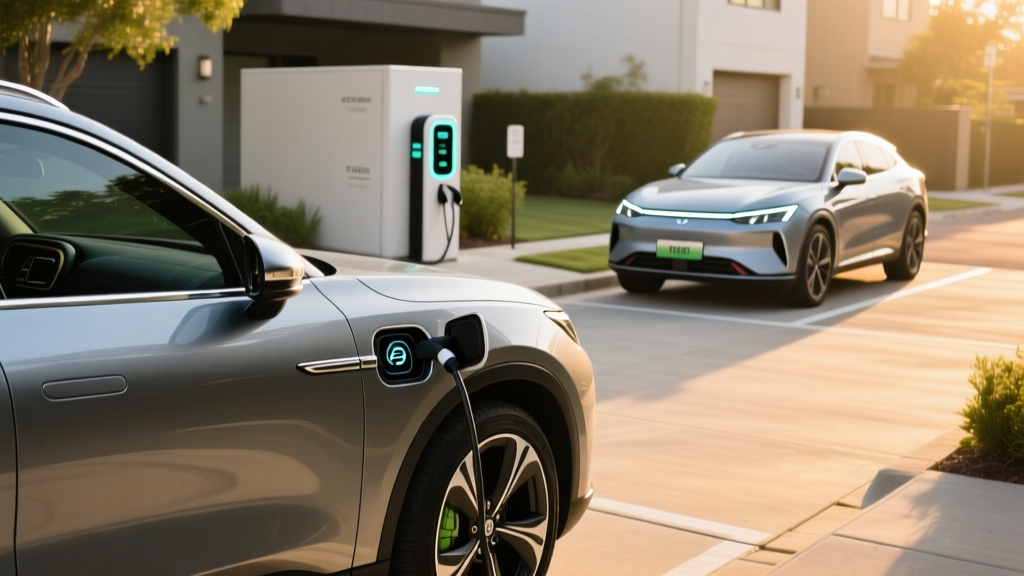
Every PHEV on the table above charges on a standard 120V household outlet (Level 1). At roughly 1.4 kW, a depleted RAV4 Prime battery reaches full in about 12 hours — fine for overnight top-ups. Plug into a 240V Level 2 station (3.3–7.2 kW depending on the vehicle's onboard charger) and you're looking at 2.5 to 4.5 hours from empty.
Most mainstream PHEV SUVs do not support DC fast charging. The batteries are small enough that Level 2 replenishes them quickly, and adding DC fast-charge hardware would increase cost and weight for marginal benefit. If you rely on public DC fast chargers during road trips, understand that a PHEV's gas engine is your long-distance solution, not rapid battery replenishment.
| Charging Level | Power (kW) | Rav4 Prime Full Charge | Tucson PHEV Full Charge |
|---|---|---|---|
| Level 1 (120V outlet) | ~1.4 kW | ~12 hours | ~9 hours |
| Level 2 (240V, 16A) | ~3.3 kW | ~5.5 hours | ~4.5 hours |
| Level 2 (240V, 32A) | ~7.2 kW | ~2.5 hours* | ~2 hours* |
*Actual time depends on the vehicle's onboard charger limit. The RAV4 Prime accepts up to 6.6 kW; the Tucson PHEV up to 7.2 kW.
Tax Credits, Lease Incentives, and the §30D Advantage
Here's where the lease math gets interesting — and where PHEVs gain a structural edge over HEVs.
- HEV (e.g., RAV4 Hybrid, CR-V Hybrid): Does NOT qualify for the federal §30D clean vehicle credit. These vehicles have no plug and don't meet the IRS definition of a qualified plug-in electric drive vehicle.
- PHEV (e.g., RAV4 Prime, Tucson PHEV): May qualify for up to $7,500 under IRS §30D, subject to MSRP caps (under $80,000 for SUVs), buyer income limits ($150K single / $300K joint AGI), and critical mineral + battery component sourcing requirements that shift annually.
- Commercial clean vehicle credit (§45W) lease workaround: When you lease (rather than buy), the lessor — typically the manufacturer's financing arm — may claim the commercial credit and pass savings to you as a "lease cash" incentive. This has been a common strategy for vehicles that don't meet §30D sourcing rules in a purchase scenario. Check the current month's lease offer details for specific amounts.
- Point-of-sale transfer: For eligible purchases (not leases), the §30D credit can be transferred to the dealer at signing, reducing your out-of-pocket cost immediately. In a lease, the lessor captures the credit and may reflect it in the money factor or cap cost reduction.
Practical advice: before signing any hybrid SUV lease, pull the current month's manufacturer incentive sheet and confirm whether the advertised payment already reflects federal or state credits. Dealerships sometimes advertise the lowest payment after applying a credit you may not qualify for.
Battery Warranty, Reliability, and Replacement Costs
Hybrid battery warranties are strong across the board. Federal emissions regulations mandate a minimum 8-year/80,000-mile warranty on hybrid battery packs. Many manufacturers exceed this:
- Toyota: 10 years / 150,000 miles on hybrid battery (from 2020 model year forward)
- Honda: 8 years / 100,000 miles (10 years / 150,000 miles in CARB states)
- Hyundai/Kia: 10 years / 100,000 miles on hybrid/PHEV battery and powertrain
For a 36-month lease, battery failure is a non-issue — you're covered for the full term and well beyond. Toyota's hybrid synergy drive system has logged two decades of real-world reliability data; RAV4 Hybrid battery replacements outside warranty are rare and run approximately $3,000–$4,500 if needed in year 12 or 15 of ownership. PHEV batteries are larger and more expensive ($6,000–$9,000 out of warranty), but again, you'll never approach that territory during a lease.
General hybrid reliability is excellent. These powertrains have fewer moving parts than a conventional automatic transmission (no torque converter, no traditional starter motor, regenerative braking reduces wear on friction brake pads). According to long-term owner surveys and IIHS safety data, the RAV4 Hybrid and CR-V Hybrid consistently rank near the top of their segments for both reliability and crash performance.
Hybrid vs PHEV vs EV: Which SUV Lease Fits You?
Choose an HEV Lease If:
- You have no access to plug-in charging at home or work
- You want the lowest possible monthly payment
- Your driving is city-heavy (where hybrids shine brightest)
- You don't want to think about charging — ever
Choose a PHEV Lease If:
- You can plug in nightly at home (even a standard 120V outlet works)
- Your daily commute is under 35 miles round-trip
- You want electric driving for errands but gas flexibility for road trips
- You want to reduce fuel spend without range anxiety in cold weather or rural areas
Choose a Full EV Lease If:
- You have reliable Level 2 home charging
- Your daily driving is under 250 miles
- You want zero tailpipe emissions and minimal maintenance
- You're comfortable with DC fast charging on road trips
The decision framework is straightforward: if a plug is available and your commute fits the electric range, a PHEV lease delivers the best of both worlds — you'll burn 80% less fuel than a gas-only SUV on weekdays, and the engine erases range anxiety on weekends. If plugging in isn't an option, an HEV lease still cuts fuel costs by 30–40% versus a conventional gas SUV with zero behavior change required.
Estimated Monthly Lease Costs (2026 Snapshot)
Lease pricing fluctuates monthly based on manufacturer incentives, money factors, and residual values. These estimates reflect typical 36-month / 12,000-mile-per-year leases with $3,000 due at signing, based on advertised deals and third-party lease trackers in early 2026:
- Toyota RAV4 Hybrid (LE): $375–$430/month
- Honda CR-V Hybrid (Sport): $390–$450/month
- Toyota RAV4 Prime (SE): $520–$610/month (higher MSRP offsets by strong residuals and potential credit pass-through)
- Hyundai Tucson PHEV (SEL): $440–$510/month
- Kia Sportage PHEV (X-Line): $450–$530/month
The RAV4 Prime commands a premium, but its 302 hp, 42-mile EV range, and Toyota's resale value keep residuals high — which paradoxically helps the lease math. The Tucson and Sportage PHEVs offer the best value proposition if you can charge at home: lower MSRP, competitive EV range, and Hyundai/Kia's generous warranty coverage.
Frequently Asked Questions
How many MPG does a hybrid SUV get in real driving?
The Toyota RAV4 Hybrid is EPA-rated at 41 city / 38 highway / 39 combined. In real-world testing, city-heavy drivers regularly see 40–44 MPG thanks to regenerative braking. Highway-only driving at 75 mph drops to roughly 34–37 MPG. The Honda CR-V Hybrid achieves similar or slightly better city numbers (43 EPA city), making it the efficiency leader in this segment.
How far can a PHEV SUV go on electric only?
The RAV4 Prime leads the segment with 42 miles of EPA-rated electric-only range. The Hyundai Tucson PHEV delivers 33 miles, and the Kia Sportage PHEV provides 34 miles. For most commuters, this covers the daily round-trip without engaging the gas engine — meaning you might visit a gas station once a month or less.
Does a hybrid SUV qualify for the $7,500 federal tax credit?
Conventional hybrids (HEVs) like the RAV4 Hybrid and CR-V Hybrid do not qualify for the §30D federal tax credit — they have no plug. PHEVs like the RAV4 Prime and Tucson PHEV may qualify for up to $7,500, but eligibility depends on your income, the vehicle's MSRP, and battery sourcing requirements that change annually. In a lease, the lessor claims the credit and may pass savings through as a lower money factor or cap cost reduction. Always verify current eligibility at irs.gov before signing.
Is a hybrid SUV battery reliable, and what does replacement cost?
Hybrid batteries are among the most reliable components in modern vehicles. Toyota, Honda, and Hyundai/Kia all warranty their hybrid batteries for 8–10 years and 100,000–150,000 miles. During a 36-month lease, battery replacement is a zero-probability concern. If you eventually buy out the lease and keep the vehicle 12+ years, out-of-warranty replacement runs $3,000–$4,500 for HEVs and $6,000–$9,000 for PHEVs.
Should I lease a hybrid or just buy a full EV?
If you have Level 2 home charging and your daily driving stays under 250 miles, a full EV offers lower operating costs and near-zero maintenance. But a hybrid SUV lease makes more sense if you lack reliable charging access, frequently drive in extreme cold (where EV range drops 20–30%), live in a rural area with sparse DC fast-charging infrastructure, or simply want the flexibility of a gas engine for long road trips without planning charging stops. Leasing either option lets you reassess in three years as charging infrastructure and battery technology continue to evolve.