Finding a true hybrid recreational vehicle means balancing fuel economy, towing capacity, cargo volume, and enough electric-only range to handle campground errands without burning gas. In 2026, several SUVs and trucks with hybrid and plug-in hybrid (PHEV) powertrains can pull a trailer, haul gear, and still deliver class-leading MPG. This guide breaks down the top contenders with exact EPA figures, real-world caveats, and ownership economics so you can decide which hybrid RV setup fits your trips.
What Counts as a Hybrid Recreational Vehicle?
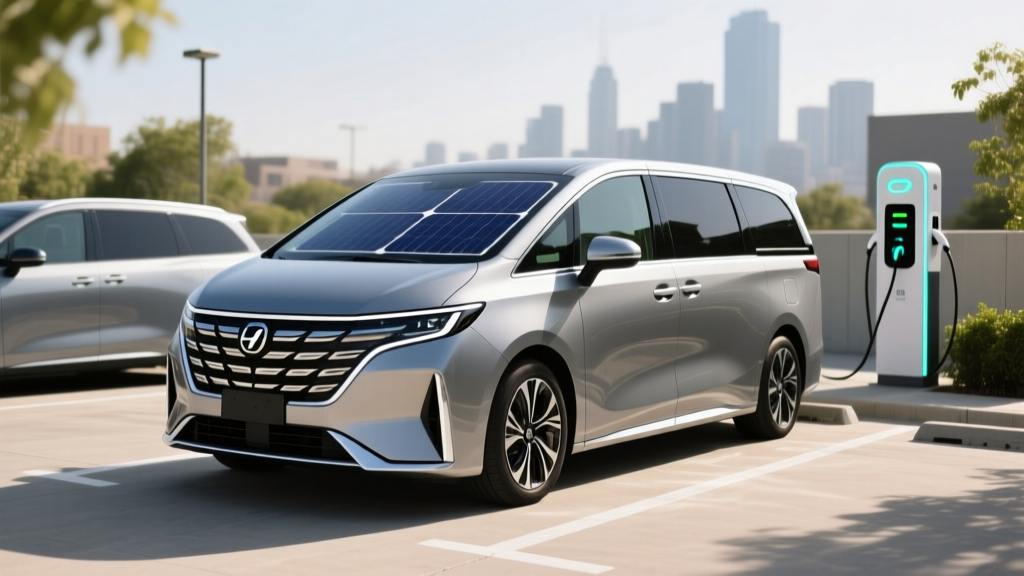
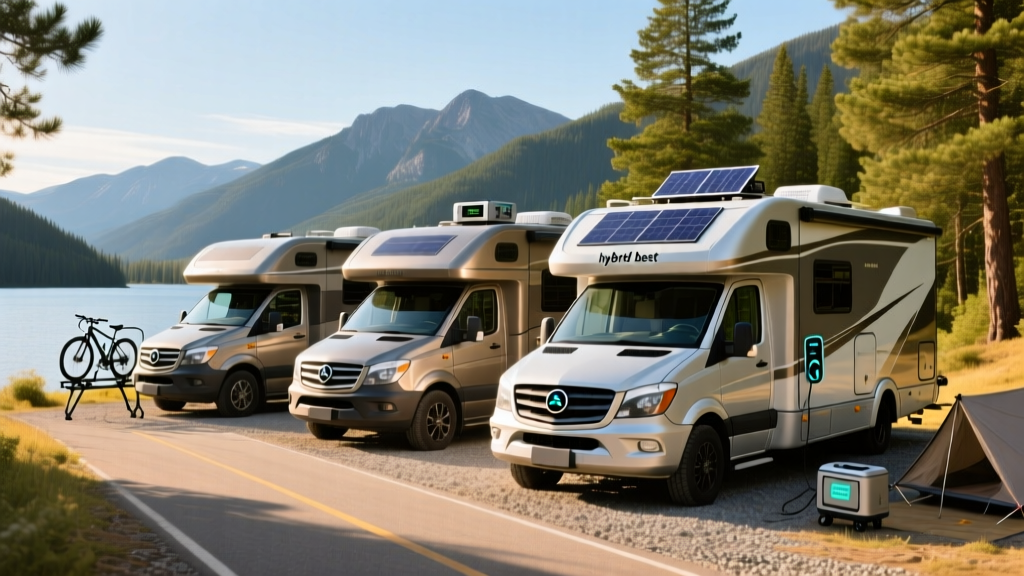
A "hybrid recreational vehicle" is not a motorhome with a hybrid drivetrain — those remain rare and expensive. Instead, the term covers hybrid and plug-in hybrid SUVs and trucks used primarily for recreation: towing travel trailers, hauling kayaks or ATVs, and serving as the daily driver that doubles as a tow rig. The key advantage over a gas-only truck or SUV is dramatically better fuel economy when you're not towing, plus usable electric-only range (on PHEVs) for short campground loops or town runs.
HEV vs PHEV: The Core Distinction
Conventional Hybrid (HEV): Charges its small battery (~1–2 kWh) through regenerative braking and the engine. You never plug it in. MPG gains are constant. Example: Toyota Grand Highlander Hybrid.
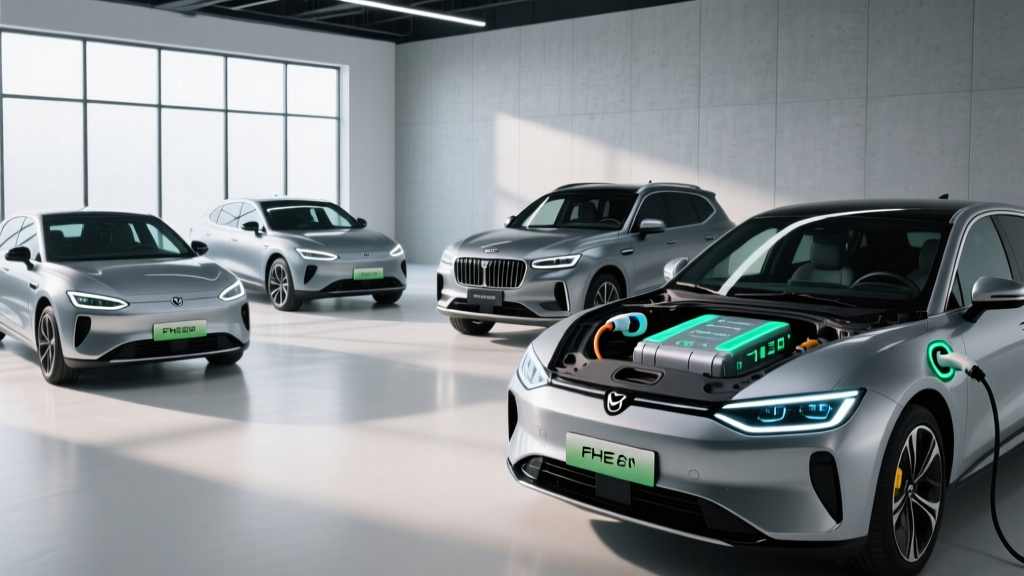
Plug-In Hybrid (PHEV): Carries a larger battery (~15–25 kWh) that you charge via a wall outlet or Level 2 station. Delivers 30–40+ miles of electric-only driving before the gas engine engages. Example: Jeep Wrangler 4xe.
Top Hybrid Recreational Vehicle Picks for 2026
We selected vehicles based on towing capacity (minimum 3,500 lbs), cargo volume, AWD availability, and real-world hybrid efficiency. Here's how the leading models compare:
| Model | Type | EPA Combined MPG / MPGe | Electric Range (PHEV) | Max Towing | Combined HP | Starting MSRP |
|---|---|---|---|---|---|---|
| Toyota Grand Highlander Hybrid | HEV | 35 MPG combined | N/A | 5,000 lbs | 245 hp | $45,120 |
| Jeep Wrangler 4xe | PHEV | 49 MPGe / 20 MPG gas | 22 mi electric | 3,500 lbs | 375 hp | $52,995 |
| Ford F-150 PowerBoost Hybrid | HEV | 24 MPG combined | N/A | 11,200 lbs | 430 hp | $60,750 |
| Toyota Tacoma i-FORCE MAX | HEV | 23 MPG combined | N/A | 6,500 lbs | 326 hp | $47,495 |
| Jeep Grand Cherokee 4xe | PHEV | 56 MPGe / 24 MPG gas | 26 mi electric | 6,125 lbs | 375 hp | $59,495 |
Fuel Economy: EPA Numbers vs Real-World MPG
Hybrid powertrains shine in stop-and-go driving, where regenerative braking recovers energy that gas vehicles waste as heat. This means city MPG often exceeds highway MPG — the opposite of a conventional vehicle.
| Model | City MPG | Highway MPG | Combined MPG | Real-World Note |
|---|---|---|---|---|
| Grand Highlander Hybrid | 36 | 33 | 35 | Expect ~32–34 highway-loaded; ~37 city |
| F-150 PowerBoost | 24 | 24 | 24 | Drops to ~10–12 MPG while towing 8,000+ lbs |
| Tacoma i-FORCE MAX | 23 | 24 | 23 | Off-road tires trim 1–2 MPG; towing ~11 MPG |
| Wrangler 4xe (gas only) | 20 | 20 | 20 | Boxy aero hurts highway; electric mode offsets around town |
| Grand Cherokee 4xe (gas) | 23 | 24 | 24 | Real-world ~22 combined on gas; 56 MPGe with regular charging |
PHEV Electric-Only Range and Charging Details
For PHEV buyers, electric-only range determines how many daily miles you can log without the engine starting. Here's the technical breakdown:
| Model | Battery (kWh usable) | Electric Range | Level 2 Charge Time (0–100%) | DC Fast Charge? |
|---|---|---|---|---|
| Wrangler 4xe | 17.3 kWh | 22 miles | ~2.5 hours at 7.2 kW | No |
| Grand Cherokee 4xe | 17.3 kWh | 26 miles | ~2.5 hours at 7.2 kW | No |
Neither Jeep 4xe supports DC fast charging — a common PHEV limitation. Level 2 charging at home (240V, ~32A circuit) fully replenishes the battery in roughly 2.5 hours, which works well for overnight top-ups. A standard 120V outlet (Level 1) takes approximately 12 hours for a full charge, adequate if you drive less than 20 electric miles per day and plug in every evening.
kW vs kWh reminder: kW (kilowatts) measures charging power — how fast energy flows. kWh (kilowatt-hours) measures battery capacity — how much energy is stored. A 7.2 kW charger fills a 17.3 kWh battery in roughly 2.4 hours (17.3 ÷ 7.2 = 2.4).
Powertrain Specs: Engine, Motor, and Combined Output
Hybrid recreational vehicles pair a gasoline engine with one or more electric motors. Combined output is what matters for towing and acceleration:
- Toyota Grand Highlander Hybrid: 2.5L 4-cylinder + two electric motors (AWD), 245 hp combined. Adequate for a 5,000-lb trailer but not brisk. 0–60 mph in ~7.6 seconds.
- Ford F-150 PowerBoost: 3.5L twin-turbo V6 + 47 hp electric motor integrated into the 10-speed transmission, 430 hp and 570 lb-ft combined. 0–60 in ~5.8 seconds. Best-in-class towing at 11,200 lbs when properly equipped.
- Toyota Tacoma i-FORCE MAX: 2.4L turbo 4-cylinder + 48 hp electric motor, 326 hp and 465 lb-ft combined. 0–60 in ~6.5 seconds. Strong low-end torque for trail crawling.
- Jeep Wrangler 4xe: 2.0L turbo 4-cylinder + two electric motors, 375 hp and 470 lb-ft combined. 0–60 in ~6.0 seconds. Instant electric torque aids rock crawling.
- Jeep Grand Cherokee 4xe: Same 2.0L turbo PHEV system as Wrangler, 375 hp, 470 lb-ft. 0–60 in ~6.3 seconds.
Pricing, Tax Credits, and Incentives
Under current IRS §30D Clean Vehicle Credit rules for 2026, only plug-in hybrids may qualify for the federal tax credit — conventional HEVs do not. Eligibility depends on multiple criteria:
- Vehicle type: Must be a PHEV with ≥7 kWh battery capacity (both 4xe models qualify)
- MSRP cap: SUVs/vans/trucks must have MSRP ≤$80,000; sedans ≤$55,000
- Buyer income cap: AGI ≤$150,000 single / ≤$300,000 joint
- Battery sourcing: Critical minerals and battery components must meet phased-in domestic/FtA sourcing thresholds — check fueleconomy.gov for per-model eligibility
- Point-of-sale transfer: Eligible buyers can apply the credit as a down-payment reduction at the dealer
As of early 2026, the Jeep Wrangler 4xe and Grand Cherokee 4xe have appeared on the IRS eligible-vehicle list for partial or full credit, but battery-sourcing compliance shifts periodically. Always verify the specific VIN with your dealer and a tax professional before purchase.
Toyota covers its hybrid batteries for 10 years / 150,000 miles (whichever comes first) on 2020+ models. Jeep/Stellantis covers PHEV batteries for 8 years / 100,000 miles (10/100,000 in CARB states). Ford covers the PowerBoost hybrid battery for 8 years / 100,000 miles. All warranties guarantee minimum capacity retention — typically 60–70% of original capacity — not a specific degradation threshold. Replacement costs range from $3,000–$6,000 out of warranty depending on model and whether refurbished packs are available.
Real-World Reliability and Battery Longevity
Hybrid battery anxiety is the top concern for first-time buyers, but the data is reassuring. Toyota's hybrid systems — now in their third decade since the original Prius — have demonstrated battery lifespans regularly exceeding 200,000 miles with gradual, manageable degradation. The Grand Highlander and Tacoma benefit from this mature architecture.
Stellantis' 4xe PHEV system is newer (introduced 2021 on Wrangler) and has accumulated fewer long-term data points, but early reports show no systemic battery failures. The smaller PHEV battery (~17 kWh) undergoes shallower cycles than a full EV pack, which reduces stress.
Ford's PowerBoost system uses a ~1.5 kWh battery that stays in a narrow state-of-charge window, minimizing degradation risk. The F-150 hybrid has been in production since the 2021 model year with generally strong reliability marks from Consumer Reports and owner forums.
Pros of a Hybrid Recreational Vehicle
- 30–50% better MPG than gas equivalents when not towing
- PHEV electric mode eliminates idling fuel burn at campgrounds
- Instant electric torque improves low-speed trail manners
- No range anxiety — gas engine covers long hauls
- Lower total fuel cost for mixed daily + weekend towing use
Cons to Consider
- $3,000–$8,000 price premium over gas-only equivalent
- Towing MPG drops sharply (hybrid advantage narrows)
- PHEV cargo space reduced by battery placement (check under-floor storage)
- Heavier curb weight affects payload capacity
- PHEVs require home charging access for full benefit
Hybrid vs PHEV vs Full EV: Which Fits Your Recreational Use?
Choose a conventional HEV (Grand Highlander Hybrid, F-150 PowerBoost, Tacoma i-FORCE MAX) if:
- You can't charge at home or at campgrounds
- You tow frequently and need maximum range without stops
- You want MPG gains with zero behavior change
Choose a PHEV (Wrangler 4xe, Grand Cherokee 4xe) if:
- You have home Level 2 charging and most daily trips are under 25 miles
- You want electric-only campground driving and reduced local emissions
- You qualify for the §30D tax credit and want to offset the price premium
Choose a full EV (Rivian R1T, F-150 Lightning) if:
- Your towing trips are under 200 miles round-trip or you can plan DC fast-charge stops
- You want zero tailpipe emissions and the lowest per-mile fuel cost
- You accept that towing cuts EV range by 40–50%
Frequently Asked Questions
How many MPG does a hybrid recreational vehicle get?
It depends on the model and whether you're towing. The Toyota Grand Highlander Hybrid achieves 35 MPG combined (36 city / 33 highway) unloaded. The Ford F-150 PowerBoost gets 24 MPG combined — roughly 4–5 MPG better than the non-hybrid EcoBoost. While towing near max capacity, expect 10–14 MPG from any hybrid truck or SUV.
How far can a PHEV recreational vehicle go on electric only?
The Jeep Wrangler 4xe delivers 22 miles of electric-only range; the Grand Cherokee 4xe manages 26 miles. Both use a 17.3 kWh battery and recharge in ~2.5 hours on Level 2. Total combined range (electric + gas) exceeds 350 miles for both models.
Is a hybrid RV reliable, and what does battery replacement cost?
Toyota's hybrid systems have a 25-year track record with batteries routinely lasting 200,000+ miles. Jeep and Ford PHEV/hybrid systems are newer but show no systemic issues. Out-of-warranty battery replacement runs $3,000–$6,000 depending on the model. All manufacturers cover hybrid batteries for 8–10 years / 100,000–150,000 miles.
Does a hybrid recreational vehicle qualify for a tax credit?
Only PHEVs (not conventional HEVs) may qualify for the federal §30D Clean Vehicle Credit, currently up to $7,500. Eligibility depends on MSRP caps, buyer income limits, and battery-sourcing requirements. Check the DOE's eligible vehicle list and consult a tax professional. Conventional hybrids like the Grand Highlander Hybrid and F-150 PowerBoost do not qualify for the federal credit, though some states offer separate hybrid rebates.
Can I tow a travel trailer with a hybrid SUV or truck?
Yes. The Ford F-150 PowerBoost tows up to 11,200 lbs — competitive with any half-ton truck. The Grand Cherokee 4xe handles 6,125 lbs, enough for most mid-size travel trailers. The Tacoma i-FORCE MAX tows 6,500 lbs. Always verify your specific trim's tow rating and invest in a weight-distribution hitch for trailers over 3,500 lbs.
Do I need to plug in a hybrid recreational vehicle?
Only if it's a PHEV. Conventional hybrids (HEVs) like the Grand Highlander Hybrid, F-150 PowerBoost, and Tacoma i-FORCE MAX charge their batteries through regenerative braking and the engine — you never plug them in. PHEVs like the Wrangler 4xe and Grand Cherokee 4xe can operate without plugging in, but you lose the electric-only range benefit and the MPGe advantage if you don't charge regularly.