The Renaissance of the Family Hauler: Why Hybrid Minivans are Winning
For the better part of a decade, the three-row SUV dominated the family vehicle market, pushing the traditional minivan to the fringes of automotive relevance. However, as the industry pivots toward electrification, a fascinating paradigm shift is occurring. The very attributes that made SUVs popular—aggressive styling and high ground clearance—are now their biggest liabilities in the electrified era due to poor aerodynamics and heavy battery penalties. Enter the minivan: a masterclass in spatial efficiency and aerodynamic packaging. Today, the best hybrid minivans are not just practical; they are at the cutting edge of family mobility, offering unparalleled fuel economy, advanced PHEV architectures, and a glimpse into the future of vehicular energy management.
In this comprehensive ranking and industry outlook, we evaluate the current market leaders in the hybrid and plug-in hybrid (PHEV) minivan segment. We will also explore the future trends shaping this niche, from solid-state battery integration to Vehicle-to-Load (V2L) capabilities, helping you decide whether to invest in today's pioneers or wait for tomorrow's disruptors.
2024-2025 Hybrid Minivan Rankings: Fuel Economy & Features
1. Toyota Sienna Hybrid (The Efficiency Benchmark)
Since its complete redesign for the 2021 model year, the Toyota Sienna has been the undisputed king of minivan fuel economy. Built on Toyota's TNGA-K platform, the Sienna is exclusively available as a hybrid, utilizing a 2.5-liter four-cylinder engine paired with up to three electric motors for available all-wheel drive (AWD). The result is an EPA-estimated 36 MPG combined, a figure that real-world testing frequently matches or exceeds on highway road trips. From a future trends perspective, Toyota's strategy of standardizing hybridization across its largest passenger vehicles positions the Sienna perfectly as a bridge technology for consumers not yet ready for full EVs, while offering near-EV levels of refinement in city driving.
2. Chrysler Pacifica PHEV (The Electric Commuter)
The Chrysler Pacifica Plug-In Hybrid remains a unique proposition in the North American market. It is currently the only PHEV minivan available, offering an EPA-estimated 32 miles of pure electric range from its 16 kWh battery pack. For families with short school runs and commutes, the Pacifica can operate as a full EV for weeks without visiting a gas station, achieving an impressive 82 MPGe. While its interior features and Stow 'n Go seating (limited in the second row due to battery placement) are legendary, the Pacifica's aging platform and lack of fast-charging capabilities hint that a next-generation overhaul is overdue. Nevertheless, it remains a vital case study in how PHEVs can serve dual roles as EV commuters and gas-powered road trippers.
3. Kia Carnival Hybrid (The Upcoming Disruptor)
While currently available in global markets like South Korea, the hybrid variant of the Kia Carnival is slated for broader international and potential North American release in upcoming model years. Utilizing Hyundai Motor Group's proven 1.6-liter turbocharged hybrid powertrain (similar to the Sorento Hybrid), the Carnival Hybrid is expected to deliver upwards of 33 MPG combined. Kia's aggressive design language and SUV-like proportions have already made the Carnival a hit; adding a highly efficient hybrid powertrain will directly challenge the Sienna's monopoly on non-plug-in hybrid family hauling. Industry insiders also expect Kia to leverage its 800V architecture experience to potentially offer advanced charging or V2L capabilities in future iterations.
Market Comparison: Current & Upcoming Hybrid Minivans
| Model | Powertrain Type | Combined MPG / EV Range | Est. Starting Price | Key Future Tech Outlook |
|---|---|---|---|---|
| Toyota Sienna | Standard Hybrid (HEV) | 36 MPG | $37,000 | Potential PHEV variant; Enhanced Toyota Safety Sense |
| Chrysler Pacifica | Plug-In Hybrid (PHEV) | 82 MPGe / 32 mi EV | $51,000 | Needs next-gen battery for 50+ mi EV range & DC fast charging |
| Kia Carnival | Turbo Hybrid (HEV) | ~33 MPG (Est.) | $41,000 (Est.) | V2L integration; Digital Key 2; Highway Driving Assist 2 |
| Honda Odyssey | None (US Market) | 22 MPG | $38,000 | Severely lacking; Rumored e:HEV hybrid system for next generation |
Future Trends: What is Next for Electrified Minivans?
The minivan segment is poised to become a testing ground for some of the most practical applications of electrified technology. As family needs evolve, so too do the features demanded from these vehicles.
Trend 1: High-Capacity PHEVs and the 50-Mile EV Standard
The current generation of PHEV minivans, like the Pacifica, offers roughly 30 miles of electric range. However, the industry is rapidly moving toward high-capacity PHEVs with 30 kWh to 40 kWh battery packs. According to data tracked by the International Energy Agency (IEA), the global average battery size in PHEVs is increasing as consumers demand vehicles that can handle round-trip commutes entirely on electricity. Future minivans will likely boast 50+ miles of EV range, effectively functioning as full EVs for 90% of daily family logistics, while retaining the gas engine for cross-country holiday travel.
Trend 2: Vehicle-to-Load (V2L) and Bi-Directional Charging
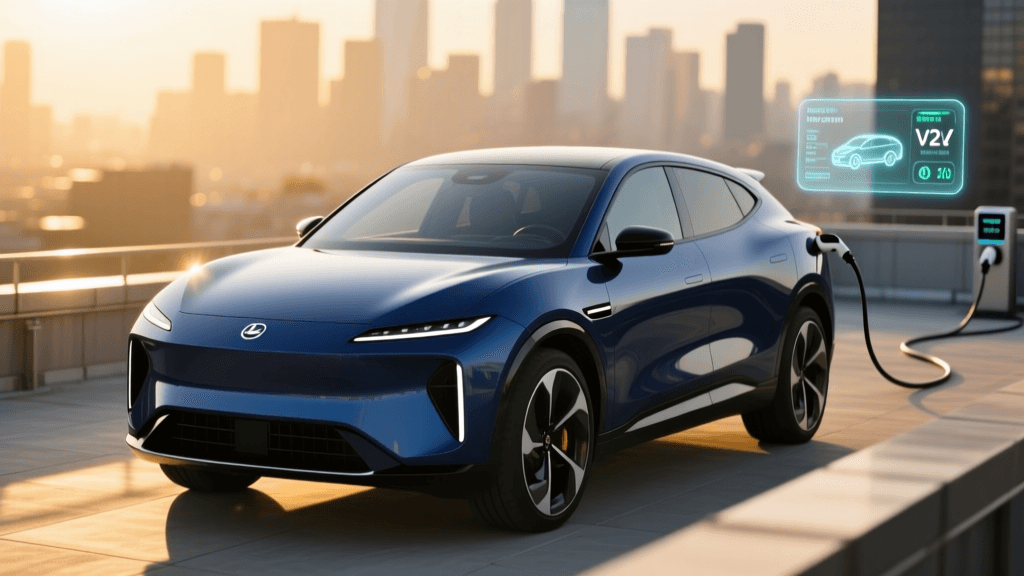
Minivans are inherently lifestyle vehicles, used for camping, tailgating, and mobile family bases. The integration of V2L technology—allowing the vehicle's high-voltage battery to power external 120V and 240V appliances—is a game-changer. Imagine powering a campsite, running heavy-duty power tools, or even providing emergency backup power to a home refrigerator during a grid outage directly from your minivan. While currently limited to specific EVs like the Hyundai Ioniq 5 and Ford F-150 Lightning, V2L is a logical next step for PHEV and hybrid minivans, transforming them from mere transport into mobile energy hubs.
Trend 3: Aerodynamic Optimization and Solid-State Batteries
As automakers chase range and efficiency, the boxy SUV is hitting a wall. Minivans, with their lower ride heights and teardrop-like rear profiles, naturally possess better drag coefficients. When paired with upcoming solid-state batteries—which promise higher energy density and lower profiles—future minivans will feature completely flat floors, maximizing interior cargo volume while lowering the center of gravity for superior handling and efficiency.
Industry Outlook: The Missing Players and Market Share
One of the most glaring anomalies in the current automotive landscape is Honda's reluctance to offer a hybrid Odyssey in the North American market. While the Odyssey remains a top-tier vehicle for interior packaging and driving dynamics, its 22 MPG combined rating is increasingly unacceptable to eco-conscious families. Honda's e:HEV hybrid system, widely used in global markets, is a prime candidate for the next-generation Odyssey. If Honda fails to electrify its minivan lineup, market share will aggressively shift toward Toyota and Kia.
Furthermore, the U.S. Department of Energy highlights that PHEVs offer a unique psychological comfort to consumers experiencing 'range anxiety,' making them an ideal stepping stone. Minivans, often serving as the primary family road-trip vehicle, are perfectly suited for PHEV architectures that eliminate the fear of stranded passengers in remote areas while maximizing local electric efficiency.
Actionable Buying Advice: Should You Buy Now or Wait?
If you are in the market for an electrified family hauler today, your decision hinges on your immediate needs versus your appetite for emerging tech.
- Buy the Toyota Sienna Now If: You want proven reliability, class-leading 36 MPG, and excellent resale value. The Sienna's hybrid system is bulletproof, and its AWD capability makes it a year-round workhorse. It is the safest financial bet in the segment.
- Consider the Pacifica PHEV If: Your daily driving is under 30 miles, you have home charging, and you want to minimize your carbon footprint during the week. However, be aware that depreciation on the Pacifica PHEV is steeper than the Sienna due to its aging platform and complex maintenance requirements.
- Wait for the Kia Carnival Hybrid If: You prefer SUV-like styling, want the latest infotainment and ADAS (Advanced Driver Assistance Systems) features, and are willing to hold off for the next model year refresh. Kia's hybrid powertrains are highly refined, and the Carnival's interior luxury currently punches above its weight class.
Finally, always consult the latest EPA data via the EPA's Fuel Economy Guide to compare real-world MPGe and annual fuel costs. As battery supply chains stabilize and new tax credit regulations under the Inflation Reduction Act continue to shift, the financial calculus of buying a PHEV versus a standard HEV minivan changes frequently. The future of the family hauler is undoubtedly electrified, and the minivan is perfectly positioned to lead the charge.