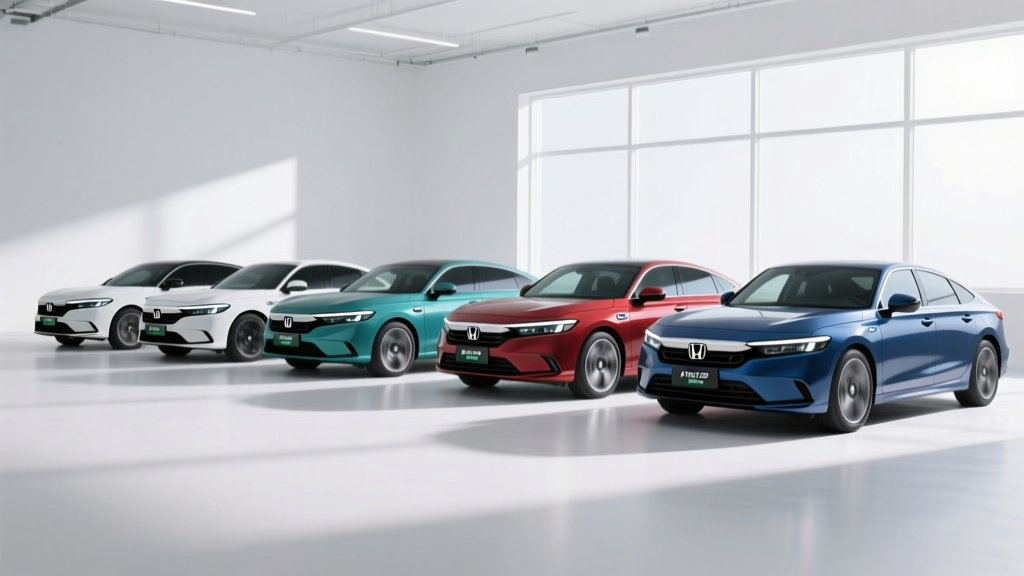
If you're researching hybrid Honda cars, you're looking at one of the most mature hybrid lineups in the industry. Honda's two-motor hybrid system has been refined across multiple generations, and for 2026, the automaker offers hybrid powertrains across nearly its entire passenger-vehicle range — from the compact Civic to the three-row Pilot. But not all Honda hybrids are created equal: some are conventional hybrids (HEVs) that never need plugging in, while one model — the Clarity successor landscape has shifted, and Honda now leans heavily on its HEV technology with a renewed commitment to plug-in hybrid development for select markets.
This guide breaks down every current hybrid Honda model with exact EPA MPG figures, real-world efficiency expectations, powertrain specs, battery warranty details, and whether any qualify for federal tax incentives. Whether you're cross-shopping a Civic Hybrid against a Toyota Corolla Hybrid or deciding if a CR-V Hybrid makes more financial sense than the gas version, the data below will make the decision clear.
HEV vs PHEV: Understanding Honda's Hybrid Strategy
Before diving into individual models, it's critical to understand the distinction between Honda's two hybrid approaches — because the ownership experience, fueling requirements, and incentive eligibility differ dramatically.
Conventional Hybrid (HEV)
How it works: A small battery (typically 1.0–1.8 kWh) paired with an electric motor and gasoline engine. The battery recharges through regenerative braking and the engine — you never plug it in.
Electric-only driving: Minimal. Brief low-speed EV mode (under 1 mile), primarily assists the gas engine for improved MPG.
Fueling: Gasoline only, same as a conventional car. No charging infrastructure needed.
Tax credits: Not eligible for the federal §30D clean vehicle credit.
Plug-In Hybrid (PHEV)
How it works: A larger battery (typically 15–20+ kWh) that can be charged via a wall outlet or charging station, enabling extended electric-only driving before the gas engine engages.
Electric-only driving: Typically 25–50 miles on battery alone, enough for most daily commutes without using gasoline.
Fueling: Electricity for short trips + gasoline for longer drives. Requires access to a 120V or 240V outlet for charging.
Tax credits: May qualify for partial §30D credit depending on battery capacity and sourcing requirements.
For 2026, Honda's U.S. hybrid lineup is overwhelmingly HEV. The automaker discontinued the Clarity PHEV after the 2021 model year and has not yet introduced a direct PHEV successor for the American market. Honda has signaled future PHEV products as part of its electrification roadmap, but as of the 2026 model year, buyers looking at hybrid Honda cars are choosing from conventional hybrid models.
2026 Honda Civic Hybrid: MPG, Specs, and Real-World Efficiency
The Civic Hybrid returns for 2026 as Honda's most fuel-efficient vehicle and one of the top-rated hybrid compact sedans on the market. It uses Honda's latest two-motor hybrid system paired with a 2.0-liter Atkinson-cycle four-cylinder engine.
| Spec | Value |
|---|---|
| Powertrain | 2.0L 4-cyl Atkinson + 2-motor hybrid system |
| Combined Horsepower | 200 hp |
| Combined Torque | 232 lb-ft |
| Battery | ~1.8 kWh lithium-ion (HEV, not plug-in) |
| EPA MPG (City) | 50 MPG |
| EPA MPG (Highway) | 47 MPG |
| EPA MPG (Combined) | 49 MPG |
| 0–60 mph | ~6.5 seconds |
| Drivetrain | Front-wheel drive |
| Starting MSRP | ~$29,845 (Sport Hybrid trim) |
| Hybrid Battery Warranty | 8 years / 100,000 miles (10 yr/150,000 mi in CARB states) |
Real-world MPG note: Honda's hybrid system excels in city driving where regenerative braking and electric-motor assist are most active. In real-world mixed driving, many Civic Hybrid owners report achieving 48–53 MPG in city-heavy commutes. Highway-only driving at 75+ mph tends to drop efficiency to the low-to-mid 40s — this is typical for all hybrids, as the electric motor provides less benefit at sustained high speeds. In cold weather (below 30°F), expect a 5–10% MPG reduction as the engine runs more frequently to maintain cabin heat.
2026 Honda Accord Hybrid: The Midsize Sedan Efficiency Leader
The Accord Hybrid continues as a cornerstone of Honda's hybrid lineup. For 2026, it carries the same fourth-generation two-motor hybrid system that debuted with the current Accord generation, delivering strong acceleration alongside class-leading midsize sedan efficiency.
| Spec | Value |
|---|---|
| Powertrain | 2.0L 4-cyl Atkinson + 2-motor hybrid system |
| Combined Horsepower | 204 hp |
| Combined Torque | 247 lb-ft |
| Battery | ~1.8 kWh lithium-ion (HEV) |
| EPA MPG (City) | 51 MPG |
| EPA MPG (Highway) | 44 MPG |
| EPA MPG (Combined) | 48 MPG |
| 0–60 mph | ~6.6 seconds |
| Drivetrain | Front-wheel drive |
| Starting MSRP | ~$33,990 (Sport Hybrid) / ~$38,990 (Sport-L Hybrid) |
| Hybrid Battery Warranty | 8 years / 100,000 miles (10 yr/150,000 mi in CARB states) |
Real-world MPG note: The Accord Hybrid's city MPG advantage is substantial — the EPA's 51 MPG city figure reflects how effectively the electric motor handles stop-and-go driving. In real-world testing, drivers with predominantly urban commutes regularly see 49–54 MPG. Highway cruising at 70–80 mph yields approximately 40–43 MPG. The Accord Hybrid's combined real-world average tends to land between 44–49 MPG depending on driving mix, per aggregated owner data on fueleconomy.gov.
2026 Honda CR-V Hybrid: The Best-Selling Hybrid SUV in the Lineup
The CR-V Hybrid is Honda's volume leader in the hybrid space, and for good reason: it combines compact SUV practicality with a meaningful fuel-economy advantage over the gas-only CR-V. For 2026, Honda offers the hybrid powertrain on the Sport and Sport Touring trims, and both come standard with all-wheel drive — a significant differentiator versus some competitors.
| Spec | Value |
|---|---|
| Powertrain | 2.0L 4-cyl Atkinson + 2-motor hybrid system |
| Combined Horsepower | 204 hp |
| Combined Torque | 247 lb-ft |
| Battery | ~1.8 kWh lithium-ion (HEV) |
| EPA MPG (City) | 43 MPG (Sport Hybrid AWD) |
| EPA MPG (Highway) | 36 MPG (Sport Hybrid AWD) |
| EPA MPG (Combined) | 40 MPG (Sport Hybrid AWD) |
| 0–60 mph | ~7.6 seconds |
| Drivetrain | AWD standard on all Hybrid trims |
| Starting MSRP | ~$36,395 (Sport Hybrid) / ~$41,495 (Sport Touring Hybrid) |
| Hybrid Battery Warranty | 8 years / 100,000 miles (10 yr/150,000 mi in CARB states) |
Real-world MPG note: SUV hybrids tend to see a larger gap between EPA city and highway ratings because of aerodynamic drag at speed. The CR-V Hybrid's 43/36 city/highway split is consistent with this pattern. Real-world owners report 38–44 MPG in mixed driving, with city-heavy commuters sometimes exceeding the EPA city estimate. In winter conditions with temperatures below freezing, expect a 7–12% reduction in fuel economy — the engine runs more often to provide cabin heat and maintain battery temperature. For a deeper look at the EPA's testing methodology, see fueleconomy.gov.
Honda Hybrid Battery Warranty, Lifespan, and Replacement Cost
Honda Hybrid Battery Coverage at a Glance
- Standard warranty: 8 years or 100,000 miles (whichever comes first)
- CARB-state warranty: 10 years or 150,000 miles — applies in California and states that follow California Air Resources Board emissions standards (including NY, MA, WA, OR, CO, VT, ME, RI, CT, NJ, MD, DE, NM, MN, NV, and others)
- What's covered: Battery capacity loss below a defined threshold, cell defects, and hybrid system component failures
- Replacement cost (out of warranty): Approximately $2,000–$4,000 for a refurbished or new hybrid battery pack, plus $500–$1,000 in labor. Honda's HEV batteries are relatively small (~1.8 kWh), keeping replacement costs far lower than full EV battery packs.
How long do Honda hybrid batteries actually last? Based on long-term ownership data from high-mileage Civic and Accord Hybrids, Honda's lithium-ion hybrid batteries routinely exceed 150,000 miles with minimal capacity degradation. Unlike EV batteries where range loss is directly felt, a hybrid battery's gradual capacity loss has a much smaller impact on daily driving — the gas engine simply compensates. Many first-generation Honda hybrid owners have reported 200,000+ miles on original battery packs. Honda's hybrid battery reliability is among the best in the industry, supported by the automaker's decades of hybrid system experience dating back to the 2000 Insight.
Tax Credits and Incentives: What Hybrid Honda Buyers Need to Know
This is where the HEV vs. PHEV distinction matters most for your wallet.
- Federal §30D Clean Vehicle Credit: Honda's current U.S. hybrid vehicles are conventional HEVs — they are not eligible for the federal §30D tax credit, which requires a minimum battery capacity of 7 kWh and plug-in capability. Only PHEVs and BEVs qualify.
- State and local incentives: Some states offer rebates or HOV lane access for hybrid vehicles regardless of plug-in status, but these vary widely by jurisdiction. Check your state's energy office or DMV for current programs.
- Fuel savings as the real incentive: The financial case for a Honda HEV rests on fuel savings, not tax credits. At $3.50/gallon and 15,000 miles/year, a Civic Hybrid (49 MPG combined) saves approximately $670/year in fuel versus a gas Civic (35 MPG combined). Over 5 years, that's roughly $3,350 in fuel savings — often covering the hybrid trim's price premium.
For current federal incentive rules, always verify eligibility on IRS.gov, as §30D requirements for battery sourcing, MSRP caps, and buyer income limits are subject to change.
Hybrid Honda vs Full EV vs Gas: Which Powertrain Fits You?
Choose a Honda Hybrid (HEV) if:
- You don't have reliable access to home or workplace charging
- You want maximum MPG without changing your fueling habits
- You regularly drive in stop-and-go city traffic where hybrid efficiency shines
- You want lower upfront cost than a full EV with no range anxiety
- You live in an apartment or rent and can't install a Level 2 charger
Choose a Full EV if:
- You can charge at home (Level 2, 240V) and want the lowest per-mile fuel cost
- Your daily driving is under 250 miles and you rarely take road trips over 300 miles
- You want to qualify for the federal §30D tax credit (up to $7,500) and state EV incentives
- You want minimal maintenance (no oil changes, fewer moving parts)
Choose a Gas-Only Vehicle if:
- You drive very low annual miles (under 8,000/year) where fuel savings won't offset the hybrid premium
- You frequently tow near maximum capacity (hybrids lose more efficiency under heavy load)
- You're buying on the tightest possible budget and the hybrid trim premium doesn't pencil out
Complete 2026 Honda Hybrid Lineup: Side-by-Side MPG Comparison
| Model | Type | City MPG | Highway MPG | Combined MPG | Combined HP | Starting MSRP |
|---|---|---|---|---|---|---|
| Civic Hybrid | HEV | 50 | 47 | 49 | 200 hp | $29,845 |
| Accord Hybrid | HEV | 51 | 44 | 48 | 204 hp | $33,990 |
| CR-V Hybrid (AWD) | HEV | 43 | 36 | 40 | 204 hp | $36,395 |
Note: EPA figures sourced from fueleconomy.gov. Real-world MPG varies based on driving style, terrain, temperature, and trip length. Honda has not announced a U.S.-market PHEV for 2026. The CR-V Hybrid is AWD only; no FWD hybrid variant is offered.
Pros of Honda's Hybrid Lineup
- Class-leading city MPG across Civic and Accord (50–51 EPA city)
- No plug-in required — zero change to fueling habits
- Strong hybrid battery warranty (8–10 years depending on state)
- Proven reliability with decades of hybrid system refinement
- AWD standard on CR-V Hybrid (competitors often charge extra)
- Competitive 0–60 times — hybrid torque fills in the low end
- Lower replacement battery cost than EVs ($2K–$4K vs $10K+)
Cons and Limitations
- No PHEV option in U.S. for 2026 — no electric-only commute capability
- Not eligible for federal §30D tax credit (HEVs excluded)
- Highway MPG advantage over gas models is smaller than city advantage
- Hybrid trims carry a $1,500–$3,000 price premium over gas equivalents
- CR-V Hybrid highway MPG (36) trails some expectations for a hybrid
- No DC fast charging capability (not applicable for HEVs, but limits future PHEV potential)
Frequently Asked Questions About Hybrid Honda Cars
How many MPG does the Honda Civic Hybrid get in real-world driving?
The EPA rates the 2026 Civic Hybrid at 50 city / 47 highway / 49 combined MPG. In real-world mixed driving, most owners report 46–53 MPG, with city-heavy commuters often exceeding the EPA city estimate thanks to the hybrid system's regenerative braking advantage. Highway-only driving at 75+ mph typically yields 42–45 MPG.
Does Honda make a plug-in hybrid (PHEV) for 2026?
As of the 2026 model year, Honda does not offer a PHEV in the U.S. market. The Clarity PHEV was discontinued after 2021. All current Honda hybrids are conventional HEVs that do not require plugging in. Honda has indicated future PHEV development but has not announced a specific U.S. model or timeline.
Is the Honda hybrid battery reliable, and what does replacement cost?
Honda hybrid batteries have an excellent reliability track record, with many lasting 150,000–200,000+ miles. The battery is covered by an 8-year/100,000-mile warranty (10 years/150,000 miles in CARB states). Out-of-warranty replacement costs approximately $2,000–$4,000 for the battery pack plus $500–$1,000 labor — significantly less than EV battery replacement.
Do Honda hybrid cars qualify for any tax credits?
No. Honda's current U.S. hybrid models are conventional HEVs, which do not qualify for the federal §30D Clean Vehicle Credit. That credit requires plug-in capability and a minimum 7 kWh battery. Some states may offer separate incentives for hybrids — check your state energy office for current programs.
Hybrid vs PHEV vs EV — which Honda powertrain should I choose?
If you can't charge at home, a Honda HEV is the clear winner — you get 40–49 MPG combined with zero infrastructure changes. If you have home charging and a short commute, a full EV (like the Honda Prologue) offers lower running costs and tax credit eligibility. A PHEV would be ideal for combining electric commuting with gas flexibility, but Honda doesn't currently offer one in the U.S.
How does the Accord Hybrid compare to the gas Accord in fuel economy?
The gas-only 2026 Accord with the 1.5L turbo gets an EPA-estimated 31 MPG combined (29 city / 37 highway). The Accord Hybrid achieves 48 MPG combined — a 55% improvement. At 15,000 miles per year and $3.50/gallon, the Hybrid saves approximately $610 annually in fuel, typically paying back its trim premium within 3–4 years.
Is the CR-V Hybrid worth the premium over the gas CR-V?
The gas CR-V AWD gets 30 MPG combined versus the Hybrid's 40 MPG — a 33% improvement. The hybrid also delivers 204 hp versus 190 hp for the gas model, with stronger low-end torque from the electric motor. The Sport Hybrid starts at ~$36,395 versus ~$33,895 for a comparable gas AWD trim. If you drive 15,000 miles/year, the hybrid saves roughly $580/year in fuel, paying back the ~$2,500 premium in about 4 years — plus you get the performance benefit immediately.