The Reality of Manual Transmissions in Modern Hybrids
For driving enthusiasts, the search for a hybrid car manual transmission often ends in disappointment. As of the 2026 model year, no mainstream hybrid vehicle sold in the United States offers a traditional manual gearbox. The engineering realities of hybrid powertrains—where an electric motor must seamlessly integrate with a gasoline engine—have made the continuously variable transmission (CVT) or, more accurately, the electronic CVT (eCVT), the universal standard.
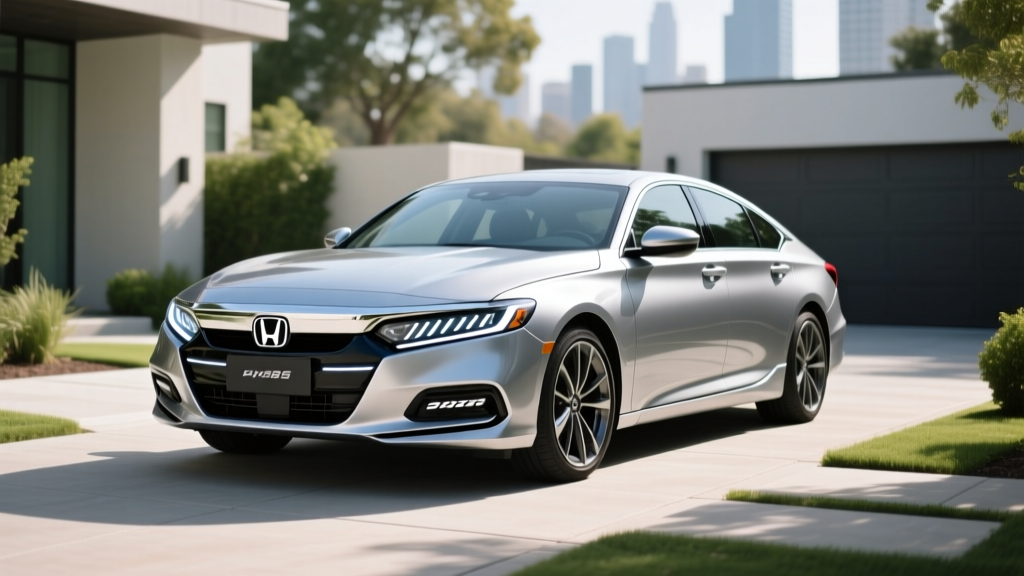
But if you're a stick-shift loyalist hunting for the most engaging, driver-focused hybrid available, the 2026 Honda Accord Hybrid comes closest to delivering that connected feel. Its eCVT is a planetary gearset design (not a belt-driven CVT), meaning it avoids the "rubber-band" drone associated with older CVTs and delivers linear, predictable power delivery that rewards attentive driving.
HEV vs PHEV: Understanding What You're Buying
Conventional Hybrid (HEV)
The Accord Hybrid is a self-charging HEV. It uses regenerative braking and the gasoline engine to charge a small battery (typically 1.3–1.9 kWh). No plug is required or available. You simply drive it like a normal car, and the hybrid system automatically manages the blend of electric and gas power.
Plug-In Hybrid (PHEV)
A PHEV like the Toyota RAV4 Prime or Chrysler Pacifica Hybrid has a larger battery (13–18 kWh) that you plug in to charge, delivering 30–42 miles of electric-only range before the gas engine activates. PHEVs are eligible for the federal §30D tax credit (up to $7,500, with income and sourcing restrictions). Conventional HEVs like the Accord Hybrid are not eligible for the federal EV credit.
2026 Accord Hybrid: Fuel Economy and Real-World MPG
The EPA rates the 2026 Honda Accord Hybrid at 51 MPG city / 44 MPG highway / 48 MPG combined for the Sport and EX-L trims, according to fueleconomy.gov. The Sport Touring trim drops slightly to 46 MPG combined due to larger 19-inch wheels and additional equipment weight.
| Trim | City MPG | Highway MPG | Combined MPG |
|---|---|---|---|
| Sport | 51 | 44 | 48 |
| EX-L | 51 | 44 | 48 |
| Sport-L | 51 | 44 | 48 |
| Sport Touring | 46 | 41 | 44 |
Real-World MPG vs. EPA Sticker
Hybrids often exceed their EPA city rating in stop-and-go traffic, where regenerative braking recharges the battery most effectively. In our experience and owner reports, drivers in urban environments regularly see 52–55 MPG. Highway driving at 75+ MPH tends to land closer to 40–42 MPG, as the electric motor contributes less at sustained high speeds. Cold weather (below 30°F) can reduce fuel economy by 10–15% due to reduced battery efficiency and increased engine runtime for cabin heat.
Powertrain Specs: How the eCVT Actually Works
| Specification | 2026 Accord Hybrid |
|---|---|
| Engine | 2.0L DOHC 4-cylinder (Atkinson cycle) |
| Engine HP / Torque | 146 HP / 134 lb-ft |
| Electric Motor | Two-motor system (drive + generator) |
| Drive Motor Output | 184 HP / 247 lb-ft |
| Combined System HP | 204 HP |
| Transmission | eCVT (planetary gearset, no belt) |
| Drivetrain | Front-wheel drive |
| Hybrid Battery | ~1.3 kWh lithium-ion (self-charging, no plug) |
| 0–60 MPH | ~7.2 seconds |
| Fuel Tank | 12.8 gallons |
| Total Range | ~614 miles (at 48 MPG combined) |
The Accord Hybrid's eCVT is fundamentally different from the belt-and-pulley CVTs found in older Nissan or Subaru models. Honda uses a planetary gearset that locks the engine, generator, and drive motor into fixed mechanical relationships. At low speeds, the car runs primarily on the electric motor. At highway cruising, the engine mechanically connects to the wheels via a lock-up clutch—giving the direct, connected feel that manual-transmission drivers appreciate. There are no "simulated gears" or rubber-band slippage.
Battery Warranty, Lifespan, and Replacement Cost
Honda Hybrid Battery Warranty
Honda covers the Accord Hybrid's IMA (Integrated Motor Assist) battery with a 10-year / 150,000-mile warranty in CARB states (California, New York, Massachusetts, and others that follow California emissions standards), and 8 years / 100,000 miles in all other states. This warranty covers battery capacity loss below a functional threshold—not just total failure.
Hybrid batteries in the Accord are small (~1.3 kWh) and operate within a narrow state-of-charge window, which significantly extends their lifespan compared to full EV or PHEV batteries. Real-world data from previous-generation Accord Hybrids shows most original batteries lasting well beyond 150,000 miles with minimal degradation. Should replacement be needed out of warranty, expect to pay $2,000–$3,500 for a refurbished or new OEM battery pack, including labor at a dealership. Third-party hybrid specialists often offer replacements for $1,500–$2,500.
The Accord Hybrid's reliability record is strong. Honda's hybrid system has fewer moving parts than a conventional automatic transmission—no torque converter, no clutch packs, no traditional gear shifts to wear out. According to owner surveys and long-term testing, the two-motor hybrid system has proven durable with minimal unscheduled maintenance beyond standard fluid changes.
Pricing, Tax Credits, and Total Cost of Ownership
The 2026 Honda Accord Hybrid starts at approximately $33,990 MSRP for the Sport trim and climbs to around $40,485 for the Sport Touring. Here's the critical tax-credit reality:
- Federal §30D EV tax credit: NOT eligible. The Accord Hybrid is a conventional HEV, not a plug-in vehicle. The IRS restricts the §30D credit to battery electric vehicles (BEVs) and plug-in hybrids (PHEVs) with a minimum battery capacity of 7 kWh. The Accord Hybrid's ~1.3 kWh battery does not qualify. See IRS.gov §30D guidelines for current rules.
- State incentives: A handful of states offer modest rebates or HOV-lane access for conventional hybrids, but these programs vary widely and change frequently. Check your state's energy office or DMV for current offerings.
| Cost Factor | Accord Hybrid (48 MPG) | Comparable Gas Sedan (30 MPG) |
|---|---|---|
| MSRP (approx.) | $35,000 | $30,000 |
| Fuel cost (5 yr, 15k mi/yr, $3.50/gal) | $5,469 | $8,750 |
| Fuel savings over gas | +$3,281 over 5 years | |
| Insurance (est. 5 yr) | $7,500 | $7,000 |
| Maintenance (est. 5 yr) | $2,200 | $3,000 |
| Federal tax credit | $0 | $0 |
The Accord Hybrid's fuel savings typically offset its price premium over a gas-only Accord within 3–4 years for average drivers. Maintenance costs are generally lower than gas-only counterparts because regenerative braking reduces brake-pad wear, and the eCVT eliminates transmission-fluid changes associated with conventional automatics.
Driving Engagement: Can a Hybrid Feel Like a Manual?
No hybrid replicates the tactile involvement of a true manual transmission—the clutch modulation, the rev-matched downshifts, the mechanical connection between driver and drivetrain. But the Accord Hybrid addresses the most common enthusiast complaint about hybrids: the disconnect between engine RPM and vehicle speed.
Honda's eCVT includes paddle shifters on Sport trims that simulate stepped gear ratios during acceleration. More importantly, under hard throttle the engine locks into a direct-drive mechanical connection at highway speeds, eliminating the "slipping clutch" sensation. The 247 lb-ft of instant electric torque gives the Accord Hybrid strong low-end punch that makes city driving feel responsive rather than lethargic.
If you're willing to look at PHEVs for a more engaging experience, the Toyota Prius Prime (52 MPG combined, 44 miles electric-only, ~$34,000) offers sharper handling with its revised platform, though it still uses an eCVT. The discontinued Honda Insight previously offered a 6-speed manual in non-hybrid trims, but Honda ended Insight production in 2022.
Hybrid vs PHEV vs Full EV: Which Is Right for You?
Choose the Accord Hybrid (HEV) if:
- You cannot install a home charger (apartment, condo, no garage)
- You want maximum simplicity—no plug, no charging apps, no range planning
- You drive 30+ miles daily and want consistently high MPG without behavioral changes
- You take frequent long road trips where charging infrastructure is uncertain
Choose a PHEV (e.g., Prius Prime, RAV4 Prime) if:
- You can charge at home and your daily commute is under 40 miles
- You want electric-only driving for daily errands with gas backup for road trips
- You want to qualify for the federal §30D tax credit (up to $7,500, subject to income and sourcing rules)
Choose a Full EV (BEV) if:
- You have reliable home Level 2 charging
- You want zero tailpipe emissions and the lowest per-mile fuel cost
- Your daily driving is under 250 miles and you're comfortable with road-trip charging planning
Pros and Cons: 2026 Accord Hybrid
Pros
- 48 MPG combined—best in midsize sedan class
- eCVT planetary gearset avoids CVT drone; direct-drive at highway speed
- 247 lb-ft electric torque for strong city acceleration
- 10-yr/150k-mi battery warranty in CARB states
- No plug required—zero lifestyle change from gas car
- 614+ mile total range per tank
- Spacious interior, strong resale value
Cons
- No manual transmission option (none available in any 2026 hybrid)
- Not eligible for federal §30D tax credit
- FWD only—no AWD option unlike Toyota Camry Hybrid
- Highway MPG drops at sustained 75+ MPH speeds
- Sport Touring trim loses ~4 MPG to larger wheels
- Paddle shifters simulate gears but can't match a true manual
Frequently Asked Questions
Does any hybrid car offer a manual transmission in 2026?
No. As of the 2026 model year, no hybrid (HEV or PHEV) sold in the U.S. market offers a manual transmission. The hybrid system's requirement to seamlessly blend electric motor and gasoline engine power makes an eCVT or planetary gearset necessary. The last mainstream car to pair any form of electrification with a manual was the early-2010s Honda CR-Z mild hybrid, which offered a 6-speed manual but was discontinued in 2016.
How many MPG does the 2026 Accord Hybrid actually get?
The EPA rates it at 51 city / 44 highway / 48 combined for most trims. Real-world city driving often exceeds the EPA estimate (52–55 MPG) thanks to regenerative braking, while sustained highway driving at 75+ MPH typically yields 40–42 MPG. Cold weather reduces fuel economy by roughly 10–15%.
Do I need to plug in the Accord Hybrid?
No. The Accord Hybrid is a conventional HEV (hybrid electric vehicle). It charges its small battery through regenerative braking and the gasoline engine. There is no plug, no charging port, and no electric-only range to manage. You fuel it with gasoline exactly like a conventional car.
Does the Accord Hybrid qualify for a tax credit?
Not the federal §30D clean vehicle credit, which requires a minimum 7 kWh battery and plug-in capability. The Accord Hybrid's ~1.3 kWh battery makes it ineligible. Some states offer minor hybrid incentives, but these vary by jurisdiction and are generally modest ($500–$1,000 where available). Consult your state energy office or a tax professional for specifics.
How long will the Accord Hybrid battery last and what does replacement cost?
Honda warranties the hybrid battery for 10 years/150,000 miles in CARB states and 8 years/100,000 miles elsewhere. Real-world data from prior generations shows most batteries lasting well beyond warranty limits with minimal degradation. Out-of-warranty replacement runs $2,000–$3,500 at a dealership or $1,500–$2,500 through independent hybrid specialists.
Is the Accord Hybrid's eCVT the same as a regular CVT?
No. A conventional CVT uses a steel belt or chain running between variable-diameter pulleys, which creates the "rubber-band" effect where engine RPM disconnects from vehicle speed. Honda's eCVT uses a planetary gearset that mechanically links the engine, generator, and drive motor. At highway speed, a lock-up clutch creates a direct 1:1 mechanical connection between engine and wheels—more akin to a traditional gear than a belt-driven CVT.
Should I buy the Accord Hybrid or the Toyota Camry Hybrid instead?
The Camry Hybrid offers AWD (the Accord is FWD only) and slightly lower pricing, with an EPA rating of 52 MPG combined. The Accord Hybrid counters with a more spacious rear seat, larger trunk, more refined interior materials, and the direct-drive eCVT behavior that feels more natural to enthusiast drivers. Both carry strong reliability records and similar battery warranties. Test-drive both—the steering feel and cabin ergonomics usually decide it.