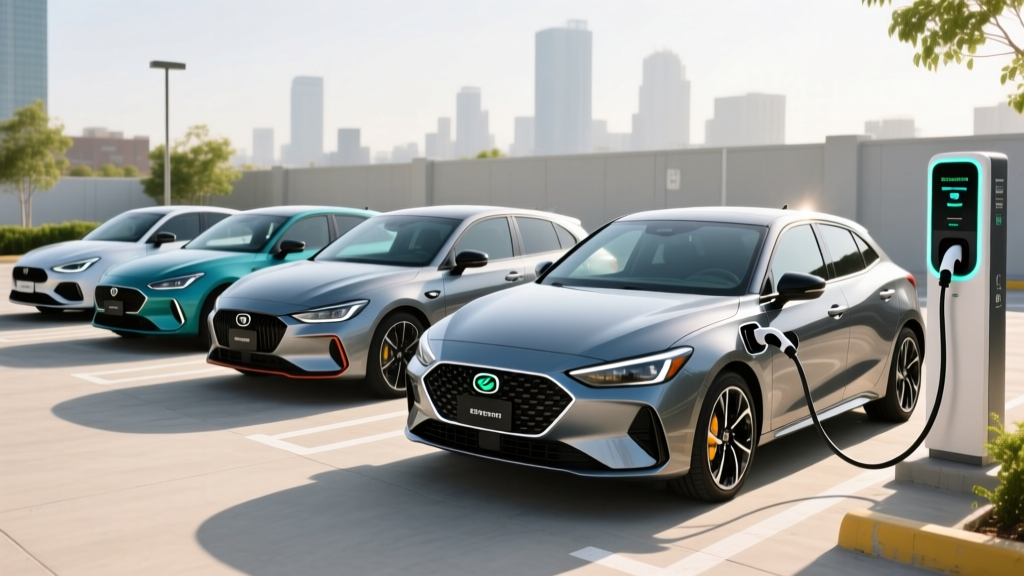
If you want maximum fuel efficiency without plugging in — or the flexibility of electric-only commuting with a gas-engine safety net — hatchback hybrids deliver some of the best efficiency numbers in the auto market. The hatchback body style pairs a compact footprint with surprising cargo versatility, and when combined with a hybrid or plug-in hybrid (PHEV) powertrain, the result is a daily driver that sips fuel and shrugs off range anxiety.
This guide covers the top hatchback hybrids available in the 2026 model year, breaking down EPA fuel economy, real-world MPG, powertrain specs, pricing, tax credit eligibility, and battery longevity. Whether you're cross-shopping a conventional hybrid (HEV) against a plug-in hybrid (PHEV) or weighing both against a full battery-electric vehicle (BEV), you'll find the exact numbers you need here.
HEV vs PHEV: What's the Difference?
Before diving into specific models, it's critical to understand the two types of hybridization available in hatchback form:
Conventional Hybrid (HEV)
- How it works: A small battery (typically 1–2 kWh) is charged by regenerative braking and the gas engine. You never plug it in.
- Electric-only driving: Very limited — usually under 1 mile at low speeds.
- Best for: Drivers without home charging access who want maximum MPG with zero behavior change.
- Tax credit: Generally does NOT qualify for the federal §30D clean vehicle credit.
Plug-In Hybrid (PHEV)
- How it works: A larger battery (10–16 kWh) that you plug in to charge, giving 25–45 miles of electric-only range before the gas engine kicks in.
- Electric-only driving: Genuine zero-emission commuting for most daily trips.
- Best for: Drivers with home/work charging who commute under 40 miles but want gas-engine flexibility for road trips.
- Tax credit: May qualify for a partial or full §30D federal credit (up to $7,500), depending on battery sourcing, MSRP caps, and buyer income limits.
Top 2026 Hatchback Hybrids: Side-by-Side Specs
Here are the key hatchback hybrids on the market for 2026, with manufacturer and EPA (fueleconomy.gov) data:
| Model | Type | EPA Combined MPG / MPGe | EV Range (PHEV) | Battery (kWh) | Combined HP | 0–60 mph | Starting MSRP |
|---|---|---|---|---|---|---|---|
| 2026 Toyota Prius (HEV) | HEV | 57 city / 56 hwy / 57 combined | N/A | 1.0 (Li-ion) | 196 hp | 7.0 sec | $29,445 |
| 2026 Toyota Prius Prime (PHEV) | PHEV | 52 combined (gas) / 127 MPGe | 44 miles | 13.6 usable | 220 hp | 6.6 sec | $34,595 |
| 2026 Hyundai Ioniq Hybrid | HEV | 54 city / 56 hwy / 55 combined | N/A | 1.6 (Li-ion) | 139 hp | 8.8 sec | $28,400 |
| 2026 Toyota Prius AWD-e (HEV) | HEV | 53 city / 54 hwy / 54 combined | N/A | 1.0 (Li-ion) | 196 hp | 6.7 sec | $31,145 |
Note: The Hyundai Ioniq PHEV was discontinued after the 2022 model year. Hyundai's current plug-in hatchback alternative is the Ioniq 5 (a full BEV). The Prius Prime remains the dominant PHEV hatchback for 2026.
Fuel Economy: EPA Numbers vs Real-World MPG
Hybrid hatchbacks are among the few vehicles where real-world fuel economy often meets or exceeds EPA estimates — especially in city driving, where regenerative braking recaptures energy at every stop.
| Model | EPA City | EPA Highway | EPA Combined | Real-World Expectation |
|---|---|---|---|---|
| Prius HEV | 57 | 56 | 57 | 55–62 MPG (city favors hybrid); 50–54 MPG sustained highway at 75+ mph |
| Prius Prime (gas mode) | 53 | 51 | 52 | 48–56 MPG depending on charge-depletion frequency |
| Ioniq Hybrid | 54 | 56 | 55 | 52–58 MPG; excellent highway efficiency due to low drag coefficient (0.24 Cd) |
| Prius AWD-e | 53 | 54 | 54 | 50–56 MPG; negligible efficiency penalty for AWD in most conditions |
2026 Toyota Prius: The Benchmark Hatchback Hybrid
The fifth-generation Prius (redesigned for 2023, carried forward to 2026) remains the hatchback hybrid to beat. Toyota's 2.0-liter Dynamic Force four-cylinder paired with a permanent-magnet motor delivers 196 combined horsepower — a dramatic performance upgrade from earlier generations. The LE trim achieves an EPA-estimated 57 MPG combined, while the XLE and Limited trims (heavier, larger wheels) drop to approximately 52 MPG combined.
Powertrain details:
- Engine: 2.0L inline-4 Atkinson-cycle, 150 hp / 139 lb-ft
- Front motor: 83 hp / 156 lb-ft
- Combined system output: 196 hp
- Transmission: eCVT (planetary gearset, not a belt-driven CVT)
- Cargo: 23.8 cu ft behind rear seats, 50.7 cu ft with seats folded
Trim pricing (2026 MSRP):
- LE: $29,445
- XLE: $32,895
- Limited: $36,790
2026 Toyota Prius Prime: The Plug-In Hatchback Hybrid
For drivers with charging access, the Prius Prime offers 44 miles of EPA-rated electric-only range — enough to cover most commutes without burning a drop of gasoline. Once the battery depletes, the 2.0L engine and motor seamlessly continue as a conventional hybrid, delivering 52 MPG combined in charge-sustaining mode.
PHEV-specific specs:
- Battery: 13.6 kWh usable lithium-ion
- Combined system output: 220 hp (larger motor than HEV)
- Level 1 charging (120V): ~11 hours from empty
- Level 2 charging (240V, 3.3 kW onboard): ~4 hours from empty
- DC fast charging: Not supported — the Prius Prime uses a J1772 connector for AC charging only
- Total range (EV + gas): approximately 440 miles
- Cargo: 20.3 cu ft (reduced vs HEV due to larger battery)
Trim pricing (2026 MSRP):
- SE: $34,595
- XSE: $37,795
- XSE Premium: $40,665
Tax Credit Eligibility for Hatchback Hybrids
Federal tax credit rules under IRS §30D distinguish sharply between HEVs and PHEVs:
- Conventional hybrids (Prius HEV, Ioniq Hybrid): Do NOT qualify for the §30D new clean vehicle credit. These vehicles lack the minimum battery capacity and plug-in capability required by statute.
- Prius Prime (PHEV): May qualify for up to $7,500, split into two components:
- $3,750 — critical minerals requirement (battery minerals sourced from US or FTA partners)
- $3,750 — battery component manufacturing requirement (assembled in North America)
- MSRP cap: The Prius Prime (a sedan/hatchback, not an SUV/truck) must have an MSRP at or below $55,000 to qualify. All current trims clear this threshold.
- Income cap: Buyer AGI must not exceed $150,000 (single), $225,000 (head of household), or $300,000 (joint filing).
- Point-of-sale transfer: As of 2024, eligible buyers can transfer the credit to the dealer at purchase, reducing the out-of-pocket price immediately rather than waiting for tax filing.
Critical sourcing caveat: Battery component and critical mineral sourcing requirements tighten annually. Verify current eligibility on the IRS Clean Vehicle Credit page or with your tax professional before purchase, as the qualifying credit amount for the Prius Prime may be $3,750 or $7,500 depending on the latest sourcing determinations.
Battery Warranty, Reliability, and Replacement Costs
Hybrid Battery Warranty Coverage (2026 Models)
- Toyota (Prius & Prius Prime): 10 years / 150,000 miles — hybrid battery coverage (transferable to subsequent owners). This applies in all 50 states.
- Hyundai (Ioniq Hybrid): 10 years / 100,000 miles — hybrid/EV battery. In CARB states, coverage extends to 10 years / 150,000 miles.
Warranty trigger: Coverage applies if the battery drops below approximately 70% of original capacity (varies by manufacturer diagnostic threshold).
Real-world reliability: Toyota's hybrid synergy drive system has an exceptional longevity track record. Prius taxis and fleet vehicles routinely exceed 200,000 miles on the original hybrid battery. The lithium-ion packs in the current-generation Prius are smaller and less stressed than those in full BEVs, contributing to slower degradation.
Out-of-warranty replacement cost:
- Toyota Prius HEV hybrid battery: $2,500–$4,000 (refurbished/aftermarket options available from $1,500)
- Toyota Prius Prime PHEV battery: $5,000–$7,500 (larger pack, fewer aftermarket options currently)
- Hyundai Ioniq Hybrid battery: $3,000–$5,000
For context, these batteries rarely fail within the warranty period. According to NHTSA complaint databases, premature hybrid battery failure in post-2020 Toyota models is exceptionally rare.
Hybrid vs PHEV vs Full EV: Which Hatchback Is Right for You?
Choose a Conventional Hybrid (HEV) If:
- You rent or live in an apartment without charging access
- Your daily driving exceeds 50+ miles with no predictable charging opportunity
- You want the lowest purchase price and simplest ownership experience
- You don't want to think about plugging in — ever
Choose a Plug-In Hybrid (PHEV) If:
- You have Level 1 or Level 2 charging at home or work
- Your daily commute is under 40 miles round-trip (covering most of it on electricity)
- You take occasional road trips where charging infrastructure is sparse
- You want to reduce gas consumption 60–80% without full EV commitment
Choose a Full EV (BEV) If:
- You have reliable home Level 2 charging
- Your daily driving is under 200 miles and you're comfortable planning DC fast-charge stops for road trips
- You want zero tailpipe emissions and minimal maintenance (no oil changes, no engine)
- You want to maximize fuel cost savings (electricity at $0.12/kWh ≈ $1.20/gallon equivalent)
Pros and Cons: Hatchback Hybrids at a Glance
Pros
- Best-in-class fuel economy: 52–57 MPG combined from EPA
- No range anxiety — gas stations everywhere, 400+ mile total range
- Lower purchase price than comparable BEVs ($28k–$35k vs $40k+)
- Strong reliability history, especially Toyota's hybrid system
- Hatchback cargo versatility: 20–24 cu ft, expandable to 50+ cu ft
- Minimal behavior change required — just drive and refuel normally
Cons
- HEVs still burn gasoline — no zero-emission driving mode
- Prius Prime's 3.3 kW onboard charger means slow Level 2 top-ups (~4 hrs)
- No DC fast charging on any current hatchback PHEV
- Cargo space reduced in PHEV trims (larger battery intrudes)
- Highway MPG advantage over efficient gas cars narrows at 80+ mph
- HEVs do not qualify for the federal §30D tax credit
Frequently Asked Questions
How many MPG does the 2026 Toyota Prius hybrid get?
The EPA rates the 2026 Prius LE at 57 city / 56 highway / 57 combined MPG. The XLE and Limited trims achieve approximately 52 combined. In real-world city driving with frequent stops, many owners report 58–62 MPG thanks to regenerative braking. Sustained highway driving above 75 mph typically yields 50–54 MPG.
How far can the Prius Prime go on electric only?
The EPA rates the 2026 Prius Prime at 44 miles of electric-only range. In warm weather at moderate speeds, you may see 46–48 miles. In cold weather (below freezing) with the cabin heater running, expect 32–38 miles. Once depleted, the car operates as a standard hybrid at 52 MPG combined.
Do I need to plug in a conventional hybrid like the Prius?
No. Conventional hybrids (HEVs) charge their small battery entirely through regenerative braking and the gas engine. You never plug them in. Only plug-in hybrids (PHEVs) like the Prius Prime require or benefit from external charging.
Is the Prius hybrid battery reliable, and what does replacement cost?
Toyota's hybrid batteries have a strong reliability record — many exceed 200,000 miles without replacement. The 2026 Prius carries a 10-year / 150,000-mile hybrid battery warranty. Out-of-warranty replacement costs $2,500–$4,000 for the HEV and $5,000–$7,500 for the Prius Prime, though refurbished options are available at lower cost.
Does the Prius or Prius Prime qualify for a federal tax credit?
The conventional Prius HEV does not qualify for the §30D federal clean vehicle credit. The Prius Prime (PHEV) may qualify for up to $7,500, depending on battery component and critical mineral sourcing compliance, buyer income limits ($150k single / $300k joint), and the vehicle's MSRP (must be ≤$55,000 for non-SUVs). Verify current eligibility at irs.gov before purchasing.
Can the Prius Prime DC fast charge?
No. The 2026 Prius Prime supports only AC charging via a J1772 connector: Level 1 (120V, ~11 hours) or Level 2 (240V at 3.3 kW, ~4 hours). No hatchback PHEV currently on the market offers DC fast charging. This is a notable limitation if you hoped to top up quickly on a road trip — but given the gas engine backup, it's rarely a practical concern.
Should I buy a hatchback hybrid or a full EV?
If you have home charging and your daily driving is under 200 miles, a full BEV like the Hyundai Ioniq 5 or Chevrolet Equinox EV offers lower operating costs and zero tailpipe emissions. If you lack charging access, frequently drive 300+ miles between stops, or simply want the lowest upfront cost, a hatchback hybrid like the Prius delivers outstanding efficiency without infrastructure dependence.