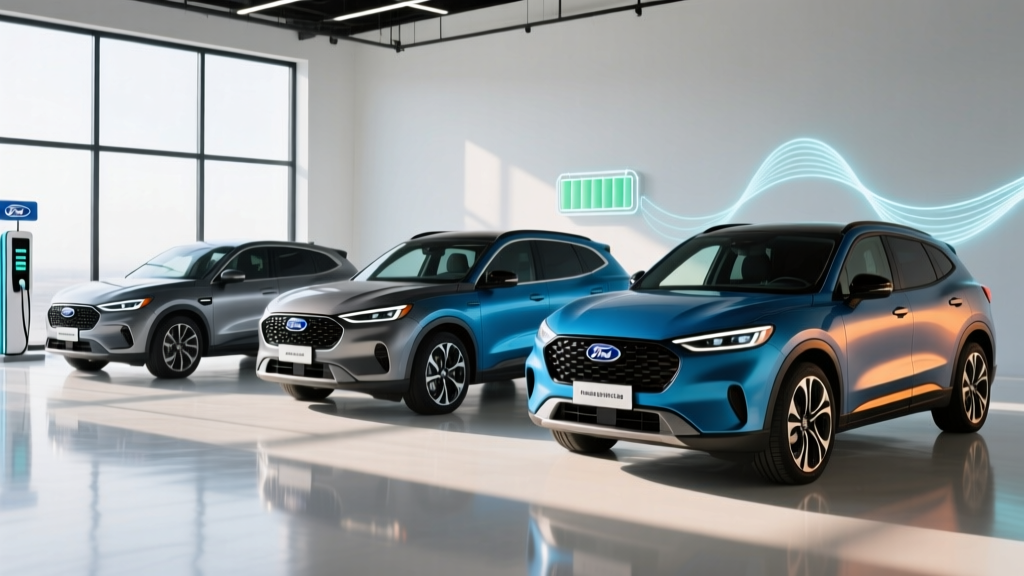
If you're searching for Ford hybrid deals in 2026, you're not alone. Ford's hybrid lineup — anchored by the compact Maverick pickup and the Escape SUV (sold as both a conventional hybrid and a plug-in hybrid) — represents some of the most practical electrified vehicles on the market. Unlike full battery-electric vehicles (BEVs), these models don't require home charging infrastructure or lifestyle changes. They simply use less fuel.
But Ford's hybrid offerings differ significantly from one another. The Maverick and Escape Hybrid are conventional hybrids (HEVs) — they charge their own small batteries through regenerative braking and the gasoline engine. You never plug them in. The Escape Plug-In Hybrid (PHEV), by contrast, has a larger battery you can plug in, giving you roughly 37 miles of electric-only driving before the gas engine kicks in. Understanding this distinction is critical before you walk into a dealership.
Below, we break down every current Ford hybrid model with exact EPA MPG figures, pricing, powertrain specs, battery warranty details, tax-credit eligibility, and a practical framework for deciding which one — if any — fits your driving life.
Ford's 2026 Hybrid Lineup at a Glance
Ford currently sells three core hybrid nameplates in the US market. Here's how they stack up on paper:
| Spec | 2026 Ford Maverick Hybrid | 2026 Ford Escape Hybrid | 2026 Ford Escape PHEV |
|---|---|---|---|
| Type | HEV (conventional) | HEV (conventional) | PHEV (plug-in) |
| EPA Combined MPG / MPGe | 37 MPG (FWD) | 39 MPG (FWD) | 105 MPGe (combined) / 40 MPG (gas-only) |
| EPA City MPG | 42 MPG | 42 MPG | N/A (electric-first) |
| EPA Highway MPG | 33 MPG | 36 MPG | N/A (gas: 37 MPG hwy) |
| Electric-Only Range | N/A | N/A | 37 miles |
| Total Range | ~500+ miles | ~520+ miles | ~520 miles (elec + gas) |
| Combined Horsepower | 191 hp | 198 hp (FWD) / 210 hp (AWD) | 210 hp |
| Engine | 2.5L I4 Atkinson-cycle | 2.5L I4 Atkinson-cycle | 2.5L I4 Atkinson-cycle |
| Battery Capacity | ~1.1 kWh (NiMH) | ~1.1 kWh (NiMH) | 14.4 kWh (NMC lithium-ion) |
| Plug-In Charging | No | No | Yes — Level 1/2 (no DCFC) |
| Level 2 Charge Time (0–100%) | N/A | N/A | ~3.5 hours (240V, 3.6 kW) |
| Starting MSRP | ~$27,995 | ~$33,995 | ~$40,495 |
| Federal Tax Credit (§30D) | Not eligible | Not eligible | Up to $3,750* |
*Tax credit amounts and eligibility depend on battery sourcing, buyer income, and MSRP caps under current IRS §30D rules. Always verify with a tax professional and the IRS clean vehicle credits page.
HEV vs. PHEV: Which Ford Hybrid Is Actually Right for You?
This is the single most important decision in your Ford hybrid search. Conventional hybrids and plug-in hybrids solve different problems.
Conventional Hybrid (HEV) — Maverick Hybrid & Escape Hybrid
- How it works: A small battery (about 1.1 kWh) is charged entirely by the gas engine and regenerative braking. You never plug it in.
- Best for: Drivers who want better fuel economy with zero behavioral change — no charging cables, no apps, no route planning.
- Real-world MPG: Hybrids typically exceed their EPA city estimates in stop-and-go traffic (regen braking shines here) but may fall 2–4 MPG short on sustained highway driving. Expect ~38–44 MPG city and ~30–34 MPG highway in a Maverick Hybrid in mixed real-world use, per fueleconomy.gov owner reports.
- Trade-off: You can't drive on electricity alone. Every mile still burns some gasoline.
Plug-In Hybrid (PHEV) — Escape PHEV
- How it works: A larger 14.4 kWh lithium-ion battery can be charged via a wall outlet or Level 2 home charger, giving you 37 miles of pure electric driving. Once that's depleted, it operates as a conventional hybrid.
- Best for: Drivers with a short commute (under 35 miles round-trip) and access to a standard 120V outlet or 240V charger at home. Many PHEV owners go weeks without visiting a gas station.
- Real-world electric range: Expect 32–37 miles on a full charge in moderate weather. Cold temperatures (below 30°F) and highway speeds above 65 mph can reduce electric-only range by 15–25%.
- Trade-off: Higher purchase price. You need somewhere to plug in, even if it's just a standard 120V garage outlet (Level 1 charging takes about 10–11 hours for a full charge).
Real-World Fuel Economy: What Owners Actually Report
EPA sticker numbers are a starting point, not a guarantee. Here's what real-world driving looks like across Ford's hybrid lineup:
| Model | EPA Combined | Real-World City (typical) | Real-World Highway (typical) | Cold-Weather Impact |
|---|---|---|---|---|
| Maverick Hybrid (FWD) | 37 MPG | 40–44 MPG | 30–33 MPG | –3 to –5 MPG |
| Escape Hybrid (FWD) | 39 MPG | 41–45 MPG | 33–36 MPG | –3 to –5 MPG |
| Escape PHEV (gas-only mode) | 40 MPG | 38–42 MPG | 35–38 MPG | –2 to –4 MPG |
Why hybrids often beat EPA in the city: Regenerative braking recovers energy during frequent stops — exactly the scenario the EPA city cycle simulates, but real stoplights and traffic jams often generate more regen opportunities than the test. Highway driving, by contrast, offers minimal regen and higher aerodynamic drag, which is why MPG drops.
Cold-weather note: Hybrid fuel economy drops in winter because the engine runs more often to provide cabin heat (there's no electric resistance heater large enough to warm the cabin alone in most HEVs). The Escape PHEV can use battery energy for heat in EV mode, but this eats into your 37-mile electric range.
Pricing, Incentives, and Finding the Best Ford Hybrid Deals
Ford hybrid pricing in 2026 spans from under $28,000 to over $45,000 depending on model and trim. Here's what to know about costs and incentives:
Current MSRP by Model and Key Trims
- 2026 Maverick Hybrid XL: ~$27,995 — the entry point for Ford hybrids and one of the cheapest hybrid vehicles sold in the US
- 2026 Maverick Hybrid Lariat: ~$32,495
- 2026 Escape Hybrid Active: ~$33,995
- 2026 Escape Hybrid Premium: ~$37,495
- 2026 Escape PHEV: ~$40,495 (single well-equipped trim)
Federal Tax Credit Eligibility (§30D)
Under current IRS §30D rules, only plug-in hybrids and full EVs qualify for the federal clean vehicle credit. Conventional hybrids (HEVs) like the Maverick Hybrid and Escape Hybrid do not qualify — they have no plug-in capability and their batteries are too small to meet the statutory minimum.
The Escape PHEV may qualify for a partial credit — historically up to $3,750 — depending on whether its battery components and critical minerals meet the domestic-sourcing thresholds that tighten each year. Key eligibility requirements include:
- Buyer adjusted gross income must not exceed $150,000 (single) / $300,000 (joint)
- Vehicle MSRP must not exceed $80,000 (SUVs/pickups) — the Escape PHEV clears this easily
- Battery critical minerals and components must meet phased-in sourcing percentages
- Credit can be transferred to the dealer at point of sale for an immediate price reduction
Bottom line: Do not assume you'll receive the full credit. Check the fueleconomy.gov tax credit calculator for the specific model year and trim, and consult a tax professional before relying on the credit in your purchase math.
Dealer Deals and Negotiation Tips
The Maverick Hybrid remains high-demand and often sells at or near MSRP with limited dealer discounting. The Escape Hybrid and especially the Escape PHEV tend to have more inventory flexibility — it's not uncommon to find $1,000–$2,500 in dealer discounts or manufacturer incentive cash on the Escape lineup, particularly late in a model year. Always check Ford's current official incentives page and compare dealer quotes in writing.
Battery Warranty, Lifespan, and Replacement Costs
Hybrid battery longevity is the number-one concern among first-time hybrid buyers. Here's the data:
Ford Hybrid Battery Warranty
All 2026 Ford hybrid and PHEV models come with a hybrid battery warranty of 8 years or 100,000 miles (whichever comes first). In California and states that follow CARB emissions rules, this extends to 10 years or 150,000 miles. This warranty covers battery capacity loss below a defined threshold (typically around 60–70% of original capacity) and any manufacturing defects.
| Battery Spec | Maverick / Escape HEV | Escape PHEV |
|---|---|---|
| Chemistry | NiMH (nickel-metal hydride) | NMC (lithium-ion) |
| Capacity | ~1.1 kWh | 14.4 kWh |
| Warranty (Federal) | 8 yr / 100,000 mi | 8 yr / 100,000 mi |
| Warranty (CARB states) | 10 yr / 150,000 mi | 10 yr / 150,000 mi |
| Estimated Replacement Cost (out of warranty) | $2,000–$3,500 | $6,000–$9,000 |
| Typical Lifespan Before Notable Degradation | 150,000–200,000+ miles | 120,000–180,000 miles |
Context on replacement costs: The HEV battery in the Maverick and Escape Hybrid is small and relatively inexpensive to replace — comparable to a major engine repair on a gas car. The Escape PHEV's 14.4 kWh lithium-ion pack is costlier, but it's also engineered with a significant buffer (you can never fully drain or fully charge it to the cell limits), which protects long-term health. Most hybrid batteries outlast the vehicle's ownership cycle.
Reliability track record: Ford's 2.5L Atkinson-cycle hybrid powertrain (shared across all three models) has been in production since the 2020 model year and has shown strong reliability in fleet and consumer data. The eCVT transmission — which has no traditional gears or belts — is one of the most durable drivetrain components in any vehicle, per NHTSA complaint databases, which show minimal hybrid-specific powertrain complaints for these models.
Hybrid vs. PHEV vs. Full EV: A Decision Framework
The right choice depends on your specific driving patterns, home setup, and budget. Use this framework:
Choose a Ford HEV (Maverick Hybrid or Escape Hybrid) if:
- You don't have access to home charging (apartment, street parking, no garage outlet)
- You want better fuel economy with zero lifestyle changes
- Your budget is under $35,000
- You drive a mix of city and highway and want 37–42 MPG without thinking about it
- You want a pickup truck (Maverick) without the range anxiety of an EV
Choose the Escape PHEV if:
- Your daily round-trip commute is under 35 miles and you can charge at home (even a 120V outlet works overnight)
- You want to drive mostly on electricity during the week but take gas-powered road trips on weekends
- You want to reduce fuel consumption by 60–80% without range anxiety
- You're eligible for the partial federal tax credit, which narrows the price gap with the HEV
Choose a Full EV (e.g., Ford Mustang Mach-E or F-150 Lightning) if:
- You have reliable Level 2 home charging
- Your daily driving is under 250 miles and you can plan around DC fast charging on road trips
- You want the lowest per-mile fuel cost and minimal maintenance
- You qualify for the full $7,500 federal tax credit on a qualifying BEV
Pros and Cons of Ford's Hybrid Lineup
Pros
- Maverick Hybrid starts under $28K — cheapest hybrid truck available
- All models use a proven 2.5L Atkinson-cycle powertrain with strong reliability data
- City MPG often exceeds EPA estimates in real-world stop-and-go driving
- 8-year/100,000-mile battery warranty (10 years in CARB states)
- No charging infrastructure required for HEV models
- Escape PHEV's 37-mile EV range covers most daily commutes gas-free
Cons
- Maverick Hybrid often sells at MSRP with long wait times and limited dealer discounts
- Escape PHEV has no DC fast charging — Level 2 only at 3.6 kW
- HEV models don't qualify for any federal tax credit
- AWD availability reduces MPG by 2–4 MPG combined across the lineup
- Escape PHEV's $40,495 starting price is steep for a compact SUV without the full $7,500 credit
- Highway fuel economy is merely average — these aren't highway-mileage champions
Frequently Asked Questions
How many MPG does the Ford Maverick Hybrid get?
The 2026 Ford Maverick Hybrid (FWD) is EPA-rated at 42 MPG city, 33 MPG highway, and 37 MPG combined. In real-world city driving, many owners report 40–44 MPG thanks to regenerative braking. Highway MPG typically falls to 30–33 MPG at sustained speeds above 70 mph. Adding AWD (available on select trims) reduces combined MPG to approximately 34.
How far can the Escape PHEV go on electric only?
The 2026 Ford Escape PHEV has an EPA-rated electric-only range of 37 miles on a full charge of its 14.4 kWh battery. In real-world conditions, expect 32–37 miles in moderate temperatures. Cold weather (below 30°F) and sustained highway speeds can reduce this to 25–30 miles. Once the battery is depleted, the Escape PHEV operates as a conventional hybrid at approximately 40 MPG combined.
Does the Ford Maverick Hybrid qualify for a tax credit?
No. The Maverick Hybrid is a conventional hybrid (HEV) — it cannot be plugged in and its battery is too small to meet §30D requirements. Only plug-in hybrids and full battery-electric vehicles qualify for the federal clean vehicle credit. Some states or utilities may offer small rebates for hybrid purchases, but there is no federal tax credit for the Maverick Hybrid.
Is the Ford hybrid powertrain reliable?
Ford's 2.5L Atkinson-cycle hybrid system has been in production since 2020 and has demonstrated strong reliability. The eCVT transmission has no traditional wear components (no clutch packs, torque converters, or belts), making it one of the most durable parts of the drivetrain. The hybrid battery carries an 8-year/100,000-mile warranty (10 years/150,000 miles in CARB states). Out-of-warranty replacement costs range from roughly $2,000–$3,500 for the HEV battery to $6,000–$9,000 for the PHEV pack.
Can I charge the Escape PHEV on a regular outlet?
Yes. The Escape PHEV can charge on a standard 120V household outlet (Level 1), but it takes approximately 10–11 hours for a full charge. On a 240V Level 2 charger (3.6 kW), a full charge takes about 3.5 hours. The Escape PHEV does not support DC fast charging — this is common among PHEVs, as their batteries are small enough that Level 2 charging is adequate for overnight replenishment.
Which Ford hybrid is the best deal overall?
For pure value, the Maverick Hybrid XL at ~$27,995 is the standout — it's the most affordable hybrid truck on the market and delivers 37 MPG combined in a practical, right-sized pickup. For maximum fuel savings with home charging access, the Escape PHEV can eliminate most gasoline use during the week while retaining road-trip flexibility, though its higher price and partial tax credit make the math tighter. The Escape Hybrid sits in between as a practical, no-plug-needed family SUV with strong city MPG.