Why the RAV4 Hybrid Still Dominates the Compact SUV Market
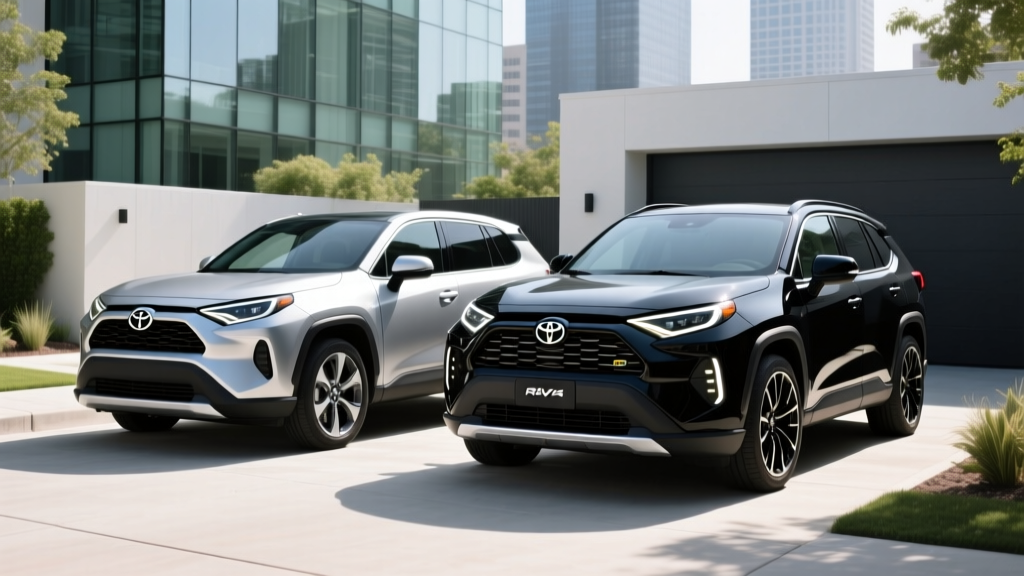
If you've been searching for deals on Toyota RAV4 Hybrid models, you're not alone. The RAV4 Hybrid remains one of the best-selling electrified vehicles in the United States, and for good reason: it delivers exceptional fuel economy without requiring any change in driving habits. For 2026, Toyota continues to offer the RAV4 in two electrified flavors — the conventional hybrid (HEV) and the plug-in hybrid variant badged as the RAV4 Prime (PHEV). Understanding the difference between these two powertrains is essential before you negotiate a deal.
HEV vs PHEV: What's the Difference?
RAV4 Hybrid (HEV): Uses a small battery charged entirely through regenerative braking and the gasoline engine. You never plug it in. It operates as a seamless blend of electric motor and gas engine, delivering superior MPG compared to a gas-only RAV4.
RAV4 Prime (PHEV): Carries a much larger 18.1 kWh battery that you can plug in to charge. It offers a genuine electric-only driving range before the gas engine kicks in, functioning as an EV for daily commutes and a hybrid for longer trips.
2026 RAV4 Hybrid Pricing and Where to Find Deals
The 2026 Toyota RAV4 Hybrid starts at an MSRP of approximately $33,550 for the LE trim (including destination charge) and climbs to roughly $42,400 for the fully loaded Woodland Edition. The RAV4 Prime PHEV starts significantly higher at approximately $44,900 (SE trim) and reaches about $49,500 for the XSE Premium.
| Model / Trim | MSRP (approx.) | Drivetrain | EPA Combined MPG / MPGe |
|---|---|---|---|
| RAV4 Hybrid LE | $33,550 | AWD (e-AWD) | 39 MPG |
| RAV4 Hybrid XLE | $35,050 | AWD (e-AWD) | 39 MPG |
| RAV4 Hybrid Limited | $40,250 | AWD (e-AWD) | 39 MPG |
| RAV4 Prime SE | $44,900 | AWD (e-AWD) | 94 MPGe / 38 MPG (gas) |
| RAV4 Prime XSE Premium | $49,500 | AWD (e-AWD) | 94 MPGe / 38 MPG (gas) |
Where to Actually Find Deals
Toyota's hybrid lineup sells briskly, so steep discounts are uncommon. However, here's where deals on Toyota RAV4 Hybrid models surface:
- Year-end and model-year changeover: Dealers clearing 2026 inventory for 2027 models (typically October–December) may offer $1,000–$2,500 in dealer discounts or Toyota cash-back incentives.
- Toyota Financial Services specials: Check Toyota's national offers page for low-APR financing (sometimes 2.9%–4.9% for well-qualified buyers) or lease deals, particularly on mid-tier trims like the XLE and XLE Premium.
- Regional incentives: Toyota frequently runs region-specific bonus cash — sometimes $500–$1,500 — especially in competitive markets like California, Texas, and the Northeast.
- Certified Pre-Owned (CPO): A 1–2 year old RAV4 Hybrid CPO retains its remaining hybrid battery warranty and can save $4,000–$7,000 off new-vehicle MSRP while still offering peace of mind.
Fuel Economy: EPA Ratings and Real-World MPG
| Model | City MPG | Highway MPG | Combined MPG | Real-World Expectation |
|---|---|---|---|---|
| RAV4 Hybrid (AWD) | 41 | 38 | 39 | 38–44 MPG (city-biased driving often exceeds EPA) |
| RAV4 Prime (charge-sustaining) | 40 | 36 | 38 | 36–42 MPG after battery depleted |
| RAV4 Prime (electric mode) | 94 MPGe combined (electric + gas equivalent) | ~2.0–2.4 kWh/mile in EV mode | ||
According to fueleconomy.gov, the RAV4 Hybrid's 41 MPG city rating is notably higher than its highway figure — a hallmark of Toyota's hybrid synergy drive system, which relies heavily on electric-motor propulsion at lower speeds and in stop-and-go traffic. Many owners report exceeding the EPA combined rating during predominantly city driving, with real-world averages in the 42–44 MPG range on urban commutes.
Highway-heavy road trips will see figures closer to 35–37 MPG, especially at speeds above 70 mph or in cold weather where engine runtime increases for cabin heating. The RAV4 Prime, when its battery is depleted, operates as a slightly heavier conventional hybrid and returns about 36–38 MPG combined — still excellent for a 4,200+ lb SUV.
RAV4 Prime: Electric-Only Range, Battery, and Charging
The RAV4 Prime's headline feature is its 42 miles of EPA-rated electric-only range, powered by an 18.1 kWh lithium-ion battery pack (approximately 14.9 kWh usable to preserve longevity via a buffer). That range covers the daily round-trip commute for a large majority of American drivers, meaning many Prime owners go weeks without visiting a gas station.
RAV4 Prime Electric Range & Total Range
Electric-only range: 42 miles (EPA)
Total combined range: ~600 miles (42 mi electric + ~560 mi on 14.5-gallon tank at 38 MPG)
Real-world EV range caveat: Expect 35–40 miles in cold weather (below 40°F) or sustained highway speeds above 65 mph. In mild conditions with city driving, some owners report 44–46 miles before the engine engages.
Charging the RAV4 Prime
| Charging Method | Power | 0–Full Time | Connector |
|---|---|---|---|
| Level 1 (120V household outlet) | ~1.4 kW | ~12 hours | J1772 |
| Level 2 (240V, SE trim / 3.3 kW onboard) | 3.3 kW | ~5.5 hours | J1772 |
| Level 2 (240V, XSE trim / 6.6 kW onboard) | 6.6 kW | ~2.5 hours | J1772 |
| DC Fast Charging | Not supported | N/A | N/A |
Important note: The RAV4 Prime does not support DC fast charging. This is a deliberate engineering choice — the battery is small enough that overnight Level 2 charging is practical, and adding DC fast-charge hardware would add cost, weight, and complexity. For a PHEV with a 42-mile electric range, Level 2 home charging is the intended use case.
If you opt for the XSE trim, the upgraded 6.6 kW onboard charger is a significant advantage — cutting charge time roughly in half compared to the SE's 3.3 kW unit. For buyers who can install a 240V Level 2 circuit at home, this is a trim-level upgrade worth prioritizing.
Powertrain Performance: Horsepower and Drivetrain
Both RAV4 electrified variants use Toyota's proven hybrid synergy drive, but with different output levels.
| Specification | RAV4 Hybrid (HEV) | RAV4 Prime (PHEV) |
|---|---|---|
| Engine | 2.5L 4-cylinder Atkinson-cycle | 2.5L 4-cylinder Atkinson-cycle |
| Combined Net Horsepower | 219 hp | 302 hp |
| Front Motor | 88 kW (118 hp) | 134 kW (180 hp) |
| Rear Motor (e-AWD) | 40 kW (54 hp) | 40 kW (54 hp) |
| 0–60 mph | ~7.4 seconds | ~5.7 seconds |
| Drivetrain | Electronic AWD (e-AWD) | Electronic AWD (e-AWD) |
| Towing Capacity | 1,750 lbs | 2,500 lbs |
The RAV4 Prime's 302 combined horsepower makes it the quickest RAV4 Toyota sells — quicker, in fact, than many sport-compact cars. That performance comes with a practical bonus: the 2,500-lb towing capacity (vs. 1,750 lbs on the standard hybrid) is enough for a small utility trailer or a pair of dirt bikes.
Tax Credits and Incentives: What You Can Actually Claim
Federal Tax Credit Eligibility (IRS §30D)
RAV4 Hybrid (HEV): Does not qualify for the federal §30D clean vehicle credit. Conventional hybrids are not eligible — only plug-in vehicles with sufficient battery capacity qualify.
RAV4 Prime (PHEV): The RAV4 Prime's eligibility for the up-to-$7,500 federal tax credit under IRS §30D rules depends on current-year battery sourcing and critical mineral requirements, which have tightened significantly since the Inflation Reduction Act. As of 2026, the RAV4 Prime's credit amount may be reduced or eliminated depending on where its battery components and critical minerals are sourced. Always verify current eligibility on the IRS website or with a tax professional before purchasing.
Point-of-sale transfer: If eligible, the §30D credit can now be transferred to the dealer at the point of sale, reducing your purchase price directly rather than waiting for a tax-time refund.
Income caps apply: Modified adjusted gross income (MAGI) must not exceed $150,000 (single), $225,000 (head of household), or $300,000 (joint). MSRP cap for SUVs: $80,000.
Beyond the federal credit, many states offer additional incentives for PHEVs — California's CVRP rebate, Colorado's state tax credit, and various utility-company charging rebates can stack on top. The conventional RAV4 Hybrid doesn't qualify for most of these, which narrows the price gap between the two models when incentives apply.
Battery Reliability, Warranty, and Replacement Costs
Toyota Hybrid Battery Warranty
Coverage: 10 years / 150,000 miles (whichever comes first) on the hybrid battery pack for all 2026 RAV4 Hybrid and Prime models.
What it covers: Battery failure or capacity loss below a defined threshold (typically ~60–70% of original capacity, depending on diagnostic criteria).
Transferable: Yes — the hybrid battery warranty transfers to subsequent owners, which supports strong resale values.
Toyota's hybrid battery reliability track record is among the best in the industry. The Prius, now over two decades old in the market, has demonstrated that Toyota's nickel-metal hydride and lithium-ion hybrid batteries routinely last 150,000–200,000+ miles with minimal degradation. The RAV4 Hybrid uses a relatively small battery (approximately 1.6 kWh for the HEV, 18.1 kWh for the Prime), and Toyota's conservative charge-window management — never letting the battery fully deplete or fully charge — dramatically extends cycle life.
Battery Replacement Cost If Out of Warranty
If you plan to keep your RAV4 Hybrid well past the 10-year/150,000-mile warranty window, here's what replacement looks like:
- RAV4 Hybrid (HEV) battery replacement: Approximately $2,500–$4,000 for a new OEM battery pack, plus labor (~$500–$800). Refurbished/reconditioned packs are available for $1,500–$2,500.
- RAV4 Prime (PHEV) battery replacement: Approximately $8,000–$12,000 for the larger 18.1 kWh pack, plus labor. This is a more significant cost, reflecting the larger battery size and more complex integration.
For context, Toyota's hybrid system overall (including the power control unit, transaxle, and electric motors) has proven remarkably durable. According to IIHS and long-term owner surveys, hybrid-system failures outside the battery are rare. The conventional hybrid's smaller battery is notably cheaper to replace than a full EV's pack — a relevant factor for buyers who plan 15+ years of ownership.
RAV4 Hybrid vs RAV4 Prime vs Full EV: Which Should You Choose?
Choose the RAV4 Hybrid (HEV) If:
- You lack access to home or workplace charging (apartment, street parking)
- You want maximum simplicity — no plugs, no charging apps, no range planning
- Your budget is in the $33,000–$40,000 range
- You drive a mix of city and highway and want 39+ MPG without thinking about it
- You want the lowest upfront cost in an electrified RAV4
Choose the RAV4 Prime (PHEV) If:
- You can install a Level 2 charger at home or have reliable workplace charging
- Your daily commute is under 40 miles round-trip (you'll rarely use gas)
- You want 302 hp and 5.7-second 0–60 performance
- You take occasional long road trips and want zero range anxiety
- You qualify for federal/state PHEV incentives that narrow the price gap
Choose a Full EV (e.g., Tesla Model Y, Ioniq 5) If:
- You want zero tailpipe emissions and the lowest per-mile fuel cost
- You have reliable home charging and access to DC fast-charging networks
- You want minimal maintenance (no oil changes, no gas engine upkeep)
- You qualify for the full $7,500 federal EV tax credit
- You're comfortable with 250–330 miles of range and route planning on road trips
The Cost-of-Ownership Equation
At current national average gas prices (~$3.30/gallon) and electricity rates (~$0.16/kWh), the RAV4 Hybrid costs roughly $1,200–$1,400 per year in fuel for 15,000 miles of mixed driving. The RAV4 Prime, if charged daily and driven mostly within its 42-mile electric range, can drop that to $400–$700 per year depending on your electricity rate and how often the gas engine runs. A comparable full EV might cost $500–$700 per year to charge at home.
The Prime's higher purchase price ($11,000+ more than the Hybrid LE) takes roughly 5–8 years to recoup through fuel savings alone — unless tax credits significantly reduce the effective purchase price. For buyers who prioritize low upfront cost and simplicity, the conventional RAV4 Hybrid remains the financially rational choice.
Frequently Asked Questions
How many MPG does the Toyota RAV4 Hybrid get?
The 2026 RAV4 Hybrid achieves an EPA-rated 41 MPG city, 38 MPG highway, and 39 MPG combined. In real-world city-heavy driving, many owners report 42–44 MPG thanks to the hybrid system's regenerative braking advantage in stop-and-go traffic. Highway-heavy trips at 75+ mph may yield 34–37 MPG.
How far can the RAV4 Prime go on electric only?
The RAV4 Prime delivers an EPA-rated 42 miles of electric-only range. In mild weather with moderate speeds, expect 38–44 real-world miles. In cold weather (below 30°F) or at sustained highway speeds, expect 32–38 miles before the gasoline engine activates. Total combined range (electric + gas) is approximately 600 miles.
Does the RAV4 Hybrid qualify for any tax credit?
The conventional RAV4 Hybrid (HEV) does not qualify for the federal §30D clean vehicle tax credit — only plug-in vehicles are eligible. The RAV4 Prime (PHEV) may qualify for up to $7,500 depending on current battery-sourcing rules, your income, and MSRP caps. Verify current eligibility at irs.gov before purchasing. Some states offer separate rebates for PHEVs.
Is the RAV4 Hybrid reliable and what does a battery replacement cost?
Toyota's hybrid system has an outstanding long-term reliability record spanning two decades. The hybrid battery is warranted for 10 years/150,000 miles. Out-of-warranty replacement for the HEV battery costs approximately $2,500–$4,000; the Prime's larger PHEV battery runs $8,000–$12,000. Most Toyota hybrid batteries last well beyond 150,000 miles with Toyota's conservative charge-management strategy.
Do I need to plug in the RAV4 Hybrid?
No. The conventional RAV4 Hybrid (HEV) charges its battery entirely through regenerative braking and the gasoline engine. You simply fill it with gas and drive. Only the RAV4 Prime (PHEV) benefits from being plugged in to charge its larger battery for electric-only driving.
What's the best deal strategy for buying a RAV4 Hybrid?
Target year-end model-year changeover (October–December) for the best dealer discounts. Check Toyota's national incentives page for low-APR financing offers. Consider CPO models for $4,000–$7,000 in savings with remaining warranty coverage. In competitive metro areas, request quotes from multiple dealers and leverage them against each other — even $500–$1,000 off MSRP on a RAV4 Hybrid is a win given its strong demand.