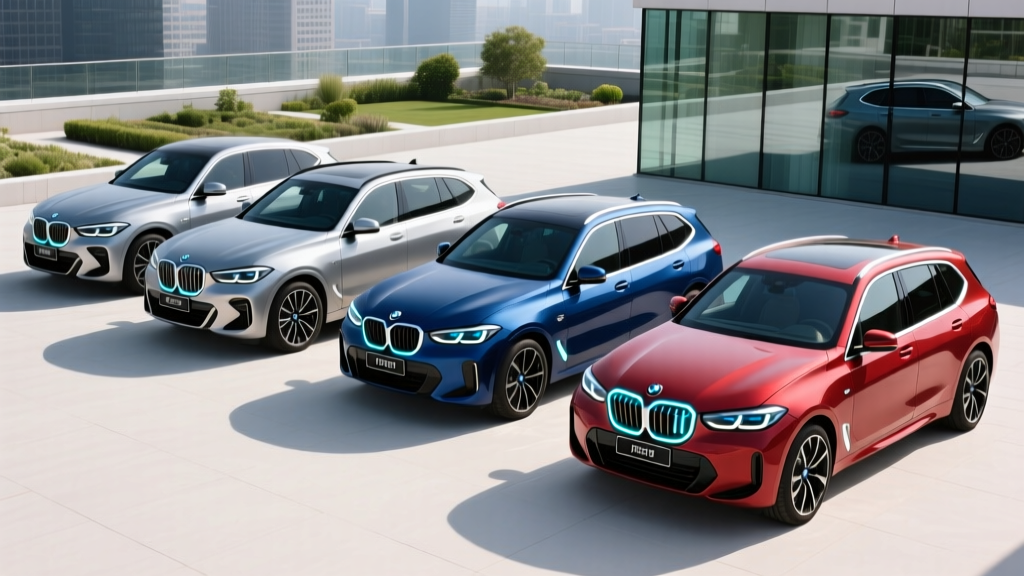
Quick Verdict: The 2026 BMW PHEV Lineup at a Glance
BMW has gone all-in on plug-in hybrids as a bridge strategy, and the 2026 lineup reflects that commitment. Every current BMW PHEV pairs a turbocharged gasoline engine with a more powerful electric motor and a larger battery than the previous generation — yielding 30 to 40 miles of electric-only driving and combined outputs that rival or exceed their M-lite counterparts. But "BMW hybrids" is a broad search term, and buyers need to know exactly which models are conventional hybrids (HEVs, which BMW no longer sells in the US) versus plug-in hybrids (PHEVs, which dominate the current lineup).
This guide breaks down every 2026 BMW plug-in hybrid available in the United States: the 330e sedan, the X3 xDrive30e, the X5 xDrive50e, the 750e xDrive, and the XM. We cover real-world MPG versus EPA estimates, electric-only range, battery specs, charging logistics, federal tax credit eligibility, and who should actually buy a BMW PHEV versus going full EV or sticking with gas.
HEV vs PHEV: What BMW Actually Sells in 2026
Conventional Hybrid (HEV): Charges its small battery through regenerative braking and the gas engine. You never plug it in. BMW does not currently offer a traditional HEV in the US market — the mild-hybrid (48V) systems in models like the X5 xDrive40 are not true hybrids and cannot drive on electric power alone.
Plug-in Hybrid (PHEV): Has a larger battery (18–25 kWh in BMW's lineup) that you charge via a wall outlet, Level 2 charger, or the gas engine. It can drive 30–40 miles on electricity alone before the gasoline engine kicks in. Every BMW hybrid sold in the US for 2026 is a PHEV.
This distinction matters enormously for your daily routine, your electric bill, and your tax situation. If you see a "BMW hybrid" listed anywhere, it is a plug-in hybrid that benefits from being plugged in nightly.
2026 BMW PHEV Models: Full Spec Comparison
| Model | Powertrain | Combined HP | Battery (kWh) | EV Range (mi) | EPA Combined MPGe | Gas-Only MPG | 0–60 mph | Base MSRP |
|---|---|---|---|---|---|---|---|---|
| 330e xDrive | 2.0L turbo I4 + e-motor | 288 | 19.5 | ~23 | 63 MPGe | 28 combined | 5.6s | $48,800 |
| X3 xDrive30e | 2.0L turbo I4 + e-motor | 288 | 19.7 | ~30 | 60 MPGe | 27 combined | 6.0s | $53,400 |
| X5 xDrive50e | 3.0L turbo I6 + e-motor | 483 | 25.7 | ~38 | 56 MPGe | 22 combined | 4.6s | $74,600 |
| 750e xDrive | 3.0L turbo I6 + e-motor | 483 | 18.7 | ~34 | 58 MPGe | 25 combined | 4.5s | $107,000 |
| XM | 4.4L twin-turbo V8 + e-motor | 644 (738 Label Red) | 25.7 | ~31 | 46 MPGe | 18 combined | 4.1s | $160,000 |
Source: fueleconomy.gov and BMW USA official specifications. MPGe figures reflect combined city/highway driving with a full charge. Gas-only MPG applies once the battery is depleted.
Electric-Only Range: How Far Can Each BMW PHEV Go Without Gas?
Electric-only range is the single most practical number for PHEV buyers. If your round-trip commute falls within the EV range and you charge nightly, you may go weeks without burning a drop of gasoline. Here is how BMW's 2026 PHEVs stack up — and what to expect in the real world:
EPA Electric-Only Range vs Real-World Expectations:
- X5 xDrive50e: EPA 38 mi → expect ~30–34 mi in mixed driving, ~25 mi in cold weather (below 40°F)
- 750e xDrive: EPA 34 mi → expect ~27–31 mi, ~22 mi in cold weather
- XM: EPA 31 mi → expect ~24–28 mi, ~20 mi in cold weather (heavy vehicle, performance tires)
- X3 xDrive30e: EPA 30 mi → expect ~24–27 mi, ~20 mi in cold weather
- 330e xDrive: EPA 23 mi → expect ~18–21 mi, ~15 mi in cold weather
Highway speeds above 70 mph reduce EV range by 15–25% across all models. BMW's pre-conditioning feature (available via the My BMW app) warms the battery while plugged in, which helps preserve range in cold weather.
The X5 xDrive50e stands out with the best combination of EV range and practicality. Its 25.7 kWh battery (roughly 22 kWh usable) gives it enough electric buffer for most daily commutes, and it's the model most likely to let owners skip the gas station entirely during the work week.
Charging: Times, Connectors, and the DC Fast-Charging Gap
Every 2026 BMW PHEV uses a J1772 connector for AC charging (Level 1 and Level 2). Here is what charging looks like in practice:
| Charging Level | Power | Time (0–100%, ~22 kWh usable) | Where |
|---|---|---|---|
| Level 1 (120V household) | ~1.4 kW | ~16 hours | Standard outlet |
| Level 2 (240V home/public) | 7.4 kW | ~3 hours | Home wallbox, public AC stations |
| DC Fast Charge | Not available on 330e, X3 30e, 750e | N/A | N/A |
| DC Fast Charge (X5 50e & XM only) | Up to 7.4 kW DC (limited) | ~2.5 hours | Select CCS stations |
Critical caveat: BMW PHEVs are primarily designed for home and workplace AC charging. None support high-speed DC fast charging the way a full BEV does. The X5 xDrive50e and XM accept DC input, but at a maximum of 7.4 kW — far below the 150–350 kW rates of dedicated EVs. If you rely exclusively on public fast-charging networks like Electrify America or Tesla Superchargers, a PHEV will frustrate you. These vehicles reward owners who can plug in at home overnight.
For most PHEV owners, a Level 2 home charger (240V, 32–40 amp circuit) is the ideal setup. Expect a full charge in roughly 3 hours — easily accomplished while you sleep. Installation of a Level 2 home charger typically costs $800–$2,000 including the unit and electrician labor, depending on your panel capacity and run length.
Fuel Economy: EPA vs Real-World MPG
| Model | EPA City (gas) | EPA Highway (gas) | EPA Combined (gas) | Real-World Combined | MPGe (with charge) |
|---|---|---|---|---|---|
| 330e xDrive | 25 | 33 | 28 | 26–32 (city-heavy drivers see more) | 63 |
| X3 xDrive30e | 24 | 31 | 27 | 25–30 | 60 |
| X5 xDrive50e | 20 | 24 | 22 | 20–25 | 56 |
| 750e xDrive | 22 | 28 | 25 | 23–28 | 58 |
| XM | 15 | 20 | 18 | 16–20 | 46 |
Gas-only MPG figures apply after the battery is depleted. Source: fueleconomy.gov.
The hybrid MPG advantage shows up most in city driving. Because PHEVs recapture energy through regenerative braking, stop-and-go traffic actually improves efficiency relative to highway cruising once you're in gas mode. Drivers with short, city-heavy commutes who charge regularly will see effective fuel consumption approaching zero gasoline use. The 330e and 750e, with their more aerodynamic sedan bodies, tend to exceed their EPA highway estimates on flat terrain.
The XM is the outlier. At over 6,000 pounds with a twin-turbo V8, its gas-only fuel economy is genuinely poor. It exists as a performance flagship, not an efficiency play. Buyers cross-shopping the XM against the X5 xDrive50e for efficiency reasons should reconsider — the X5 delivers far better MPG with still-impressive 483 hp.
Battery Warranty, Reliability, and Replacement Cost
BMW PHEV Battery Warranty (2026 models):
- Coverage: 8 years / 80,000 miles (whichever comes first)
- Capacity threshold: BMW warrants the high-voltage battery against defects and excessive capacity loss. The warranty covers replacement if the battery drops below approximately 70% of original capacity within the warranty period.
- What's covered: Battery module replacement, labor, and diagnostics
- What's not covered: Damage from accidents, improper charging, or modifications
Reliability: BMW's current-generation PHEV powertrains (introduced from 2021 onward across the lineup) use the B58 3.0L inline-six or B48 2.0L inline-four — both widely regarded as among the most reliable modern BMW engines. The electric motor and power electronics add complexity, but failure rates on BMW's e-drive components have been low based on owner surveys and warranty claim data.
Battery replacement cost: Out-of-warranty replacement of a BMW PHEV high-voltage battery currently ranges from $12,000 to $18,000 depending on the model, including parts and labor. However, PHEV batteries are smaller and less stressed than full-EV batteries, and degradation data from earlier-generation BMW PHEVs (like the 2018–2020 X5 xDrive45e) shows modest capacity loss of roughly 5–10% over 80,000 miles. Most owners will never need a replacement.
Mild-hybrid note: BMW's 48V mild-hybrid systems (found on non-PHEV models like the X5 xDrive40) use a much smaller battery with a separate warranty. These systems assist the engine but cannot propel the car electrically. Replacement cost for the 48V battery is significantly lower, typically $2,000–$4,000.
Federal Tax Credits and Incentives for BMW PHEVs
Under the current IRS §30D Clean Vehicle Credit rules, PHEVs can qualify for up to $7,500 in federal tax credits — but eligibility is strict and model-specific. Key requirements for 2026:
- Battery capacity: At least 7 kWh (all BMW PHEVs qualify)
- MSRP cap: Vans/SUVs/pickups must be under $80,000; sedans under $55,000
- Buyer income cap: AGI ≤ $150,000 (single), $225,000 (head of household), $300,000 (joint)
- Battery sourcing: Critical minerals and battery components must meet escalating domestic-content percentages — this is where many luxury PHEVs fail
- Assembly: Final assembly must occur in North America
- Point-of-sale transfer: Eligible buyers can transfer the credit to the dealer at purchase for an immediate price reduction
2026 BMW PHEV tax credit status:
- X5 xDrive50e: Assembled in Spartanburg, SC. MSRP starts at $74,600 (under the $80K SUV cap). Credit eligibility depends on battery-sourcing compliance — BMW has been working to qualify, but buyers should verify current status on fueleconomy.gov before purchasing. Potential credit: up to $7,500.
- X3 xDrive30e: Assembly location and sourcing determine eligibility. Verify on fueleconomy.gov. MSRP under $80K cap.
- 330e xDrive: MSRP starts at $48,800 (under the $55K sedan cap). However, final assembly occurs in Germany, which disqualifies it from the §30D credit under current rules.
- 750e xDrive: MSRP exceeds the $55,000 sedan cap. Not eligible for the federal credit regardless of sourcing.
- XM: MSRP far exceeds all caps. Not eligible.
State incentives: Several states offer additional rebates or HOV lane access for PHEVs with sufficient EV range. California's CVRP program, Colorado's state credit, and New York's DRIVE Clean Rebate are examples — but amounts and eligibility vary by jurisdiction. Check your state's energy office or DMV for current programs.
Who Should Buy a BMW PHEV — And Who Shouldn't
Choose a BMW PHEV if:
- You have home or workplace charging access and a commute under 35 miles round-trip
- You want electric daily driving but need gas flexibility for road trips, towing, or rural travel
- You live in an area with sparse DC fast-charging infrastructure
- You want BMW driving dynamics and build quality without committing to a full EV
- Your household has one car that needs to do everything
Choose a full BMW EV (i4, i5, i7, iX) instead if:
- You want to eliminate gasoline entirely and reduce maintenance (no oil changes, fewer moving parts)
- You have reliable home charging and access to DC fast chargers for road trips
- You want the lowest per-mile fuel cost (electricity is typically $0.04–$0.06/mile vs $0.12–$0.18/mile for gas in a PHEV on gas mode)
- You want the maximum available federal tax credit (BMW's iX and i4 have had broader credit eligibility)
Stick with a conventional gas BMW if:
- You have no access to any charging (no garage, no workplace charger, apartment without EV infrastructure)
- Your budget is tight and you want to avoid the PHEV price premium ($5,000–$10,000 over gas equivalents)
- You drive primarily long highway routes where the PHEV advantage diminishes
Pros and Cons: BMW PHEVs Summarized
Pros
- 30–38 miles of real electric range covers most daily commutes
- No range anxiety — gas engine provides 350+ miles of total range
- Strong combined horsepower (288–644 hp) with smooth electric torque fill
- BMW driving dynamics and premium interior quality
- Lower running costs when charged regularly vs gas-only equivalents
- 8-year/80,000-mile battery warranty provides peace of mind
- X5 xDrive50e offers the best blend of EV range, power, and practicality
Cons
- Most models do NOT qualify for the $7,500 federal tax credit (assembly/sourcing/MSRP barriers)
- No high-speed DC fast charging — AC-only for most models
- PHEV premium of $5,000–$10,000 over gas-only BMW equivalents
- Added weight from battery and motor reduces handling agility vs gas models
- Electric range drops significantly in cold weather (20–30% loss)
- 330e's 23-mile EV range is short by 2026 standards
- XM's fuel economy is poor — it's a performance vehicle, not an efficiency play
Frequently Asked Questions
How many MPG does a BMW hybrid get?
Gas-only MPG (after the battery is depleted) ranges from 18 combined (XM) to 28 combined (330e xDrive). When charged regularly and driven within EV range, effective fuel consumption can approach zero for short commutes. MPGe ratings with a full charge range from 46 (XM) to 63 (330e).
How far can a BMW PHEV go on electric only?
The 2026 BMW PHEV with the longest electric range is the X5 xDrive50e at an EPA-estimated 38 miles. The 330e offers the shortest at 23 miles. In real-world driving, expect 15–34 electric miles depending on model, temperature, and driving style.
Do BMW hybrids need to be plugged in?
Yes — every BMW hybrid sold in the US for 2026 is a plug-in hybrid (PHEV). While the gas engine can recharge the battery to a limited degree, you'll only access the full electric range and efficiency benefits by plugging in. Without regular charging, a PHEV operates as a heavier, less efficient gas car.
Is a BMW PHEV reliable, and what does a battery replacement cost?
BMW's current PHEV powertrains use proven engines (B48 and B58) with well-tested electric components. The high-voltage battery is warrantied for 8 years/80,000 miles. Out-of-warranty replacement costs $12,000–$18,000, but historical data suggests most PHEV batteries retain 90%+ capacity within the warranty period.
Does any BMW hybrid qualify for the $7,500 federal tax credit?
Possibly — the X5 xDrive50e is the strongest candidate, as it's assembled in South Carolina and falls under the $80,000 SUV MSRP cap. However, battery-sourcing requirements under §30D are stringent and subject to change. The 330e is assembled in Germany (disqualified), and the 750e and XM exceed MSRP caps. Always verify current eligibility on fueleconomy.gov and consult a tax professional.
BMW PHEV vs full EV (i4, iX) — which should I choose?
If you can charge at home, drive under 40 miles daily, and take occasional road trips where charging infrastructure is sparse, a PHEV like the X5 xDrive50e offers the best of both worlds. If you have reliable charging access, want minimal maintenance, and prioritize the lowest cost-per-mile, a full EV like the BMW i4 or iX is the better long-term choice.
Can I tow with a BMW PHEV?
Yes. The X5 xDrive50e is rated to tow up to 7,200 pounds — comparable to the gas X5. Towing will significantly reduce electric range and increase fuel consumption. The XM is rated for similar capacity. The 330e and 750e sedans are not recommended for heavy towing.