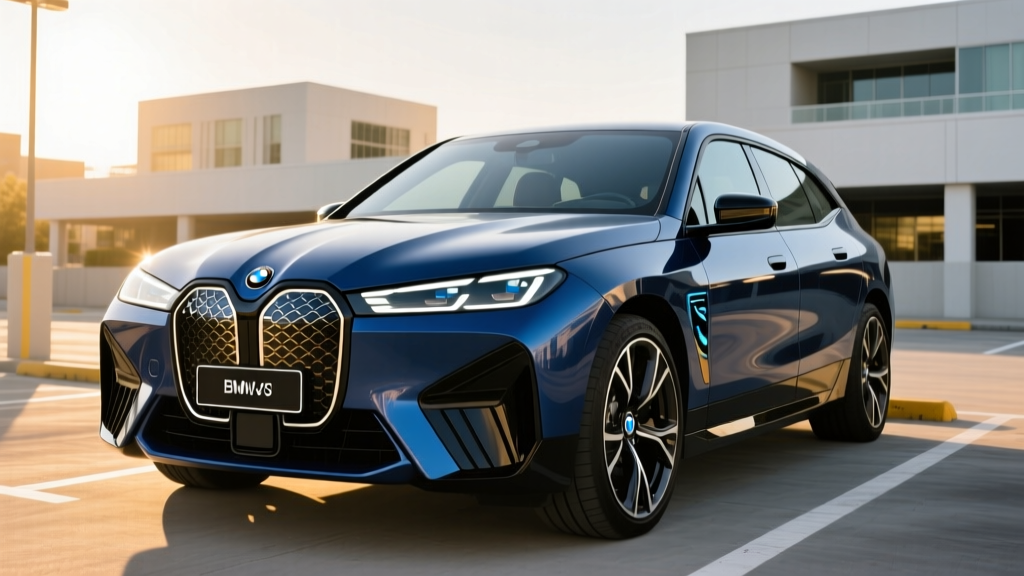
BMW's plug-in hybrid lineup has quietly become one of the most compelling entry points into electrified driving — particularly when you factor in aggressive dealer incentives and the federal tax credit. For 2026, BMW offers PHEV variants across its core sedan and SUV lineup, each pairing a turbocharged gasoline engine with a substantial battery pack capable of 30+ miles of electric-only range.
If you've been searching for BMW hybrid deals, this guide breaks down every current PHEV model with exact EPA figures, real-world efficiency observations, pricing, and a clear picture of which tax credits you can actually claim. We'll also clarify the difference between BMW's plug-in hybrids (PHEVs) and conventional hybrids (HEVs), because the distinction matters enormously for your wallet and your daily driving.
BMW's 2026 PHEV Lineup: What's Available Now
For the 2026 model year, BMW sells plug-in hybrid electric vehicles (PHEVs) — not conventional hybrids (HEVs). This is a critical distinction. A conventional hybrid like the Toyota Prius cannot be plugged in; it recharges its small battery through regenerative braking and the gasoline engine. A PHEV has a much larger battery that you charge via a plug, giving you a meaningful electric-only driving range before the gasoline engine engages.
HEV vs. PHEV — What BMW Actually Offers
| Feature | Conventional Hybrid (HEV) | Plug-in Hybrid (PHEV) |
|---|---|---|
| Plug-in charging | No — never plugs in | Yes — Level 1 or Level 2 |
| Electric-only range | 0–2 miles at very low speed | 30–40 miles at full highway speed |
| Battery size | ~1–2 kWh | ~19–29 kWh (BMW 2026) |
| Federal tax credit | No | Up to $3,750–$7,500 (varies) |
| BMW models (2026) | None (BMW discontinued mild-hybrid-only trims) | 330e, 530e, 750e, X5 xDrive50e, XM |
Every BMW "hybrid" sold new in the US for 2026 is a PHEV. If you see a conventional HEV BMW, it's either a used import from another market or a mild-hybrid system (which does not provide meaningful electric-only range).
Model-by-Model Breakdown: Specs, MPG & Electric Range
Here's the full 2026 BMW PHEV lineup with the numbers that matter. All electric-range and MPGe figures are EPA estimates sourced from fueleconomy.gov.
| Model | Battery (kWh gross/usable) | EV Range (mi) | Combined HP | 0–60 mph | MPG (gas only) | MSRP (base) |
|---|---|---|---|---|---|---|
| 330e Sedan | 19.5 / ~17.0 | 23–25 | 288 | 5.6 sec | 28 city / 34 hwy / 30 combined | $47,975 |
| 330e xDrive | 19.5 / ~17.0 | 20–22 | 288 | 5.5 sec | 25 city / 32 hwy / 28 combined | $49,975 |
| 530e Sedan | 22.1 / ~18.7 | 36–38 | 295 | 5.8 sec | 27 city / 32 hwy / 29 combined | $62,575 |
| 530e xDrive | 22.1 / ~18.7 | 33–35 | 295 | 5.6 sec | 25 city / 30 hwy / 27 combined | $65,075 |
| 750e xDrive | 22.1 / ~18.7 | 30–33 | 483 | 4.1 sec | 24 city / 29 hwy / 26 combined | $107,575 |
| X5 xDrive50e | 29.5 / ~24.0 | 38–40 | 483 | 4.6 sec | 22 city / 25 hwy / 23 combined | $78,175 |
| XM (Label) | 29.5 / ~24.0 | 30–31 | 644–738 | 3.8 sec | 14 city / 18 hwy / 16 combined | $140,575 |
Real-World Range & MPG Reality Check
EPA electric-range estimates assume moderate temperatures and gentle driving. In practice:
- Highway driving at 75+ mph: Expect 15–20% less electric range than the EPA sticker. The X5 xDrive50e's 38-mile rating may deliver ~30–33 miles on the interstate.
- Cold weather (below 40°F): Battery chemistry slows and cabin heating draws significant power. Expect 25–35% range loss. The 530e's 36-mile EV range can drop to ~24–27 miles in January in Chicago.
- Gas-only MPG: BMW PHEVs tend to meet or slightly exceed EPA city MPG thanks to regenerative braking, but highway MPG can fall 2–4 MPG below the sticker at sustained high speeds.
Charging: What You Need to Know Before Plugging In
BMW's 2026 PHEVs charge via a J1772 connector (Level 1 and Level 2 AC charging). None of BMW's current PHEVs support DC fast charging — this is a common limitation in the PHEV segment, not unique to BMW. The onboard chargers max out between 3.7 kW and 7.4 kW depending on the model.
| Charging Level | Power (kW) | Time: 0–100% (typical) | Where |
|---|---|---|---|
| Level 1 (120V outlet) | ~1.4 kW | 12–18 hours | Standard household outlet |
| Level 2 (240V, 16A) | ~3.7 kW | 5–7 hours | Home wallbox, public Level 2 |
| Level 2 (240V, 32A) | ~7.4 kW | 2.5–4 hours | Higher-power home charger, public stations |
| DC Fast Charging | — | Not supported | N/A |
Practical takeaway: Most BMW PHEV owners charge overnight on a Level 1 or Level 2 home setup. A standard 120V outlet adds roughly 5–7 miles of EV range per hour of charging — enough to replenish a daily commute if you park for 10+ hours. A 240V Level 2 charger fully replenishes any BMW PHEV battery in a single overnight session.
Federal Tax Credit: Which BMW PHEVs Qualify?
This is where finding genuine BMW hybrid deals gets interesting — and complicated. Under current IRS §30D rules, the federal plug-in EV credit applies to PHEVs, but eligibility depends on battery sourcing, critical-mineral requirements, MSRP caps, and buyer income limits. Here's the framework:
- MSRP cap: Sedans must be under $55,000; SUVs/pickups/vans under $80,000. This immediately disqualifies the 750e, XM, and most well-equipped 530e and X5 builds.
- Buyer income cap: Modified AGI must not exceed $150,000 (single), $225,000 (head of household), or $300,000 (joint filing).
- Battery sourcing & critical minerals: The credit splits into two halves ($3,750 each) based on battery-component manufacturing and critical-mineral sourcing requirements. These rules tighten annually.
- Point-of-sale transfer: Eligible buyers can transfer the credit to the dealer at purchase, reducing the purchase price directly rather than waiting for a tax refund.
Realistic Credit Expectations for 2026 BMW PHEVs
| Model | Base MSRP | MSRP Under Cap? | Max Potential Credit |
|---|---|---|---|
| 330e Sedan | $47,975 | Yes ($55k sedan cap) | Up to $3,750–$7,500* |
| 330e xDrive | $49,975 | Yes ($55k sedan cap) | Up to $3,750–$7,500* |
| 530e Sedan | $62,575 | No (over $55k sedan cap) | $0 |
| 750e xDrive | $107,575 | No | $0 |
| X5 xDrive50e | $78,175 | Yes ($80k SUV cap) | Up to $3,750–$7,500* |
| XM | $140,575 | No | $0 |
*Actual credit amount depends on battery-component and critical-mineral sourcing compliance, which BMW does not fully disclose on a per-model basis. Verify current eligibility on IRS.gov before purchasing. Tax professionals can confirm your personal eligibility.
Where the deals actually are: The 330e Sedan is the strongest federal-credit candidate. At $47,975 base, it clears the $55,000 sedan MSRP cap with room for some options. Combine a potential $3,750 federal credit with BMW's own lease cash and dealer discounts, and you can find effective prices in the low $40,000s on well-timed purchases. The X5 xDrive50e, sitting just under the $80,000 SUV cap at base, is also viable — but adding packages pushes it over the limit quickly.
Powertrain Deep Dive: How BMW's PHEVs Actually Work
BMW uses a consistent PHEV architecture across its lineup: a turbocharged gasoline engine paired with an electric motor integrated into the transmission. This "P2" layout (motor between engine and gearbox) delivers seamless transitions between electric and gas power.
The 330e and 530e use a 2.0-liter turbocharged four-cylinder producing 181–184 hp on its own, augmented by an electric motor contributing 107–113 hp. Combined system output ranges from 288 hp (330e) to 295 hp (530e). The 750e and X5 xDrive50e step up to a 3.0-liter inline-six (308–312 hp) paired with a more powerful electric motor, yielding a combined 483 hp. The XM is in a class of its own with a twin-turbo V8 and electric motor producing up to 738 hp in Label Red trim.
All models use an 8-speed automatic transmission and offer xDrive all-wheel drive as standard or optional. The electric motor can drive the vehicle independently at speeds up to 87 mph in most models — meaning genuine highway-capable electric driving, not just parking-lot crawling.
Battery Longevity, Warranty & Replacement Cost
BMW PHEV Battery Warranty
BMW covers its high-voltage PHEV batteries with an 8-year / 80,000-mile warranty (whichever comes first), guaranteeing a minimum of 70% capacity retention. If the battery degrades below this threshold within the warranty period, BMW will repair or replace it at no cost.
This warranty is consistent with industry standards and federal requirements. California and states adopting CARB emissions standards mandate even longer coverage: 10 years / 150,000 miles for PZEV/AT-PZEV components, which can include the hybrid battery in some registrations.
How long do BMW PHEV batteries actually last? Modern lithium-ion PHEV batteries from BMW use NMC (nickel-manganese-cobalt) chemistry with sophisticated thermal management. Real-world data from earlier-generation BMW PHEVs (2018–2021 330e, 530e) shows typical degradation of 8–12% over 5 years and 60,000–80,000 miles — well within the warranty threshold. Most owners report negligible range loss in the first 3–4 years.
Out-of-warranty replacement cost: If a battery does fail after warranty, replacement costs for BMW PHEV battery packs currently range from $8,000 to $14,000 including parts and labor, depending on the model. This is significantly less than full EV battery replacement ($15,000–$25,000+) because PHEV packs are smaller. However, complete battery failure in a modern BMW PHEV is rare — individual cell or module repairs are often possible at lower cost.
Who Should Buy a BMW PHEV — And Who Shouldn't
Choose a BMW PHEV If:
- You have home or workplace charging access (even a 120V outlet works) and a daily commute under 30–35 miles round-trip — you'll drive mostly on electricity
- You regularly take road trips exceeding 200 miles and don't want to plan around DC fast-charging stops
- You want meaningful fuel savings without the range limitations of a pure EV in cold climates
- You value BMW's driving dynamics and interior quality and aren't ready to switch to a dedicated EV brand
Choose a Full EV Instead If:
- You have reliable home Level 2 charging and rarely drive more than 250 miles in a single day
- You want to eliminate gasoline purchases, oil changes, and engine maintenance entirely
- You want access to the full $7,500 federal credit (available on more BEVs than PHEVs due to sourcing rules)
- Your state offers additional BEV-only incentives (some states exclude PHEVs from HOV lane access or rebates)
Stick With a Gas Car If:
- You have absolutely no access to any charging — a PHEV you never plug in is just a heavier, less efficient gas car
- Your budget is under $40,000 (no new BMW PHEV falls here)
- You drive fewer than 5,000 miles per year — the fuel savings won't offset the PHEV price premium
Finding the Best BMW Hybrid Deals Right Now
Dealer incentives, lease programs, and BMW Financial Services offerings change monthly. Here's where to look for the strongest savings on a 2026 BMW PHEV:
- Lease cash: BMW frequently offers $1,000–$3,000 in lease cash on PHEV models, particularly the 330e and X5 xDrive50e. This stacks with the federal credit (if eligible) when transferred at point of sale.
- Loyalty and conquest bonuses: Current BMW owners or lessees may qualify for $500–$1,500 loyalty credits. Conquest incentives for buyers switching from competing luxury brands can reach $2,000.
- End-of-quarter pushes: BMW dealers are most aggressive on pricing in the last two weeks of March, June, September, and December.
- CPO (Certified Pre-Owned): 2023–2025 BMW PHEVs with remaining factory warranty offer significant value. A 2-year-old 330e can be found for $32,000–$38,000 with full CPO warranty coverage.
BMW PHEV Pros
- 30–40 miles of real electric commuting eliminates most gas stops
- No range anxiety — gas engine provides 300+ miles of total range
- BMW driving dynamics intact — responsive steering, strong acceleration
- Potential for $3,750+ federal tax credit on qualifying models
- Strong build quality and premium interior materials
- 8-year / 80,000-mile battery warranty
BMW PHEV Cons
- No DC fast charging — overnight home charging required for daily EV use
- Higher MSRP than gas-only BMW equivalents ($5,000–$10,000 premium)
- Many models exceed federal tax credit MSRP caps
- Added weight from battery/motor reduces handling agility vs. gas models
- Two powertrains mean two systems to maintain long-term
- Cargo space slightly reduced vs. gas-only variants
Frequently Asked Questions
How many MPG does a BMW hybrid get?
It depends on the model and whether you're driving on electricity or gasoline. The 330e delivers an EPA-estimated 30 MPG combined (28 city / 34 highway) when running on gasoline alone, plus a 75 MPGe combined rating when factoring in electric driving. The 530e achieves 29 MPG combined on gas, the 750e gets 26 MPG combined, and the X5 xDrive50e returns 23 MPG combined. In real-world city driving with regular charging, many owners report using gasoline only on long trips.
How far can a BMW PHEV go on electric only?
EPA-rated electric-only range varies by model: the 330e manages 23–25 miles, the 530e achieves 36–38 miles, the 750e delivers 30–33 miles, and the X5 xDrive50e leads the lineup at 38–40 miles. Real-world range drops 15–20% at sustained highway speeds and 25–35% in cold weather below 40°F.
Does BMW make a conventional hybrid (non-plug-in)?
Not in the US market for 2026. BMW uses 48-volt mild-hybrid systems on some gasoline models (which provide minimal efficiency benefit and no electric-only driving), but every full hybrid BMW sold stateside is a plug-in hybrid. If you want a conventional hybrid that never needs plugging in, you'd need to look at Lexus, Toyota, or Honda.
Is the BMW PHEV battery reliable and what does replacement cost?
BMW PHEV batteries have proven reliable, with typical degradation of 8–12% over 5 years. The battery is warrantied for 8 years / 80,000 miles at a minimum 70% capacity retention. Out-of-warranty replacement runs $8,000–$14,000 depending on the model, though full pack failures are uncommon — individual module repairs are often possible at lower cost.
Does a BMW PHEV qualify for the federal tax credit?
It depends on the model, your income, and current battery-sourcing rules. The 330e Sedan ($47,975) and base X5 xDrive50e ($78,175) fall under the IRS MSRP caps and are the strongest credit candidates. The 530e, 750e, and XM exceed their respective MSRP caps and do not qualify. Income limits apply: $150,000 (single), $225,000 (head of household), $300,000 (joint). Verify current eligibility at IRS.gov and consult a tax professional before relying on the credit.
Can I charge a BMW PHEV at a Tesla Supercharger?
No. BMW PHEVs use the J1772 connector for AC charging and do not support DC fast charging at all. Tesla Superchargers deliver DC power and use the NACS connector. You can charge a BMW PHEV at any public Level 2 station with a J1772 connector (ChargePoint, EVgo Level 2, Blink, etc.).
Is a BMW PHEV better than a full EV?
Neither is universally better — it depends on your driving patterns and charging access. A BMW PHEV is ideal if you want electric commuting with gas-engine freedom for road trips. A full EV (like the BMW i4 or iX) is better if you want zero gasoline use, lower maintenance costs, and access to DC fast charging for road trips. PHEVs are a bridge technology that works well for specific use cases, not a replacement for full electrification.
Sources: EPA fuel economy data from fueleconomy.gov. Federal tax credit rules from IRS.gov §30D. BMW model specifications from BMW USA. All pricing reflects base MSRP for the 2026 model year and excludes destination charges. Tax credit eligibility is subject to change — verify before purchase.