The Toyota Hybrid Halo Effect: Separating Fact from Fiction
Toyota essentially invented the modern mass-market hybrid vehicle with the original Prius, and over the last two decades, the brand has cultivated a legendary reputation for bulletproof reliability and unmatched fuel economy. However, this massive success has created a halo effect that breeds complacency, misconceptions, and outright myths among buyers and owners. Many consumers assume that every vehicle wearing a Toyota hybrid badge operates on the exact same simple planetary gearset, or that they require zero maintenance beyond standard oil changes. As a senior automotive analyst for AutoEdgeView, I am here to bust these myths and rank the best Toyota hybrid models based on real-world efficiency, mechanical reliability, and the common mistakes owners make that can turn a dependable daily driver into an expensive liability.
Myth #1: All Toyota Hybrids Use the Same Simple e-CVT
One of the most pervasive myths in the automotive community is that every Toyota hybrid utilizes the same simple, beltless e-CVT (electronic continuously variable transmission) paired with a naturally aspirated engine. While this is true for the Prius, Camry, and RAV4 hybrids—which use the incredibly robust Toyota Hybrid System (THS) with a planetary gearset—it is entirely false for Toyota's newer heavy-duty trucks. The Toyota Tundra i-FORCE MAX and the new Tacoma i-FORCE MAX use a completely different architecture. They pair a twin-turbocharged V6 engine with a hybrid motor sandwiched between the engine and a traditional 10-speed automatic transmission. This setup provides massive torque but introduces turbochargers, intercoolers, and traditional transmission clutches into the equation. Believing the Tundra hybrid is as mechanically simple and maintenance-free as a Prius is a critical mistake that will lead to unexpected repair bills once the powertrain warranty expires.
Myth #2: Trim Levels Don't Impact Hybrid Efficiency
Many buyers walk into a dealership assuming that any new Toyota Prius will deliver the headline-grabbing 57 MPG combined. This is a dangerous assumption that leads to buyer's remorse at the gas pump. The EPA ratings vary wildly based on wheel size and weight. According to the U.S. Department of Energy's Fuel Economy Guide, the base Prius LE with 18-inch wheels achieves 57 MPG combined. However, if you opt for the sportier XSE trim with 19-inch alloy wheels and a panoramic glass roof, the fuel economy drops to 52 MPG combined. While 52 MPG is still phenomenal, it represents a nearly 10% loss in efficiency simply for cosmetic upgrades. Always check the specific trim's EPA sticker rather than relying on the brand's marketing umbrella.
The Ultimate Ranking: Best Toyota Hybrids by Efficiency & Reliability
To help you navigate the lineup, we have ranked the current Toyota hybrid models based on their combined efficiency, real-world reliability data, and mechanical longevity.
| Model Rank | Powertrain | Combined MPG | Primary Reliability Quirk |
|---|---|---|---|
| 1. Prius / Prius Prime | 2.0L 4-Cyl THS | 52-57 MPG | Battery cooling fan filter access |
| 2. Camry Hybrid | 2.5L 4-Cyl THS | 44-52 MPG | EGR valve carbon buildup |
| 3. Corolla Hybrid | 1.8L 4-Cyl THS | 50 MPG | 12V auxiliary battery drain |
| 4. RAV4 Hybrid | 2.5L 4-Cyl eAWD | 39-41 MPG | Rear e-motor cooling ducts |
| 5. Highlander Hybrid | 2.5L 4-Cyl AWD | 35-36 MPG | Software tuning for towing limits |
1. Toyota Prius & Prius Prime (The Efficiency Undisputed Champs)
The newly redesigned fifth-generation Prius is a masterclass in thermal efficiency. As noted in Car and Driver's comprehensive testing, the new 2.0-liter hybrid powertrain not only delivers vastly improved acceleration (dropping the 0-60 mph time to the low 7-second range) but maintains its crown as the most efficient non-plug-in hybrid on the market. The Prius Prime (PHEV) offers up to 44 miles of pure electric range, making it the ultimate commuter car. Reliability is stellar, provided owners do not make the mistake of blocking the rear-seat battery cooling fan intake.
2. Toyota Camry Hybrid (The Midsize Commuter King)
The Camry Hybrid remains the gold standard for midsize sedans. With the transition to the all-hybrid eighth-generation powertrain, Toyota has standardized the 2.5-liter Dynamic Force engine across the lineup. It offers a perfect blend of highway comfort and city sipping, easily achieving over 50 MPG in real-world mixed driving. It ranks second only because its larger physical footprint and slightly heavier curb weight prevent it from matching the Prius's sheer numbers, but for families needing more rear-seat room, it is the undisputed champion.
3. Toyota RAV4 Hybrid (The Sensible SUV)
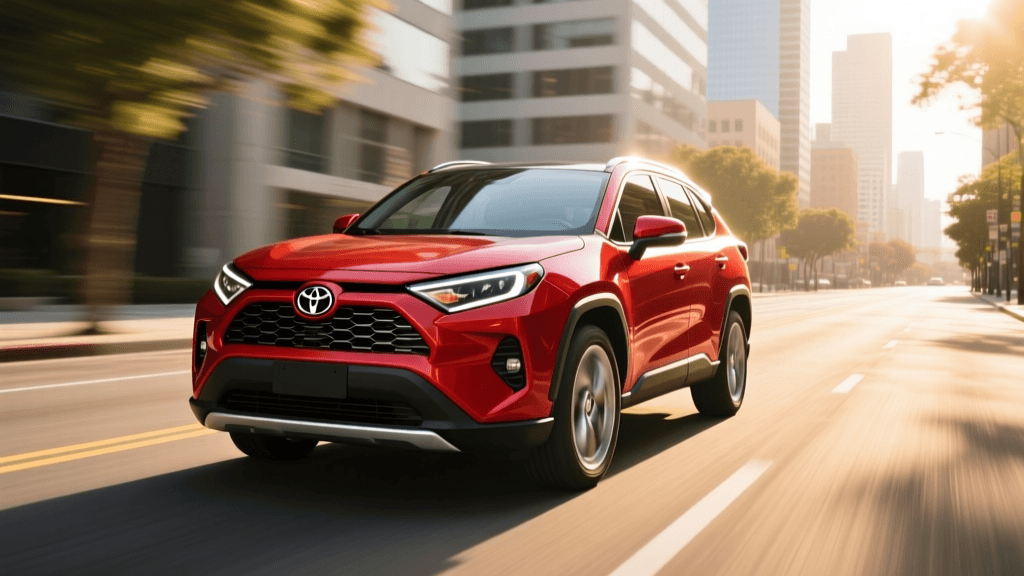
The RAV4 Hybrid is the best-selling hybrid SUV in America for a reason. It utilizes an electronic On-Demand AWD system, meaning there is no mechanical driveshaft connecting the front and rear axles; instead, a dedicated rear electric motor provides traction when slip is detected. While incredibly reliable, buyers must understand that this eAWD system is designed for rainy commutes and light snow, not off-road rock crawling. Pushing the rear e-motor beyond its thermal limits on steep dirt trails will trigger a protective shut-down mode.
4. Toyota Highlander Hybrid (The Family Hauler Defying Physics)
Getting 35 MPG combined in a three-row, seven-passenger SUV feels like cheating physics. The Highlander Hybrid achieves this by heavily relying on its electric motors at low speeds and utilizing an aerodynamic profile. However, it ranks lower on our list because the 2.5-liter four-cylinder engine can sound coarse and strained when fully loaded with passengers and cargo climbing steep grades. It is highly reliable, but owners must adjust their expectations regarding highway passing power compared to the older V6 models.
Critical Maintenance Mistakes Toyota Hybrid Owners Make
Even the most reliable vehicles will fail if subjected to neglect. Industry watchdogs like Consumer Reports consistently highlight that while Toyota's hybrid drivetrains are robust, the supporting systems require specific attention. Here are the most common and costly mistakes owners make.
Mistake 1: Ignoring the Hybrid Battery Cooling Fan Filter
This is the number one killer of Toyota hybrid batteries. The high-voltage traction battery is air-cooled, and the intake vent is usually located near the rear passenger seat or in the trunk. Over time, dust, pet hair, and debris clog the intake filter. When the battery cannot breathe, it overheats. Chronic overheating degrades the battery cells, eventually triggering a P0A80 check engine light and requiring a $3,000+ battery replacement. The Fix: Locate the battery fan filter (consult your owner's manual) and vacuum or wash it every 15,000 miles. It takes five minutes and costs nothing.
Mistake 2: Neglecting the EGR Valve and Cooler on the 2.5L Engine
The 2.5-liter Dynamic Force engine (found in the Camry, RAV4, and Highlander hybrids) is incredibly efficient, but it is prone to carbon buildup in the Exhaust Gas Recirculation (EGR) valve and cooler. Around the 80,000 to 100,000-mile mark, the narrow passages can clog. This restricts exhaust flow, causing the engine to run hotter and experience pre-ignition knock, which can ultimately lead to a blown head gasket. The Fix: Have your mechanic inspect and clean the EGR valve and cooler at every 60,000-mile major service interval. Do not wait for the check engine light.
Mistake 3: Forgetting the Inverter Coolant
Many owners know to change the engine coolant, but forget that the hybrid inverter—which converts DC battery power to AC power for the electric motors—has its own separate cooling system. If the inverter coolant is never flushed, it loses its dielectric and anti-corrosive properties, risking a catastrophic inverter failure that can cost upwards of $2,500 to replace. The Fix: Follow Toyota's severe maintenance schedule and flush the inverter coolant every 100,000 miles.
Conclusion
Toyota's hybrid lineup remains the benchmark for the industry, offering an unmatched combination of fuel efficiency and long-term dependability. However, the key to maximizing this reliability lies in busting the myths of invincibility. By understanding the specific mechanical nuances of your chosen model—whether it is the e-CVT simplicity of the Prius or the turbocharged complexity of the Tundra—and by adhering to hybrid-specific maintenance like cleaning battery fans and EGR coolers, you can ensure your Toyota hybrid easily surpasses the 200,000-mile mark without missing a beat.