The State of Hybrid Trucks in 2026
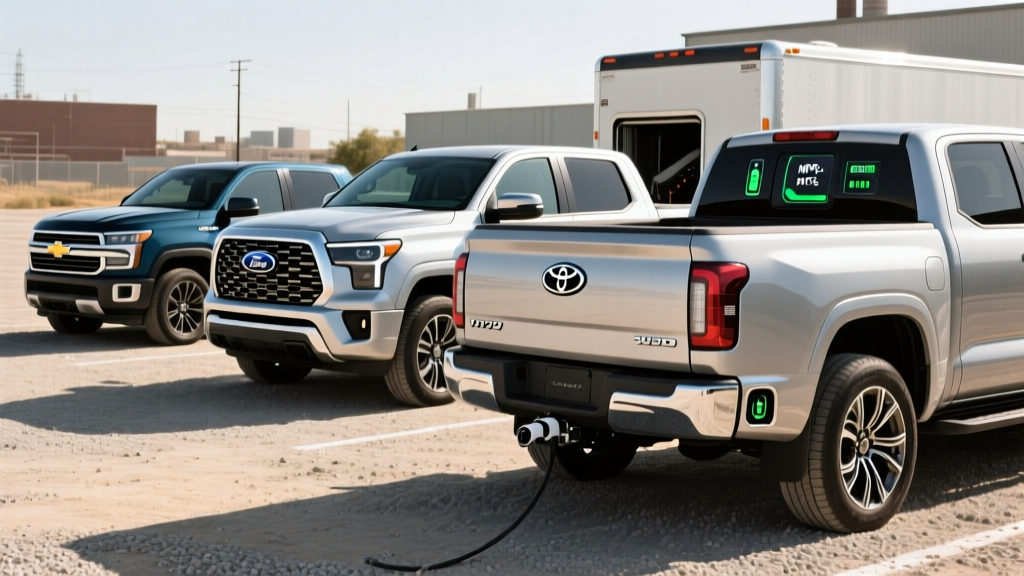
Full-size pickup trucks have historically been among the least efficient vehicles on the road. That's changing. As of the 2026 model year, every major American and Japanese automaker offers at least one hybrid powertrain in its half-ton truck lineup. These aren't mild-hybrid stop-start systems — they're full parallel hybrids (and in some cases plug-in hybrids) that deliver meaningful fuel savings without sacrificing the towing and payload capacity truck buyers demand.
If you're researching hybrid trucks, you're likely weighing three things: real-world fuel economy, capability (towing and payload), and whether a hybrid powertrain adds long-term reliability risk. This guide breaks down the current hybrid truck landscape with exact EPA figures, powertrain specs, warranty coverage, and ownership economics so you can make a data-driven decision.
HEV vs. PHEV: What's the Difference for Trucks?
Before comparing models, it's critical to understand the two hybrid architectures available in today's trucks:
Conventional Hybrid (HEV)
A standard hybrid like the Toyota Tundra i-FORCE MAX or Ford F-150 PowerBoost uses a small battery (typically 1.5–2.0 kWh) paired with a gasoline engine and electric motor. You never plug it in. The battery recharges through regenerative braking and the engine. Benefit: improved MPG with zero behavior change. Drawback: limited electric-only assist, no EV mode for short trips.
Plug-In Hybrid (PHEV)
A plug-in hybrid truck — like the forthcoming Ram 1500 Ramcharger (extended-range EV with a gas generator, technically an EREV) — carries a larger battery (often 10–20+ kWh) that you can charge from a wall outlet or public charger. It offers a meaningful electric-only driving range (typically 20–50 miles) before the gas engine kicks in. Benefit: daily commutes can be zero-gas. Drawback: higher upfront cost, added weight, requires charging access to maximize savings.
For 2026, the mainstream full-size hybrid truck market is dominated by conventional HEVs. True PHEV trucks remain limited, though several are announced for the 2026–2027 timeframe. We'll cover both categories below.
2026 Hybrid Truck Lineup: Specs at a Glance
| Model | Powertrain | Combined HP / Torque | EPA MPG (City/Hwy/Combined) | Max Towing | Starting MSRP |
|---|---|---|---|---|---|
| Ford F-150 PowerBoost | 3.5L V6 HEV | 430 hp / 570 lb-ft | 25 / 26 / 25 | 12,700 lbs | $56,295 |
| Toyota Tundra i-FORCE MAX | 3.4L Twin-Turbo V6 HEV | 437 hp / 583 lb-ft | 22 / 24 / 22 | 12,000 lbs | $57,005 |
| Chevrolet Silverado 1500 Hybrid | 2.7L Turbo I4 HEV (eAssist) | 310 hp / 430 lb-ft | 21 / 23 / 22 | 9,300 lbs | $48,300 |
| Ram 1500 Ramcharger (EREV)* | EREV w/ 3.6L V6 generator | 663 hp / 615 lb-ft | MPGe TBD (est. 50+ mi EV range) | 14,000 lbs | $69,995 (est.) |
*Ramcharger announced; final EPA ratings and pricing preliminary as of early 2026. Source: fueleconomy.gov, manufacturer press releases.
Fuel Economy Deep Dive: EPA vs. Real-World MPG
Hybrid trucks often exceed their EPA ratings in city driving — the opposite of what happens with conventional gas trucks. Here's why: regenerative braking recovers energy during stop-and-go traffic, and the electric motor handles low-speed acceleration where gas engines are least efficient. On the highway, the advantage narrows because the engine does most of the work at sustained speeds.
| Model | EPA Combined | Real-World City (Observed) | Real-World Highway (Observed) | Estimated Annual Fuel Cost* |
|---|---|---|---|---|
| F-150 PowerBoost | 25 MPG | 26–28 MPG | 22–24 MPG | $2,400 |
| Tundra i-FORCE MAX | 22 MPG | 22–24 MPG | 19–21 MPG | $2,730 |
| Silverado Hybrid | 22 MPG | 22–23 MPG | 20–22 MPG | $2,730 |
| Gas F-150 3.5L EcoBoost (baseline) | 20 MPG | 17–19 MPG | 21–23 MPG | $3,000 |
*Based on 15,000 miles/year, $3.20/gallon regular unleaded. Real-world figures compiled from owner-reported data and independent testing. Your results will vary with payload, terrain, and climate. Source: fueleconomy.gov.
The Ford F-150 PowerBoost leads the pack in combined efficiency, returning up to 25 MPG — a significant advantage for a truck that can still tow over 12,000 pounds. Toyota's i-FORCE MAX prioritizes power delivery over efficiency, which shows in its slightly lower MPG figures. The Chevy Silverado's mild-hybrid eAssist system provides a modest bump over its non-hybrid sibling but trails the full parallel hybrids from Ford and Toyota.
Powertrain Performance: Towing, Payload, and Horsepower
Hybrid powertrains in trucks aren't just about saving fuel — the instant torque from electric motors makes them genuinely strong performers. Here's how the top hybrid trucks stack up on capability:
Ford F-150 PowerBoost (3.5L V6 Hybrid)
The PowerBoost pairs a twin-turbo 3.5-liter V6 with a 35 kW electric motor integrated into the 10-speed automatic transmission. Combined output is 430 horsepower and 570 lb-ft of torque. Maximum towing reaches 12,700 pounds when properly equipped, and payload tops out around 2,120 pounds. The onboard 1.5 kWh lithium-ion battery also enables Pro Power Onboard — a 7.2 kW mobile generator that can power tools, appliances, or even a home circuit during an outage.
Toyota Tundra i-FORCE MAX (3.4L Twin-Turbo V6 Hybrid)
Toyota's hybrid system sandwiches a 36 kW motor-generator between the twin-turbo V6 and the 10-speed automatic. The result: 437 hp and a massive 583 lb-ft of torque available low in the rev range. Max towing is rated at 12,000 pounds. The i-FORCE MAX is standard on TRD Pro and Capstone trims and optional on several others. It's the most powerful conventional hybrid truck currently available.
Chevrolet Silverado 1500 Hybrid (2.7L Turbo I4 eAssist)
Chevy's approach is more conservative — a belt-driven motor-generator provides mild hybrid assist rather than full parallel hybrid operation. The 2.7-liter turbocharged inline-four produces 310 hp and 430 lb-ft with electric assist. Towing maxes out around 9,300 pounds. It's the most affordable entry into hybrid trucks but sacrifices some capability versus the Ford and Toyota.
Ram 1500 Ramcharger (EREV — Extended Range)
The Ramcharger takes a fundamentally different approach. It's an extended-range electric vehicle: the wheels are always driven by electric motors (front and rear, totaling 663 hp), while a 3.6-liter V6 acts solely as an onboard generator to recharge the battery. Preliminary specs suggest over 50 miles of electric-only range from its ~92 kWh battery pack, with total range exceeding 600 miles. Towing is rated up to 14,000 pounds. This is the most innovative — and most expensive — electrified truck in the segment, though final EPA numbers are pending.
Battery Warranty, Reliability, and Replacement Costs
Hybrid Battery Warranty Coverage
Federal emissions regulations mandate that hybrid battery packs carry a minimum warranty of 8 years / 100,000 miles (extended to 10 years / 150,000 miles in California and states that follow CARB standards). Here's what each manufacturer provides:
- Ford F-150 PowerBoost: 8 years / 100,000 miles on hybrid battery and components
- Toyota Tundra i-FORCE MAX: 10 years / 150,000 miles on hybrid battery (nationwide for 2026 models)
- Chevrolet Silverado Hybrid: 8 years / 100,000 miles on battery and hybrid-specific components
- Ram Ramcharger: 8 years / 100,000 miles on high-voltage battery (details preliminary)
How Long Do Hybrid Truck Batteries Actually Last?
Real-world data from Toyota's hybrid lineup (which has been on the road since the 2001 Prius) shows that nickel-metal hydride and modern lithium-ion hybrid batteries regularly exceed 150,000–200,000 miles before significant degradation. Because conventional HEV batteries are small (1–2 kWh) and operate in a shallow state-of-charge window — typically cycling between 40% and 80% — they experience far less stress than full EV batteries.
If a hybrid battery does require out-of-warranty replacement, expect these approximate costs:
- Ford F-150 PowerBoost battery: $3,000–$5,000 (parts + labor)
- Toyota Tundra i-FORCE MAX battery: $3,500–$5,500
- Chevrolet Silverado eAssist battery: $2,000–$3,500 (smaller pack, lower cost)
For context, these costs are significantly lower than full EV battery replacements ($10,000–$20,000+) because hybrid packs are much smaller. The risk of needing a replacement within the first 10 years of ownership is low based on historical data.
Tax Credits and Incentives: What Do Hybrid Trucks Qualify For?
Here's where the distinction between HEV and PHEV becomes financially significant:
- Conventional hybrids (HEV): The Ford F-150 PowerBoost, Toyota Tundra i-FORCE MAX, and Chevrolet Silverado Hybrid do not qualify for the federal §30D clean vehicle tax credit. That credit is reserved for plug-in electric vehicles (BEVs and PHEVs) with battery packs of at least 7 kWh that meet critical-mineral and battery-component sourcing requirements.
- Plug-in hybrids / EREVs (PHEV): The Ram 1500 Ramcharger, with its large battery pack, is expected to qualify for up to $7,500 under §30D — subject to the buyer's income limits ($150K single / $300K joint AGI), the vehicle's MSRP cap ($80,000 for trucks/vans/SUVs), and battery-sourcing compliance. The credit can now be applied as a point-of-sale discount rather than waiting for a tax refund. Always verify current eligibility on irs.gov before purchasing, as sourcing requirements tighten annually.
- State incentives: Several states (notably California, Colorado, and New York) offer additional rebates for PHEVs. Conventional hybrids rarely qualify for state EV incentives. Check your state's energy office or DMV for current programs.
Who Should Buy a Hybrid Truck — and Who Shouldn't?
Choose a Hybrid Truck (HEV) If:
- You drive a mix of city and highway miles and want better fuel economy without plugging in
- You tow regularly but want to reduce fuel costs during daily driving
- You value Pro Power Onboard (Ford) or similar onboard generator capability for job sites or camping
- You want proven reliability with strong warranty coverage and minimal behavior change
- Your annual mileage is 12,000–20,000+ miles, where fuel savings compound quickly
Choose a PHEV/EREV Truck If:
- You have home charging access and a daily commute under 50 miles (electric-only covers most driving)
- You want to minimize gasoline use without range anxiety on long trips
- You qualify for the §30D federal tax credit and applicable state incentives
- You're willing to pay a higher upfront price for long-term fuel and emissions savings
Stick With a Gas Truck If:
- You drive primarily highway miles at high speeds with heavy loads (the hybrid advantage shrinks)
- Upfront cost is the primary concern and your annual mileage is under 10,000 miles
- You plan to keep the truck under 4 years (hybrid fuel savings may not offset the premium)
Consider a Full EV Truck (F-150 Lightning, Silverado EV, R1T) If:
- You have reliable Level 2 home charging and your daily driving is under 250 miles
- You want the lowest per-mile fuel cost and minimal maintenance (no oil changes, fewer moving parts)
- You qualify for the full $7,500 federal tax credit on a BEV
Hybrid Truck Pros
- 15–25% better fuel economy vs. gas equivalent (F-150 PowerBoost: 25 vs. 20 MPG combined)
- No charging required — behaves exactly like a gas truck
- Instant electric torque improves low-speed responsiveness and towing feel
- Strong battery warranties (8–10 years / 100K–150K miles)
- Onboard power generation (Ford Pro Power Onboard up to 7.2 kW)
- Lower lifetime fuel cost, especially for high-mileage drivers
Hybrid Truck Cons
- $2,000–$6,000 price premium over equivalent gas-only trims
- No federal tax credit for conventional HEVs
- Added powertrain complexity (two systems to maintain long-term)
- Highway MPG improvement is modest — biggest gains are in city driving
- Hybrid battery replacement cost ($2,000–$5,500) after warranty expires
- Some trims require the hybrid as part of a package — limited standalone availability
5-Year Ownership Cost Comparison
| Cost Factor | F-150 PowerBoost HEV | F-150 3.5L EcoBoost (Gas) | F-150 Lightning BEV |
|---|---|---|---|
| Purchase Price (base) | $56,295 | $49,995 | $54,995 |
| Federal Tax Credit | $0 | $0 | Up to $7,500* |
| Effective Purchase Price | $56,295 | $49,995 | $47,495 |
| 5-Year Fuel/Energy (75K mi) | $12,000 | $15,000 | $4,500 |
| 5-Year Maintenance (est.) | $3,200 | $3,800 | $1,800 |
| 5-Year Insurance (est.) | $9,500 | $8,800 | $10,200 |
| 5-Year Total Cost | $80,995 | $77,595 | $63,995 |
*$7,500 credit assumes eligibility under 2026 §30D rules (income, MSRP, sourcing). Verify at irs.gov. Fuel costs based on $3.20/gal gas and $0.14/kWh electricity. Insurance estimates are averages — your rate will vary.
The hybrid sits between the gas truck and the full EV on total cost of ownership. For buyers who can't charge at home or regularly exceed 300 miles between stops, the HEV offers a practical middle ground — saving roughly $3,000 in fuel over five years versus the gas model, with zero lifestyle adjustment.
Frequently Asked Questions
How many MPG do hybrid trucks actually get?
The Ford F-150 PowerBoost leads the segment at 25 MPG combined (25 city / 26 highway). The Toyota Tundra i-FORCE MAX returns 22 MPG combined, and the Chevy Silverado Hybrid achieves approximately 22 MPG combined. In real-world city driving, owners often see 1–3 MPG above the EPA city rating thanks to regenerative braking. Highway fuel economy tends to match or fall slightly below the EPA figure, especially when towing or carrying heavy payloads.
Do hybrid trucks need to be plugged in?
No. Conventional hybrid trucks (HEVs) like the F-150 PowerBoost, Tundra i-FORCE MAX, and Silverado Hybrid never need to be plugged in. The battery recharges through regenerative braking and the gasoline engine. Only plug-in hybrids (PHEVs) and extended-range EVs (EREVs) like the Ram Ramcharger require or benefit from plug-in charging.
Are hybrid trucks reliable long-term?
Yes. Toyota's hybrid systems have demonstrated exceptional longevity, with many owners reporting 200,000+ miles on original hybrid batteries. Ford's PowerBoost system, introduced for the 2021 model year, has shown strong reliability in its first five years on the market. All hybrid batteries carry warranties of at least 8 years / 100,000 miles, and Toyota extends that to 10 years / 150,000 miles. The electric motor-generator adds fewer failure points than a traditional transmission because it eliminates some mechanical components.
What does a hybrid truck battery replacement cost?
Out-of-warranty hybrid battery replacement for a full-size truck typically costs $2,000–$5,500 depending on the model. This is far less than full EV battery replacements because hybrid packs are much smaller (1.5–2.0 kWh for HEVs vs. 80–130+ kWh for BEVs). Given the 8–10 year warranty coverage and the typical lifespan exceeding 150,000 miles, most original owners will never face this cost.
Can hybrid trucks tow as much as gas trucks?
Yes — and in some cases more. The Ford F-150 PowerBoost tows up to 12,700 lbs, which matches or exceeds most gas-powered F-150 configurations. The Toyota Tundra i-FORCE MAX tows up to 12,000 lbs. The electric motor's instant torque actually improves low-speed trailer control. However, fuel economy drops significantly when towing (expect 10–14 MPG), which is true of all trucks regardless of powertrain.
Do hybrid trucks qualify for any tax credit?
Conventional hybrid trucks (HEVs) do not qualify for the federal §30D clean vehicle tax credit. That credit — up to $7,500 — is available only for plug-in vehicles (BEVs and PHEVs) meeting battery-sourcing and buyer-income requirements. The Ram 1500 Ramcharger (EREV) is expected to qualify. Some states offer additional incentives for PHEVs. Always check current rules at irs.gov and your state's energy office.
Hybrid vs. full EV truck — which should I choose?
Choose a hybrid if you lack reliable home charging, regularly drive more than 250 miles in a day, tow frequently in remote areas with sparse charging infrastructure, or want better fuel economy with zero behavior change. Choose a full EV truck (F-150 Lightning, Silverado EV, Rivian R1T) if you have Level 2 home charging, your daily driving is under 250 miles, you want the lowest per-mile energy cost, and you qualify for the $7,500 federal credit. A hybrid is the pragmatic bridge for buyers not yet ready to go fully electric.