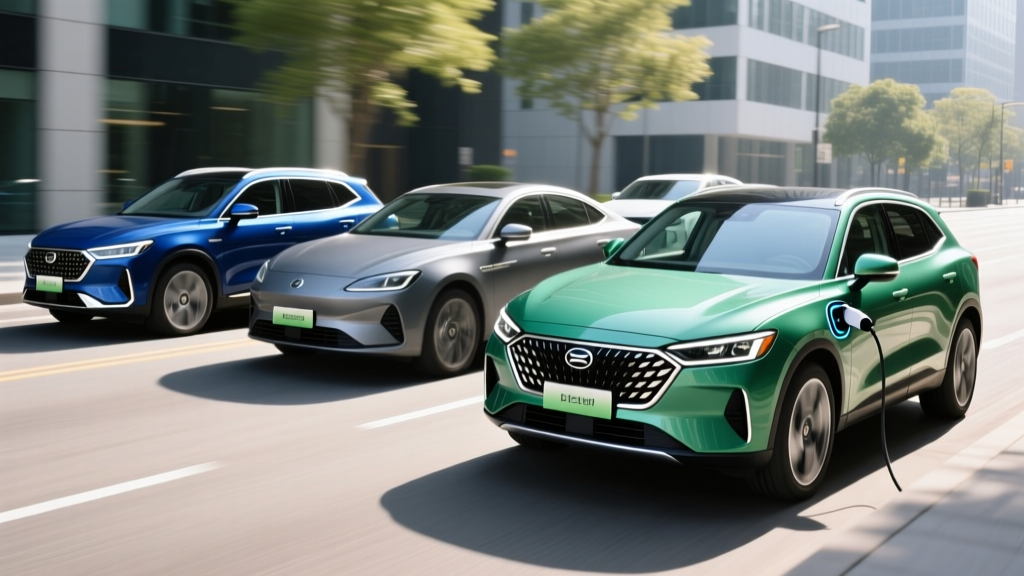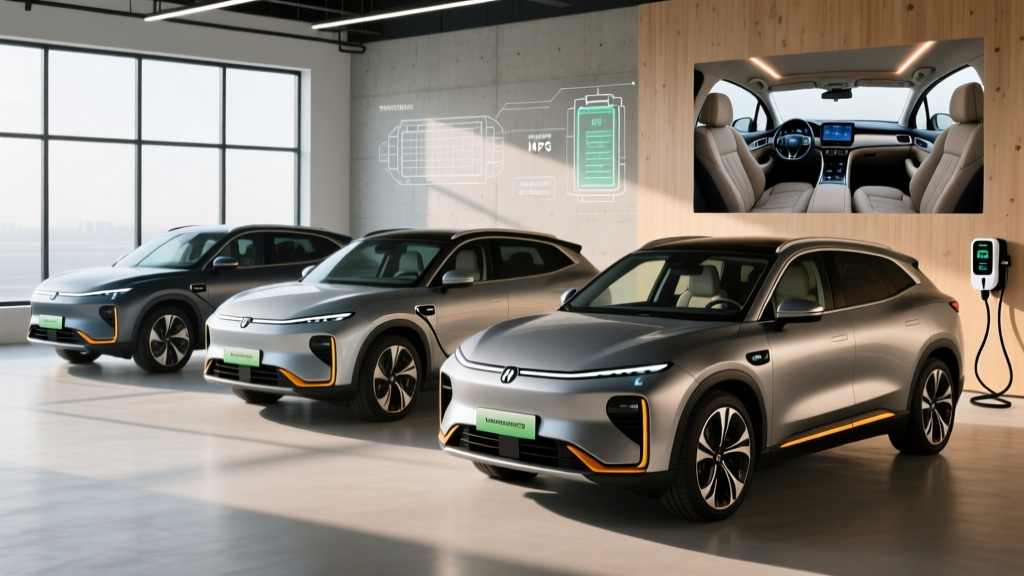
The Hybrid Plug In SUV Landscape in 2026
Plug-in hybrid SUVs occupy a specific niche: they deliver 25–45 miles of electric-only commuting, then switch to a gasoline-hybrid powertrain for longer trips — eliminating the range anxiety that still deters some buyers from full battery-electric vehicles. For 2026, the segment has matured. Larger PHEV batteries, faster Level 2 charging, and more competitive pricing mean the best hybrid plug in SUV models now cover most daily driving on electricity alone while retaining 400+ miles of total range.
This guide breaks down what a PHEV actually is, how it differs from a conventional hybrid, which models lead the segment in 2026, and whether a plug-in hybrid — or a full EV or standard HEV — is the right call for your garage.
HEV vs. PHEV: What's the Difference?
Before comparing models, the distinction matters because it changes how you fuel, what you pay, and which tax credits apply.
| Feature | Conventional Hybrid (HEV) | Plug-In Hybrid (PHEV) |
|---|---|---|
| Battery size | 0.5–2.0 kWh | 12–25+ kWh |
| Electric-only range | 0–1 mi (low-speed assist) | 25–45+ mi |
| Plugs in? | No — charges via regen & engine | Yes — Level 1 or Level 2 |
| Fuel economy (gas mode) | 35–50+ MPG combined | 25–40 MPG combined (after battery depleted) |
| Federal tax credit (§30D) | Not eligible | Up to $7,500 (if eligible) |
| Best for | No home charging access | Home charging + short commutes |
A conventional hybrid like the Toyota RAV4 Hybrid never plugs in. Its small battery captures energy from regenerative braking and the engine, delivering strong city MPG without any lifestyle change. A PHEV like the RAV4 Prime (now called RAV4 Plug-In Hybrid for 2026) has a much larger battery you charge at home or at public stations, giving you an electric-only commute before the gas engine ever starts.
Top Hybrid Plug In SUV Models for 2026
These five models represent the strongest PHEV SUV options available for the 2026 model year, chosen for electric range, overall efficiency, cargo practicality, and value.
Toyota RAV4 Plug-In Hybrid (2026)
Toyota's RAV4 PHEV remains the segment benchmark for combining electric-only range with proven hybrid reliability. The 2026 model carries over the 18.1 kWh battery pack and 302 combined horsepower powertrain (2.5L four-cylinder + front/rear electric motors providing standard AWD).
| Spec | Value |
|---|---|
| EPA electric-only range | 42 miles |
| EPA combined (hybrid mode) | 38 MPG (94 MPGe combined) |
| Battery | 18.1 kWh lithium-ion |
| Combined HP | 302 hp |
| 0–60 mph | 5.7 seconds |
| Level 2 charge time (240V) | ~2.5 hours (3.3 kW onboard charger) |
| DC fast charging | Not available |
| Base MSRP | $44,915 (SE trim) |
| Battery warranty | 10 years / 150,000 miles |
Real-world note: Owners consistently report exceeding the 42-mile EPA electric range in mild weather city driving — 45–48 miles is common. Highway driving at 70+ mph drops electric range to roughly 32–35 miles. In hybrid mode after battery depletion, expect 35–37 MPG on the highway, slightly below the EPA combined figure, per fueleconomy.gov data.
Hyundai Tucson Plug-In Hybrid (2026)
The Tucson PHEV received a refresh for 2025 with a larger battery, and the 2026 model carries the updated 13.8 kWh pack with an improved EPA-rated 33 miles of electric range. Its 1.6L turbocharged four-cylinder paired with a 6-speed automatic (no CVT) and electric motor produces 261 combined horsepower.
| Spec | Value |
|---|---|
| EPA electric-only range | 33 miles |
| EPA combined (hybrid mode) | 35 MPG (80 MPGe combined) |
| Battery | 13.8 kWh lithium-ion polymer |
| Combined HP | 261 hp |
| 0–60 mph | 7.1 seconds |
| Level 2 charge time (240V) | ~2 hours (7.2 kW onboard charger) |
| DC fast charging | Not available |
| Base MSRP | $39,690 (SEL Convenience) |
| Battery warranty | 10 years / 100,000 miles |
The Tucson PHEV's 7.2 kW onboard charger is a standout — it charges roughly twice as fast on Level 2 as the RAV4, making midday top-ups at workplace chargers more practical.
Ford Escape Plug-In Hybrid (2026)
Ford's Escape PHEV prioritizes electric range over power. Its 14.4 kWh battery delivers an EPA-rated 37 miles electric-only — second only to the RAV4 in this group — but the 210 hp combined output is the most modest here. It's front-wheel drive only, which limits its appeal in snow-belt states but improves efficiency.
| Spec | Value |
|---|---|
| EPA electric-only range | 37 miles |
| EPA combined (hybrid mode) | 40 MPG (105 MPGe combined) |
| Battery | 14.4 kWh lithium-ion |
| Combined HP | 210 hp |
| 0–60 mph | 8.5 seconds |
| Level 2 charge time (240V) | ~3.5 hours (3.3 kW onboard charger) |
| DC fast charging | Not available |
| Base MSRP | $38,500 (base PHEV) |
| Battery warranty | 8 years / 100,000 miles |
The Escape PHEV's 40 MPG combined in hybrid mode is the highest gas-mode figure in this comparison, making it a strong pick for drivers who frequently exceed their electric range.
Jeep Grand Cherokee 4xe (2026)
For buyers who need three-row-adjacent size (it seats five but offers substantial cargo room) and genuine off-road capability, the Grand Cherokee 4xe is the only PHEV SUV in this group with a trail-rated variant. The 2026 model pairs a 2.0L turbo four-cylinder with two electric motors and a 17.3 kWh battery.
| Spec | Value |
|---|---|
| EPA electric-only range | 26 miles |
| EPA combined (hybrid mode) | 25 MPG (56 MPGe combined) |
| Battery | 17.3 kWh lithium-ion |
| Combined HP | 375 hp / 470 lb-ft torque |
| 0–60 mph | 6.0 seconds |
| Level 2 charge time (240V) | ~2 hours (7.4 kW onboard charger) |
| DC fast charging | Not available |
| Base MSRP | $55,490 (base 4xe) |
| Battery warranty | 8 years / 100,000 miles |
The 4xe trades efficiency for capability: 375 hp, 6,125-lb towing capacity, and available air suspension. Its 26-mile electric range is the shortest here, and 25 MPG in hybrid mode reflects its 5,000+ lb curb weight.
Kia Sportage Plug-In Hybrid (2026)
Kia's Sportage PHEV shares its powertrain architecture with the Tucson but offers a slightly different tune and more aggressive pricing. The 2026 model produces 261 hp and an EPA-rated 34 miles of electric range with standard AWD.
| Spec | Value |
|---|---|
| EPA electric-only range | 34 miles |
| EPA combined (hybrid mode) | 35 MPG (84 MPGe combined) |
| Battery | 13.8 kWh lithium-ion polymer |
| Combined HP | 261 hp |
| 0–60 mph | 7.0 seconds |
| Level 2 charge time (240V) | ~2 hours (7.2 kW onboard charger) |
| DC fast charging | Not available |
| Base MSRP | $38,490 (X-Line PHEV) |
| Battery warranty | 10 years / 100,000 miles |
Fuel Economy & Real-World MPG: What to Actually Expect
| Model | EPA City | EPA Highway | EPA Combined | Real-World Hybrid Note |
|---|---|---|---|---|
| Toyota RAV4 PHEV | 40 MPG | 36 MPG | 38 MPG | City often exceeds EPA; hwy ~35 |
| Hyundai Tucson PHEV | 37 MPG | 33 MPG | 35 MPG | Consistent with EPA in mixed driving |
| Ford Escape PHEV | 42 MPG | 38 MPG | 40 MPG | City drivers report 43–45 MPG |
| Jeep Grand Cherokee 4xe | 25 MPG | 24 MPG | 25 MPG | Heavy vehicle — expect 22–24 hwy |
| Kia Sportage PHEV | 37 MPG | 33 MPG | 35 MPG | Matches Tucson; slightly better city |
Hybrids and PHEVs in gas mode tend to exceed EPA city estimates because regenerative braking recaptures energy in stop-and-go traffic that conventional vehicles waste as heat. Highway MPG often falls 1–3 MPG below the EPA sticker due to aerodynamic drag at sustained speeds. In electric mode, cold weather (below 32°F) can reduce range by 20–30% due to cabin heating demands and reduced battery efficiency — a 42-mile EPA rating may deliver 28–32 miles in January in Chicago.
Hybrid & PHEV Battery Warranty: What's Covered
Federal law mandates that hybrid and PHEV batteries carry a minimum warranty of 8 years / 100,000 miles (10 years / 150,000 miles in CARB states including California, New York, Massachusetts, and others). Toyota extends coverage to 10 years / 150,000 miles nationwide on its PHEV batteries. Hyundai and Kia match with 10 years / 100,000 miles. These warranties typically cover the battery if capacity drops below 60–70% of original, though exact thresholds vary by manufacturer. Full battery replacement outside warranty runs $4,000–$8,000 depending on the model, though failures within the warranty period remain rare based on long-term fleet data from Toyota and Hyundai PHEVs now exceeding 100,000 miles in service.
Federal Tax Credit Eligibility for PHEV SUVs
Under IRS §30D rules for 2026, plug-in hybrids may qualify for a federal tax credit of up to $7,500 — but eligibility is far from automatic. Key requirements:
- Battery capacity: The PHEV must have at least 7 kWh of battery capacity (all models above qualify).
- MSRP cap: SUVs must have an MSRP at or below $80,000 (all models above qualify at base trims; loaded Grand Cherokee 4xe trims may exceed this).
- Income cap: Modified adjusted gross income must not exceed $150,000 (single), $225,000 (head of household), or $300,000 (joint).
- Critical minerals & battery sourcing: A percentage of battery components must be manufactured or assembled in North America, and critical minerals must meet sourcing thresholds. These requirements tighten annually — check the fueleconomy.gov tax credit lookup for each specific VIN.
- Point-of-sale transfer: As of 2024, eligible buyers can transfer the credit to the dealer at purchase, reducing the sale price directly rather than waiting for a tax refund.
Conventional hybrids (non-plug-in) do not qualify for the §30D credit. Some PHEV models may qualify for a partial credit ($3,750) if they meet one of the two sourcing requirements but not both. Always verify eligibility for the exact model year and trim with your tax professional.
Hybrid vs. PHEV vs. Full EV: Which Fits Your Situation?
Choose a conventional hybrid (HEV) if: You have no access to home or workplace charging, you drive a mix of city and highway, and you want maximum simplicity with no plug-in routine. Models like the RAV4 Hybrid (39 MPG combined) or Honda CR-V Hybrid (40 MPG combined) deliver strong efficiency without lifestyle changes.
Choose a plug-in hybrid (PHEV) if: You can install a Level 2 charger at home, your daily commute is under 35 miles round-trip (covering most days on electricity), but you regularly take road trips exceeding 200 miles where charging infrastructure is uncertain. A PHEV gives you ~90% electric daily driving with zero range anxiety on long trips.
Choose a full battery EV if: You have reliable home charging, your daily driving is predictable, and you want the lowest per-mile fuel cost ($0.03–$0.05/mile on electricity vs. $0.12–$0.18/mile on gas). You accept that road trips require DC fast-charging stops every 200–300 miles.
Charging a Plug-In Hybrid: What You Need at Home
No PHEV SUV currently on the market supports DC fast charging — their batteries are too small to justify the added cost and weight. Charging happens exclusively via Level 1 (120V household outlet) or Level 2 (240V dedicated circuit).
| Charging Level | Power | Miles of Range Added/Hour | Full Charge Time (typical PHEV) |
|---|---|---|---|
| Level 1 (120V) | ~1.4 kW | 3–5 miles/hour | 8–12 hours |
| Level 2 (240V, 3.3 kW onboard) | 3.3 kW | 10–14 miles/hour | 2.5–4 hours |
| Level 2 (240V, 7.2 kW onboard) | 7.2 kW | 10–14 miles/hour* | ~2 hours |
*Miles-per-hour is limited by the vehicle's onboard charger capacity, not the EVSE. The Tucson and Sportage accept 7.2 kW, charging their 13.8 kWh batteries in ~2 hours. The RAV4 and Escape are limited to 3.3 kW onboard, so even a 48-amp Level 2 station will only deliver 3.3 kW to them.
For PHEV owners, a basic 16-amp Level 2 home charger ($300–$500 for the unit) is usually sufficient. Installation by a licensed electrician runs $500–$1,500 depending on whether your electrical panel needs an upgrade. Because PHEV batteries are small, overnight Level 1 charging from a standard outlet is often adequate — plugging in at 9 PM yields a full battery by 7 AM for most models.
Reliability, Maintenance & Long-Term Ownership
PHEV SUVs carry two powertrains — an internal combustion engine and an electric motor with a high-voltage battery. Counterintuitively, this doesn't mean double the maintenance. The engine runs less (often only on longer trips), reducing oil change frequency for commuters who stay in electric mode. Regenerative braking reduces brake pad wear significantly.
Toyota's hybrid system has the longest track record, with RAV4 Hybrid and PHEV models regularly exceeding 200,000 miles on original batteries. Hyundai and Kia's PHEV systems have proven reliable in early data, with fewer reported issues than their turbocharged gas-only counterparts. Jeep's 4xe system is newer and more complex (turbo engine + dual motors + 8-speed auto), and long-term reliability data is still accumulating.
Maintenance cost differences vs. gas-only SUVs are modest: expect to save $200–$400/year on brakes and oil but pay slightly more for insurance (typically 5–10% higher premiums for PHEVs due to higher repair costs after collisions).
PHEV SUV Advantages
- 25–42 miles of zero-gas commuting
- No range anxiety on road trips
- Reduced brake wear from regen
- Federal tax credit potential (up to $7,500)
- Quieter, smoother electric driving in daily use
- Precondition cabin while plugged in (saves energy)
PHEV SUV Trade-Offs
- Higher purchase price than HEV or gas versions
- Must plug in regularly to realize benefits
- No DC fast charging on any current model
- Added weight reduces efficiency vs. HEV when battery is empty
- Cargo space may be slightly reduced by battery placement
- Two systems to maintain long-term
Frequently Asked Questions
How many MPG does a plug-in hybrid SUV get?
In hybrid mode (after the battery is depleted), PHEV SUVs range from 25 MPG combined (Jeep Grand Cherokee 4xe) to 40 MPG combined (Ford Escape PHEV). Most models in this segment deliver 33–38 MPG combined. During electric-only driving, fuel consumption is zero — efficiency is measured in MPGe (miles per gallon equivalent), where the RAV4 PHEV achieves 94 MPGe.
How far can a PHEV SUV go on electric only?
Current 2026 PHEV SUVs deliver between 26 miles (Grand Cherokee 4xe) and 42 miles (RAV4 PHEV) of EPA-rated electric range. Real-world electric range varies with temperature, speed, and terrain. Expect 20–30% less range in freezing weather and at sustained highway speeds above 70 mph.
Do plug-in hybrids qualify for the $7,500 federal tax credit?
Some do, but eligibility depends on MSRP (under $80,000 for SUVs), buyer income limits, and battery-component/critical-mineral sourcing requirements that tighten each year. As of 2026, several PHEV SUVs qualify for the full or partial credit, but you must verify the specific model year and trim. Check the fueleconomy.gov database or consult a tax professional. Conventional hybrids do not qualify.
Is a hybrid plug in SUV reliable, and what does battery replacement cost?
PHEV reliability is generally strong, particularly from Toyota, Hyundai, and Kia, all of which back their batteries with 8–10 year / 100,000–150,000 mile warranties. Full battery replacement outside warranty costs $4,000–$8,000, but premature failures remain uncommon. Most hybrid batteries outlast the vehicle's typical ownership period.
Can I charge a PHEV SUV at a public fast charger?
No. Current PHEV SUVs do not support DC fast charging — their batteries are too small (12–18 kWh) to benefit from it, and the added hardware would increase cost and weight. You charge at home via Level 1 (standard outlet) or Level 2 (240V), or at public Level 2 stations.
Should I buy a PHEV or just go full electric?
If you can charge at home and your daily driving is under 40 miles, a PHEV lets you drive electric most days while keeping gas backup for road trips. If your daily driving is predictable, you have reliable home charging, and you're comfortable planning DC fast-charging stops on long trips, a full EV delivers lower operating costs and less maintenance over time. PHEVs are the pragmatic bridge; EVs are the lower-cost long-term play.