Why Hybrid Lease Deals Are Dominating in 2026
With new-vehicle transaction prices hovering above $48,000 and full EV charging infrastructure still uneven across the country, hybrid lease deals have become the smart middle ground for cost-conscious buyers. Leasing a hybrid — whether a conventional HEV that never needs a plug or a plug-in hybrid (PHEV) with 30-40 miles of electric-only range — lets you lock in a predictable monthly payment while sidestepping the steeper depreciation that has hit some battery-electric models.
But not every hybrid lease is created equal. Residual values, money factors, manufacturer incentives, and federal tax-credit pass-throughs all shape what you actually pay. Below, we break down the strongest hybrid lease deals available right now, with exact EPA fuel economy figures, PHEV electric-range data, battery warranty terms, and real-world efficiency numbers you can trust.
HEV vs PHEV: Which Hybrid Lease Is Right for You?
Before comparing specific lease offers, you need to know the fundamental difference between the two hybrid architectures on the market:
| Factor | Conventional Hybrid (HEV) | Plug-In Hybrid (PHEV) |
|---|---|---|
| Plugs in? | No — charges via regenerative braking and engine | Yes — charges via outlet or public charger |
| Electric-only range | None (motor assists engine at low speeds only) | Typically 25–45 miles on battery alone |
| Battery size | 0.6–1.6 kWh | 13–22 kWh (usable) |
| Fuel economy | 40–57 MPG combined | 30–40 MPG combined (gas mode); 80–105 MPGe (electric) |
| Federal tax credit | None under §30D | Up to $7,500 if battery sourcing & buyer income qualify |
| Home charging needed? | No | Recommended for full value; Level 1 overnight works |
| Ideal for | Drivers without home charging access | Drivers with home/garage charging and short commutes |
If you can charge at home and your daily commute is under 35 miles round-trip, a PHEV lease lets you drive on electricity most days while keeping a gas engine for road trips. If you live in an apartment or lack reliable charging, a conventional HEV delivers excellent MPG without any lifestyle change.
Top Hybrid Lease Deals: 2026 HEV Picks
2026 Toyota Prius LE
The redesigned Prius continues to set the efficiency benchmark. The LE trim's 2.0-liter four-cylinder paired with Toyota's fifth-generation hybrid transaxle produces 194 combined horsepower — a massive leap from the anemic Prius of a decade ago.
| Spec | 2026 Toyota Prius LE |
|---|---|
| EPA MPG (city / hwy / combined) | 57 / 56 / 57 |
| Combined HP | 194 |
| Battery | 0.9 kWh lithium-ion (sealed NiMH on AWD-e variant) |
| 0–60 mph | 7.2 seconds |
| MSRP | $29,450 |
| Typical lease (36 mo / 12k mi/yr) | $269–$309/mo with $2,500 due at signing |
| Federal tax credit | Not eligible (HEV) |
Real-world MPG note: The Prius LE consistently exceeds its EPA rating in city driving. On fueleconomy.gov, owners report averages of 58–62 MPG in mixed suburban driving. Highway-only trips at 75+ mph drop efficiency to roughly 48–52 MPG — still class-leading.
2026 Honda Accord Hybrid Sport-L
The Accord Hybrid's two-motor system prioritizes electric propulsion at city speeds, with the 2.0-liter Atkinson-cycle engine acting primarily as a generator. The result is a midsize sedan that feels more like an EV around town than any competitor in its segment.
| Spec | 2026 Honda Accord Hybrid Sport-L |
|---|---|
| EPA MPG (city / hwy / combined) | 51 / 44 / 48 |
| Combined HP | 204 |
| Battery | 1.1 kWh lithium-ion |
| 0–60 mph | 6.8 seconds |
| MSRP | $34,990 |
| Typical lease (36 mo / 12k mi/yr) | $339–$379/mo with $2,999 due at signing |
| Federal tax credit | Not eligible (HEV) |
Real-world MPG note: Expect 50–55 MPG in city and suburban conditions. Sustained highway driving at 70+ mph yields 40–44 MPG. The Accord Hybrid's city advantage over its EPA rating is a hallmark of Honda's e:HEV system, which runs in EV mode up to about 45 mph before the engine kicks in.
Top Plug-In Hybrid (PHEV) Lease Deals for 2026
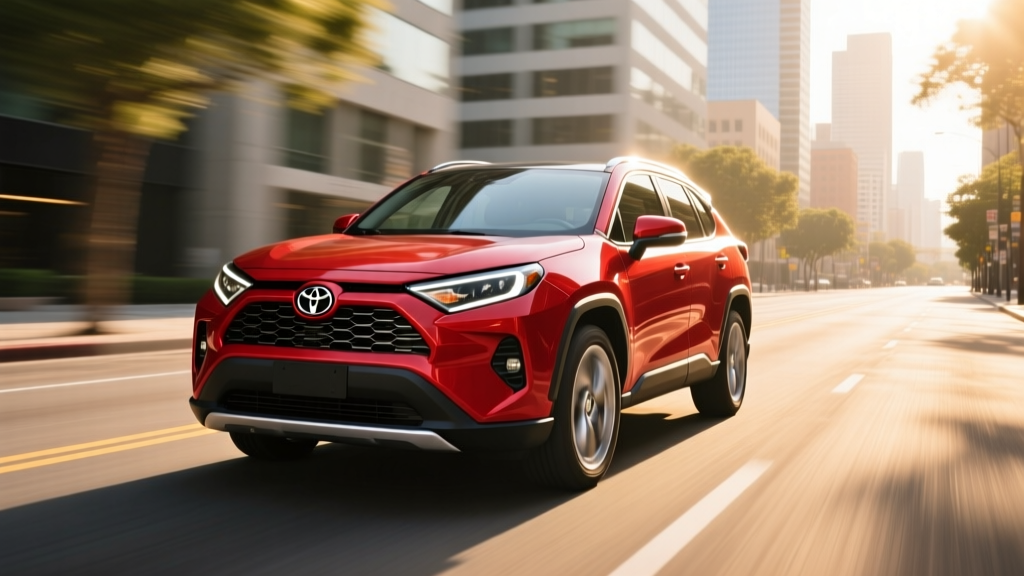
2026 Toyota RAV4 Prime SE
The RAV4 Prime remains one of the most in-demand PHEVs on the market, and for good reason: 42 miles of electric-only range, standard AWD, and 302 combined horsepower. Lease availability fluctuates by region, but when inventory opens up, deals are competitive.
| Spec | 2026 Toyota RAV4 Prime SE |
|---|---|
| Electric-only range (EPA) | 42 miles |
| Gas-mode MPG (combined) | 38 MPG |
| Combined range (electric + gas) | ~600 miles |
| Combined HP | 302 |
| Battery (usable) | 14.9 kWh lithium-ion |
| Level 2 charge time (0–100%) | ~2.5 hours at 6.6 kW |
| DC fast charging | Not supported |
| 0–60 mph | 5.7 seconds |
| MSRP | $44,865 |
| Typical lease (36 mo / 12k mi/yr) | $389–$449/mo with $3,500 due at signing |
| Federal tax credit | Up to $7,500 (subject to §30D sourcing & income rules) |
Tax credit caveat: The RAV4 Prime's eligibility for the full §30D federal credit depends on battery-component and critical-mineral sourcing requirements that shift annually. For 2026, verify current eligibility on the IRS clean vehicle credit page before signing. If you qualify, many dealers apply the credit as a point-of-sale reduction, effectively lowering your lease's capitalized cost and monthly payment by $150–$200/mo.
2026 Hyundai Tucson PHEV SEL
Hyundai's Tucson PHEV offers a practical electric-only commute range and a well-equipped interior at a price point undercutting most competitors. Its 1.6-liter turbocharged four-cylinder paired with a 72-kW electric motor delivers confident acceleration and genuine daily-driver usability on battery power alone.
| Spec | 2026 Hyundai Tucson PHEV SEL |
|---|---|
| Electric-only range (EPA) | 33 miles |
| Gas-mode MPG (combined) | 35 MPG |
| Combined range (electric + gas) | ~440 miles |
| Combined HP | 261 |
| Battery (usable) | 13.8 kWh lithium-ion |
| Level 2 charge time (0–100%) | ~2 hours at 7.2 kW |
| DC fast charging | Not supported |
| 0–60 mph | 6.9 seconds |
| MSRP | $38,975 |
| Typical lease (36 mo / 12k mi/yr) | $329–$379/mo with $2,999 due at signing |
| Federal tax credit | Up to $7,500 (subject to §30D sourcing & income rules) |
Real-world PHEV note: The Tucson PHEV's 33-mile EPA electric range is achievable in mild weather at speeds under 55 mph. In winter (below 35°F), expect 24–28 miles of electric range due to cabin heating demands and reduced battery efficiency. If your commute is under 25 miles each way, you'll still cover most trips on electricity year-round.
Side-by-Side MPG & Efficiency Comparison
| Model | Type | City MPG | Hwy MPG | Combined | EV Range (PHEV) | MPGe (PHEV) |
|---|---|---|---|---|---|---|
| Toyota Prius LE | HEV | 57 | 56 | 57 | — | — |
| Honda Accord Hybrid | HEV | 51 | 44 | 48 | — | — |
| Toyota RAV4 Prime | PHEV | 40* | 36* | 38* | 42 mi | 94 |
| Hyundai Tucson PHEV | PHEV | 37* | 33* | 35* | 33 mi | 80 |
* Gas-mode MPG after battery is depleted. MPGe reflects efficiency while running on electricity.
Battery Warranty, Lifespan, and Replacement Costs
Hybrid battery warranties are among the longest in the auto industry. Federal emissions regulations mandate a minimum 8-year/80,000-mile warranty on hybrid battery packs. In California Air Resources Board (CARB) states, coverage extends to 10 years / 150,000 miles. Here's what each manufacturer provides:
- Toyota (Prius, RAV4 Prime): 10 years / 150,000 miles on hybrid battery
- Honda (Accord Hybrid): 8 years / 100,000 miles (10/150k in CARB states)
- Hyundai (Tucson PHEV): 10 years / 100,000 miles on high-voltage battery
Replacement cost reality: If a hybrid battery fails outside warranty, replacement costs vary widely. A Prius HEV battery replacement runs $2,000–$3,500 at a dealer, with refurbished units available for $1,000–$1,800. PHEV batteries are larger and more expensive — a RAV4 Prime pack replacement is approximately $8,000–$12,000. However, real-world failure rates are extremely low. Toyota's hybrid battery packs routinely last 200,000+ miles with minimal degradation, as the system keeps the battery within a narrow state-of-charge window (roughly 40–80%) to maximize longevity.
Leasing advantage: If you lease, battery replacement is almost never your concern. A 36-month lease ends well within the 8–10 year warranty window. Even a 48-month lease keeps you covered. This is one reason hybrid leases carry lower risk than buying a high-mileage used hybrid out of warranty.
Hybrid vs PHEV vs EV: Which Should You Lease?
Choose a conventional hybrid (HEV) lease if:
- You don't have access to home or workplace charging
- You want maximum MPG with zero behavior change
- Your budget is under $350/mo
- You drive mostly city/suburban routes where hybrids shine
Choose a PHEV lease if:
- You have a garage or driveway with a 120V or 240V outlet
- Your daily commute is under 35 miles round-trip
- You want EV-like daily driving with gas-engine freedom for road trips
- You can take advantage of the §30D federal tax credit (up to $7,500)
Choose a full EV lease if:
- You have reliable Level 2 home charging
- Your daily driving is under 250 miles and you rarely take long road trips
- You want zero tailpipe emissions and the lowest per-mile fuel cost
- You're comfortable with public DC fast charging for occasional trips
How to Evaluate a Hybrid Lease Deal
Not every advertised lease is a good deal. Here's what to check before signing:
- Capitalized cost (cap cost): This is the negotiated vehicle price the lease is based on. It should be at or below MSRP. Ask for the cap cost in writing — some dealers inflate it to hide fees.
- Money factor: The lease equivalent of an interest rate. Multiply the money factor by 2,400 to get the approximate APR. A 0.00250 money factor = ~6.0% APR. Anything above 0.00300 (~7.2% APR) is expensive in the current rate environment.
- Residual value: The projected value at lease-end, expressed as a percentage of MSRP. Higher residuals mean lower monthly payments. Hybrid residuals have strengthened as demand grows — expect 58–65% on a 36-month lease for popular models.
- Tax credit application: For eligible PHEVs, confirm whether the dealer applies the §30D credit as a cap-cost reduction. This can shave $150–$200/mo off your payment. Per IRS rules, the point-of-sale transfer requires the dealer to be registered with the IRS Energy Credits Online portal.
- Mileage allowance: Standard leases offer 10,000 or 12,000 miles per year. If you commute more, negotiate 15,000 miles/year upfront — adding miles at lease-end costs $0.15–$0.25 per mile.
Federal Tax Credit Eligibility for PHEV Leases
- Vehicle MSRP cap: SUVs, vans, and pickups must have an MSRP ≤ $80,000; sedans and other vehicles ≤ $55,000
- Buyer income cap: Modified AGI ≤ $300,000 (joint), $225,000 (head of household), $150,000 (single)
- Battery sourcing: Minimum percentages of critical minerals and battery components must be sourced from the US or free-trade-agreement countries — thresholds increase annually through 2026
- Assembly: Vehicle must undergo final assembly in North America
- Point-of-sale transfer: You can transfer the credit to the dealer at purchase or the leasing company can claim it (which should reduce your lease cost)
Important: When you lease a PHEV rather than buy, the leasing company (the legal owner) may claim the commercial clean vehicle credit under §45W instead of the §30D consumer credit. Many leasing companies pass this savings through as a lower cap cost, but it is not legally required. Always ask your dealer how the credit is being applied to your specific lease.
Pros and Cons of Leasing a Hybrid in 2026
Pros
- Lower monthly payments than financing a purchase — typically 20–35% less
- Battery replacement is never your problem (fully covered under warranty during lease term)
- Drive a new hybrid every 3 years with the latest efficiency tech and safety features
- PHEV tax credits can reduce effective lease cost when passed through
- No resale-value risk if hybrid demand shifts
- Hybrids often exceed EPA city MPG in real-world driving
Cons
- You build no equity — at lease-end, you return the car or buy at residual price
- Mileage penalties ($0.15–$0.25/mile over limit) hurt high-mileage drivers
- Disposition fees ($300–$500) at lease-end if you don't lease again from the same brand
- PHEV leases may not pass the full tax-credit benefit to you
- Popular models (RAV4 Prime) may have limited lease inventory and higher money factors
Frequently Asked Questions
How many MPG does a hybrid get in real-world driving?
Conventional hybrids like the 2026 Toyota Prius LE achieve 57 MPG combined per the EPA, and real-world owners frequently report 58–62 MPG in city and suburban driving. Highway-only driving at 75+ mph reduces this to 48–52 MPG. The Honda Accord Hybrid delivers 48 MPG combined (EPA), with real-world city figures often reaching 50–55 MPG. For PHEVs, gas-mode MPG after battery depletion is lower — the RAV4 Prime achieves 38 MPG combined on gas alone, and the Tucson PHEV gets 35 MPG combined.
How far can a PHEV go on electric-only power?
The 2026 Toyota RAV4 Prime delivers 42 miles of EPA-rated electric-only range, enough for most daily commutes without using a drop of gas. The Hyundai Tucson PHEV provides 33 miles electric-only. In cold weather (below 35°F), expect a 15–25% reduction in electric range due to cabin heating demands and reduced battery efficiency. Once the battery depletes, both vehicles seamlessly switch to hybrid mode and continue on gasoline.
Is a hybrid reliable, and what does battery replacement cost?
Modern hybrids from Toyota, Honda, and Hyundai are among the most reliable vehicles on the road. Toyota's hybrid system has been refined over 25+ years, and battery packs routinely last 200,000+ miles. All three manufacturers cover hybrid batteries for 8–10 years and 100,000–150,000 miles depending on the brand and state. Out-of-pocket replacement costs range from $2,000–$3,500 for a Prius HEV battery to $8,000–$12,000 for a RAV4 Prime PHEV battery. If you lease, you'll return the vehicle long before battery replacement becomes relevant.
Do PHEVs qualify for a tax credit when leased?
Potentially, but the mechanics differ from a purchase. Under IRS §30D, the buyer of an eligible new PHEV can claim up to $7,500 in federal tax credits if income, MSRP, and battery-sourcing requirements are met. When leasing, the leasing company is the legal owner and may claim a commercial clean vehicle credit under §45W instead. Many lessors pass this savings through as a reduced cap cost (lowering your monthly payment), but this is not guaranteed. Always ask the dealer for written confirmation of how the credit is applied to your lease.
Can I charge a PHEV at home on a regular outlet?
Yes. Both the RAV4 Prime and Tucson PHEV include a Level 1 charging cable that plugs into a standard 120V household outlet. At 120V, the RAV4 Prime's 14.9 kWh battery charges in approximately 12 hours, and the Tucson PHEV's 13.8 kWh battery in about 11 hours — easily overnight. For faster charging, a 240V Level 2 home charger (requiring a 240V outlet or hardwired installation by a licensed electrician) cuts charge time to 2–2.5 hours. Neither vehicle supports DC fast charging, which is typical for PHEVs given their smaller battery sizes.
Should I lease a hybrid or a full EV?
It depends on your charging access and driving patterns. If you have Level 2 home charging and rarely drive more than 250 miles in a day, a full EV offers lower per-mile fuel costs (roughly $0.04–$0.06 per mile on electricity vs. $0.08–$0.12 for a hybrid on gas) and zero tailpipe emissions. If you lack home charging, frequently take long road trips, or live in an area with sparse public charging infrastructure, a hybrid or PHEV eliminates range anxiety while still delivering significant fuel savings. A PHEV lease is the best of both worlds for many drivers — electric commuting during the week, gas-powered freedom on weekends.