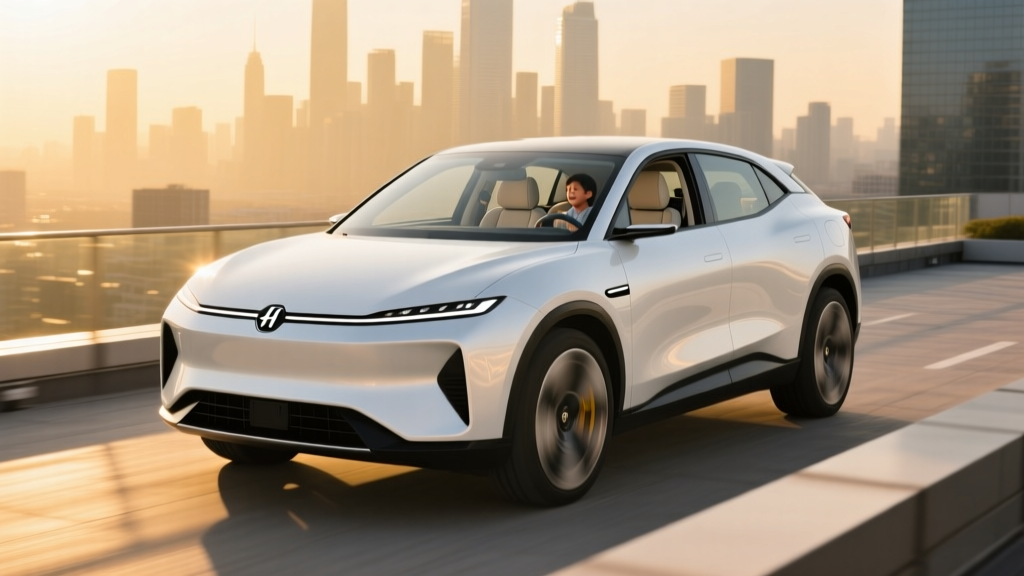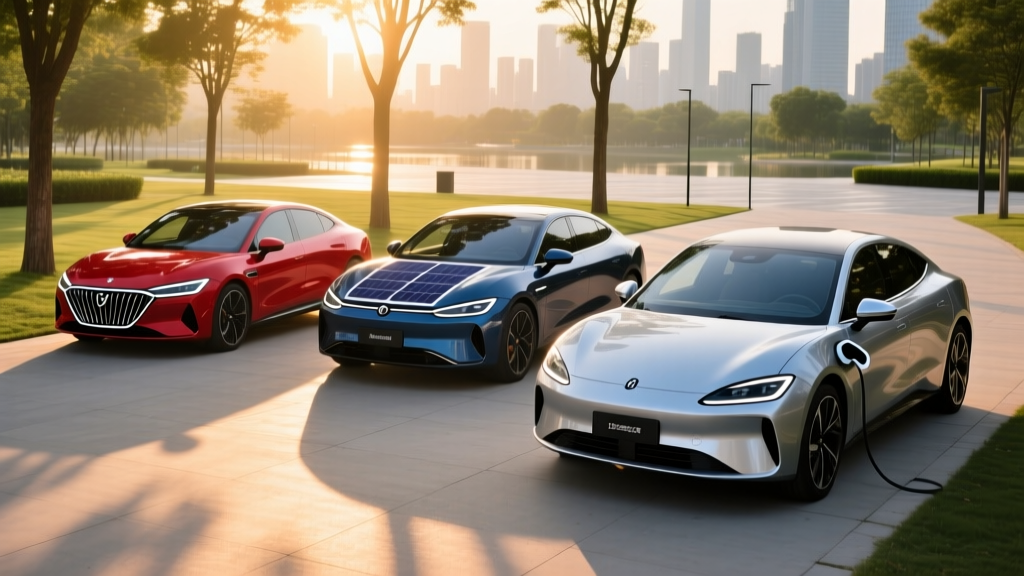
The hatchback body style has always been about practicality, and pairing it with a hybrid powertrain creates one of the most efficient vehicles you can buy. For 2026, the hybrid hatchback segment is small but outstanding — led by the redesigned Toyota Prius lineup and a handful of compelling alternatives. Whether you want a conventional hybrid (HEV) that never needs plugging in or a plug-in hybrid (PHEV) that covers your daily commute on electricity alone, this guide breaks down every critical number you need before buying.
HEV vs PHEV: Which Hybrid Hatchback Type Fits You?
Before comparing specific models, it's essential to understand the two types of hybrid hatchback cars available. A conventional hybrid (HEV) uses a small battery recharged entirely through regenerative braking and the gasoline engine — you never plug it in. A plug-in hybrid (PHEV) carries a larger battery that you can charge from a wall outlet or public charger, giving you a pure electric driving range before the gas engine kicks in.
| Feature | Conventional Hybrid (HEV) | Plug-In Hybrid (PHEV) |
|---|---|---|
| Plug-in charging required? | No | Yes (for electric-only range) |
| Electric-only range | None (motor assists engine) | 25–45 miles typical |
| Battery size | ~1.0–1.5 kWh | ~10–14 kWh usable |
| Federal tax credit eligible? | No | Up to $3,750 (§30D, varies) |
| Best for | No home charging access, long commutes | Home charging, short daily commutes |
| Price premium over gas | ~$1,500–$3,000 | ~$4,000–$7,000 |
The decision often comes down to one question: Can you charge at home? If yes, a PHEV hatchback lets you drive 30+ miles daily on electricity — effectively an EV for most commutes — while keeping a gas engine for road trips. If you live in an apartment without charging access, an HEV gives you outstanding MPG with zero behavioral change.
2026 Toyota Prius: The Benchmark Hybrid Hatchback
The Toyota Prius remains the default answer when shoppers search for hybrid hatchback cars, and the current fifth-generation model (introduced for 2023, refreshed through 2026) earned its reputation with genuinely impressive numbers. Toyota's 2.0-liter four-cylinder hybrid powertrain produces a combined 194 horsepower on front-wheel-drive trims and 196 hp with the available electronic all-wheel drive (AWD-e). That's a dramatic improvement over the anemic pre-2023 Prius, and it shows in the 0–60 mph time of approximately 7.2 seconds for FWD models.
| Specification | 2026 Prius LE (FWD) | 2026 Prius XLE/Limited (FWD) | 2026 Prius AWD-e |
|---|---|---|---|
| Combined HP | 194 hp | 194 hp | 196 hp |
| Engine | 2.0L I4 + electric motor | 2.0L I4 + electric motor | 2.0L I4 + dual motors |
| EPA City MPG | 57 | 52 | 49 |
| EPA Highway MPG | 52 | 48 | 46 |
| EPA Combined MPG | 55 | 50 | 48 |
| 0–60 mph | ~7.2 sec | ~7.2 sec | ~7.0 sec |
| Battery | ~1.3 kWh lithium-ion | ~1.3 kWh lithium-ion | ~1.3 kWh lithium-ion |
| Cargo (rear seats up) | 23.8 cu ft | 23.8 cu ft | 23.8 cu ft |
| Starting MSRP | ~$29,450 | ~$32,600 | ~$33,800 |
According to fueleconomy.gov, the Prius LE achieves a remarkable 55 MPG combined. The trade-off for stepping up to the XLE or Limited trim — larger 19-inch wheels, additional tech features — is a 5 MPG combined drop to 50. The AWD-e model, which adds a rear electric motor for traction in inclement weather, drops to 48 combined.
Real-World MPG: What Owners Actually See
Hybrids often exceed their EPA ratings in city driving because regenerative braking recovers energy in stop-and-go traffic. In real-world ownership, Prius drivers frequently report 55–62 MPG in city-heavy commutes, particularly in warm climates where the engine doesn't need to run the heater. Highway-only driving at 75+ mph typically yields 45–50 MPG, and cold-weather operation (below 30°F) can drop city MPG by 10–15% as the engine runs more frequently for cabin heat and battery warming. Expect a realistic annual average of 48–55 MPG combined depending on your climate and driving mix.
2026 Toyota Prius Prime: The PHEV Hatchback Option
For buyers who want electric-only commuting with the flexibility of a gas engine, the Prius Prime is the plug-in hybrid version of the Prius hatchback. It pairs the same 2.0-liter engine with a larger 13.6 kWh lithium-ion battery pack (usable capacity approximately 10.8 kWh) and a more powerful electric motor.
| Specification | 2026 Prius Prime SE | 2026 Prius Prime XSE/XSE Premium |
|---|---|---|
| Combined HP | 220 hp | 220 hp |
| EPA Electric-Only Range | 44 miles | 40 miles |
| EPA Combined MPGe | 127 MPGe | 117 MPGe |
| EPA Combined MPG (gas only) | 52 MPG | 48 MPG |
| Total Range (electric + gas) | ~490 miles | ~460 miles |
| Battery (usable) | 13.6 kWh total / ~10.8 usable | 13.6 kWh total / ~10.8 usable |
| Level 1 Charge Time (120V) | ~11 hours (0–100%) | ~11 hours (0–100%) |
| Level 2 Charge Time (240V) | ~4 hours (0–100%) | ~4 hours (0–100%) |
| DC Fast Charging | No | No |
| 0–60 mph | ~6.6 sec | ~6.6 sec |
| Starting MSRP | ~$34,100 | ~$37,500 |
The Prius Prime SE delivers an EPA-rated 44 miles of electric-only range — enough to cover the average American's one-way commute with room to spare. When the battery depletes, it seamlessly transitions to hybrid mode at 52 MPG combined. The 220 combined horsepower also makes it the quickest Prius variant, hitting 60 mph in approximately 6.6 seconds.
Important charging note: The Prius Prime does not support DC fast charging. This is common for PHEVs — the battery is small enough that Level 2 (240V) charging at 3.3–3.6 kW fully replenishes it in about 4 hours, which works well for overnight home charging. On a standard 120V household outlet (Level 1), expect roughly 11 hours for a full charge.
Alternatives: Other Hybrid Hatchbacks Worth Considering
While the Prius dominates, a few other hybrid hatchback cars compete in this space for 2026:
Hyundai Ioniq Hybrid (Discontinued After 2022)
The Hyundai Ioniq Hybrid was once the Prius's main rival, achieving up to 58 MPG combined in its final model year. Hyundai discontinued the Ioniq nameplate to focus on the all-electric Ioniq 5 and Ioniq 6. If you find a certified pre-owned 2022 Ioniq, it remains an excellent used hybrid hatchback with strong reliability data and up to 59 MPG city.
Toyota Prius Nightshade and Sport Trims
Toyota has expanded the Prius lineup with appearance-oriented trims like the Nightshade Edition, which adds blacked-out wheels and trim accents. Mechanically identical to the XLE, these trims offer the same 50 MPG combined with a sportier aesthetic, starting around $34,000.
Ford Maverick Hybrid (Truck, Not Hatchback — But Worth a Mention)
While not a hatchback, the Ford Maverick Hybrid deserves a note for buyers who want hybrid efficiency with maximum cargo versatility. Its 2.5-liter hybrid powertrain achieves 42 MPG combined, and the truck bed offers far more hauling capability than any hatchback. Starting MSRP is approximately $28,000 for the hybrid-equipped model.
Battery Warranty, Reliability, and Replacement Costs
Hybrid battery longevity is one of the most common concerns among buyers. Here's what you need to know:
Hybrid Battery Warranty Coverage
- Toyota (Prius / Prius Prime): 10 years / 150,000 miles (whichever comes first) on the hybrid battery in all 50 states, covering defects and capacity loss below a defined threshold.
- Hyundai (CPO Ioniq): Originally 10 years / 100,000 miles for the original owner; transfers to 5 years / 60,000 miles for subsequent owners unless certified pre-owned.
- Federal mandate: All hybrids and PHEVs sold in the US must carry at minimum an 8-year / 100,000-mile warranty on emissions-related components including the hybrid battery (10/150,000 in CARB states).
In practice, modern lithium-ion hybrid batteries are proving extremely durable. Toyota's hybrid synergy drive system has accumulated billions of real-world miles across multiple generations, and widespread battery failures before 150,000 miles are rare. Data from fleet operators and long-term owners suggests that most Prius hybrid batteries retain 85–90% of original capacity at 100,000 miles. The smaller battery in a conventional HEV undergoes shallower charge/discharge cycles than a full EV battery, which contributes to its longevity.
What Does Hybrid Battery Replacement Cost?
If you do need a replacement outside of warranty, expect to pay:
- Toyota Prius HEV battery: $2,000–$3,500 (new OEM), $1,000–$2,000 (remanufactured)
- Toyota Prius Prime PHEV battery: $4,000–$6,500 (new OEM, larger capacity)
- Labor: $300–$600 additional at most shops
These costs have decreased significantly over the past decade as third-party remanufactured batteries have become widely available. Many independent hybrid specialists now offer replacement at roughly half the dealer price.
Federal Tax Credits: Which Hybrid Hatchbacks Qualify?
This is where the distinction between HEV and PHEV matters significantly for your wallet.
IRS §30D Clean Vehicle Credit — PHEV Eligibility Requirements
- Vehicle type: Must be a plug-in hybrid or full EV with at least 7 kWh of battery capacity (Prius Prime qualifies with 13.6 kWh)
- MSRP cap: Vans/SUVs/trucks up to $80,000; sedans/hatchbacks up to $55,000 — all Prius Prime trims fall under this cap
- Buyer income cap: Modified AGI must not exceed $150,000 (single), $225,000 (head of household), or $300,000 (joint filers)
- Battery sourcing: Critical minerals and battery component requirements phase in annually; check current-year rules at IRS.gov §30D
- Credit amount: Up to $3,750 for the Prius Prime (varies based on critical-mineral and battery-component sourcing compliance; the full $7,500 requires meeting both thresholds)
- Point-of-sale transfer: As of 2024, you can transfer the credit to the dealer at purchase for an immediate price reduction — you do not need to wait until tax filing
- Conventional HEV (standard Prius): Does not qualify for §30D — no plug-in capability
The standard Prius HEV does not qualify for the federal §30D tax credit because it lacks plug-in charging capability. However, some states and local utilities offer rebates for conventional hybrids — check your state energy office or utility provider for current programs. The Prius Prime, as a PHEV, may qualify for up to $3,750 in federal credit depending on your income, the vehicle's battery sourcing compliance, and current-year IRS rules. Always consult a tax professional to confirm eligibility for your specific situation.
Hybrid vs PHEV vs EV: Which Powertrain Should You Choose?
The hybrid hatchback segment exists at a crossroads between traditional gas vehicles and full battery-electric vehicles. Here's a practical decision framework:
Choose a Conventional Hybrid (HEV) If:
- You cannot charge at home or work (apartment living, street parking)
- You want maximum MPG with zero lifestyle change
- You drive a mix of city and highway with frequent long road trips
- Your budget is under $35,000 and you want the lowest upfront cost
- You live in an area with limited public charging infrastructure
Choose a Plug-In Hybrid (PHEV) If:
- You have reliable home Level 2 charging (or can install it)
- Your daily round-trip commute is under 40 miles
- You want EV-like daily driving but need gas flexibility for road trips
- You want to reduce fuel costs significantly without range anxiety
- You qualify for the federal PHEV tax credit, narrowing the price gap
Choose a Full EV If:
- You have home charging and your daily driving is under 250 miles
- You want zero tailpipe emissions and the lowest per-mile fuel cost
- You qualify for the full $7,500 federal EV credit on eligible models
- You're ready to plan longer road trips around DC fast-charging stops
- You want minimal maintenance (no oil changes, no engine)
For many buyers, a PHEV hatchback like the Prius Prime represents the lowest-risk entry into electrification. You get 40+ miles of electric commuting — which, according to FHWA data, covers the vast majority of daily driving — while retaining the gas engine for the 5% of trips that exceed your electric range. The trade-off is carrying two powertrains, which adds weight and mechanical complexity compared to a pure EV or pure hybrid.
Ownership Costs: Hybrid Hatchback vs Gas vs EV
To put the economics in perspective, here's a simplified 5-year cost comparison for a driver covering 15,000 miles per year:
| Cost Factor | Prius HEV (55 MPG) | Prius Prime PHEV (44 mi EV + 52 MPG) | Gas Compact (30 MPG) |
|---|---|---|---|
| Purchase Price (base MSRP) | ~$29,450 | ~$34,100 | ~$25,000 |
| Federal Tax Credit | $0 | Up to $3,750 | $0 |
| Effective Purchase Price | ~$29,450 | ~$30,350 | ~$25,000 |
| 5-Year Fuel Cost* | ~$4,100 | ~$2,400 (electricity + gas) | ~$7,500 |
| 5-Year Maintenance (est.) | ~$2,200 | ~$2,000 | ~$3,000 |
| 5-Year Total (purchase + fuel + maint.) | ~$35,750 | ~$34,750 | ~$35,500 |
*Assumes $3.50/gallon gasoline and $0.14/kWh home electricity. PHEV assumes 70% of miles driven on electricity. Actual costs vary by region and driving pattern.
The Prius Prime PHEV, after accounting for the federal credit and dramatically lower fuel costs, can actually undercut a comparable gas compact car on 5-year total cost — while offering a far superior driving experience. The conventional Prius HEV breaks roughly even with a gas car on total cost but provides substantially more cargo versatility and better city MPG.
Pros and Cons of Today's Hybrid Hatchbacks
Pros
- Outstanding fuel economy: 48–57 MPG combined (HEV) or 127 MPGe (PHEV)
- No range anxiety: Gas engine provides 400+ miles of total range
- Lower maintenance: Regenerative braking extends brake life; no turbo or complex emissions systems
- Proven reliability: Toyota's hybrid system has 25+ years of real-world data
- Strong resale value: Prius models hold value well, especially in high-fuel-cost markets
- Hatchback practicality: 23+ cu ft cargo, fold-flat rear seats
Cons
- Limited model selection: Very few hybrid hatchbacks remain on the new-car market
- No DC fast charging (PHEV): Prius Prime cannot use public fast chargers
- AWD availability: Only the standard Prius HEV offers AWD-e; the Prime is FWD only
- Modest performance: 194–220 hp is adequate but not sporty
- HEV doesn't qualify for federal credit: Only the plug-in Prime is eligible
- Toyota reliability tax: High demand can mean limited dealer inventory and minimal discounts
Frequently Asked Questions
How many MPG does the 2026 Toyota Prius hybrid hatchback get?
The 2026 Toyota Prius LE achieves an EPA-rated 57 city / 52 highway / 55 combined MPG. The XLE and Limited trims drop to 52/48/50 due to larger wheels. The AWD-e variant rates at 49/46/48 combined. In real-world city driving with regenerative braking, many owners report 55–62 MPG, while sustained highway driving at 75+ mph typically yields 45–50 MPG.
How far can the Prius Prime go on electric-only power?
The 2026 Prius Prime SE delivers an EPA-rated 44 miles of electric-only range, while the XSE and XSE Premium trims achieve 40 miles (due to heavier equipment and larger wheels). This covers the average American commute of approximately 16 miles one-way with significant margin. Once the battery depletes, the Prime operates as a conventional hybrid at 52 MPG combined.
Is the Toyota Prius hybrid reliable, and what does battery replacement cost?
The Toyota Prius has one of the strongest reliability records of any vehicle on the road. Toyota's hybrid system is now in its fifth generation with billions of cumulative miles of real-world data. The hybrid battery is covered by a 10-year / 150,000-mile warranty. If replacement is needed outside warranty, expect $2,000–$3,500 for a new OEM HEV battery or $1,000–$2,000 for a remanufactured unit. Widespread failures before 150,000 miles are uncommon.
Does the Toyota Prius qualify for any tax credit?
The conventional Prius HEV does not qualify for the federal §30D Clean Vehicle Credit because it cannot be plugged in. The Prius Prime PHEV may qualify for up to $3,750, depending on battery sourcing compliance and your income (capped at $150K single / $300K joint filers). The credit can be transferred to the dealer at point of sale for an immediate price reduction. Check current-year eligibility at IRS.gov and consult a tax professional.
Should I buy a hybrid hatchback or a full electric vehicle?
Choose a hybrid hatchback if you lack home charging, regularly drive more than 250 miles in a day, or want the lowest-risk entry into fuel-efficient driving. Choose a full EV if you have reliable home charging, your daily driving is under 250 miles, and you want the lowest per-mile operating cost and zero tailpipe emissions. A PHEV like the Prius Prime splits the difference — electric commuting with gas backup — and is ideal for households with one vehicle that must serve both commuting and road-trip duties.
Do conventional hybrids need to be plugged in?
No. Conventional hybrids (HEVs) like the standard Toyota Prius recharge their small battery entirely through regenerative braking and the gasoline engine. You simply fill up with gas and drive. Only plug-in hybrids (PHEVs) like the Prius Prime benefit from being plugged in — and even a PHEV will function normally as a hybrid if you never charge it, though you'll miss the electric-only range benefit.