California drivers face a unique calculus when choosing an electrified vehicle. The state's sprawling metro areas, long highway corridors, and relatively high gas prices (frequently above $5.00/gallon) make fuel efficiency a financial priority—not just an environmental one. But with limited home-charging access in dense urban apartments and a public DC fast-charging network still expanding, a full battery-electric vehicle (BEV) isn't practical for everyone. That's where hybrids and plug-in hybrids fill a critical gap.
This guide breaks down the best hybrid and plug-in hybrid vehicles for California buyers in 2026, with exact EPA fuel economy, real-world efficiency expectations, pricing, warranty coverage, and state-specific incentive eligibility. Whether you're commuting in LA traffic, driving the 5 to Sacramento, or navigating Bay Area hills, we'll help you match the right powertrain to your lifestyle.
HEV vs PHEV: What California Buyers Need to Know
Before comparing models, it's essential to understand the two types of hybrid vehicles available—and they serve very different use cases.
| Feature | Conventional Hybrid (HEV) | Plug-In Hybrid (PHEV) |
|---|---|---|
| Plug in to charge? | No — charges via regen & engine | Yes — plug in for electric-only miles |
| Electric-only range | None (electric assist only) | 20–45 miles typical (2026 models) |
| Battery size | 1.0–2.0 kWh (small buffer) | 13–22 kWh usable |
| Home charging needed? | No | Strongly recommended (Level 1 or 2) |
| Federal tax credit (§30D)? | No | Up to $7,500 (if eligible) |
| CVRP rebate (CA)? | No | Up to $2,000 income-dependent |
| Best for | No home charging, highway-heavy driving | Home charging access, short commutes |
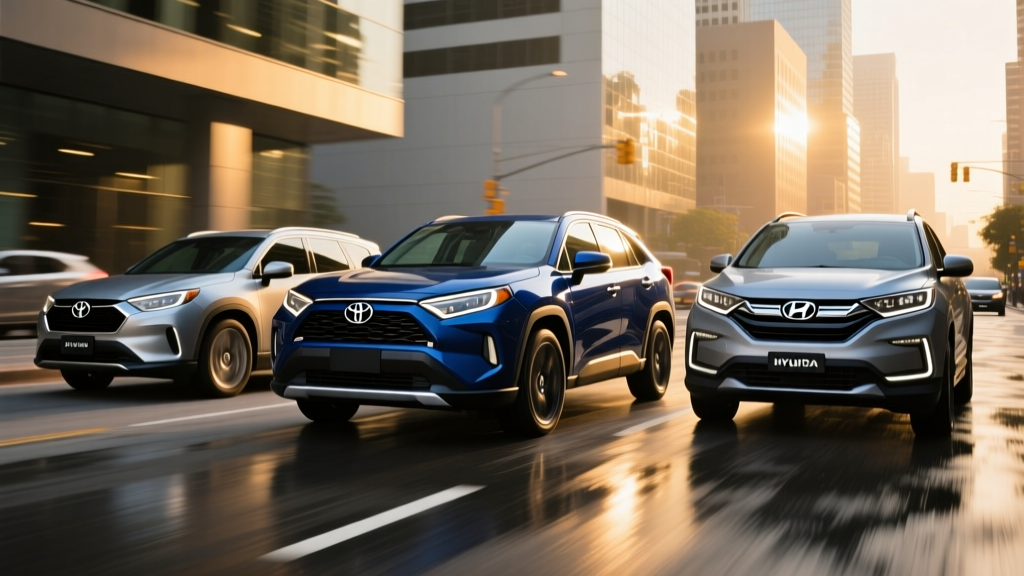
A conventional hybrid (HEV) like the Toyota RAV4 Hybrid uses a small battery and electric motor to assist the gas engine. You never plug it in. It recovers energy through regenerative braking and generates electricity from the engine. The result: significantly better MPG than a gas-only car, especially in stop-and-go city traffic where the electric motor does more work.
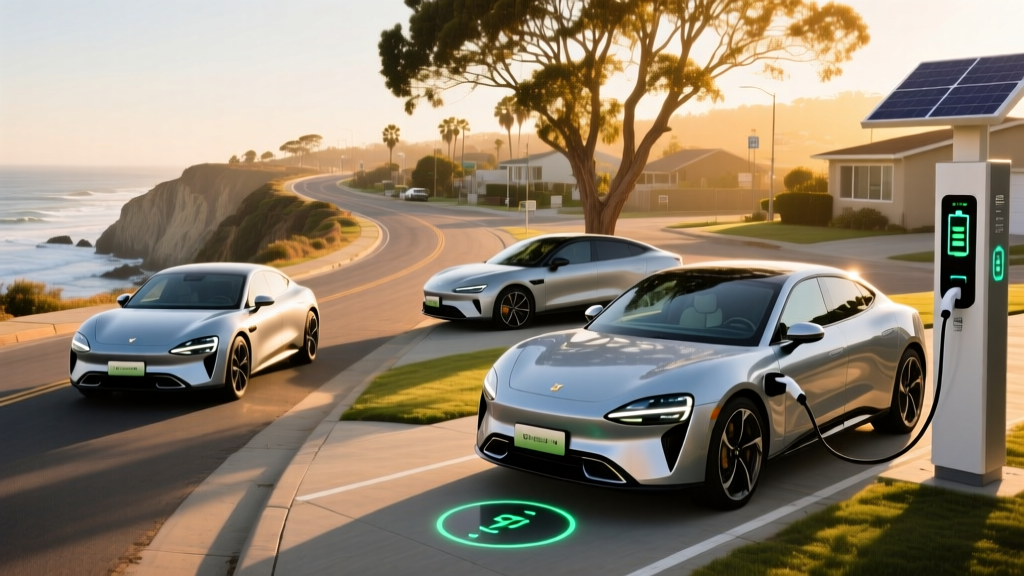
A plug-in hybrid (PHEV) like the Toyota RAV4 Prime has a much larger battery that you charge by plugging in. It can drive 20–45 miles on electricity alone before the gas engine kicks in. If your daily round-trip commute falls within that electric range and you charge at home, you may go weeks without visiting a gas station—but you always have the engine as a backup for road trips.
Top Conventional Hybrids for California Commuters
These HEVs require zero lifestyle change—just fill up with gas and drive. They're ideal for apartment dwellers without charging access or anyone who wants maximum simplicity.
2026 Toyota RAV4 Hybrid
| Spec | Value |
|---|---|
| Powertrain | 2.5L 4-cyl + 2 electric motors, AWD (electronic) |
| Combined Horsepower | 219 hp |
| EPA City / Hwy / Combined | 41 / 38 / 40 MPG |
| Real-World Expectation | 38–43 MPG (city-biased driving can exceed EPA) |
| Battery | ~1.6 kWh NiMH (self-charging, no plug) |
| 0–60 mph | 7.4 seconds |
| Base MSRP (LE AWD) | $33,575 |
| Hybrid Battery Warranty | 10 years / 150,000 miles |
The RAV4 Hybrid remains the best-selling hybrid SUV in America for good reason. In real-world California commuting—especially stop-and-go traffic on the 405 or 101—owners consistently report exceeding the EPA city estimate, with many seeing 42–44 MPG in urban driving. Hybrids tend to outperform their EPA city numbers because regenerative braking captures energy that a gas car wastes as heat at every stoplight.
Highway efficiency is slightly lower than the city figure because the electric motor assists less at sustained high speeds. On a 500-mile road trip up the Pacific Coast Highway, expect closer to 36–38 MPG at 70+ mph.
2026 Honda CR-V Hybrid
| Spec | Value |
|---|---|
| Powertrain | 2.0L 4-cyl + 2-motor hybrid system, AWD available |
| Combined Horsepower | 204 hp |
| EPA City / Hwy / Combined | 40 / 34 / 37 MPG (AWD) |
| Real-World Expectation | 35–41 MPG depending on driving mix |
| Battery | ~1.1 kWh lithium-ion (self-charging) |
| 0–60 mph | 7.6 seconds |
| Base MSRP (Sport AWD) | $36,400 |
| Hybrid Battery Warranty | 8 years / 100,000 miles (10 yr / 150k in CA as PZEV) |
Honda's two-motor hybrid system operates primarily as a series hybrid at lower speeds—the gas engine generates electricity for the drive motor rather than turning the wheels directly. This gives the CR-V Hybrid a smooth, EV-like feel around town. The AWD system adds a rear-mounted electric motor that engages when traction is needed, such as on rainy Sierra Nevada passes.
Top Plug-In Hybrids for California Drivers
If you have access to a standard 120V outlet or a Level 2 charger at home, a PHEV lets you do most daily driving on electricity while keeping a gas engine for longer trips. California's electricity rates (average ~$0.30/kWh residential, though time-of-use plans can drop off-peak rates to $0.15–0.20/kWh) make PHEV charging cost-effective compared to $5+ gas.
2026 Toyota RAV4 Prime
| Spec | Value |
|---|---|
| Powertrain | 2.5L 4-cyl + front/rear electric motors, AWD |
| Combined Horsepower | 302 hp |
| EPA Electric-Only Range | 42 miles |
| EPA Combined (gas after battery) | 38 MPG |
| Total Combined Range | ~600 miles |
| MPGe (electric mode) | 94 MPGe |
| Battery (usable) | 18.1 kWh lithium-ion |
| Level 1 Charge (120V) | ~12 hours (full) |
| Level 2 Charge (240V, 6.6 kW) | ~2.5 hours (full) |
| DC Fast Charge? | No |
| 0–60 mph | 5.7 seconds |
| Base MSRP (SE) | $45,460 |
| Federal Tax Credit (§30D) | Up to $7,500 (eligibility varies — see below) |
| PHEV Battery Warranty | 10 years / 150,000 miles |
The RAV4 Prime is the most powerful RAV4 in the lineup and one of the best PHEVs on the market. With 42 miles of electric-only range, most California commuters can handle a round-trip daily commute without burning a drop of gas. A Sacramento-to-Folsom commuter (roughly 25 miles each way) would use almost no gas on weekdays.
The 302 combined horsepower makes this genuinely quick—5.7 seconds to 60 mph is sports-sedan territory in a compact SUV. The trade-off is availability: the RAV4 Prime has faced persistent demand-driven shortages, so expect potential wait times at California dealers.
2026 Chrysler Pacifica Hybrid
| Spec | Value |
|---|---|
| Powertrain | 3.6L V6 + 2 electric motors (eCVT), FWD |
| Combined Horsepower | 260 hp |
| EPA Electric-Only Range | 32 miles |
| EPA Combined (gas after battery) | 30 MPG |
| Total Combined Range | ~520 miles |
| MPGe (electric mode) | 82 MPGe |
| Battery (usable) | 16.0 kWh lithium-ion |
| Level 2 Charge (240V, 6.6 kW) | ~2 hours (full) |
| DC Fast Charge? | No |
| Base MSRP | $51,095 |
| Federal Tax Credit (§30D) | Up to $7,500 (check current sourcing rules) |
| PHEV Battery Warranty | 10 years / 100,000 miles |
The Pacifica Hybrid is the only plug-in hybrid minivan available, making it the default choice for California families who need three rows and want some electric driving. Thirty-two miles of electric range covers school runs, grocery trips, and short commutes in EV mode, with the V6 taking over for family road trips to Yosemite or Joshua Tree.
Fuel Economy Deep Dive: Real-World MPG vs EPA Stickers
One of the biggest advantages of conventional hybrids is that they frequently beat their EPA city estimates in real-world driving. This is the opposite of most gas cars, which tend to fall short of EPA numbers in real-world use.
| Vehicle | EPA Combined | Real-World Range (Owner Reports) | Why It Varies |
|---|---|---|---|
| Toyota RAV4 Hybrid | 40 MPG | 38–44 MPG | City regen boosts; highway 70+ mph drops to ~36 |
| Honda CR-V Hybrid | 37 MPG | 35–41 MPG | Series-hybrid system excels at low speeds |
| Toyota Prius | 57 MPG | 52–62 MPG | Light weight + strong regen = city hypermiler |
| Toyota Camry Hybrid | 52 MPG | 48–55 MPG | Sedan aero helps highway; heavy-foot drops to ~45 |
California-specific factors that affect hybrid MPG:
- Terrain: Bay Area and LA basin hills increase consumption on climbs but regen recovers significant energy on descents. Net effect is usually neutral to slightly positive vs flat terrain.
- Climate: California's mild weather is ideal for hybrid efficiency. Unlike cold-weather states where battery performance drops and cabin heating saps energy, California drivers rarely see the 10–15% winter efficiency loss experienced in northern states.
- Traffic patterns: Hybrids shine in congestion. A Prius in bumper-to-bumper 405 traffic will see 55+ MPG while a gas car drops to 18–22 MPG. The more stop-and-go, the bigger the hybrid advantage.
- A/C usage: Running the air compressor draws engine power. In California's Central Valley summers (100°F+), expect a 2–4 MPG reduction from heavy A/C use.
For PHEVs, real-world electric range depends heavily on driving style and conditions. The RAV4 Prime's EPA-rated 42 miles of electric range may stretch to 45+ on flat city streets at moderate speeds, but drops to roughly 30–34 miles at sustained 70 mph highway speeds or when climbing grades. Heating the cabin in EV mode also reduces range, though this is less impactful in California's climate than in colder states.
California Incentives: Federal Credits, CVRP, and HOV Lane Access
California offers some of the most valuable incentives in the country for electrified vehicle purchases, but eligibility is nuanced. Here's what applies as of 2026:
Federal §30D Tax Credit (PHEVs Only — HEVs Do Not Qualify)
- Credit amount: Up to $7,500, based on battery capacity and critical-mineral/battery-component sourcing requirements
- Income caps: AGI ≤ $150,000 (single), $225,000 (head of household), $300,000 (joint)
- MSRP caps: ≤ $80,000 for SUVs/pickups/vans; ≤ $55,000 for sedans
- Point-of-sale transfer: Eligible buyers can apply the credit as an immediate dealer discount rather than waiting for tax filing
- Battery sourcing: Critical minerals and battery components must meet escalating domestic/free-trade-partner thresholds — check IRS eligible vehicle list before purchasing
Important: Conventional hybrids (HEVs) like the RAV4 Hybrid and CR-V Hybrid do not qualify for the federal §30D tax credit. Only plug-in hybrids with sufficient battery capacity qualify, and even then, battery-sourcing rules may reduce or eliminate the credit for specific models. Always verify current eligibility on irs.gov before relying on the credit in your purchase decision.
California Clean Vehicle Rebate Project (CVRP)
California's CVRP has undergone significant changes in recent years. As of 2026, the program primarily targets lower-income buyers. PHEVs may qualify for rebates of up to $2,000, but income caps apply and funding availability varies. Check the CVRP official site for current status. Conventional HEVs do not qualify for CVRP.
HOV Lane Stickers (Clean Air Vehicle Decals)
One of California's most coveted perks: solo-access carpool lane stickers. PHEVs that meet California's enhanced AT-PZEV or TZEV emissions standards qualify for Clean Air Vehicle decals, granting solo HOV lane access on freeways like the 110, 10, and 880. As of 2026, new qualifying vehicles receive decals valid through approximately 2029, depending on the program phase. HEVs no longer qualify for HOV stickers — this benefit is reserved for PHEVs, BEVs, and hydrogen fuel-cell vehicles.
Battery Reliability, Warranty, and Replacement Costs
Hybrid battery longevity is consistently the top concern for prospective buyers. Here's what the data shows:
Hybrid Battery Warranty Coverage (2026 Models)
| Manufacturer | Warranty Period | California (PZEV) Extension |
|---|---|---|
| Toyota (HEV & PHEV) | 10 years / 150,000 miles | Same — already covers 150k |
| Honda (HEV & PHEV) | 8 years / 100,000 miles | 10 years / 150,000 miles (PZEV models) |
| Hyundai/Kia (HEV & PHEV) | 10 years / 100,000 miles | Same |
| Chrysler (Pacifica PHEV) | 10 years / 100,000 miles | Same |
Warranty covers battery capacity below a specified threshold (typically 60–70% of original capacity).
Real-world reliability data: Toyota's hybrid system is among the most proven in the automotive industry, with over 25 years of production history. Taxi fleets running Prius models routinely exceed 300,000 miles on the original hybrid battery. Failure rates for modern hybrid batteries (2018+) are well under 5% within the warranty period, based on industry repair data.
Battery replacement costs if out of warranty:
- Toyota RAV4 Hybrid: $3,000–$4,500 (NiMH pack, widely available refurbished)
- Toyota RAV4 Prime (PHEV): $8,000–$12,000 (larger lithium-ion pack)
- Honda CR-V Hybrid: $2,500–$4,000
- Chrysler Pacifica Hybrid: $7,000–$10,000
For context, a conventional gas car's transmission replacement often costs $4,000–$7,000, and the hybrid system eliminates the traditional transmission entirely (using an eCVT planetary gearset with no clutches or bands to wear out). Many hybrid owners never face a battery replacement—the battery outlasts the vehicle's useful life.
Hybrid vs PHEV vs EV: Which Powertrain Fits Your California Lifestyle?
Choose a Conventional Hybrid (HEV) If:
- You live in an apartment or condo without charging access
- You want zero lifestyle change — just buy gas as usual
- Your driving is highway-heavy (commutes over 60 miles one-way)
- You want the lowest purchase price with strong fuel savings
- Example: RAV4 Hybrid at $33,575, 40 MPG combined, no plug needed
Choose a Plug-In Hybrid (PHEV) If:
- You have home charging (even a standard 120V outlet works for overnight)
- Your daily round-trip commute is under 40 miles
- You want electric commuting but need gas flexibility for road trips
- You value HOV lane access for your solo commute
- You may qualify for the $7,500 federal credit, bringing effective price down significantly
- Example: RAV4 Prime at $45,460 MSRP, potentially ~$37,960 after federal credit, 42 mi electric range
Choose a Full EV (BEV) If:
- You have reliable Level 2 home charging
- Your daily driving is under 200 miles and you rarely take road trips over 300 miles
- You want zero gas costs and minimal maintenance (no oil changes, no engine)
- You want the lowest per-mile fuel cost (California off-peak electricity at ~$0.15/kWh ≈ $0.04–0.05/mile)
- Example: Tesla Model Y at ~$44,990, 310 mi EPA range, ~$0.05/mile home charging
For many California buyers, the PHEV represents the "best of both worlds"—but only if you can actually plug in. A PHEV that's never charged is just a heavier, more expensive hybrid. If you can't charge at home or work, buy the HEV instead and save $8,000–$12,000 upfront.
Pros and Cons at a Glance
Hybrids & PHEVs — Advantages
- No range anxiety — gas station backup always available
- 40–57 MPG in real-world city driving (HEVs)
- 20–42 miles of gas-free commuting (PHEVs)
- No home charging required (HEVs)
- Proven long-term reliability (25+ years of Toyota hybrid data)
- PHEVs qualify for HOV stickers and potential $7,500 federal credit
- Lower upfront cost than most BEVs
Hybrids & PHEVs — Limitations
- HEVs don't qualify for federal tax credits or HOV stickers
- PHEVs are more expensive upfront ($8,000–$12,000 more than HEV equivalent)
- PHEV electric range disappears at sustained highway speeds
- Still require oil changes, engine maintenance, and smog checks
- PHEV cargo space may be reduced by larger battery placement
- Neither achieves the per-mile fuel cost of a home-charged BEV
Frequently Asked Questions
How many MPG does a hybrid get in California traffic?
In stop-and-go California freeway traffic (the 405, 101, 880 during commute hours), hybrids actually perform better than their EPA estimates. The Toyota RAV4 Hybrid is EPA-rated at 41 city / 38 highway / 40 combined MPG, but many owners report 42–44 MPG in city-heavy commuting. The Toyota Prius achieves an EPA 57 MPG combined and can exceed 60 MPG in moderate-speed urban driving. Hybrids are most efficient below 45 mph where the electric motor handles more propulsion and regenerative braking recaptures energy at every stop.
How far can a PHEV go on electric only?
The 2026 Toyota RAV4 Prime delivers 42 miles of EPA-rated electric-only range. The Chrysler Pacifica Hybrid provides 32 miles. In real-world California driving, expect the RAV4 Prime to achieve 38–45 electric miles depending on speed, terrain, and climate control usage. At sustained 70 mph highway speeds, electric range drops to roughly 30–34 miles. For city commuting at 25–40 mph, you may exceed the EPA estimate.
Do conventional hybrids need to be plugged in?
No. Conventional hybrids (HEVs) like the RAV4 Hybrid, CR-V Hybrid, and Prius never plug in. Their small batteries charge through regenerative braking and the gas engine. You fuel them exactly like a regular gas car — the hybrid system operates automatically with no driver intervention needed.
Does a hybrid qualify for any tax credit in California?
Conventional hybrids (HEVs) do not qualify for the federal §30D tax credit or California's CVRP rebate. Plug-in hybrids (PHEVs) may qualify for up to $7,500 in federal tax credits, subject to income caps ($150k single / $300k joint), MSRP caps ($80k SUVs), and battery-sourcing requirements. Some PHEVs also qualify for California HOV lane stickers. Always verify current eligibility on irs.gov and consult a tax professional.
Is a hybrid battery expensive to replace?
Hybrid battery replacement costs range from $2,500 to $4,500 for conventional hybrids (HEVs) and $7,000 to $12,000 for plug-in hybrids (PHEVs) with larger lithium-ion packs. However, modern hybrid batteries rarely fail within the warranty period (8–10 years / 100,000–150,000 miles). Toyota's hybrid system has demonstrated exceptional longevity, with many examples exceeding 200,000 miles on the original battery. The eCVT transmission in most hybrids also has fewer wear components than a conventional automatic.
Should I buy a hybrid or a full EV in California?
If you have Level 2 home charging, drive under 200 miles daily, and rarely take road trips exceeding 300 miles, a full EV offers lower operating costs ($0.04–0.06/mile vs $0.10–0.14/mile for a hybrid on California gas). If you lack home charging, frequently drive long distances, live in an area with sparse public charging, or simply want zero lifestyle change, a hybrid is the better choice. A PHEV splits the difference — electric commuting with gas backup — but only delivers its full value if you plug in regularly.