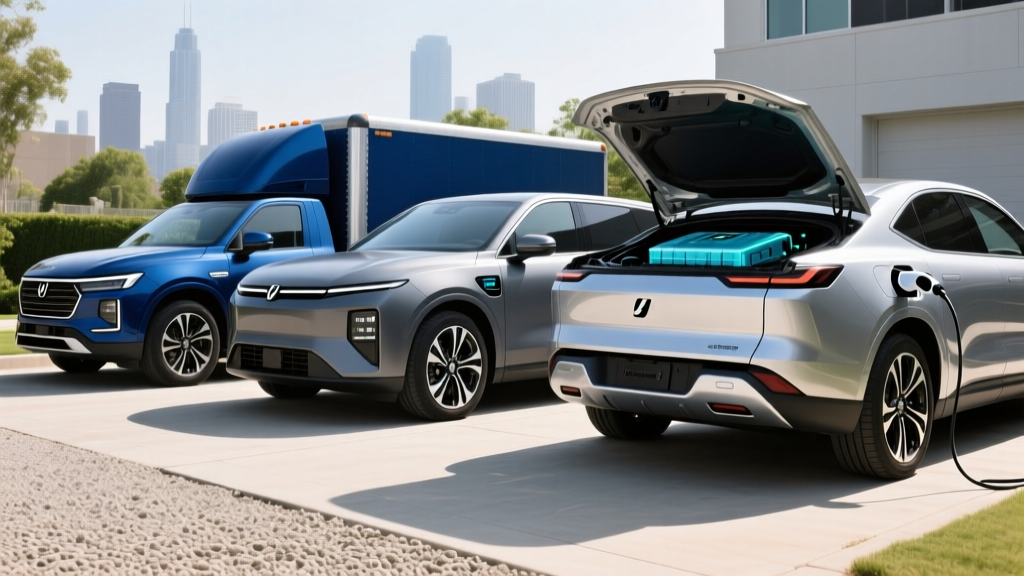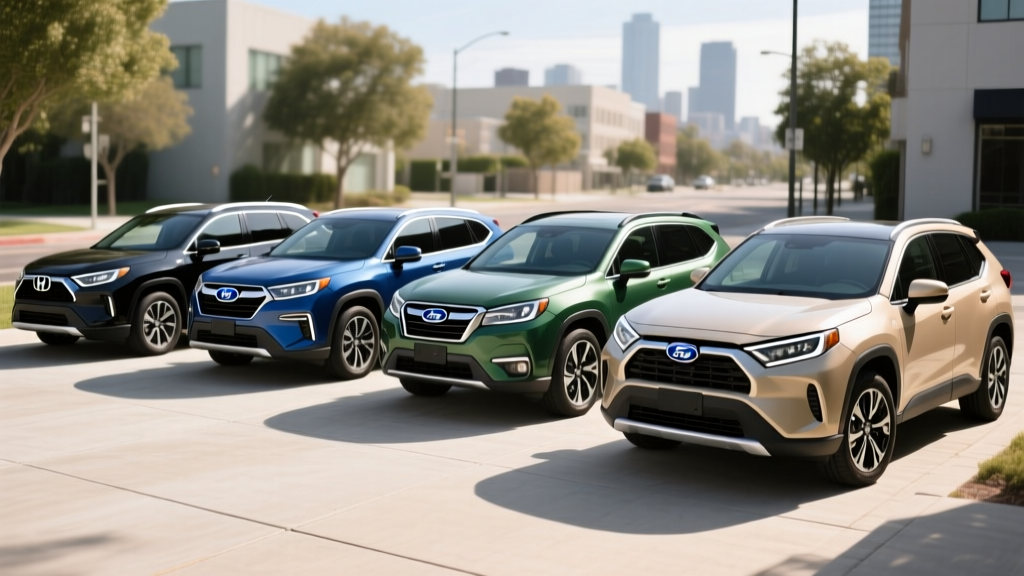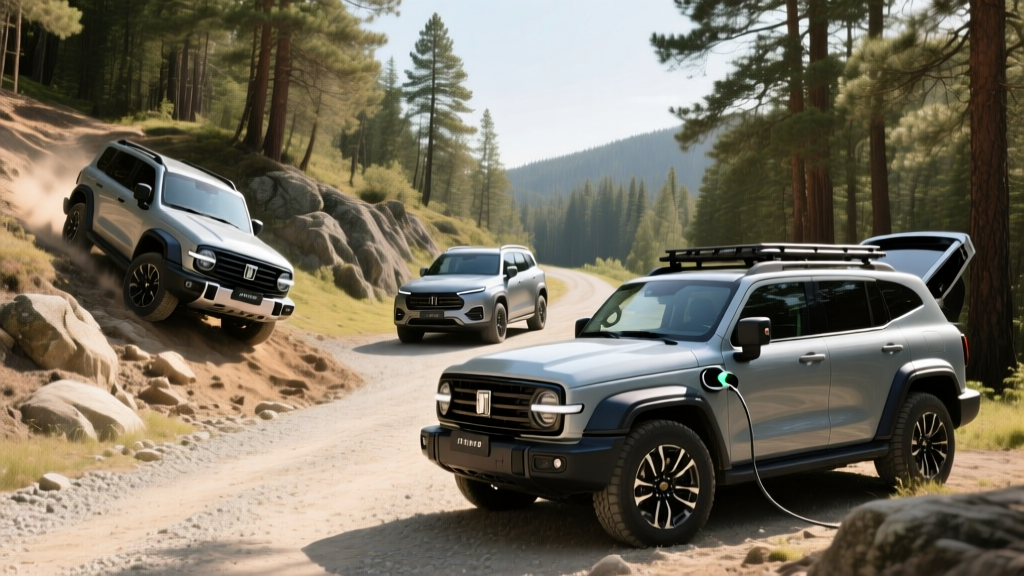
If you need genuine four-wheel-drive capability without the fuel bill of a body-on-frame truck, the modern hybrid 4x4 is the sweet spot. Whether you're eyeing a conventional hybrid (HEV) that never needs plugging in or a plug-in hybrid (PHEV) that can handle daily commutes on electricity alone, today's electrified 4x4s deliver real off-road chops alongside dramatically improved fuel economy.
This guide breaks down the best hybrid 4x4 SUVs you can buy in 2026 — with exact EPA MPG figures, electric-only range, battery warranties, pricing, and the real-world efficiency numbers that matter when you're actually driving.
HEV vs PHEV: Which Hybrid 4x4 Type Fits You?
Conventional Hybrid (HEV) 4x4
- No plug required. The battery recharges through regenerative braking and the gasoline engine.
- Smaller battery: typically 1–2 kWh, used for assist and low-speed electric driving.
- Best for: Drivers without home charging access who want better MPG without lifestyle changes.
- Fuel economy gain: 20–40% improvement over a comparable gas-only 4x4.
Plug-In Hybrid (PHEV) 4x4
- Plugs in to charge. Larger battery provides 25–40+ miles of electric-only driving before the gas engine kicks in.
- Larger battery: typically 14–20 kWh usable.
- Best for: Drivers with home Level 2 charging who commute short distances but need gas-engine range for road trips and trail runs.
- Fuel economy gain: Near-zero gas use on short commutes; combined MPGe ratings can exceed 80.
The choice isn't about which is "better" — it's about your charging access and driving pattern. A PHEV 4x4 is wasted money if you can't plug in regularly. An HEV 4x4 leaves efficiency on the table if you have a garage and a short commute.
Top Hybrid 4x4 SUVs: Side-by-Side Specs
| Model | Type | Powertrain | Combined HP | EPA MPG (City/Hwy/Combined) | EV Range (PHEV) | Battery (kWh) | Base MSRP |
|---|---|---|---|---|---|---|---|
| Toyota RAV4 Hybrid AWD | HEV | 2.5L I4 + 3 electric motors | 219 hp | 41 / 38 / 40 MPG | N/A | ~1.6 kWh | $33,550 |
| Toyota RAV4 Prime AWD | PHEV | 2.5L I4 + 2 electric motors | 302 hp | 94 MPGe / 38 MPG (gas) | 42 miles | 18.1 kWh | $44,615 |
| Ford Explorer Hybrid AWD | HEV | 3.3L V6 + electric motor | 318 hp | 23 / 26 / 24 MPG | N/A | ~1.5 kWh | $54,450 |
| Jeep Wrangler 4xe | PHEV | 2.0L turbo I4 + 2 electric motors | 375 hp | 49 MPGe / 20 MPG (gas) | 22 miles | 17.3 kWh | $51,790 |
| Toyota Grand Highlander Hybrid AWD | HEV | 2.5L I4 + electric motors (Hybrid MAX avail.) | 245 hp (362 hp MAX) | 36 / 32 / 34 MPG | N/A | ~1.6 kWh | $46,290 |
| Subaru Crosstrek Hybrid | PHEV | 2.0L flat-4 + electric motor | 148 hp | 90 MPGe / 35 MPG (gas) | 17 miles | 8.8 kWh | $36,995 |
Source: fueleconomy.gov and manufacturer specifications for 2025–2026 model years. MSRP excludes destination charges.
Real-World MPG: What Hybrid 4x4 Owners Actually See
EPA estimates are a starting point, but hybrid 4x4s behave differently in practice — often in your favor.
| Model | EPA Combined | Real-World City | Real-World Highway | Cold-Weather Impact |
|---|---|---|---|---|
| RAV4 Hybrid AWD | 40 MPG | 42–45 MPG | 35–37 MPG | −3 to −5 MPG below 30°F |
| RAV4 Prime AWD | 94 MPGe / 38 MPG | 40–42 MPG (gas) | 34–36 MPG (gas) | EV range drops to ~32 mi in winter |
| Wrangler 4xe | 49 MPGe / 20 MPG | 22–24 MPG (gas) | 18–20 MPG (gas) | EV range drops to ~16 mi in winter |
| Grand Highlander Hybrid | 34 MPG | 35–38 MPG | 30–32 MPG | −2 to −4 MPG below 30°F |
Why hybrids often beat EPA in the city: Regenerative braking recovers energy during stop-and-go traffic that a gas engine simply wastes as heat. On the highway, there's less braking to recover from, and aerodynamic drag dominates — which is why a boxy Wrangler 4xe drops to 18 MPG at 75 mph regardless of its hybrid system.
PHEV cold-weather reality: Lithium-ion batteries lose efficiency below 40°F, and cabin heating draws significant energy. Expect 20–25% less electric-only range in winter. The Wrangler 4xe's EPA-rated 22 miles of EV range routinely shrinks to 15–17 miles on cold mornings. The RAV4 Prime handles this better thanks to an available heat pump, retaining closer to 32–35 miles in moderate cold.
Charging, Battery Size, and DC Fast Charging
If you're considering a PHEV hybrid 4x4, charging logistics matter.
| PHEV Model | Battery (Usable kWh) | Level 1 (120V) Charge Time | Level 2 (240V) Charge Time | DC Fast Charge? |
|---|---|---|---|---|
| RAV4 Prime | 18.1 kWh | ~12 hours | ~2.5 hours (3.3 kW onboard) | No |
| Wrangler 4xe | 17.3 kWh | ~12 hours | ~2 hours (7.2 kW onboard) | No |
| Crosstrek Hybrid | 8.8 kWh | ~5 hours | ~1.5 hours (3.3 kW onboard) | No |
Key takeaway: No mainstream PHEV 4x4 currently supports DC fast charging. This is by design — PHEV batteries are small enough that Level 2 overnight charging fully replenishes them. You do not need a public fast charger for a PHEV; a home Level 2 setup (240V, ~$500–$1,500 installed) is sufficient.
For the RAV4 Prime, note the relatively slow 3.3 kW onboard charger. Even on a 40-amp Level 2 circuit, the car will only accept 3.3 kW, meaning a full charge takes roughly 2.5 hours. The Wrangler 4xe's 7.2 kW onboard charger is meaningfully faster for mid-day top-ups.
Off-Road Capability: Can a Hybrid 4x4 Actually Trail-Drive?
The short answer: yes, and in some cases better than their gas counterparts.
Jeep Wrangler 4xe remains the benchmark. It retains the Wrangler's solid axles, available front/rear locking differentials, electronic sway-bar disconnect, and 10.8 inches of ground clearance. The instant torque from its electric motors is an advantage on technical rock-crawling terrain where precise throttle modulation matters. It has completed the Rubicon Trail and earned Jeep's Trail Rated badge. The 4xe's additional ~600 lbs of battery weight is noticeable on steep descents but manageable.
Toyota RAV4 Hybrid/Prime AWD uses an independent rear electric motor (not a mechanical driveshaft) for its AWD system. This provides responsive torque vectoring in snow, mud, and light trail conditions via selectable modes (Mud & Sand, Rock & Dirt). It's not a rock crawler, but it handles forest service roads and moderate off-road terrain competently. Ground clearance is 8.1–8.6 inches depending on trim.
Ford Explorer Hybrid AWD uses a conventional mechanical AWD system with a torque-sensing transfer case. It's suited for snow, gravel, and light trail use rather than technical off-roading. With 7.9 inches of ground clearance, it's a capable family hauler that won't strand you on a dirt road, but it's no Wrangler competitor.
Hybrid 4x4 Advantages
- Instant electric torque improves low-speed trail control
- Silent electric-only operation for stealth camping and wildlife areas
- Regenerative braking reduces brake wear on steep descents
- 20–40% better fuel economy vs gas equivalent (HEV)
- Available V2L (vehicle-to-load) power on some models for campsite electricity
Hybrid 4x4 Limitations
- Added battery weight (400–700 lbs) affects payload and braking distance
- PHEV EV range drops significantly in cold weather and off-road use
- Complex powertrains may mean higher repair costs out of warranty
- Fewer models available vs conventional gas 4x4s
- PHEV premium pricing ($8,000–$12,000 more than HEV equivalents)
Battery Warranty, Lifespan, and Replacement Cost
Hybrid Battery Warranty Coverage
Federal law mandates a minimum 8-year / 100,000-mile warranty on hybrid and PHEV battery packs. In California Air Resources Board (CARB) states, this extends to 10 years / 150,000 miles.
- Toyota: 10 years / 150,000 miles (all states, 2020+ models)
- Ford: 8 years / 100,000 miles (10/150k in CARB states)
- Jeep (Stellantis): 8 years / 100,000 miles (10/150k in CARB states)
- Subaru: 8 years / 100,000 miles (10/150k in CARB states)
Real-world lifespan data: Toyota's hybrid battery packs have the longest track record. The RAV4 Hybrid's nickel-metal-hydride (NiMH) pack is proven to last 150,000–200,000+ miles with minimal degradation. Toyota's earlier Prius fleet routinely exceeded 200,000 miles on original batteries. The PHEV lithium-ion packs in the RAV4 Prime and Wrangler 4xe are newer but are engineered with conservative charge buffers (typically using only 70–80% of total cell capacity) to extend cycle life.
Replacement cost if out of warranty:
- Toyota RAV4 Hybrid (NiMH): $3,000–$4,500 for a refurbished pack; $5,500–$7,000 new from dealer
- Toyota RAV4 Prime (Li-ion): $8,000–$12,000 (larger, more complex pack)
- Jeep Wrangler 4xe (Li-ion): $10,000–$15,000 estimated
- Subaru Crosstrek Hybrid: $6,000–$9,000
These are worst-case scenarios. The vast majority of hybrid batteries outlast the vehicle's useful life. Third-party refurbishment services and individual cell replacement are increasingly available at lower cost.
Tax Credits and Incentives for Hybrid 4x4 SUVs
Tax credit eligibility is where the HEV vs PHEV distinction matters financially.
- Conventional hybrids (HEV): Do NOT qualify for the federal §30D clean vehicle credit. No plug = no federal incentive. Some states offer modest rebates ($250–$500) for high-efficiency vehicles — check your state energy office.
- Plug-in hybrids (PHEV): May qualify for up to $7,500 under IRS §30D, subject to strict requirements:
- Battery capacity: Must be ≥ 7 kWh (all listed PHEVs qualify)
- MSRP cap: SUVs/vans/pickups capped at $80,000 MSRP (all listed PHEVs qualify)
- Income cap: AGI ≤ $150,000 (single) / $300,000 (joint) / $225,000 (head of household)
- Critical minerals & battery sourcing: Must meet escalating domestic-content thresholds per the Inflation Reduction Act — this changes annually and varies by model. Check IRS.gov §30D guidance for current eligible models.
- Point-of-sale transfer: As of 2024+, you can transfer the credit to the dealer for an immediate price reduction rather than claiming it on your tax return.
Current PHEV 4x4 credit status (2026 model year): The Jeep Wrangler 4xe has historically qualified for partial credit ($3,750–$7,500 depending on sourcing compliance). The Toyota RAV4 Prime has faced credit limitations due to battery-component sourcing. Always verify the specific VIN's eligibility on fueleconomy.gov before purchasing — credit eligibility can change mid-year as manufacturers adjust supply chains.
Hybrid vs PHEV vs Full EV: Which 4x4 Is Right for You?
Choose a Conventional Hybrid (HEV) 4x4 If:
- You cannot charge at home or work (apartment, street parking, no outlet access)
- You want maximum simplicity — no charging cables, no range planning
- Your budget is under $40,000 and you need AWD
- You drive mostly city/suburban with moderate highway use
- Example: Toyota RAV4 Hybrid AWD at 40 MPG combined, $33,550
Choose a Plug-In Hybrid (PHEV) 4x4 If:
- You have Level 2 home charging and a commute under 35 miles
- You want EV-like daily driving but need gas-engine range for road trips and trails
- You qualify for the §30D tax credit (income and sourcing requirements met)
- You want maximum power (PHEVs combine engine + motors for peak HP)
- Example: RAV4 Prime — 42 mi EV range, 302 hp, 94 MPGe
Choose a Full EV (BEV) 4x4 If:
- You have reliable home charging and your daily driving is under 250 miles
- You want zero tailpipe emissions and minimal maintenance (no oil changes, no spark plugs)
- You want the lowest per-mile fuel cost ($0.04–$0.06/mile on home electricity vs $0.12–$0.18/mile for hybrid gas)
- You're willing to plan around public charging for road trips
- Example: Rivian R1S Dual-Motor AWD — 352 mi range, $79,900
For serious off-road use where you'll be far from charging infrastructure, a PHEV or HEV remains the pragmatic choice. A full EV 4x4 like the Rivian R1S or the upcoming electric Jeep Recon can handle trails, but you'll need to carefully manage battery consumption and plan return charging — not always feasible in remote backcountry.
Reliability Ratings and Long-Term Ownership
Hybrid powertrains, particularly Toyota's, have earned strong reliability reputations over two decades of real-world use.
- Toyota RAV4 Hybrid/Prime: Consistently rated above average by IIHS and Consumer Reports. The hybrid transaxle has no traditional transmission bands or clutches to wear out. The e-CVT is a planetary gearset with no shifting components.
- Jeep Wrangler 4xe: More complex — turbocharged engine, two electric motors, 8-speed automatic, and a high-voltage pack. Early 2021–2022 models had recalls related to battery-pack fire risk (addressed via software updates and insulation modifications). Later models are improved but remain more maintenance-intensive than Toyota's system.
- Ford Explorer Hybrid: Average reliability. The 3.3L V6 hybrid powertrain is proven, but the Explorer platform has had transmission and electronics complaints in non-hybrid trims.
- Subaru Crosstrek Hybrid: Limited production and being discontinued after 2025 model year in PHEV form. Subaru's hybrid system is simpler and proven reliable, but parts availability may thin over time.
For a hybrid 4x4 you plan to keep 10+ years, the Toyota RAV4 Hybrid or Prime has the strongest long-term ownership case: proven powertrain, widely available parts, strong resale value, and comprehensive battery warranty.
Frequently Asked Questions
How many MPG does a hybrid 4x4 get?
It depends on the model. The Toyota RAV4 Hybrid AWD achieves an EPA-rated 41 city / 38 highway / 40 combined MPG — the best in the segment. Larger hybrid 4x4s like the Ford Explorer Hybrid AWD return 24 MPG combined. The Jeep Wrangler 4xe gets 20 MPG combined on gasoline (plus 49 MPGe when factoring in electric driving). Hybrids typically exceed their EPA city rating in real-world stop-and-go driving.
How far can a PHEV hybrid 4x4 go on electric only?
The Toyota RAV4 Prime leads with an EPA-rated 42 miles of electric-only range. The Jeep Wrangler 4xe manages 22 miles, and the Subaru Crosstrek Hybrid delivers 17 miles. In cold weather (below 35°F), expect 20–25% less range. For commutes under 25 miles round-trip, the RAV4 Prime can operate as a de facto EV most of the year.
Is a hybrid 4x4 reliable, and what does battery replacement cost?
Toyota's hybrid systems are among the most reliable powertrains in any vehicle category, with batteries routinely lasting 150,000–200,000+ miles. Battery warranties cover 8–10 years / 100,000–150,000 miles depending on manufacturer and state. Out-of-warranty replacement ranges from $3,000–$4,500 for a Toyota HEV pack to $10,000–$15,000 for a Wrangler 4xe PHEV pack. Most owners never need a replacement.
Does a hybrid 4x4 qualify for the federal tax credit?
Conventional hybrids (HEV) do not qualify for the federal §30D clean vehicle credit — only plug-in hybrids and full EVs do. PHEV 4x4s may qualify for up to $7,500, but eligibility depends on your income (AGI caps apply), the vehicle's MSRP (under $80,000 for SUVs), and battery-component/critical-mineral sourcing requirements that change annually. Always verify on IRS.gov and fueleconomy.gov before purchasing.
Do I need to plug in a hybrid 4x4?
Only if it's a plug-in hybrid (PHEV). Conventional hybrids (HEV) like the RAV4 Hybrid and Grand Highlander Hybrid charge their small batteries entirely through regenerative braking and the gas engine. You fuel them like any other car and never need a charger. PHEVs like the RAV4 Prime and Wrangler 4xe benefit greatly from regular plug-in charging to maximize electric driving and fuel savings.
Can a hybrid 4x4 tow?
Yes, but capacity varies significantly. The Toyota Grand Highlander Hybrid MAX AWD can tow up to 5,000 lbs. The Ford Explorer Hybrid AWD is rated for 5,000 lbs. The RAV4 Hybrid AWD tows 1,750 lbs (RAV4 Prime: 2,500 lbs with the Tow Prep Package). The Wrangler 4xe tows 3,500 lbs. If towing is a priority, note that towing dramatically reduces MPG and PHEV electric range — expect 40–60% lower efficiency under load.