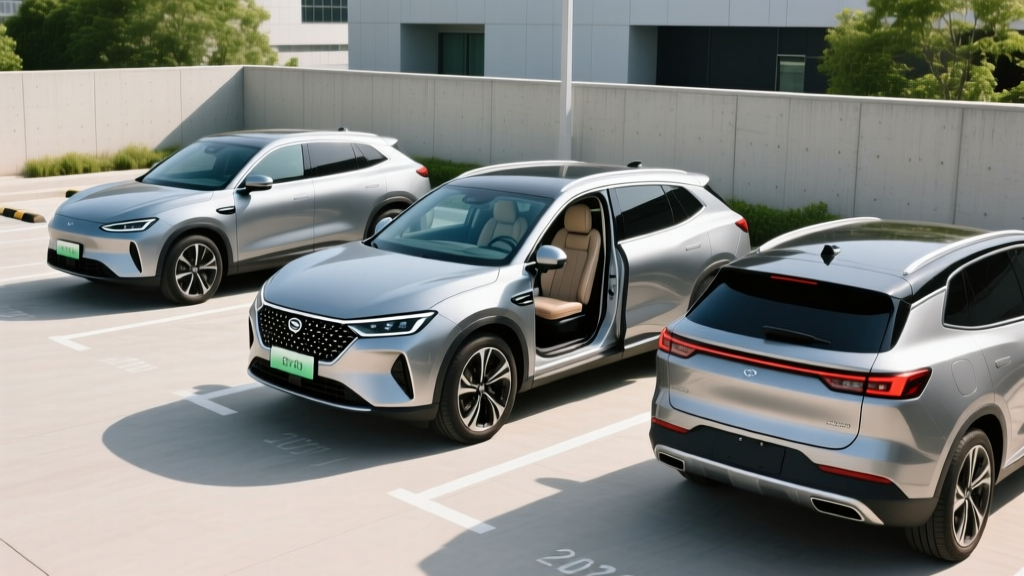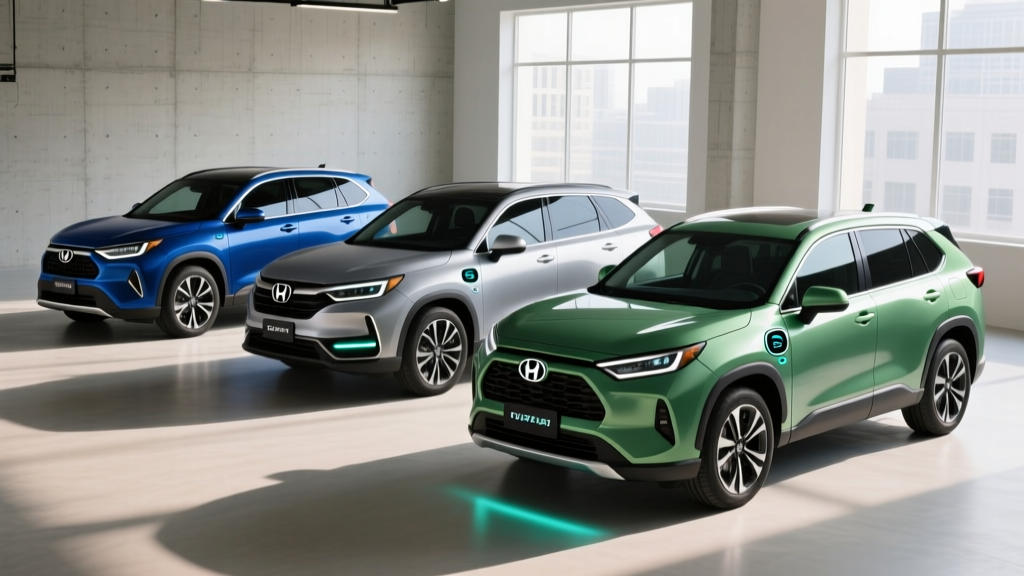
Compact SUV hybrids occupy a sweet spot that full battery-electric vehicles still can't match for many buyers: you get 35–94 MPGe efficiency, no charging infrastructure requirement, and a purchase price that often undercuts comparable EVs by $5,000–$10,000. For 2026, the segment has matured into two distinct camps — conventional hybrids (HEVs) that never need a plug, and plug-in hybrids (PHEVs) that deliver 30–42 miles of electric-only driving before the gas engine kicks in.
This guide breaks down the top compact SUV hybrids available now, with exact EPA figures, real-world testing notes, battery warranty terms, and current federal tax credit eligibility under IRS §30D rules.
HEV vs PHEV: Which Compact SUV Hybrid Architecture Fits You?
Conventional Hybrid (HEV): A small battery (typically 1.0–1.6 kWh) recharges through regenerative braking and the engine. You never plug in. The electric motor assists the gas engine at low speeds and during acceleration, cutting fuel consumption 30–40% versus a gas-only equivalent. Ideal if you lack home charging access or drive predominantly in stop-and-go city traffic.
Plug-In Hybrid (PHEV): A larger battery (13–20 kWh usable) provides 30–42 miles of pure electric driving. You plug in at home (Level 1 or Level 2) to recharge overnight. Once the battery depletes, the vehicle operates as a conventional hybrid. Ideal if you have home charging, a commute under 40 miles round-trip, and want to eliminate most daily gasoline use without range anxiety on road trips.
The core trade-off: PHEVs cost $3,000–$6,000 more upfront and add 200–400 lbs of battery weight, but they can eliminate 80–90% of gasoline consumption for drivers with short commutes and reliable home charging. HEVs are simpler, cheaper, and deliver consistent fuel savings regardless of charging access.
Top Compact SUV Hybrids: Side-by-Side Specs
| Model | Type | Combined HP | EPA Combined MPG / MPGe | EV Range (PHEV) | Battery (kWh usable) | Starting MSRP |
|---|---|---|---|---|---|---|
| Toyota RAV4 Hybrid | HEV | 219 | 39 combined (41 city / 38 hwy) | — | 1.6 | $33,425 |
| Toyota RAV4 Prime | PHEV | 302 | 94 MPGe (elec+gas) / 38 MPG (gas only) | 42 miles | 18.1 | $44,725 |
| Honda CR-V Hybrid | HEV | 204 | 40 combined (43 city / 36 hwy) | — | 1.1 | $36,395 |
| Hyundai Tucson Hybrid | HEV | 226 | 38 combined (38 city / 38 hwy) | — | 1.5 | $34,590 |
| Hyundai Tucson PHEV | PHEV | 261 | 80 MPGe (elec+gas) / 35 MPG (gas only) | 33 miles | 13.8 | $39,940 |
| Ford Escape PHEV | PHEV | 210 | 105 MPGe (elec+gas) / 39 MPG (gas only) | 37 miles | 14.4 | $37,500 |
| Kia Sportage Hybrid | HEV | 227 | 43 combined (42 city / 44 hwy) | — | 1.5 | $32,090 |
Source: EPA data via fueleconomy.gov and manufacturer specifications. MPGe reflects combined electric+gasoline operation for PHEVs.
Fuel Economy Deep Dive: Real-World MPG vs EPA Stickers
Hybrid fuel economy behaves differently than most buyers expect. The EPA test cycle includes substantial city driving with frequent stops — exactly where hybrids excel thanks to regenerative braking and electric-motor assist at low speeds. This is why you'll see HEVs like the Honda CR-V Hybrid rated at 43 city but only 36 highway.
| Model | EPA Combined | Real-World City | Real-World Highway (70 mph) | Real-World Cold Weather |
|---|---|---|---|---|
| Toyota RAV4 Hybrid | 39 MPG | 40–44 MPG | 34–36 MPG | 32–35 MPG |
| Honda CR-V Hybrid | 40 MPG | 42–46 MPG | 33–35 MPG | 33–36 MPG |
| Hyundai Tucson Hybrid | 38 MPG | 37–40 MPG | 34–37 MPG | 31–34 MPG |
| Kia Sportage Hybrid | 43 MPG | 43–47 MPG | 38–41 MPG | 36–39 MPG |
Key patterns from owner-reported data and independent testing:
- City driving often exceeds EPA estimates by 2–5 MPG because regenerative braking recovers energy at every stop.
- Sustained highway speeds (70–80 mph) drop MPG 4–7 points below the combined rating. Aerodynamic drag dominates at highway speeds, and the electric motor provides minimal assist.
- Cold weather (below 30°F) reduces hybrid MPG by 8–15% because the engine runs more frequently to provide cabin heat and because battery chemistry is less efficient at low temperatures.
For PHEV owners, the calculus changes entirely. If your daily round-trip commute is 30 miles and you charge at home every night, you may use gasoline only on weekend road trips. The RAV4 Prime's 42-mile EV range covers the average American's daily driving distance (approximately 37 miles, per FHWA data) with margin to spare.
PHEV Electric Range and Charging: What You Need to Know
Plug-in hybrid compact SUVs in 2026 offer 33–42 miles of electric-only range — enough to cover most daily commuting without burning a drop of gasoline. But charging logistics matter.
| Model | Battery (kWh usable) | Level 1 (120V) Full Charge | Level 2 (240V) Full Charge | DC Fast Charge |
|---|---|---|---|---|
| Toyota RAV4 Prime | 18.1 | ~12 hours | ~2.5 hours (6.6 kW) | No |
| Hyundai Tucson PHEV | 13.8 | ~9 hours | ~2 hours (7.2 kW) | No |
| Ford Escape PHEV | 14.4 | ~10 hours | ~3.5 hours (3.3 kW onboard charger) | No |
A critical detail that catches new PHEV buyers off guard: none of these compact SUV PHEVs support DC fast charging. The batteries are too small to justify the cost and weight of DC hardware, and the onboard chargers max out at 3.3–7.2 kW. This means public fast-charging networks like Electrify America or Tesla Superchargers are irrelevant for PHEV owners. Your charging will happen at home, overnight, on a standard 120V outlet (Level 1) or a 240V circuit (Level 2).
For most PHEV owners, Level 1 charging on a standard household outlet is sufficient. Plugging in at 7 PM and unplugging at 7 AM provides 12 hours — more than enough to fully recharge any compact SUV PHEV battery. A Level 2 home charger ($300–$600 for equipment, $500–$1,500 for electrician installation) is a convenience upgrade, not a necessity.
Real-World PHEV Range Note: The EPA's EV range figure for PHEVs assumes moderate temperatures and mixed driving. Expect 10–20% less electric range in sustained highway driving (above 65 mph) and 20–30% less in freezing temperatures when the cabin heater draws heavily from the battery. The RAV4 Prime's 42-mile rating may shrink to 30–33 miles on a cold winter highway commute.
Pricing, Tax Credits, and Total Cost of Ownership
Compact SUV hybrids range from approximately $32,000 to $45,000 before incentives. The federal tax credit landscape for 2026 is critical to understand, because the rules differ sharply between HEVs and PHEVs.
Federal §30D Tax Credit Rules (2026):
- HEVs (conventional hybrids): Do NOT qualify for the federal EV tax credit. The §30D credit applies only to plug-in vehicles with battery capacity ≥7 kWh.
- PHEVs: May qualify for up to $7,500, but eligibility depends on multiple factors:
- Vehicle MSRP must not exceed $80,000 for SUVs (all compact PHEV SUVs clear this cap).
- Buyer adjusted gross income must not exceed $150,000 (single), $225,000 (head of household), or $300,000 (joint).
- Battery components and critical minerals must meet escalating domestic-sourcing thresholds — this is the requirement that has disqualified several models. Check the IRS's current eligible-vehicle list before purchasing.
- The credit can be transferred to the dealer as a point-of-sale discount, reducing your out-of-pocket cost at purchase.
Source: IRS §30D Clean Vehicle Credit. Rules are subject to change — verify eligibility at purchase time.
Among the PHEVs listed above, the Ford Escape PHEV and Hyundai Tucson PHEV have recently appeared on the IRS eligible list, but battery-sourcing requirements shift as manufacturers adjust supply chains. The Toyota RAV4 Prime has faced eligibility challenges due to battery component sourcing — always confirm with your dealer and cross-reference the IRS list before counting on the credit.
| Model | Purchase Price | Fuel/Energy (5 yr) | Estimated Maintenance | Federal Credit | Net 5-Yr Cost |
|---|---|---|---|---|---|
| Toyota RAV4 Hybrid (HEV) | $33,425 | $5,200 | $2,800 | $0 | ~$41,425 |
| Toyota RAV4 Prime (PHEV) | $44,725 | $2,800 | $2,800 | $0–$7,500 | ~$42,825–$50,325 |
| Kia Sportage Hybrid (HEV) | $32,090 | $4,500 | $2,600 | $0 | ~$39,190 |
| Honda CR-V Hybrid (HEV) | $36,395 | $4,900 | $2,700 | $0 | ~$44,000 |
| Ford Escape PHEV | $37,500 | $2,400 | $2,800 | $0–$7,500 | ~$35,200–$42,700 |
Fuel costs assume $3.40/gallon gasoline and $0.16/kWh electricity (national averages). Maintenance includes oil changes, tire rotations, brake service. Actual costs vary by region and driving habits.
Battery Reliability, Warranty, and Replacement Costs
Hybrid battery longevity remains one of the top concerns for buyers switching from conventional gas vehicles. The data after two decades of hybrid deployment is reassuring.
Hybrid Battery Warranty Coverage (2026 Models):
- Toyota: 10 years / 150,000 miles (hybrid battery and components)
- Honda: 8 years / 100,000 miles (10/150,000 in CARB states)
- Hyundai/Kia: 10 years / 100,000 miles (lifetime in some model years for original owner)
- Ford: 8 years / 100,000 miles (hybrid battery and components)
Warranty covers battery capacity loss below a defined threshold (typically 60–70% of original capacity) and component failure.
Real-world failure data tells a positive story. Toyota's hybrid system, now in its fifth generation, has demonstrated exceptional longevity. Independent surveys and fleet data show that the vast majority of Toyota hybrid batteries last well beyond 150,000 miles without significant degradation. The RAV4 Hybrid and RAV4 Prime use proven nickel-metal hydride (NiMH) and lithium-ion chemistries respectively, with thermal management systems that prevent the extreme charge/discharge cycles that accelerate degradation.
If a hybrid battery does require replacement out of warranty:
- HEV battery replacement: $2,000–$4,000 (the batteries are small — 1.0–1.6 kWh — and relatively inexpensive)
- PHEV battery replacement: $5,000–$9,000 (larger 13–18 kWh packs cost more, but are still a fraction of a full EV battery replacement)
- Refurbished/remanufactured options: Available for $1,500–$3,000 for most HEV models through independent shops
For context, a conventional gas vehicle's transmission replacement averages $3,000–$7,000, and timing chain/belt service runs $1,000–$2,500. Hybrids eliminate several maintenance items entirely: no starter motor to replace, significantly reduced brake wear (regenerative braking handles most deceleration), and no alternator. Many owners find their total maintenance cost is lower than a gas-only vehicle despite the battery concern.
According to IIHS ratings, the 2026 RAV4, CR-V, and Tucson all carry top safety picks, and their hybrid variants share identical structural safety ratings with gas models.
Compact SUV Hybrid vs PHEV vs Full EV: Decision Framework
Choose a conventional hybrid (HEV) if:
- You don't have access to home charging (apartment, street parking, no garage)
- Your budget is under $36,000
- You want maximum simplicity — no charging cables, no electrical work, no behavioral changes
- You drive a mix of city and highway and want consistent fuel savings without planning
- You keep vehicles 8–12 years and want proven long-term reliability data
Choose a plug-in hybrid (PHEV) if:
- You have home charging (garage or driveway with outlet access)
- Your daily round-trip commute is under 40 miles
- You want to drive mostly on electricity but need gas-engine flexibility for road trips
- You want to reduce gasoline purchases by 80%+ without depending on public charging infrastructure
- You qualify for the federal tax credit, which can close the price gap with HEVs
Choose a full battery-electric vehicle (BEV) if:
- You have reliable home Level 2 charging
- Your daily driving is predictable and within the vehicle's real-world range
- You want to eliminate gasoline entirely and minimize maintenance (no oil changes, no engine)
- You're comfortable with public DC fast charging for road trips
- You want the lowest per-mile energy cost (electricity at $0.16/kWh costs roughly $0.04–$0.05/mile vs. $0.12–$0.15/mile for gasoline in a hybrid)
Pros and Cons: Compact SUV Hybrids at a Glance
Advantages
- 35–43 MPG combined (HEV) without any charging infrastructure
- 33–42 miles electric-only range (PHEV) for daily commuting
- No range anxiety — gas engine provides 400+ total miles of range
- Lower purchase price than comparable full EVs ($5,000–$10,000 less)
- Proven reliability with 10-year/150,000-mile battery warranties
- Reduced brake wear and maintenance vs. gas-only vehicles
- AWD available on most models without significant MPG penalty
Limitations
- HEVs do not qualify for federal EV tax credits
- PHEV tax credit eligibility depends on battery sourcing rules that change frequently
- Highway MPG drops 4–7 points below EPA combined rating
- PHEVs add 200–400 lbs of battery weight, slightly affecting handling
- Cold weather reduces both MPG (HEV) and EV range (PHEV) by 10–30%
- PHEVs require home charging access to realize their fuel-cost advantage
- No DC fast charging on any compact SUV PHEV — home charging only
Frequently Asked Questions
How many MPG do compact SUV hybrids actually get?
EPA ratings range from 38 MPG combined (Hyundai Tucson Hybrid) to 43 MPG combined (Kia Sportage Hybrid). In real-world city driving with frequent stops, expect to match or slightly exceed EPA numbers. On sustained highway driving at 70+ mph, expect 4–7 MPG less than the combined rating. Cold weather below 30°F reduces fuel economy by 8–15% across all models.
How far can a compact SUV PHEV drive on electric only?
Current models deliver 33–42 miles of EPA-rated electric-only range. The Toyota RAV4 Prime leads at 42 miles, followed by the Ford Escape PHEV at 37 miles and the Hyundai Tucson PHEV at 33 miles. Real-world EV range drops to 25–35 miles in cold weather or at sustained highway speeds.
Do conventional hybrids need to be plugged in?
No. Conventional hybrids (HEVs) charge their small batteries entirely through regenerative braking and the gasoline engine. You fuel them like any gas car and never need a charging cable or outlet. Only plug-in hybrids (PHEVs) require charging to access their electric-only range.
Are hybrid batteries reliable, and what does replacement cost?
Hybrid batteries have proven highly reliable over 20+ years of deployment. Toyota, Honda, Hyundai, and Kia all warranty their hybrid batteries for 8–10 years and 100,000–150,000 miles. Most hybrid batteries last well beyond warranty coverage. If replacement is needed, HEV batteries cost $2,000–$4,000 and PHEV batteries cost $5,000–$9,000 — substantially less than full EV battery replacements. Refurbished options are available for $1,500–$3,000.
Do compact SUV hybrids qualify for tax credits?
Conventional hybrids (HEVs) do not qualify for the federal §30D clean vehicle credit. Plug-in hybrids (PHEVs) may qualify for up to $7,500, subject to buyer income limits ($150K single / $300K joint), MSRP caps ($80K for SUVs), and battery component/critical mineral sourcing requirements. Eligibility changes as manufacturers adjust supply chains — verify current status on the fueleconomy.gov tax credit page before purchasing.
Should I buy a hybrid or a full EV?
Choose a hybrid if you lack home charging, drive long or unpredictable routes, or want a lower purchase price. Choose a PHEV if you have home charging and a short commute but want road-trip flexibility. Choose a full EV if you have home charging, predictable daily driving within the vehicle's range, and want to eliminate gasoline and minimize maintenance entirely.