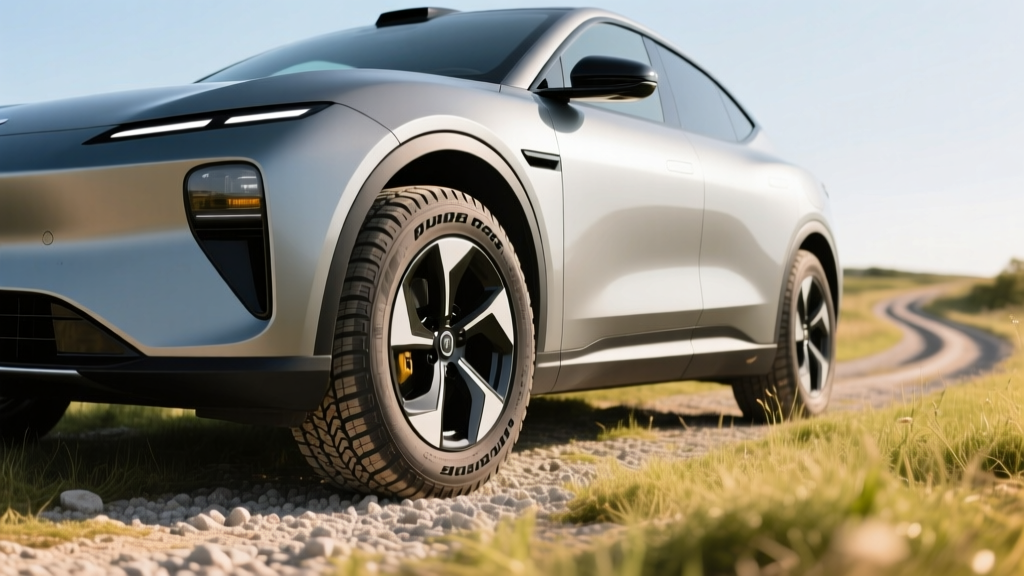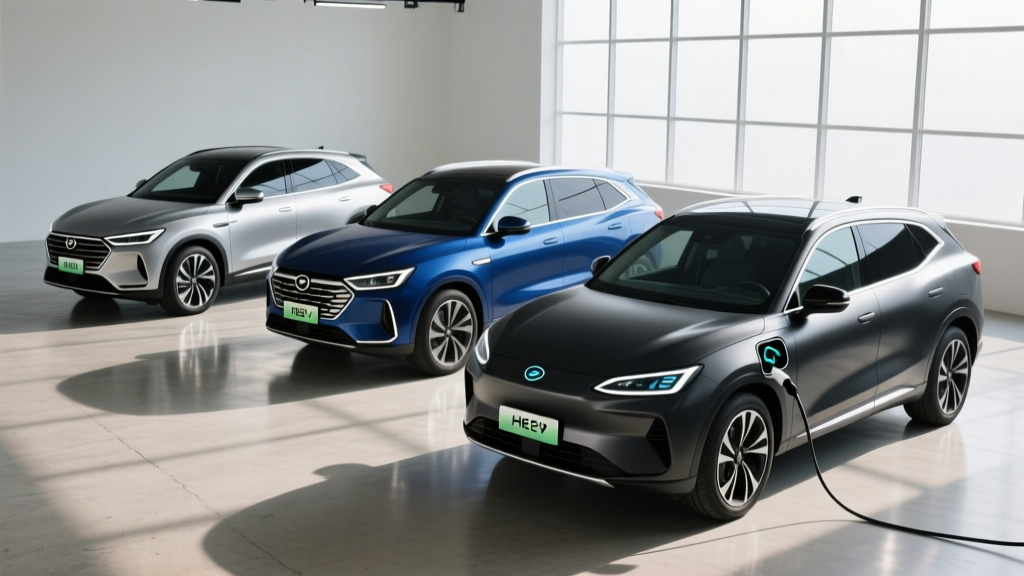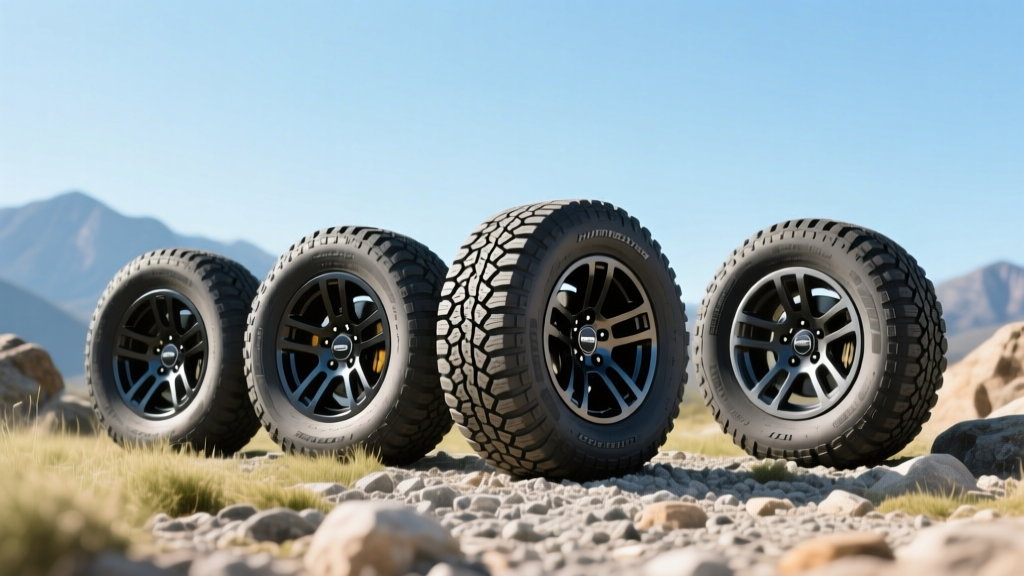
Choosing tires for a hybrid or plug-in hybrid SUV isn't as simple as picking any all-terrain pattern and calling it a day. Hybrids carry extra weight from battery packs and electric motors, deliver instant torque from standstill, and depend heavily on low rolling resistance to hit their EPA MPG targets. Slap on a heavy, aggressive all-terrain tire designed for a diesel truck, and you could lose 3–5 MPG combined on a conventional hybrid (HEV) or shave 5–8 miles off the electric-only range of a plug-in hybrid (PHEV).
This guide breaks down what makes an all-terrain tire genuinely compatible with hybrid and PHEV powertrains, how to read the specs that matter, and which 2026 models deliver off-road capability without gutting your fuel economy.
Why Hybrids and PHEVs Need Different All-Terrain Tires
Hybrid and PHEV SUVs like the Toyota RAV4 Hybrid, Hyundai Tucson PHEV, and Ford Escape Hybrid share three traits that change the tire equation:
- Higher curb weight: A RAV4 Hybrid weighs roughly 3,800 lbs — about 200–300 lbs more than its gas-only counterpart. That extra mass demands higher load-index tires and accelerates tread wear if the compound isn't designed for it.
- Instant electric torque: The electric motor delivers peak torque at 0 RPM, which can cause premature tread squirm and wear on softer all-terrain compounds not engineered for hybrid torque delivery.
- Rolling-resistance sensitivity: Hybrids achieve their fuel economy partly through low-rolling-resistance (LRR) tires. Switching to a conventional all-terrain tire can increase rolling resistance by 15–30%, directly reducing MPG and electric range.
The best all-terrain hybrid tires balance three competing demands: off-road traction (stone ejectors, lateral siping, reinforced sidewalls), low rolling resistance for efficiency, and load capacity for the added battery weight. A handful of tire manufacturers now specifically engineer all-terrain lines with hybrid vehicles in mind.
HEV vs. PHEV: How Your Powertrain Affects Tire Choice
Conventional Hybrid (HEV)
HEVs like the Toyota Highlander Hybrid (EPA 35 city / 35 highway / 35 combined MPG) and Honda CR-V Hybrid (EPA 40 city / 35 highway / 37 combined) never plug in. They recapture energy through regenerative braking and use the electric motor to assist the gas engine. Because every mile is supported by regenerative braking, tire rolling resistance directly impacts how much energy the system recaptures.
Tire priority: Lowest possible rolling resistance that still delivers all-terrain capability. Even a 10% increase in rolling resistance can cost 1–2 MPG combined in a conventional hybrid.
Plug-In Hybrid (PHEV)
PHEVs like the Toyota RAV4 Prime (EPA 42 miles electric-only, 38 MPG combined on gas) and Jeep Wrangler 4xe (EPA 21 miles electric-only, 20 MPG combined on gas) carry larger battery packs — typically 13–18 kWh usable — and can drive on electricity alone for 21–42 miles. They're significantly heavier: the RAV4 Prime weighs 4,235 lbs, about 500 lbs more than the standard RAV4 Hybrid.
Tire priority: Higher load index (XL or reinforced) to handle the battery mass, plus low rolling resistance to preserve electric-only range. A high-resistance tire can reduce a PHEV's electric range by 5–8 miles — a meaningful percentage of a 21–42 mile envelope.
| Vehicle (2026 MY) | Type | Curb Weight (lbs) | EPA Combined MPG / EV Range | Battery (kWh) |
|---|---|---|---|---|
| Toyota RAV4 Hybrid | HEV | ~3,800 | 39 combined | 1.6 |
| Toyota RAV4 Prime (PHEV) | PHEV | ~4,235 | 42 mi EV / 38 MPG gas | 18.1 |
| Toyota Highlander Hybrid | HEV | ~4,500 | 35 combined | 1.6 |
| Hyundai Tucson PHEV | PHEV | ~4,100 | 33 mi EV / 35 MPG gas | 13.8 |
| Ford Escape Hybrid | HEV | ~3,750 | 39 combined | 1.1 |
| Jeep Wrangler 4xe | PHEV | ~5,100 | 21 mi EV / 20 MPG gas | 17.3 |
Source: fueleconomy.gov (U.S. EPA)
Specs That Matter: Reading an All-Terrain Hybrid Tire Label
Before comparing brands, you need to decode the sidewall. Here are the five specs that determine whether an all-terrain tire is truly compatible with your hybrid:
1. Rolling Resistance Coefficient (RRC)
Measured in kg/ton or as a grade (A through E in the EU labeling system). Lower is better. Standard hybrid OEM tires typically score RRC of 7–9 kg/ton. A good all-terrain hybrid tire targets 9–11 kg/ton. Aggressive all-terrain or mud-terrain tires can push to 13–16 kg/ton — avoid these on any hybrid if MPG matters.
2. Load Index
This number indicates maximum weight per tire. PHEVs need XL (Extra Load) rated tires at minimum. For a 4,235-lb RAV4 Prime, each tire must support at least 1,059 lbs — a load index of 99 or higher. The Jeep Wrangler 4xe at 5,100 lbs needs load index 105+.
3. UTQG Treadwear Rating
Hybrid instant torque accelerates tread wear. Look for a UTQG treadwear rating of 600 or higher for longevity. Premium all-terrain hybrid tires from Michelin and Bridgestone typically score 640–720.
4. Speed Rating
Most hybrid SUVs are electronically limited to 112–118 mph. An H rating (130 mph) or T rating (118 mph) is sufficient. Don't overpay for V or W ratings you'll never use.
5. Three-Peak Mountain Snowflake (3PMSF)
If you drive in winter conditions, a 3PMSF-rated all-terrain tire eliminates the need for dedicated winter tires — saving the cost and storage hassle of a second set. Most premium all-terrain hybrid tires now carry this rating.
Top All-Terrain Hybrid Tire Picks for 2026
These tires are selected specifically for hybrid and PHEV SUV compatibility, prioritizing low rolling resistance, adequate load capacity, and real all-terrain capability.
Michelin Defender LTX M/S2 (All-Season / Light All-Terrain)
While technically an all-season highway tire, the Defender LTX M/S2 is the benchmark for hybrid SUV owners who need light gravel and dirt-road capability without sacrificing efficiency. Its RRC of approximately 8.5 kg/ton is among the lowest in its class, and the UTQG treadwear rating of 720 means it routinely exceeds its 70,000-mile warranty.
- Best for: HEV owners (RAV4 Hybrid, Highlander Hybrid) who see 90% pavement and 10% light trails
- MPG impact: Negligible — within 0.5 MPG of OEM tires
- Load index: Up to 112 (XL available)
- Approximate price: $230–$270 per tire (225/65R17)
Falken WildPeak A/T4W (All-Terrain)
The WildPeak A/T4W is one of the few true all-terrain tires engineered with a hybrid-friendly silica compound that keeps rolling resistance competitive. It carries the 3PMSF snowflake rating and features aggressive lateral grooves for mud and snow traction. The RRC sits around 10.5 kg/ton — a reasonable tradeoff for genuine off-road grip.
- Best for: PHEV owners (Tucson PHEV, RAV4 Prime) who regularly tackle forest roads, snow, and light rock
- MPG impact: Expect 1–2 MPG combined loss on HEVs; 2–4 mile EV range reduction on PHEVs
- Load index: Up to 115 (XL)
- Approximate price: $210–$250 per tire (225/65R17)
Bridgestone Dueler A/T Revo 3
Bridgestone's Dueler A/T Revo 3 is the OEM all-terrain tire on several hybrid and PHEV trucks and SUVs. Its TreadShield compound is designed for the torque characteristics of electrified powertrains, and the tire carries a 60,000-mile treadwear warranty with a UTQG of 640.
- Best for: Hybrid truck owners (Ford F-150 PowerBoost, Toyota Tacoma i-FORCE MAX Hybrid) needing genuine all-terrain capability
- MPG impact: 1–1.5 MPG combined loss
- Load index: Up to 121 (for heavy-duty hybrid trucks)
- Approximate price: $240–$300 per tire (varies by size)
Toyo Open Country A/T III
The Open Country A/T III is a favorite among off-road enthusiasts and now comes in hybrid-compatible sizes with reinforced sidewalls. It's more aggressive than the Falken or Bridgestone options, which means slightly higher rolling resistance — but it delivers best-in-class rock and deep-mud traction.
- Best for: Wrangler 4xe owners who prioritize off-road performance over maximum electric range
- MPG impact: 2–3 MPG combined loss on HEVs; 4–6 mile EV range reduction on PHEVs
- Load index: Up to 126 (E-rated for heavy vehicles)
- Approximate price: $250–$310 per tire (LT-metric sizes)
Real-World MPG Impact: What to Expect After Switching
The EPA fuel economy numbers on fueleconomy.gov are measured with OEM low-rolling-resistance tires. Switching to all-terrain tires changes the equation. Here's what hybrid owners consistently report in real-world driving after fitting all-terrain tires:
| Tire Category | RRC (approx.) | HEV MPG Impact | PHEV EV Range Impact |
|---|---|---|---|
| OEM Hybrid LRR Tire | 7–8 kg/ton | Baseline (EPA sticker) | Baseline (EPA sticker) |
| Highway All-Season (e.g., Michelin Defender LTX) | 8.5–9 kg/ton | -0.5 to -1 MPG | -1 to -2 miles |
| Hybrid-Friendly A/T (e.g., Falken WildPeak A/T4W) | 10–11 kg/ton | -1 to -2 MPG | -2 to -4 miles |
| Aggressive A/T (e.g., Toyo Open Country A/T III) | 12–13 kg/ton | -2 to -3.5 MPG | -4 to -6 miles |
| Mud-Terrain (not recommended) | 14–16 kg/ton | -3 to -5 MPG | -6 to -10 miles |
These figures assume proper tire inflation (check your door-jamb sticker, typically 33–36 PSI for hybrid SUVs). Underinflation by even 4 PSI can add another 1 MPG of loss on top of the tire's inherent rolling resistance.
Hybrid Battery Warranty Reminder
Your tire choice doesn't affect your hybrid battery warranty, but it's worth noting that all 2026-model-year hybrids and PHEVs sold in the U.S. carry a minimum 8-year/100,000-mile hybrid battery warranty under federal emissions regulations (10 years/150,000 miles in CARB states including California, New York, and Massachusetts). Toyota, Hyundai, and Ford all honor these terms. If your hybrid battery fails within this window, replacement is covered — regardless of what tires you run.
Installation, Rotation, and Maintenance for Hybrid Tire Longevity
Hybrid SUVs wear tires differently than gas-only vehicles due to regenerative braking (which puts more load on the rear axle during deceleration) and instant electric torque (which accelerates front-tire wear during acceleration). Follow these practices to maximize tire life:
- Rotate every 5,000 miles: More frequent than the 7,500-mile standard for gas cars. The torque and regen load pattern on hybrids demands it.
- Align at installation and annually: The extra 200–500 lbs of battery mass accelerates alignment drift. A $90 alignment prevents $200+ in premature tire wear.
- Check pressure monthly: Hybrids are especially sensitive to underinflation. Invest in a quality digital gauge and check when tires are cold.
- Balance at every rotation: All-terrain tires with aggressive tread blocks can develop imbalance as the tread wears unevenly.
Tax Credits and the Tire Purchase Decision
Tires themselves don't qualify for federal tax credits. However, if you're buying a new PHEV in 2026, the vehicle may qualify for the IRS §30D Clean Vehicle Credit of up to $7,500, which can offset the cost of upgrading to premium all-terrain tires immediately after purchase. Key eligibility rules for 2026:
- Vehicle MSRP must not exceed $80,000 for SUVs, pickups, and vans ($55,000 for sedans)
- Buyer adjusted gross income must not exceed $150,000 (single) or $300,000 (joint)
- Battery components and critical minerals must meet phased-in domestic sourcing requirements (stricter in 2026 than prior years)
- The credit can be transferred to the dealer at point of sale as an immediate price reduction
Conventional hybrids (HEVs) do not qualify for the §30D credit because they cannot be plugged in. Some states offer separate incentives for HEVs — check your state energy office for current programs.
Pros of All-Terrain Hybrid Tires
- Genuine off-road traction on gravel, mud, snow, and light rock
- 3PMSF-rated models eliminate the need for dedicated winter tires
- Reinforced sidewalls handle hybrid/PHEV extra weight safely
- Higher load index reduces risk of sidewall failure under battery mass
- Modern hybrid-specific compounds minimize MPG penalty vs. older A/T tires
Cons of All-Terrain Hybrid Tires
- 1–3.5 MPG combined loss vs. OEM LRR tires (real-world)
- PHEV electric-only range reduced by 2–6 miles depending on tire aggressiveness
- Higher cost per tire ($210–$310 vs. $150–$200 for standard all-season)
- Increased road noise at highway speeds (3–5 dB louder typical)
- Faster tread wear if not rotated every 5,000 miles due to hybrid torque
Who Should Choose All-Terrain Hybrid Tires?
All-terrain hybrid tires make sense if you regularly drive on unpaved roads, forest service roads, snowy mountain passes, or construction sites. They're the right call for hybrid SUV owners who use their vehicles for camping, skiing, rural property access, or light overlanding.
They do not make sense if you drive 95%+ of your miles on paved roads. In that case, a highway all-season tire like the Michelin Defender LTX M/S2 delivers better MPG, lower noise, and longer tread life — with enough gravel-road capability for occasional detours.
For the dedicated off-roader with a Wrangler 4xe, an aggressive all-terrain like the Toyo Open Country A/T III is worth the electric-range tradeoff. For the RAV4 Prime owner who hits a dirt fire road on weekends, the Falken WildPeak A/T4W hits the sweet spot of capability and efficiency.
Frequently Asked Questions
Do all-terrain tires reduce my hybrid's MPG?
Yes. Expect a 1–3.5 MPG combined reduction depending on how aggressive the tread pattern is and the tire's rolling resistance coefficient. Highway-focused all-season tires lose less than 1 MPG; true all-terrain tires lose 1.5–3.5 MPG. Mud-terrain tires, which we don't recommend for hybrids, can cost 3–5 MPG.
Can I put all-terrain tires on a plug-in hybrid without losing electric range?
You will lose some electric-only range — typically 2–6 miles depending on the tire. A PHEV with a 42-mile EPA electric range (like the RAV4 Prime) might see 36–40 miles of real-world electric range with aggressive all-terrain tires. If you commute within the reduced electric range, the impact on your daily fuel cost is minimal.
Do hybrid vehicles need special tires?
Hybrids don't require proprietary tires, but they benefit significantly from tires with low rolling resistance, higher load index (for battery weight), and compounds designed for instant electric torque. Several manufacturers now market "EV-compatible" or "hybrid-optimized" all-terrain tires that address these needs.
What load index do I need for my PHEV SUV?
Check your vehicle's door-jamb placard for the OEM load index. For most PHEV SUVs (RAV4 Prime, Tucson PHEV), you need a minimum load index of 99–103 (XL rated). For heavier PHEVs like the Wrangler 4xe, load index 105 or higher is required. Never go below the OEM-specified load index.
Will all-terrain tires void my hybrid warranty?
No. Tire choice does not void your hybrid powertrain or battery warranty under the Magnuson-Moss Warranty Act. However, if a tire-related issue (e.g., incorrect load index causing suspension damage) contributes to a component failure, the manufacturer could deny that specific claim. Stick to the recommended load index and size.
How long do all-terrain tires last on a hybrid?
Expect 40,000–60,000 miles from a quality all-terrain tire on a hybrid SUV, assuming 5,000-mile rotation intervals and proper inflation. This is 10,000–20,000 miles less than a highway all-season tire, due to the softer compound and more aggressive tread pattern required for off-road traction. The hybrid's instant torque accelerates wear by roughly 10–15% compared to a gas-only vehicle.
Are all-terrain tires noisy on the highway?
Yes, compared to all-season tires. Expect 3–5 dB more road noise at 70 mph. The Falken WildPeak A/T4W and Bridgestone Dueler A/T Revo 3 use computer-optimized tread-block spacing to minimize highway drone — they're noticeably quieter than older all-terrain designs. If highway quietness is a top priority, the Michelin Defender LTX M/S2 is the best compromise.