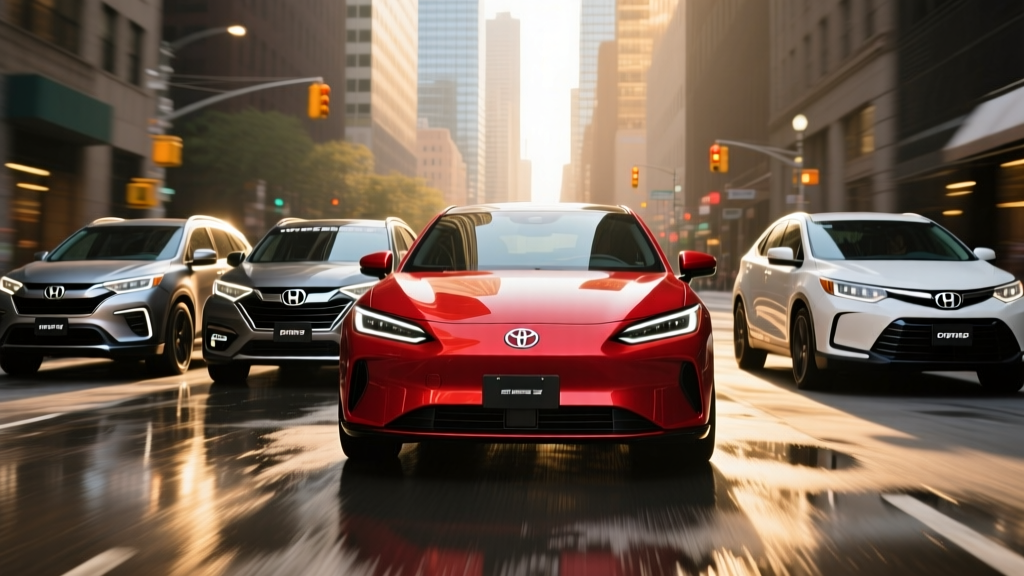
The Affordable SUV Hybrid Landscape in 2026
Finding an affordable SUV hybrid that delivers genuine fuel savings without a punishing sticker price has never been more competitive. For 2026, the compact and midsize hybrid SUV segment is stacked with models starting under $35,000 that return 35+ MPG combined — some pushing well past 40 MPG in real-world city driving. Whether you need a two-row commuter or a three-row family hauler, the options below represent the highest-value electrified SUVs on the market right now.
This guide covers conventional hybrids (HEVs) and plug-in hybrids (PHEVs) side by side, with exact EPA figures, real-world MPG expectations, powertrain specs, battery warranty terms, and current tax credit eligibility. No marketing fluff — just the numbers you need to make a purchase decision.
HEV vs PHEV: The Critical Distinction
Conventional Hybrid (HEV): Uses a small battery (typically 1–2 kWh) charged by regenerative braking and the engine. You never plug it in. It improves MPG across all driving conditions, especially in stop-and-go city traffic where the electric motor handles low-speed propulsion.
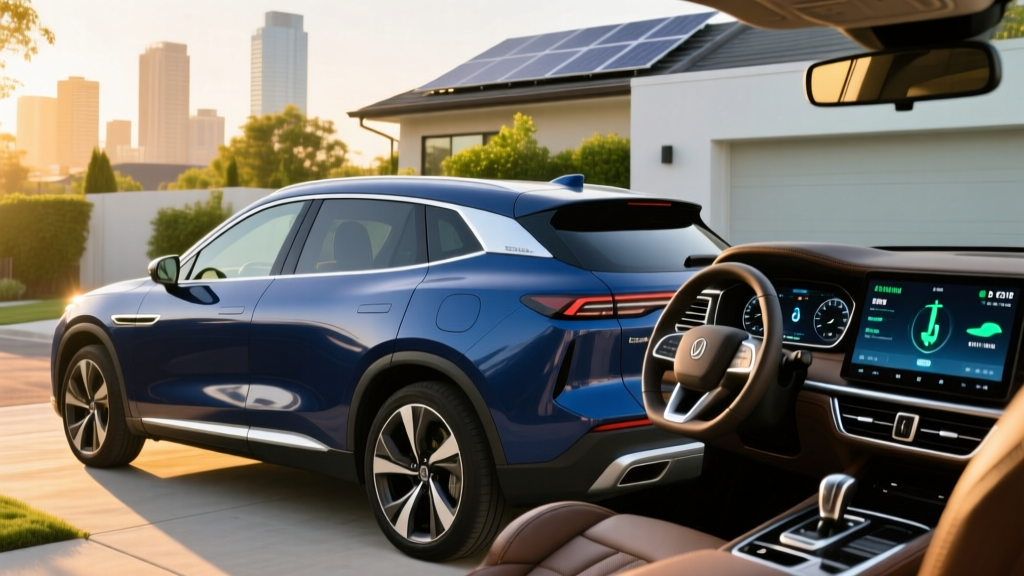
Plug-In Hybrid (PHEV): Carries a larger battery (typically 13–22 kWh) that you charge from a wall outlet or public charger. It provides 25–45 miles of pure electric driving before the gas engine engages. Once the battery depletes, it operates as a conventional hybrid. Ideal if you have home charging and a short commute.
Top Affordable SUV Hybrids: Side-by-Side Specs
The table below compares the strongest value-oriented hybrid SUVs available for the 2026 model year. All pricing reflects base MSRP before destination charges.
| Model | Type | EPA Combined MPG | City / Hwy MPG | PHEV EV Range | Battery | Combined HP | Base MSRP |
|---|---|---|---|---|---|---|---|
| Toyota RAV4 Hybrid | HEV | 39 MPG | 41 / 38 | N/A | 1.6 kWh NiMH | 219 hp | $33,425 |
| Honda CR-V Hybrid | HEV | 40 MPG | 43 / 36 | N/A | 1.1 kWh Li-ion | 204 hp | $35,395 |
| Hyundai Tucson Hybrid | HEV | 38 MPG | 38 / 38 | N/A | 1.49 kWh Li-ion | 232 hp | $33,985 |
| Kia Sportage Hybrid | HEV | 38 MPG | 38 / 38 | N/A | 1.49 kWh Li-ion | 232 hp | $32,990 |
| Toyota RAV4 Prime | PHEV | 38 MPG (hybrid) / 94 MPGe | 40 / 36 (hybrid) | 42 miles | 18.1 kWh Li-ion | 302 hp | $44,900 |
| Hyundai Tucson PHEV | PHEV | 35 MPG (hybrid) / 80 MPGe | 36 / 34 (hybrid) | 33 miles | 13.8 kWh Li-ion | 261 hp | $39,990 |
| Ford Escape Hybrid | HEV | 39 MPG | 42 / 36 | N/A | 1.1 kWh Li-ion | 198 hp | $33,235 |
Sources: fueleconomy.gov (EPA estimates), manufacturer 2026 model-year specifications. PHEV MPGe reflects combined electric+gas operation over the first portion of a charge-depleting cycle.
Real-World MPG: What You'll Actually See
EPA window stickers are a starting point, not a guarantee. Hybrid SUVs tend to exceed their EPA city estimates in stop-and-go traffic because regenerative braking recovers energy that conventional cars waste as heat. On the highway, where the gas engine does most of the work, real-world MPG often falls slightly below the EPA figure.
Here's what to expect based on aggregated owner data and long-term testing:
| Model | EPA Combined | Real-World City | Real-World Highway (70 mph) | Cold-Weather Impact |
|---|---|---|---|---|
| Toyota RAV4 Hybrid | 39 MPG | 40–44 MPG | 34–37 MPG | -3 to -5 MPG in sub-30°F |
| Honda CR-V Hybrid | 40 MPG | 42–46 MPG | 33–36 MPG | -3 to -6 MPG in sub-30°F |
| Hyundai Tucson Hybrid | 38 MPG | 37–41 MPG | 34–37 MPG | -2 to -5 MPG in sub-30°F |
| Kia Sportage Hybrid | 38 MPG | 37–41 MPG | 34–37 MPG | -2 to -5 MPG in sub-30°F |
| Ford Escape Hybrid | 39 MPG | 40–43 MPG | 34–36 MPG | -3 to -5 MPG in sub-30°F |
Cold-weather note: Hybrid batteries are less efficient below freezing, and the engine runs more frequently to provide cabin heat. Expect a 5–12% MPG reduction in sustained sub-30°F conditions. Models with heat pumps (some trims of the Tucson and Sportage) mitigate this slightly.
PHEV real-world range: The RAV4 Prime's 42-mile EPA electric range holds up well in mild weather, typically delivering 38–45 miles on a full charge depending on terrain and climate control use. In cold weather (below 30°F), expect 30–35 miles of electric range before the engine kicks in. The Tucson PHEV similarly delivers 28–35 electric miles in winter versus its 33-mile EPA rating.
Powertrain Breakdown: Engine, Motor, and Total Output
Hybrid powertrains pair a gasoline engine with one or more electric motors. Combined horsepower is the figure that matters for acceleration and highway merging — not just the engine alone.
- Toyota RAV4 Hybrid: 2.5L inline-4 (176 hp) + front/rear electric motors = 219 hp combined. AWD standard via rear electric motor (eAWD). 0–60 mph in ~7.4 seconds.
- Honda CR-V Hybrid: 2.0L inline-4 Atkinson-cycle (145 hp) + two-motor system = 204 hp combined. FWD standard; AWD available on Sport Touring Hybrid. 0–60 mph in ~7.6 seconds.
- Hyundai Tucson Hybrid / Kia Sportage Hybrid: 1.6L turbocharged inline-4 (178 hp) + 47.7 kW electric motor = 232 hp combined. AWD standard. 0–60 mph in ~7.1 seconds. These share a powertrain and are the most powerful in the affordable segment.
- Ford Escape Hybrid: 2.5L inline-4 Atkinson-cycle (161 hp) + electric motor = 198 hp combined. FWD standard; AWD available. 0–60 mph in ~8.2 seconds.
- Toyota RAV4 Prime (PHEV): 2.5L inline-4 + front/rear electric motors = 302 hp combined. AWD standard. 0–60 mph in 5.7 seconds — the quickest affordable hybrid SUV available.
- Hyundai Tucson PHEV: 1.6L turbo inline-4 + 66.9 kW electric motor = 261 hp combined. AWD standard. 0–60 mph in ~7.0 seconds.
PHEV Charging: Battery Size, Charge Times, and DC Capability
For PHEV buyers, charging logistics matter. Both the RAV4 Prime and Tucson PHEV charge via a standard J1772 connector for Level 1 and Level 2 AC charging. Neither supports DC fast charging — a common limitation in the PHEV segment, since the battery packs are small enough that Level 2 charging completes overnight.
| PHEV Model | Battery Capacity | Level 1 (120V) Charge Time | Level 2 (240V) Charge Time | Onboard Charger | DC Fast Charge |
|---|---|---|---|---|---|
| Toyota RAV4 Prime | 18.1 kWh | ~12 hours (0–100%) | ~2.5 hours (0–100%) | 6.6 kW | No |
| Hyundai Tucson PHEV | 13.8 kWh | ~10 hours (0–100%) | ~2 hours (0–100%) | 7.2 kW | No |
Practical charging note: A standard 120V household outlet adds roughly 4–5 miles of electric range per hour of charging. For daily commuters who plug in overnight, Level 1 is often sufficient for PHEVs. A Level 2 home charger (240V, typically $500–$1,500 installed) ensures a full battery every morning regardless of how depleted it was. See a DOE PHEV comparison tool for detailed energy consumption data.
Battery Warranty, Lifespan, and Replacement Cost
Hybrid Battery Warranty: The 10-Year/150,000-Mile Standard
Federal law mandates that hybrid and EV battery packs carry a minimum warranty of 8 years/100,000 miles. In California Air Resources Board (CARB) states — which include CA, CO, CT, ME, MA, NJ, NY, OR, RI, VT, and WA — the requirement extends to 10 years/150,000 miles. Most manufacturers meet or exceed these thresholds nationwide.
Here's the warranty breakdown by model:
- Toyota (RAV4 Hybrid, RAV4 Prime): 10 years / 150,000 miles hybrid battery warranty nationwide.
- Honda (CR-V Hybrid): 8 years / 100,000 miles (10/150k in CARB states).
- Hyundai (Tucson Hybrid/PHEV): 10 years / 100,000 miles hybrid/EV battery warranty.
- Kia (Sportage Hybrid): 10 years / 100,000 miles hybrid battery warranty.
- Ford (Escape Hybrid): 8 years / 100,000 miles hybrid battery warranty.
How long do hybrid batteries actually last? Real-world data from fleet operators and long-term owners shows most modern hybrid batteries retain 85–95% capacity at 150,000 miles. Toyota's NiMH packs in particular have demonstrated exceptional longevity, with many RAV4 Hybrids exceeding 200,000 miles on the original battery. Lithium-ion packs (Honda, Hyundai, Kia, Ford) also show strong durability, though long-term data on newer models is still accumulating.
Replacement cost if out of warranty:
- RAV4 Hybrid NiMH pack: $3,000–$4,500 (parts + labor at dealer; independent shops may offer refurbished packs for $1,500–$2,500)
- Honda CR-V Hybrid Li-ion pack: $3,500–$5,000
- Hyundai/Kia Li-ion pack: $3,000–$4,500
- RAV4 Prime PHEV pack: $6,000–$9,000 (larger battery, higher cost)
- Tucson PHEV pack: $5,000–$7,500
These costs have been trending downward as the hybrid repair aftermarket matures. Most owners will never need a battery replacement within typical ownership periods.
Tax Credits and Incentives: What Applies in 2026
The federal EV tax credit landscape under IRS §30D applies differently to HEVs and PHEVs:
- Conventional hybrids (HEVs) do NOT qualify for the federal §30D clean vehicle credit. That credit is reserved for plug-in vehicles (BEVs and PHEVs) with battery capacity ≥7 kWh.
- PHEVs may qualify for up to $7,500, but eligibility depends on: battery critical-mineral sourcing requirements, battery component manufacturing origin, buyer income caps ($150k single / $300k joint AGI), MSRP caps ($80,000 for SUVs/vans/pickups), and the vehicle being assembled in North America.
- Toyota RAV4 Prime: Currently eligible for up to $3,750 (meets critical-mineral threshold but not full battery-component requirements as of 2026). Verify current status on the IRS qualified vehicles list before purchasing.
- Hyundai Tucson PHEV: Eligibility varies by model year and sourcing updates. Check the fueleconomy.gov tax credit database for the latest qualification status.
- Point-of-sale transfer: As of 2024+, eligible PHEV buyers can transfer the credit to the dealer at purchase, reducing the out-of-pocket price immediately rather than waiting for a tax refund.
State incentives: Many states offer additional rebates or HOV lane access for PHEVs (not HEVs). California's CVRP, Colorado's Innovative Motor Vehicle Credit, and New York's Drive Clean Rebate all include PHEV eligibility with varying amounts ($1,000–$4,000 depending on income and battery size). Check your state's energy office for current programs.
Hybrid vs PHEV vs Full EV: Which Fits Your Life?
Choose a Conventional Hybrid (HEV) If:
- You don't have access to home or workplace charging
- You want maximum MPG with zero behavior change — just fill up with gas
- Your budget is under $35,000 and you want proven reliability
- You take frequent long road trips and don't want to plan charging stops
- You live in an apartment or rent and can't install a charger
Choose a Plug-In Hybrid (PHEV) If:
- You have home charging (even a 120V outlet works for PHEVs overnight)
- Your daily commute is under 40 miles round-trip — you'll rarely use gas
- You want electric driving for daily errands but gas flexibility for road trips
- You want the federal tax credit (up to $7,500) to offset the higher sticker price
- You want stronger acceleration (PHEVs are typically the most powerful variants)
Choose a Full EV (BEV) If:
- You have reliable Level 2 home charging
- Your daily driving is predictable and within 200+ miles
- You want zero tailpipe emissions and minimal maintenance (no oil changes, no gas engine)
- You qualify for the full $7,500 federal credit plus state incentives
- You're comfortable with public DC fast charging for road trips
Pros and Cons: The Affordable Hybrid SUV Verdict
Pros of Affordable Hybrid SUVs
- 35–44 MPG real-world combined — 30–50% less fuel than gas-only equivalents
- No charging required (HEV) — works with your existing routine
- Lower purchase price than comparable EVs ($32k–$36k vs $40k–$55k)
- Proven long-term reliability; hybrid batteries rarely fail within warranty
- Strong resale value, especially Toyota and Honda hybrids
- AWD available on most models via electric rear motor
- No range anxiety — total range of 450–550+ miles per tank
Cons of Affordable Hybrid SUVs
- HEVs don't qualify for federal tax credits
- Higher upfront cost than gas-only versions ($2,000–$4,000 premium)
- Still burning gasoline — not a zero-emission solution
- PHEV variants carry a significant price premium ($8,000–$12,000 more than HEV)
- Highway MPG advantage over gas cars is smaller than city MPG advantage
- Some models (CR-V Hybrid) only offer hybrid on higher trims
- Cargo space slightly reduced vs gas versions due to battery placement
Frequently Asked Questions
How many MPG does the most affordable hybrid SUV get?
The Kia Sportage Hybrid starts at $32,990 and delivers an EPA-rated 38 MPG combined (38 city / 38 highway). The Honda CR-V Hybrid achieves the highest EPA combined rating at 40 MPG (43 city / 36 highway) but starts slightly higher at $35,395. In real-world city driving, both models frequently exceed their EPA estimates, with owners reporting 40–46 MPG in stop-and-go conditions.
How far can a PHEV SUV go on electric only?
The Toyota RAV4 Prime delivers 42 miles of EPA-rated electric-only range — the most in the affordable PHEV SUV segment. The Hyundai Tucson PHEV provides 33 miles. In real-world driving, expect 38–45 miles from the RAV4 Prime in mild weather and 30–35 miles in cold conditions. For most commuters with a sub-40-mile round trip, a PHEV can eliminate daily gasoline use entirely.
Is a hybrid SUV reliable, and what does battery replacement cost?
Modern hybrid SUVs are among the most reliable vehicles on the road. Toyota's hybrid system in particular has decades of proven durability, with many examples exceeding 200,000 miles on the original battery. Hybrid battery warranties cover 8–10 years / 100,000–150,000 miles depending on the manufacturer and state. Out-of-warranty replacement costs range from $3,000–$5,000 for HEV packs and $5,000–$9,000 for PHEV packs, though refurbished options can reduce this significantly.
Does a hybrid SUV qualify for any tax credit?
Conventional hybrids (HEVs) do not qualify for the federal §30D clean vehicle tax credit — that credit is exclusive to plug-in vehicles. PHEVs like the RAV4 Prime and Tucson PHEV may qualify for up to $7,500, subject to battery sourcing requirements, buyer income caps, and MSRP limits. Many states also offer separate incentives for PHEVs. Always verify current eligibility on irs.gov before purchasing.
Should I get a hybrid or just buy a gas SUV?
If you drive more than 12,000 miles per year, especially in city or suburban conditions, the hybrid premium ($2,000–$4,000) typically pays for itself in fuel savings within 3–5 years. At 15,000 miles/year and $3.50/gallon gas, a 40 MPG hybrid saves roughly $750–$900 annually over a 28 MPG gas equivalent. Hybrids also tend to hold higher resale values. For low-mileage drivers under 8,000 miles/year, the payback period stretches longer, and a gas model may make more financial sense.
Do hybrid SUVs cost more to maintain?
No — hybrid SUVs generally cost the same or less to maintain than gas-only versions. The regenerative braking system reduces wear on brake pads (many owners report 80,000+ miles on original brakes). There's no additional maintenance required for the hybrid system itself. The only unique long-term expense risk is battery replacement, which is rare within the first 150,000 miles and covered by warranty during that period.