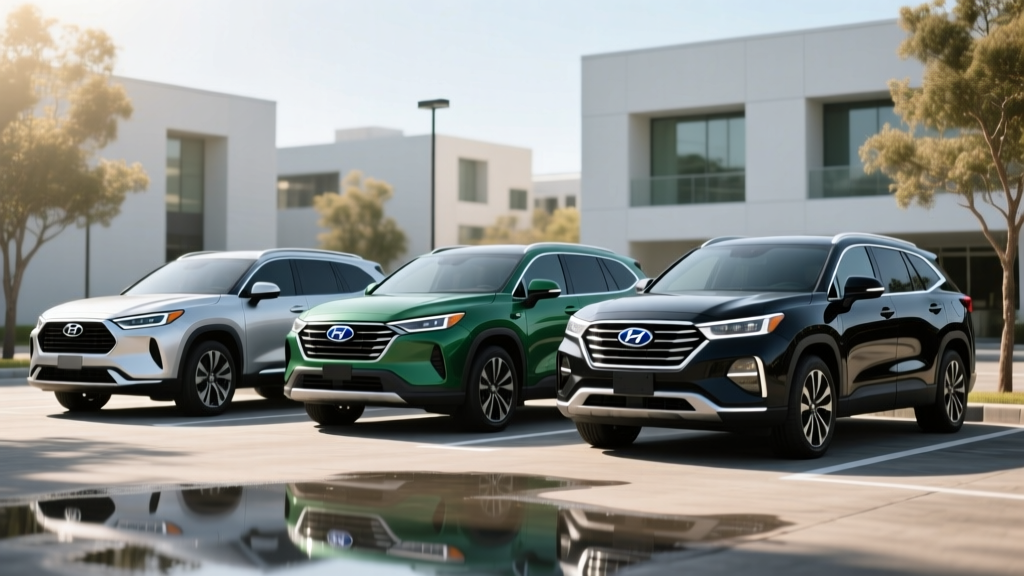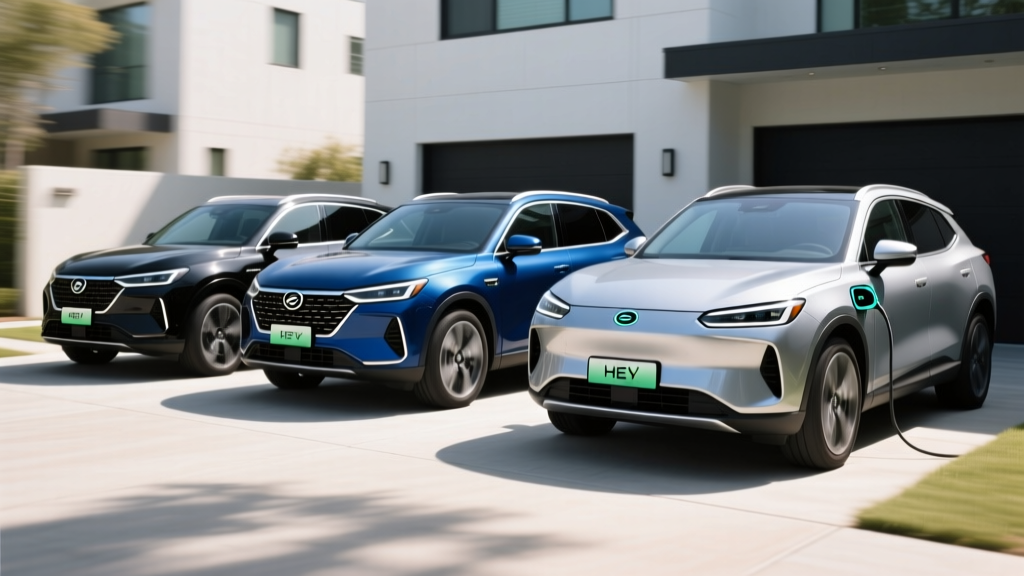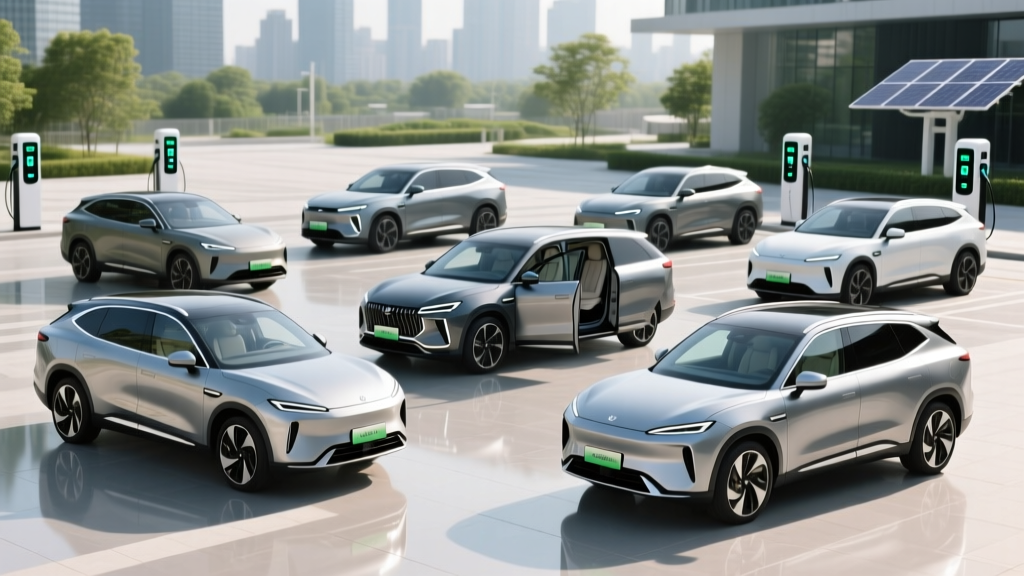
Finding a true 7 passenger plug in hybrid that actually fits adults in the third row while delivering meaningful electric-only range is one of the tightest needles to thread in the current auto market. Most three-row PHEVs sacrifice either passenger space, electric range, or both. As of the 2026 model year, only a handful of nameplates deliver all three — and the differences between them matter far more than the spec sheets suggest.
This guide breaks down every viable 7 passenger plug in hybrid SUV currently on sale, with exact EPA figures, battery specifications, real-world efficiency data, and current federal tax credit eligibility under IRS §30D rules.
HEV vs PHEV: What You're Actually Buying
Before comparing models, the distinction between a conventional hybrid (HEV) and a plug-in hybrid (PHEV) determines your entire ownership experience.
| Factor | Conventional Hybrid (HEV) | Plug-In Hybrid (PHEV) |
|---|---|---|
| Battery size | 1–2 kWh | 13–25 kWh (typically) |
| Plug in to charge? | No — regenerative braking only | Yes — Level 1 or Level 2 |
| Electric-only driving | Brief low-speed assist only | 25–50+ miles at highway speeds |
| Fuel when battery depletes | Gasoline (always) | Gasoline (operates as HEV) |
| Federal tax credit | None | Up to $7,500 (eligibility varies) |
| Best for | No home charging access | Home charging + short daily commutes |
A conventional hybrid like the Toyota Highlander Hybrid gets excellent MPG but never drives on electricity alone. A PHEV like the Toyota Grand Highlander Plug-In Hybrid can complete most daily commutes without burning a drop of gasoline — then switches to hybrid operation for longer trips with zero range anxiety.
2026 Seven-Passenger PHEVs: Side-by-Side Specs
These are the PHEVs currently on sale in the U.S. market that offer a usable third row. We've included the key numbers buyers need.
| Model | EPA Electric Range | Battery (kWh) | Combined HP | EPA MPG (gas) | Base MSRP |
|---|---|---|---|---|---|
| Toyota Grand Highlander PHEV | 32 mi | 18.1 kWh | 304 hp | 35 combined | $49,290 |
| Kia Sorento PHEV | 32 mi | 13.8 kWh | 261 hp | 34 combined | $51,090 |
| Hyundai Santa Fe PHEV | 30 mi | 13.8 kWh | 261 hp | 33 combined | $47,900 |
| Jeep Grand Cherokee L PHEV* | 26 mi (est.) | 17.3 kWh | 375 hp | 28 combined (est.) | $62,000 (est.) |
*Jeep Grand Cherokee L PHEV: announced for 2026, specs preliminary until EPA certification. Monitor Stellantis for final figures.
Notice what's missing: the Mazda CX-90 PHEV is a 3-row SUV, but its third row is best suited for children only. The Mitsubishi Outlander PHEV offers a third row, but it's similarly cramped. If you need adults in all seven seats regularly, the Grand Highlander PHEV is the clear leader.
Electric-Only Range: How Far Can You Actually Go?
The EPA-rated electric range for these PHEVs clusters around 30 miles — enough to cover the average American commute of roughly 16 miles each way, according to FHWA data. But real-world electric range depends heavily on conditions.
Real-World Electric Range Expectations:
- Mild weather, city/suburban driving: Expect to meet or slightly exceed EPA ratings (32–35 mi in the Grand Highlander PHEV)
- Highway-only at 70+ mph: Expect 20–25 mi — electric motors are less efficient at sustained high speeds
- Cold weather (below 32°F): Expect 18–24 mi — battery chemistry and cabin heating reduce usable capacity by 20–35%
- Full load (7 passengers + cargo): Subtract 2–4 mi from any estimate above
For most PHEV owners with home Level 2 charging, the daily routine is simple: plug in overnight, wake up to a full battery, and handle the school run, commute, and errands on electricity alone. The gas engine rarely fires during the work week.
MPG When the Battery Runs Out: Hybrid-Mode Efficiency
Once the electric range depletes, a PHEV operates as a conventional hybrid. This is where the EPA combined MPG figure matters — and where real-world results often surprise buyers.
| Model | EPA City | EPA Highway | EPA Combined | Real-World Combined |
|---|---|---|---|---|
| Toyota Grand Highlander PHEV | 36 mpg | 34 mpg | 35 mpg | 32–37 mpg |
| Kia Sorento PHEV | 35 mpg | 33 mpg | 34 mpg | 30–35 mpg |
| Hyundai Santa Fe PHEV | 34 mpg | 32 mpg | 33 mpg | 30–34 mpg |
Toyota's hybrid system tends to deliver real-world MPG that meets or slightly exceeds the EPA combined rating, particularly in city driving where regenerative braking recaptures more energy. Hyundai-Kia's turbocharged PHEV powertrain is slightly thirstier on the highway, where the turbo spools more frequently under load.
For context: a comparable gas-only three-row SUV like the Chevrolet Traverse averages 22 MPG combined. Even in hybrid mode with a depleted battery, these PHEVs save roughly $600–$900 per year in fuel over a gas equivalent at 15,000 miles driven annually (based on $3.50/gallon).
Charging Speed, Battery Specs, and Home Setup
PHEV batteries are smaller than full EV batteries, which means faster charging — but also limited DC fast-charge capability.
| Model | Battery Chemistry | Level 1 (120V) | Level 2 (240V) | DC Fast Charge |
|---|---|---|---|---|
| Toyota Grand Highlander PHEV | Lithium-ion (NMC) | ~12 hours (0–100%) | ~4 hours (0–100%) | Not available |
| Kia Sorento PHEV | Lithium-ion (NMC) | ~11 hours (0–100%) | ~3.5 hours (0–100%) | Not available |
| Hyundai Santa Fe PHEV | Lithium-ion (NMC) | ~11 hours (0–100%) | ~3.5 hours (0–100%) | Not available |
No mainstream 7-passenger PHEV currently offers DC fast charging. The batteries are too small (13–18 kWh) to justify the cost and weight of DC hardware, and the charging speeds at Level 2 are adequate for overnight replenishment. A standard 240V Level 2 home charger — typically a 32A or 40A unit on a NEMA 14-50 outlet — will fully recharge any of these PHEVs while you sleep.
Level 2 home charger installation typically costs $500–$1,500 for the equipment and electrician work if your panel has capacity. A 200-amp panel upgrade, if needed, adds $1,500–$3,000. Always get a licensed electrician's assessment before purchasing equipment.
Pricing and Federal Tax Credit Eligibility
PHEVs carry a price premium over their gas and conventional hybrid siblings — typically $5,000–$8,000 more. The federal tax credit under IRS §30D can offset a significant portion of that, but eligibility is complex and changes frequently.
2026 Federal PHEV Tax Credit Requirements (IRS §30D):
- Vehicle must have a battery capacity of at least 7 kWh
- MSRP cap: $80,000 for SUVs, vans, and pickup trucks
- Buyer income cap: $300,000 (married filing jointly), $225,000 (head of household), $150,000 (single)
- Battery components and critical minerals must meet phased domestic sourcing thresholds (increasing annually)
- Credit amount phases from $3,750 to $7,500 depending on sourcing compliance
- Point-of-sale transfer available — apply the credit at the dealer rather than waiting for tax filing
As of early 2026, the Toyota Grand Highlander PHEV and Kia Sorento PHEV have faced shifting credit eligibility due to battery sourcing rule changes. The credit amount available at any given time depends on the manufacturer's current supply chain compliance. Always verify current eligibility on IRS.gov or through your dealer before finalizing a purchase.
State incentives may stack on top — California, Colorado, and several other states offer additional rebates for PHEVs. Check your state energy office or the Alternative Fuels Data Center for current local programs.
Battery Warranty, Reliability, and Replacement Costs
Hybrid and PHEV battery longevity is consistently the top concern among first-time buyers. The data is reassuring: modern lithium-ion hybrid batteries are engineered for 15+ years of service, and failure rates are low.
PHEV Battery Warranty Coverage (2026 Models):
- Toyota: 10 years / 150,000 miles (hybrid battery)
- Hyundai/Kia: 10 years / 100,000 miles (hybrid battery)
- Federal minimum (EPA): 8 years / 80,000 miles for emissions-related components including hybrid batteries
Warranty covers battery capacity loss below a defined threshold (typically 60–70% of original capacity) and outright failure.
Out-of-warranty PHEV battery replacement costs currently range from $4,000–$8,000 depending on the model, including labor. For comparison, a full EV battery replacement can run $12,000–$20,000+. The smaller PHEV battery is both cheaper to replace and less likely to need it — Toyota's hybrid battery track record stretches back to the 2001 Prius, with many original batteries still in service past 200,000 miles.
According to reliability data tracked by Consumer Reports and J.D. Power, Toyota's hybrid powertrains consistently rank at or near the top for long-term dependability. Hyundai-Kia's PHEV systems have shown solid reliability in the 2022+ generation, though long-term data beyond 5 years is still accumulating.
Hybrid vs PHEV vs Full EV: Which Three-Row Fits You?
Choose a conventional hybrid (HEV) like the Toyota Grand Highlander Hybrid if:
- You cannot install a home charger (apartment, street parking, no garage)
- You want maximum simplicity — no plugs, no charging routines
- Your budget is tighter (HEVs cost $5,000–$7,000 less than PHEV equivalents)
- You drive mostly highway miles where PHEV electric range offers less benefit
Choose a 7 passenger plug in hybrid if:
- You have access to Level 2 home charging (garage or driveway with 240V outlet)
- Your daily driving is under 30 miles (most commutes, school runs, errands)
- You regularly take longer road trips and want zero range anxiety
- You want to reduce fuel consumption by 60–80% without going full EV
- You need three usable rows for passengers, not just cargo
Choose a full EV (like the Kia EV9 or Tesla Model X) if:
- You have reliable home charging and access to DC fast chargers for road trips
- You want the lowest per-mile fuel cost and minimal maintenance
- Your household has a second vehicle for edge cases, or your road trips are infrequent
- You want to maximize the federal tax credit (full EVs generally qualify more consistently)
The honest truth: if you can charge at home and your daily driving is under 30 miles, a PHEV lets you drive electric 80% of the time while keeping the gas engine as a safety net for the 20% of trips that exceed battery range. You get most of the EV ownership benefit without the infrastructure dependency.
Pros and Cons: 7-Passenger PHEVs at a Glance
Pros
- 30+ miles of electric-only range covers most daily driving
- No range anxiety — gas engine handles any road trip
- 35 MPG combined in hybrid mode beats any gas-only 3-row SUV
- Federal tax credit can reduce effective price by $3,750–$7,500
- Lower maintenance than gas vehicles (no oil changes in EV mode, reduced brake wear from regen)
- Proven hybrid reliability with 10-year battery warranties
Cons
- $5,000–$8,000 price premium over conventional hybrid versions
- Requires home Level 2 charging to realize full value
- No DC fast charging — public charging impractical for quick top-ups
- Third row in most models still tighter than minivan alternatives
- Tax credit eligibility shifts with sourcing rules — not guaranteed
- Added weight from dual powertrains slightly reduces cargo capacity vs gas models
Frequently Asked Questions
How many MPG does a 7-passenger PHEV get?
Once the electric range is depleted, the Toyota Grand Highlander PHEV returns an EPA-rated 36 city / 34 highway / 35 combined MPG. The Kia Sorento PHEV achieves 35/33/34 MPG, and the Hyundai Santa Fe PHEV delivers 34/32/33 MPG. In real-world city driving, Toyota's hybrid system often exceeds its EPA rating by 1–2 MPG thanks to aggressive regenerative braking.
How far can a 7-passenger plug-in hybrid go on electric only?
Current models deliver 26–32 miles of EPA-rated electric-only range. In mild weather with city driving, expect to match or slightly exceed this. In cold weather or highway-only use, expect 18–25 miles of real-world electric range. Once depleted, the vehicle seamlessly switches to hybrid mode with no driver input required.
Do 7-passenger PHEVs qualify for the federal tax credit?
They can, but eligibility under IRS §30D depends on battery sourcing, buyer income, and MSRP caps that change annually. As of 2026, some PHEV models qualify for the full $7,500 credit, others for $3,750, and some for none at all depending on their current battery supply chain. Always verify on IRS.gov before purchasing. The credit can be transferred to the dealer at point of sale, reducing your purchase price directly.
Is a PHEV battery reliable, and what does replacement cost?
Modern PHEV batteries are highly reliable, with failure rates well under 5% over the first decade of use. Toyota's hybrid batteries have a documented track record of lasting 150,000–200,000+ miles. All major manufacturers cover PHEV batteries for 8–10 years / 80,000–150,000 miles. Out-of-warranty replacement costs $4,000–$8,000 including labor — less than half the cost of a full EV battery replacement.
Can I charge a PHEV at a public DC fast charger?
No. Current 7-passenger PHEVs do not support DC fast charging. They charge via Level 1 (120V household outlet) or Level 2 (240V) using a standard J1772 connector. Because PHEV batteries are small (13–18 kWh), Level 2 charging fully replenishes them in 3.5–4 hours, which is practical for overnight home charging but not for public charging stops.
Should I get a PHEV or just buy a full EV?
If you have home charging, a daily commute under 30 miles, and regularly take road trips exceeding 200 miles, a PHEV is the pragmatic choice — you drive electric most days and burn gas only on long trips. If you have reliable home and public charging access, rarely drive more than 250 miles in a day, and want the lowest operating cost, a full EV like the Kia EV9 (EPA range up to 304 mi) eliminates gasoline entirely. The PHEV is the bridge; the EV is the destination — choose based on your actual driving patterns, not aspirational ones.