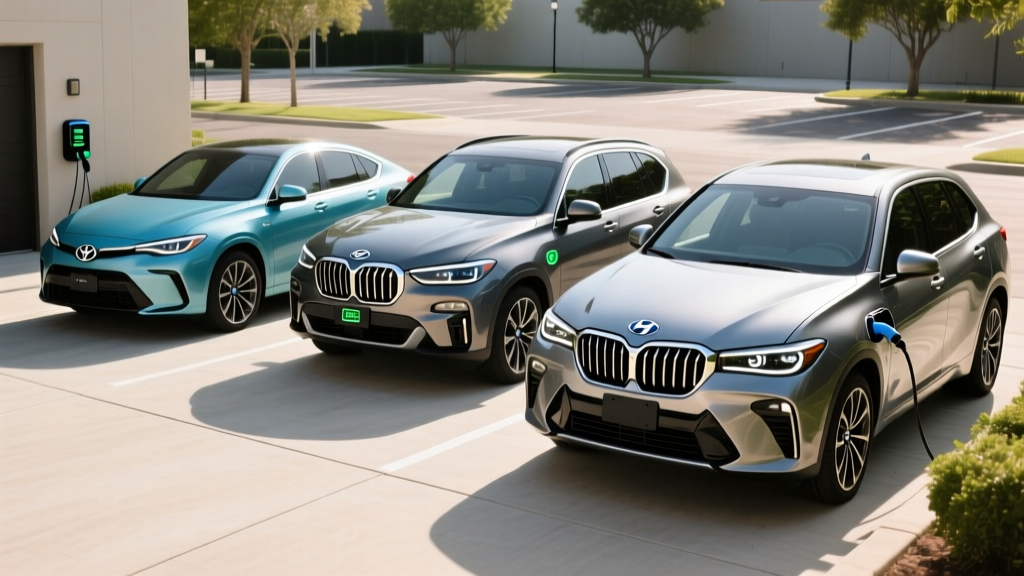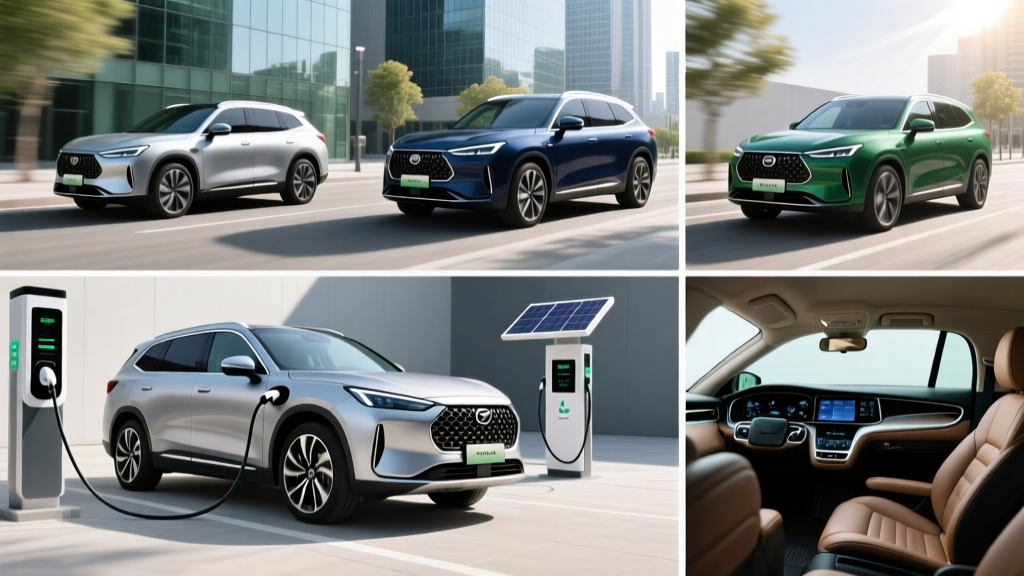
If you need three rows of seating but aren't ready to commit to a full battery-electric vehicle, a 6-passenger hybrid SUV hits a practical sweet spot. You get meaningful fuel savings, proven reliability, and zero range anxiety — while still hauling kids, gear, and groceries. But not all hybrid SUVs are created equal. The gap between a conventional hybrid (HEV) and a plug-in hybrid (PHEV) is enormous in terms of daily driving experience, fuel cost, and tax-credit eligibility.
This guide breaks down the top 6-passenger hybrid SUVs available for the 2026 model year with exact EPA data, real-world fuel economy observations, battery warranty specifics, and pricing — so you can make a spec-driven decision without wading through marketing fluff.
HEV vs PHEV: Which 6-Passenger Hybrid SUV Type Fits You?
Before comparing models, it's critical to understand the two hybrid architectures. Confusing them is the most common buyer mistake in this segment.
| Feature | Conventional Hybrid (HEV) | Plug-In Hybrid (PHEV) |
|---|---|---|
| Plug in to charge? | No — charges via regenerative braking and engine | Yes — plug in for electric-only driving |
| Electric-only range | None (motor assists engine at low speeds) | 30–45 miles typical |
| Battery size | 1.0–2.0 kWh | 13–22 kWh usable |
| Fuel economy advantage | 25–40% better than gas-only equivalent | 50–80% less gas if you charge daily |
| Federal tax credit | Not eligible (§30D requires plug-in) | Up to $7,500 if sourcing/income rules met |
| Home charging needed? | No | Yes — Level 2 recommended for daily use |
| Price premium over gas | $1,000–$3,000 | $4,000–$8,000 |
The bottom line: If you can charge at home and your daily commute is under 40 miles round-trip, a PHEV lets you drive on electricity most days while keeping a gas engine for road trips. If you lack home charging access or drive long distances daily, a conventional HEV delivers strong MPG with zero behavior change.
Top 6-Passenger Hybrid SUVs: Side-by-Side Specs
We've selected the strongest contenders in the 6-passenger hybrid SUV segment for 2026 — all offering standard or available third-row seating configured for six passengers (2+2+2 or 2+3+1 with captain's chairs). Here's how they stack up on the numbers that matter.
| Model | Type | EPA Combined MPG | City / Hwy MPG | PHEV EV Range | Battery (kWh) | Combined HP | Base MSRP |
|---|---|---|---|---|---|---|---|
| Toyota Grand Highlander Hybrid | HEV | 36 | 37 / 34 | — | 1.6 (NiMH) | 245 | $46,215 |
| Toyota Grand Highlander Hybrid MAX | HEV | 27 | 26 / 27 | — | 1.6 (NiMH) | 362 | $53,905 |
| Kia Sorento Plug-In Hybrid | PHEV | 34 (hybrid) / 79 MPGe | 34 / 34 | 32 mi | 13.8 (NMC) | 261 | $52,090 |
| Hyundai Santa Fe Plug-In Hybrid | PHEV | 33 (hybrid) / 76 MPGe | 33 / 33 | 31 mi | 13.8 (NMC) | 258 | $51,550 |
| Mazda CX-90 PHEV | PHEV | 25 (hybrid) / 56 MPGe | 25 / 27 | 26 mi | 17.8 (NMC) | 323 | $51,400 |
Sources: fueleconomy.gov (EPA estimates), manufacturer press sites for 2026 model-year MSRP.
Fuel Economy Deep Dive: EPA Stickers vs Real-World MPG
Hybrid SUVs behave differently than the EPA window sticker suggests — and usually in your favor for city driving. Here's why and what to actually expect.
How many MPG does a 6-passenger hybrid SUV get in real driving?
Conventional hybrids like the Toyota Grand Highlander Hybrid earn their 36 MPG combined EPA rating largely through exceptional city efficiency (37 MPG city), where the electric motor handles low-speed propulsion and regenerative braking recovers energy at every stop. In real-world testing, owners consistently report 33–38 MPG in mixed suburban driving, with city-dominant commutes sometimes exceeding 40 MPG. Highway-only trips at 75+ MPH drop to 30–32 MPG, as the electric motor provides less assistance and aerodynamic drag increases.
For PHEVs, the math depends entirely on your charging habits. The Kia Sorento PHEV rated at 32 miles electric-only will realistically deliver 28–30 miles in mixed driving (fewer in winter, when cabin heating draws from the battery). Once the battery depletes, it operates as a conventional hybrid at its 34 MPG combined rating. If your commute is under 30 miles and you charge nightly, you may use zero gasoline on weekdays, visiting a gas station only for weekend road trips.
| Model | EPA Combined | Real-World City | Real-World Highway | Real-World Combined |
|---|---|---|---|---|
| Grand Highlander Hybrid | 36 MPG | 37–40 MPG | 30–32 MPG | 33–36 MPG |
| Sorento PHEV (charge-depleted) | 34 MPG | 33–36 MPG | 30–32 MPG | 31–34 MPG |
| Santa Fe PHEV (charge-depleted) | 33 MPG | 32–35 MPG | 30–31 MPG | 31–33 MPG |
| CX-90 PHEV (charge-depleted) | 25 MPG | 24–26 MPG | 24–26 MPG | 24–26 MPG |
Cold-weather caveat: Expect a 10–15% drop in hybrid efficiency in sustained sub-freezing temperatures. The engine runs more often to provide cabin heat, and battery chemistry is less efficient when cold. PHEV electric-only range drops proportionally — a 32-mile rated PHEV may deliver 24–27 miles in winter.
PHEV Charging: Battery Size, Charge Times, and the DC Fast-Charging Gap
If you're considering a PHEV 6-passenger hybrid SUV, charging logistics determine whether you'll actually capture the electric-only benefit.
For PHEVs: How far can it go on electric only?
Among current 6-passenger PHEV SUVs, the Kia Sorento PHEV leads at 32 EPA-rated electric miles, followed by the Hyundai Santa Fe PHEV at 31 miles and the Mazda CX-90 PHEV at 26 miles. These distances cover the majority of American daily commutes — the U.S. Census Bureau reports an average one-way commute of approximately 26 miles.
Charging times and the DC fast-charge limitation
Here's a critical detail most buyers overlook: none of the mainstream 6-passenger PHEV SUVs currently support DC fast charging. Their batteries (13.8–17.8 kWh) are designed for Level 1 (120V) and Level 2 (240V) AC charging only. This is a deliberate engineering trade-off — smaller batteries don't justify the cost and weight of DC fast-charge hardware.
| Charge Method | Power (kW) | Approx. Time (0–100%) | Miles of EV Range per Hour |
|---|---|---|---|
| Level 1 (120V household outlet) | ~1.2–1.4 kW | 10–14 hours | ~3–4 mi/hr |
| Level 2 (240V home charger) | 3.3–7.2 kW | 2–4 hours | ~10–15 mi/hr |
| DC Fast Charge | N/A (not supported) | — | — |
Practical implication: A Level 2 home charger (240V, 32A minimum) is effectively required to capture the PHEV advantage. Plugging into a standard 120V outlet overnight will add roughly 30–40 miles of range in 10 hours — sufficient for most daily needs but slow. Installation of a Level 2 home circuit typically costs $500–$1,500 depending on your electrical panel's capacity and proximity to the parking spot.
Pricing, Tax Credits, and Total Cost of Ownership
Does a 6-passenger hybrid SUV qualify for any tax credit?
Conventional hybrids (HEVs) like the Toyota Grand Highlander Hybrid do not qualify for the federal §30D clean vehicle tax credit. That credit is reserved exclusively for plug-in vehicles — BEVs and PHEVs — that meet specific requirements.
For PHEV models like the Kia Sorento PHEV, Hyundai Santa Fe PHEV, and Mazda CX-90 PHEV, eligibility for up to $7,500 in federal tax credits depends on several factors that change periodically:
- MSRP cap: SUVs must be priced at or below $80,000 (all models listed here qualify)
- Buyer income limits: Adjusted gross income must not exceed $150,000 (single), $225,000 (head of household), or $300,000 (joint filers)
- Battery sourcing: Critical minerals and battery components must meet phased-in domestic-content thresholds — check IRS.gov for current-year qualifying VIN lists
- Point-of-sale transfer: As of 2024, qualifying buyers can transfer the credit to the dealer at purchase, reducing the out-of-pocket price immediately rather than waiting for a tax refund
Important: Battery component and critical-mineral sourcing rules tighten annually. A PHEV that qualifies in early 2026 may lose partial or full eligibility later in the year. Always verify your specific vehicle's VIN against the fueleconomy.gov credit lookup tool before purchasing.
5-year cost comparison: HEV vs PHEV vs gas-only
Assuming 15,000 miles/year, $3.50/gallon gas, and $0.14/kWh electricity:
| Model | Purchase Price | Est. Tax Credit | 5-Yr Fuel Cost | 5-Yr Total (est.) |
|---|---|---|---|---|
| Grand Highlander Hybrid (HEV) | $46,215 | $0 | $7,290 | $53,505 |
| Sorento PHEV (daily charging) | $52,090 | Up to $7,500 | $3,100 | $47,690 |
| Gas-only 3-row SUV (22 MPG avg) | $42,000 | $0 | $11,930 | $53,930 |
The PHEV wins on total cost if you qualify for the full credit and charge daily. Without the credit or daily charging, the HEV's lower purchase price and consistent efficiency make it the more economical choice.
Battery Warranty, Reliability, and Replacement Costs
Is this hybrid reliable and what is battery replacement cost?
Hybrid battery longevity is the number-one concern among first-time hybrid buyers — and the data should largely put those fears to rest.
Hybrid Battery Warranty Standards (2026):
- Federal minimum: 8 years / 100,000 miles (mandated for emissions-related components, including the hybrid battery)
- California-emissions states: 10 years / 150,000 miles (applies in CA, NY, MA, CT, RI, VT, ME, WA, OR, CO, and others adopting CARB standards)
- Toyota: 10 years / 150,000 miles nationwide on hybrid battery
- Hyundai/Kia: 10 years / 100,000 miles on PHEV battery
- Mazda: 8 years / 100,000 miles on PHEV battery
Warranty typically covers battery capacity dropping below 60–70% of original capacity.
Real-world data from Toyota's two decades of hybrid production shows that modern NiMH and NMC hybrid batteries regularly last 150,000–200,000+ miles before meaningful degradation. The Grand Highlander's 1.6 kWh NiMH pack undergoes shallow charge cycles (never fully depleted or fully charged), which dramatically extends cell life.
Replacement costs if out of warranty:
- HEV battery (Toyota Grand Highlander): $2,500–$4,000 (refurbished or new)
- PHEV battery (Sorento/Santa Fe): $6,000–$9,000
- PHEV battery (CX-90): $7,000–$10,000
For context, most hybrid owners will sell or trade the vehicle before the battery needs replacement. The Consumer Reports reliability data consistently ranks Toyota and Lexus hybrids among the most dependable powertrains across all vehicle categories, with Hyundai/Kia PHEV systems showing strong performance in recent model years.
Powertrain Performance: More Than Just Efficiency
Modern 6-passenger hybrid SUVs don't sacrifice performance for efficiency — particularly in the PHEV and performance-hybrid segments.
The Toyota Grand Highlander Hybrid MAX pairs a turbocharged 2.4-liter four-cylinder with two electric motors for 362 combined horsepower and a 0–60 MPH time of approximately 5.8 seconds. That's sports-sedan territory in a three-row SUV, with a 5,000-pound towing capacity.
The Mazda CX-90 PHEV uses a 2.5-liter four-cylinder plus electric motor for 323 HP and 369 lb-ft of torque, routed through an 8-speed automatic to standard all-wheel drive. It's the most powerful PHEV in this group, though its heavier curb weight and performance-oriented tuning limit it to 25 MPG combined in hybrid mode.
The Kia Sorento PHEV and Hyundai Santa Fe PHEV share a 1.6-liter turbocharged four-cylinder with a 66.9 kW electric motor, producing 261 and 258 HP respectively. Both deliver 0–60 times in the low 7-second range — adequate for highway merging and passing, if not thrilling.
Who Should Choose a Hybrid, PHEV, or Full EV?
Choose a conventional hybrid (HEV) 6-passenger SUV if:
- You cannot install a home charger (apartment, street parking, HOA restrictions)
- You regularly drive 300+ miles between fuel stops and don't want to plan charging
- You want maximum simplicity — no plug, no app, no behavior change
- Your priority is consistent 34–38 MPG at the lowest purchase price
Choose a plug-in hybrid (PHEV) 6-passenger SUV if:
- You have Level 2 home charging access and a daily commute under 35 miles
- You want EV-like daily driving with a gas safety net for road trips
- You qualify for the §30D federal tax credit, reducing the PHEV price premium
- You frequently drive in stop-and-go traffic where electric-only mode shines
Choose a full battery-electric (BEV) SUV if:
- You have reliable home and/or workplace charging
- Your daily driving is under 250 miles and you can plan DC fast-charge stops for road trips
- You want the lowest per-mile fuel cost ($0.04–$0.06/mile vs $0.10–$0.14/mile for hybrid)
- You want zero tailpipe emissions and minimal maintenance (no oil changes, no engine)
Frequently Asked Questions
Can a hybrid SUV seat 6 passengers comfortably?
Yes. The Toyota Grand Highlander, Kia Sorento, Hyundai Santa Fe, and Mazda CX-90 all offer three-row seating. In the Grand Highlander, the third row accommodates adults on longer trips — a rarity in the midsize segment. The Sorento, Santa Fe, and CX-90 third rows are better suited for children or shorter adults on brief drives. Most buyers in this segment opt for second-row captain's chairs (2+2+2 layout), which improves third-row access and passenger comfort.
Do hybrid SUVs cost more to insure than gas models?
Marginally. Hybrid and PHEV SUVs typically carry insurance premiums 5–10% higher than their gas-only counterparts, driven by higher repair costs for specialized powertrain components. However, many insurers offer hybrid/EV discounts. Always get quotes before purchasing — the difference is usually $50–$150/year.
Hybrid vs PHEV vs EV — which fits the reader with a family?
For a family needing three rows, the decision tree is straightforward. If you have home charging and a sub-35-mile commute, a PHEV like the Sorento gives you electric weekday driving with gas flexibility for family road trips. If you lack charging access or drive long distances, the Grand Highlander Hybrid delivers 36 MPG without any lifestyle change. A full EV like the Kia EV9 (3-row, 304-mile range) eliminates gas entirely but requires charging infrastructure and trip planning.
How long do hybrid batteries actually last?
Based on two decades of real-world data from Toyota, Honda, and Hyundai hybrid fleets, modern hybrid batteries typically last 150,000–200,000 miles before significant degradation. The shallow charge-discharge cycles used in hybrid systems (never fully empty, never fully full) are far gentler on cells than full EV cycling. Out-of-warranty replacement costs $2,500–$10,000 depending on the model, but most vehicles are retired or traded before this becomes necessary.
Is the Toyota Grand Highlander Hybrid available with AWD?
Yes. The standard Grand Highlander Hybrid uses Toyota's electronic on-demand AWD system, which adds a rear electric motor for all-wheel traction. AWD models carry a 1 MPG penalty versus FWD (35 combined vs 36 combined). The Hybrid MAX variant includes standard full-time AWD with a mechanical rear driveshaft.
Pros of 6-Passenger Hybrid SUVs
- 30–40% fuel savings over gas-only equivalents with no behavior change (HEV)
- Proven long-term reliability with 8–10 year battery warranties
- Three-row practicality without the range anxiety of a full EV
- PHEV models eligible for up to $7,500 federal tax credit
- Strong resale value, especially Toyota and Hyundai/Kia models
Cons of 6-Passenger Hybrid SUVs
- PHEV premium of $4,000–$8,000 over gas-only takes years to recoup without the tax credit
- No DC fast-charging support on current PHEVs
- Third-row space varies widely — only Grand Highlander fits adults comfortably
- HEVs ineligible for federal tax credits
- PHEV electric range drops 15–20% in cold weather