Quick Verdict: The Prius Hybrid Engine Punches Above Its Weight
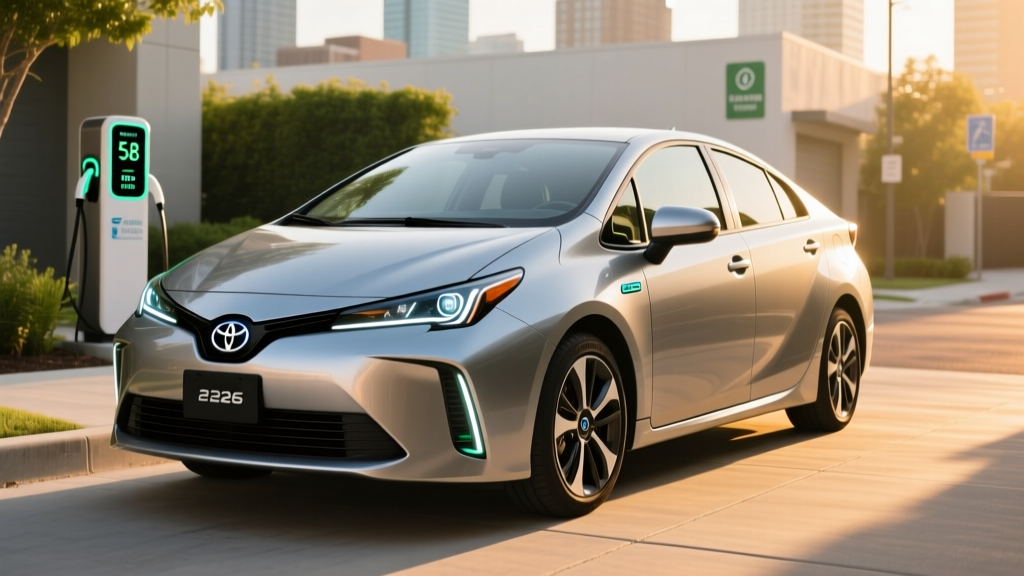
The current-generation Toyota Prius rewrote the hybrid playbook. Gone is the sluggish, appliance-like reputation. The 2026 Prius pairs a 2.0-liter four-cylinder engine with dual electric motor-generators through Toyota's fifth-generation Hybrid Synergy Drive, delivering 196 combined horsepower in front-wheel-drive form (199 hp with AWD) while still achieving up to 57 MPG EPA combined. It's one of the most efficient vehicles on the road that doesn't require a plug.
This guide covers everything a buyer needs to know about the Prius hybrid powertrain — real-world fuel economy, the HEV vs. PHEV (Prius Prime) decision, battery longevity, and whether any tax credits apply.
HEV vs. PHEV: Which Prius Powertrain Is Right for You?
Toyota sells two distinct Prius models. Understanding the difference is essential before visiting a dealer.
| Attribute | Prius (HEV) | Prius Prime (PHEV) |
|---|---|---|
| Powertrain type | Conventional hybrid — no plug | Plug-in hybrid — charges from grid |
| Combined horsepower | 196 hp (FWD) / 199 hp (AWD) | 220 hp |
| Battery capacity | ~0.9 kWh (small buffer) | 13.6 kWh usable |
| Electric-only range | N/A (EV mode ~1 mi at low speed) | 44 miles (EPA) |
| EPA combined MPG / MPGe | 57 MPG (LE FWD) | 52 MPG (gas) / 127 MPGe (with charge) |
| Requires plugging in? | No — regenerates via braking/engine | Optional, but unlocks PHEV benefits |
| DC fast charging? | No | No (Level 2 AC only, ~4 hrs at 120V; ~2 hrs at 240V) |
| Starting MSRP (2026) | ~$28,350 (LE) | ~$33,445 (SE) |
| Federal tax credit (§30D) | Not eligible | Up to $3,750 (see eligibility below) |
The bottom line: If you can't charge at home or work, the standard Prius HEV is the correct choice. If you have access to a 120V or 240V outlet and your daily commute is under 40 miles round-trip, the Prius Prime lets you drive most days on electricity alone while retaining a gas engine for longer trips.
2026 Prius Hybrid Engine: Powertrain Specs and Performance
The Prius uses Toyota's fifth-generation hybrid system, which is significantly more powerful and refined than the older 1.8-liter setup that defined earlier generations.
| Specification | Prius LE / XLE (FWD) | Prius LE / XLE (AWD) |
|---|---|---|
| Gas engine | 2.0L inline-4 (150 hp, 139 lb-ft) | 2.0L inline-4 (150 hp, 139 lb-ft) |
| Front electric motor | 111 hp / 152 lb-ft | 111 hp / 152 lb-ft |
| Rear electric motor (AWD) | N/A | 41 hp / 62 lb-ft |
| Net combined output | 196 hp | 199 hp |
| Transmission | eCVT (planetary gearset) | eCVT (planetary gearset) |
| 0–60 mph | ~7.2 seconds | ~7.0 seconds |
| Hybrid battery | Lithium-ion, ~0.9 kWh | Lithium-ion, ~0.9 kWh |
| Curb weight | ~3,098 lbs | ~3,218 lbs |
The 2.0-liter Dynamic Force engine operates on the Atkinson cycle for maximum thermal efficiency (~41%), meaning it extracts more energy per gallon than most conventional engines. The eCVT isn't a belt-driven CVT — it's a planetary gearset that seamlessly blends engine and motor torque with no rubber-band effect. Acceleration from 0–60 in roughly 7 seconds is genuinely quick for a 57-MPG car and makes highway merging effortless.
Fuel Economy: EPA Ratings vs. Real-World MPG
Fuel economy is the Prius's headline feature. Here's how the 2026 lineup breaks down per fueleconomy.gov:
| Trim / Drivetrain | City MPG | Highway MPG | Combined MPG |
|---|---|---|---|
| LE (FWD) | 57 | 56 | 57 |
| XLE / Limited (FWD) | 52 | 52 | 52 |
| LE (AWD) | 53 | 54 | 54 |
| XLE (AWD) | 49 | 50 | 49 |
Real-world MPG reality check: Toyota hybrids consistently match or exceed their EPA city ratings because stop-and-go driving maximizes regenerative braking and electric-motor usage. Owners on platforms like Fuelly report averages of 52–60 MPG in mixed suburban driving with the LE FWD trim. Highway-only driving at 75+ mph typically drops to 46–50 MPG due to aerodynamic drag — a pattern common to all vehicles but noticeable when your baseline is 57.
Cold weather reduces MPG by roughly 5–10% in winter conditions (below 35°F) because the engine runs more frequently to generate cabin heat. A block heater or garage parking mitigates some of this loss.
Prius Prime (PHEV): Electric-Only Range and Charging
If you're considering the plug-in Prius Prime, here are the critical numbers:
- EPA electric-only range: 44 miles (SE trim, 19-inch wheels reduce this slightly vs. prior 18-inch setup)
- Total combined range: ~490 miles (electric + 10.6-gallon gas tank)
- Battery: 13.6 kWh usable, lithium-ion
- Level 1 charging (120V household outlet): ~4 hours from empty
- Level 2 charging (240V): ~2 hours from empty
- DC fast charging: Not available — Toyota omitted DC capability on the Prime
The lack of DC fast charging is a deliberate trade-off. The 13.6 kWh battery is small enough that Level 2 replenishes it quickly, and adding DC hardware would increase cost and weight for a battery that most owners charge overnight. For 90%+ of daily commutes, 44 miles of electric range covers the round trip entirely, meaning you may visit a gas station only for longer weekend trips.
Reliability, Battery Warranty, and Replacement Cost
Longevity data: The Prius nameplate has accumulated over two decades of real-world reliability data. Taxi fleets running prior-generation Prius vehicles routinely logged 300,000–500,000 miles on the original hybrid battery. The current-generation lithium-ion pack runs at a conservative state-of-charge window (roughly 40–80%) to minimize degradation — the engine and regenerative braking manage this buffer automatically.
Replacement cost if out of warranty: A new OEM hybrid battery for the current-generation Prius costs approximately $2,500–$3,500 including labor at a Toyota dealer. Third-party refurbished or reconditioned packs are available for $1,200–$2,000. Given the 10-year/150,000-mile warranty and the battery's track record, most original owners will never face this expense.
The Prius consistently earns top reliability marks from Consumer Reports and was named an IIHS Top Safety Pick (when equipped with LED projector headlights on higher trims). Toyota Safety Sense 3.0 — including pre-collision braking, lane tracing assist, and full-speed adaptive cruise — is standard on every trim.
Pricing, Trims, and Tax Credit Eligibility
| 2026 Prius Trim | MSRP (approx.) | Key features |
|---|---|---|
| LE (FWD) | $28,350 | 57 MPG, 8" touchscreen, TSS 3.0, 16" wheels |
| LE (AWD) | $29,750 | 54 MPG, electronic AWD, same features |
| XLE (FWD) | $31,695 | 52 MPG, 19" wheels, heated seats, wireless CarPlay |
| Limited (FWD) | $35,565 | 52 MPG, panoramic roof, JBL audio, fixed glass roof |
Does the Prius Qualify for a Federal Tax Credit?
Standard Prius (HEV): No. Conventional hybrids that cannot be plugged in do not qualify for the IRS §30D Clean Vehicle Credit. There is no federal purchase incentive for HEVs as of 2026.
Prius Prime (PHEV): The Prius Prime qualifies for a federal tax credit of up to $3,750, subject to the following §30D eligibility requirements:
- Buyer income cap: Modified AGI must not exceed $150,000 (single), $225,000 (head of household), or $300,000 (joint filing)
- MSRP cap: Vehicle MSRP must be $55,000 or below (the Prius Prime clears this easily at ~$33,445)
- Battery sourcing: A portion of battery critical minerals and components must meet North American sourcing thresholds that tighten annually — the $3,750 figure reflects partial credit if some sourcing requirements are not fully met
- Point-of-sale transfer: Buyers can transfer the credit to the dealer at purchase, reducing the out-of-pocket price directly rather than waiting for a tax refund
Tax rules change frequently and depend on your personal financial situation. Confirm current eligibility with a tax professional or the IRS Clean Vehicle Credit page before purchasing.
Hybrid vs. PHEV vs. Full EV: Which Should You Choose?
- You live in an apartment or lack home/work charging access
- You want maximum simplicity — no cables, no charging apps, no planning
- Your budget is under $30,000 and you need a new vehicle
- You frequently drive in extreme cold where EV range loss is severe
- You can install a Level 2 charger at home (or have a 120V garage outlet)
- Your daily commute is under 44 miles round-trip (most US commuters)
- You want to drive on electricity daily but need gas flexibility for road trips
- The $3,750 federal credit makes the price gap vs. the HEV worthwhile
- You have reliable home Level 2 charging
- Your daily driving is predictable and within 200–250 miles
- You want the lowest per-mile fuel cost (~$0.04/mi on home electricity vs. ~$0.08/mi for the Prius at 57 MPG and $3.50/gal)
- You're eligible for the full $7,500 federal credit on a qualifying BEV
Pros and Cons at a Glance
- Best-in-class 57 MPG combined (LE FWD) — among the highest of any non-plug-in vehicle sold in the US
- 196 hp delivers genuinely responsive acceleration (0–60 in ~7 sec)
- 10-year / 150,000-mile hybrid battery warranty provides long-term peace of mind
- Low starting price of ~$28,350 for a tech-loaded compact hatchback
- Standard Toyota Safety Sense 3.0 on every trim — no upcharge for core ADAS
- ~644-mile total range per tank eliminates range anxiety entirely
- Higher trims (Limited, ~$35,565) sacrifice MPG (52 combined) for 19" wheels and added weight
- No DC fast charging on the Prius Prime — limits public charging utility
- Rear seat headroom is tight for passengers over 6'1" due to the sloping roofline
- Cargo space (23.8 cu ft behind rear seats) trails competitors like the Corolla Hatchback
- No federal tax credit for the standard HEV; PHEV credit limited to $3,750
- AWD system adds ~$1,400 and drops fuel economy by 3–5 MPG
Frequently Asked Questions
How many MPG does the 2026 Toyota Prius get?
The most efficient trim, the Prius LE FWD, achieves an EPA-rated 57 MPG city, 56 highway, and 57 combined. The AWD LE drops to 54 combined. Real-world mixed driving typically yields 52–60 MPG depending on conditions, with city driving often exceeding the EPA estimate thanks to regenerative braking.
How far can the Prius Prime go on electric only?
The 2026 Prius Prime has an EPA-rated electric-only range of 44 miles on a full charge (SE trim). This covers the average American's daily round-trip commute. Once the battery is depleted, the Prime operates as a conventional hybrid achieving 52 MPG combined.
Is the Prius hybrid reliable and what does a battery replacement cost?
The Prius is one of the most reliable vehicles in Toyota's lineup, backed by decades of fleet and consumer data. The hybrid battery carries a 10-year / 150,000-mile warranty. Out-of-warranty replacement costs approximately $2,500–$3,500 for a new OEM pack, though many Prius batteries last well beyond 200,000 miles without significant degradation.
Does the Prius qualify for any tax credit?
The standard Prius HEV does not qualify for any federal purchase tax credit. The Prius Prime PHEV qualifies for up to $3,750 under the IRS §30D Clean Vehicle Credit, subject to buyer income limits ($150K single / $300K joint), MSRP caps ($55K), and battery sourcing requirements. The credit can be transferred to the dealer at point of sale to reduce your purchase price directly.
Do I need to plug in the standard Prius?
No. The standard Prius is a conventional hybrid (HEV). Its small battery recharges automatically through regenerative braking and the gasoline engine. There is no plug, no charging cable, and no need to change your fueling routine — you simply fill up at a gas station as you would with any conventional car.
Prius vs. a full EV — which saves more money?
It depends on your electricity cost and driving pattern. At $3.50/gallon and 57 MPG, the Prius costs roughly $0.061 per mile in fuel. At the US average electricity rate of ~$0.16/kWh and an efficient EV consuming 3.5 miles/kWh, an EV costs about $0.046 per mile. Over 15,000 miles/year, that's a savings of ~$230/year for the EV — meaningful, but the Prius has a lower purchase price, no charging infrastructure cost, and no range limitations. If you lack home charging, the Prius is almost certainly the more practical and economical choice.