Plug-in hybrid SUVs occupy a precise niche in 2026: they deliver 30–45 miles of electric-only commuting, eliminate range anxiety on road trips, and don't require a home charger to function (though one unlocks their full value). But not all PHEVs are created equal. Some prioritize electric range with larger batteries; others focus on combined horsepower and towing. This guide breaks down the top 2026 PHEV SUVs with exact EPA data, real-world efficiency observations, and federal tax-credit eligibility under current IRS §30D rules.
HEV vs PHEV: What's the Actual Difference?
Before ranking models, it's critical to separate conventional hybrids (HEVs) from plug-in hybrids (PHEVs). A conventional hybrid like the Toyota RAV4 Hybrid uses a small battery (typically 1–2 kWh) that charges exclusively through regenerative braking and the gas engine. You never plug it in. It improves fuel economy—often 35–40 MPG combined—but has zero electric-only range.
A PHEV carries a much larger battery (15–25 kWh usable), an onboard charger, and a charge port. You can plug it into a Level 1 (120V) or Level 2 (240V) outlet to recharge. This unlocks 30–45 miles of pure electric driving at highway speeds before the gas engine engages. Once the battery depletes, it operates exactly like a conventional hybrid.
The decision framework: If you can charge at home and your daily commute is under 40 miles round-trip, a PHEV lets you drive on electricity most days while keeping a gas tank for longer trips. If you can't charge at home, a conventional HEV delivers excellent MPG without any infrastructure requirement. A full battery-electric vehicle (BEV) makes sense if you have home charging, drive under 300 miles daily, and want zero tailpipe emissions—but it requires planning for road trips and public charging.
2026 PHEV SUV Specs: Side-by-Side Comparison
| Model | EV Range (mi) | Combined MPGe | Gas-Only MPG | Battery (kWh) | Combined HP | 0-60 (sec) | Base MSRP |
|---|---|---|---|---|---|---|---|
| Toyota RAV4 Prime | 42 | 94 MPGe | 38 combined | 18.1 | 302 | 5.7 | $44,900 |
| Hyundai Tucson PHEV | 33 | 80 MPGe | 35 combined | 13.8 | 261 | 6.3 | $39,500 |
| Kia Sportage PHEV | 34 | 84 MPGe | 35 combined | 13.8 | 261 | 6.7 | $39,990 |
| Ford Escape PHEV | 37 | 105 MPGe | 40 combined | 14.4 | 210 | 7.5 | $38,500 |
| Jeep Grand Cherokee 4xe | 26 | 56 MPGe | 23 combined | 17.3 | 375 | 6.0 | $60,490 |
| BMW X5 xDrive50e | 38 | 57 MPGe | 27 combined | 25.7 | 483 | 4.6 | $72,500 |
| Volvo XC60 Recharge | 35 | 63 MPGe | 28 combined | 18.8 | 455 | 4.9 | $58,350 |
Sources: EPA fueleconomy.gov, manufacturer 2026 spec sheets. MPGe measures efficiency in electric mode; gas-only MPG applies after battery depletion.
Electric Range and Charging: What You Actually Get
The EPA electric-range figures above assume moderate temperatures, flat terrain, and speeds under 60 mph. Real-world electric range varies significantly:
- Highway driving at 70+ mph: Expect 20–30% less electric range. The RAV4 Prime's 42-mile EPA rating drops to roughly 30–33 miles at sustained highway speed.
- Cold weather (below 40°F): Battery chemistry slows, and cabin heating draws power. Plan for 25–40% range loss. A 35-mile PHEV may deliver only 22–26 electric miles in January in Minnesota.
- Preconditioning helps: Most 2026 PHEVs let you preheat the cabin while plugged in, preserving battery for actual driving.
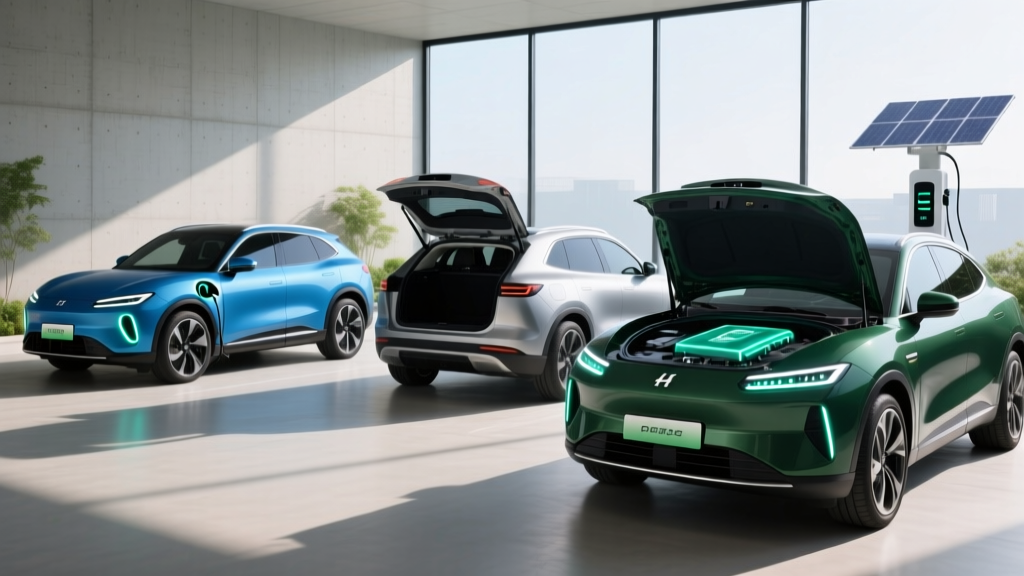
Charging speeds: Nearly all 2026 PHEV SUVs use Level 2 (240V) AC charging at 3.3–7.2 kW. None support DC fast charging—the batteries are too small to justify the hardware cost and weight. Here's what that means in practice:
| Charging Method | Power (kW) | Time to Full (15 kWh battery) | Practical Use |
|---|---|---|---|
| Level 1 (120V outlet) | 1.2–1.4 kW | 10–12 hours | Overnight top-up, emergency use |
| Level 2 (240V, 16A) | 3.3 kW | 4–5 hours | Standard home charging |
| Level 2 (240V, 32A) | 7.2 kW | 2–2.5 hours | Faster home/public charging |
The Hyundai Tucson PHEV and Kia Sportage PHEV both support 7.2 kW Level 2 charging, meaning a full recharge in roughly 2 hours on a properly rated home charger. The Toyota RAV4 Prime maxes at 6.6 kW. For most PHEV owners charging overnight, even 3.3 kW is sufficient—the battery refills while you sleep.
Fuel Economy: EPA Ratings vs Real-World MPG
Once the battery depletes, PHEVs operate as conventional hybrids. Here's where real-world data diverges from EPA stickers:
- City driving: Hybrids and PHEVs often exceed EPA city MPG because regenerative braking recaptures energy in stop-and-go traffic. The Ford Escape PHEV's EPA rating is 40 MPG combined in hybrid mode; owners regularly report 42–45 MPG in urban driving.
- Highway driving: Hybrids lose their regenerative advantage at steady speed. Expect EPA highway numbers or slightly below. The Escape PHEV's 37 highway MPG rating is realistic at 65 mph but drops to 33–35 MPG at 75+ mph.
- Combined driving: EPA combined figures assume 55% city / 45% highway. If your commute is 90% highway, weight your expectations toward the highway number.
The Toyota RAV4 Prime leads this segment in gas-only efficiency at 38 MPG combined, thanks to Toyota's mature hybrid synergy drive system. The Ford Escape PHEV achieves 40 MPG combined but sacrifices 100+ horsepower to do it.
Tax Credits and Pricing: What You'll Actually Pay
Under IRS §30D rules for 2026, qualifying new PHEVs can receive up to $7,500 in federal tax credits, but eligibility depends on three factors:
- MSRP cap: SUVs must have a base MSRP under $80,000. This eliminates the BMW X5 xDrive50e from full credit eligibility on higher trims.
- Buyer income limits: Modified adjusted gross income must not exceed $300,000 (joint filers), $225,000 (head of household), or $150,000 (single).
- Battery sourcing: A percentage of critical minerals and battery components must be sourced from the U.S. or free-trade-agreement countries. This requirement tightens annually, and some 2026 models may qualify for only $3,750 (half credit) or none at all.
As of early 2026, the Ford Escape PHEV and Toyota RAV4 Prime typically qualify for the full $7,500 credit when purchased by eligible buyers. The Hyundai Tucson PHEV and Kia Sportage PHEV qualify for $3,750 due to partial battery-sourcing compliance. The Jeep Grand Cherokee 4xe qualifies for $3,750 on most trims. Always verify current eligibility on IRS.gov before purchasing—sourcing rules change quarterly.
Point-of-sale transfer: Since 2024, you can transfer the federal tax credit to the dealer at purchase, reducing your out-of-pocket cost immediately rather than waiting for a tax refund. This effectively turns the credit into a rebate.
Battery Warranty and Replacement Cost
All 2026 PHEV SUVs carry a minimum 8-year/100,000-mile battery warranty (10 years/150,000 miles in California Air Resources Board states). This covers capacity loss below 70–80% of original, depending on manufacturer. PHEV batteries rarely require full replacement within this window, but out-of-warranty replacement costs range from $4,000–$8,000 depending on the model. Toyota and Hyundai have the longest track records—RAV4 Hybrid and Tucson Hybrid batteries routinely exceed 150,000 miles with minimal degradation.
Who Should Buy a PHEV SUV (and Who Shouldn't)
Choose a PHEV SUV if:
- You can charge at home (Level 1 or Level 2) and commute under 40 miles daily
- You want to drive on electricity most days but need gas flexibility for road trips
- You live in a region with extreme cold that significantly reduces BEV range
- You tow occasionally (most PHEVs retain 1,500–3,500 lb towing capacity)
- You're not ready to rely on public charging infrastructure
Choose a full BEV instead if:
- You have reliable home Level 2 charging and drive under 300 miles daily
- You want zero tailpipe emissions and minimal maintenance (no oil changes, no gas engine)
- You qualify for the full $7,500 federal credit on a BEV (many BEVs have clearer sourcing compliance)
- You prioritize lowest cost-per-mile (electricity is typically $0.04–$0.06/mile vs $0.10–$0.14/mile for gas in a PHEV)
Choose a conventional HEV if: You cannot charge at home, your daily driving exceeds 60 miles, or you want maximum simplicity with no plug-in requirement. A RAV4 Hybrid at 39 MPG combined costs $5,000–$8,000 less than the Prime and delivers excellent real-world efficiency without any charging infrastructure.
Reliability and Long-Term Ownership
PHEV powertrains are mature technology. Toyota's hybrid system has been in production since 1997; Hyundai/Kia's PHEV architecture dates to 2017. The primary reliability concern is the high-voltage battery, but degradation in PHEVs is slower than in BEVs because the battery is smaller and operates in a narrower state-of-charge window (typically 15–85% to preserve longevity).
According to Consumer Reports reliability surveys and long-term owner data, the Toyota RAV4 Prime and Ford Escape PHEV rank highest for predicted reliability. The Jeep Grand Cherokee 4xe has shown more electrical gremlins in early model years, though 2026 models benefit from software updates addressing most issues.
Maintenance costs: PHEVs require oil changes (typically every 5,000–10,000 miles when the engine runs), but if you drive mostly on electricity, the engine sees far less use. Some owners report going 12–15 months between oil changes because the gas engine only activates on longer trips.
Frequently Asked Questions
How many MPG does a PHEV get after the battery runs out?
Once the electric range depletes, 2026 PHEV SUVs deliver 23–40 MPG combined depending on the model. The Ford Escape PHEV leads at 40 MPG combined; the Jeep Grand Cherokee 4xe trails at 23 MPG due to its weight and powerful engine. Real-world city MPG often exceeds EPA ratings by 5–10% thanks to regenerative braking.
How far can PHEV SUVs go on electric only?
EPA-rated electric range for 2026 PHEV SUVs spans 26–42 miles. The Toyota RAV4 Prime achieves 42 miles; the BMW X5 xDrive50e manages 38 miles. Expect 20–30% less range at highway speeds or in cold weather. For a 30-mile round-trip commute, most PHEVs in this segment cover it entirely on electricity.
Do PHEVs qualify for the $7,500 federal tax credit?
Some do, but eligibility depends on MSRP (under $80,000 for SUVs), buyer income (under $300,000 joint), and battery-sourcing requirements. As of 2026, the Ford Escape PHEV and Toyota RAV4 Prime typically qualify for the full $7,500; Hyundai Tucson and Kia Sportage PHEVs qualify for $3,750. Verify current status at IRS.gov before purchase.
Is a PHEV battery expensive to replace?
Out-of-warranty PHEV battery replacement costs $4,000–$8,000 depending on the model. However, all 2026 PHEVs carry 8-year/100,000-mile battery warranties (10 years/150,000 miles in CARB states). Real-world data shows PHEV batteries rarely require replacement before 150,000+ miles, and many exceed 200,000 miles with gradual capacity loss rather than failure.
Can I charge a PHEV at a public DC fast charger?
No. PHEV batteries are too small (13–25 kWh) to justify DC fast-charging hardware, and none of the 2026 PHEV SUVs support it. All use Level 1 (120V) or Level 2 (240V) AC charging. A full Level 2 charge takes 2–5 hours depending on the onboard charger rating (3.3–7.2 kW).