The 2026 Hybrid Toyota Lineup at a Glance
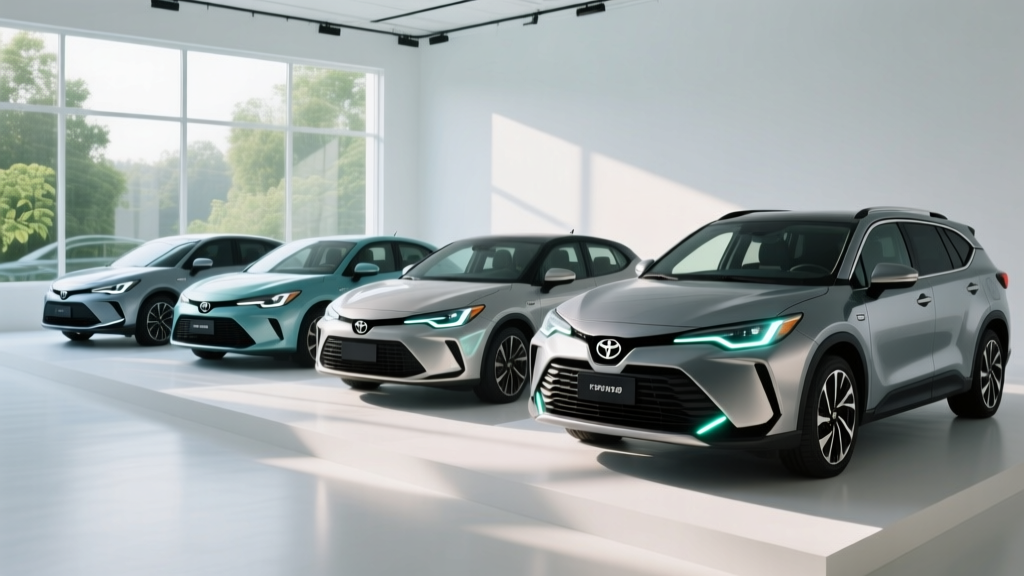
Toyota sells more hybrids than any other automaker, and for 2026 the lineup spans 11 distinct nameplates—from the 57-MPG Prius to the three-row Grand Highlander Hybrid. But "hybrid" now means two very different things at Toyota dealerships: a conventional hybrid (HEV) that never plugs in, and a plug-in hybrid (PHEV) that delivers 30–40+ miles of electric-only driving before the gas engine wakes up. Mixing them up is the single most common mistake buyers make, so before we rank anything, let's lock down the distinction.
HEV vs. PHEV — What Toyota Actually Means
Hybrid Electric Vehicle (HEV): A small battery (typically 1–2 kWh) recharged entirely by the engine and regenerative braking. You never plug it in. Efficiency comes from the electric motor assisting the gas engine, especially in stop-and-go traffic. Think: Prius, Camry Hybrid, RAV4 Hybrid.
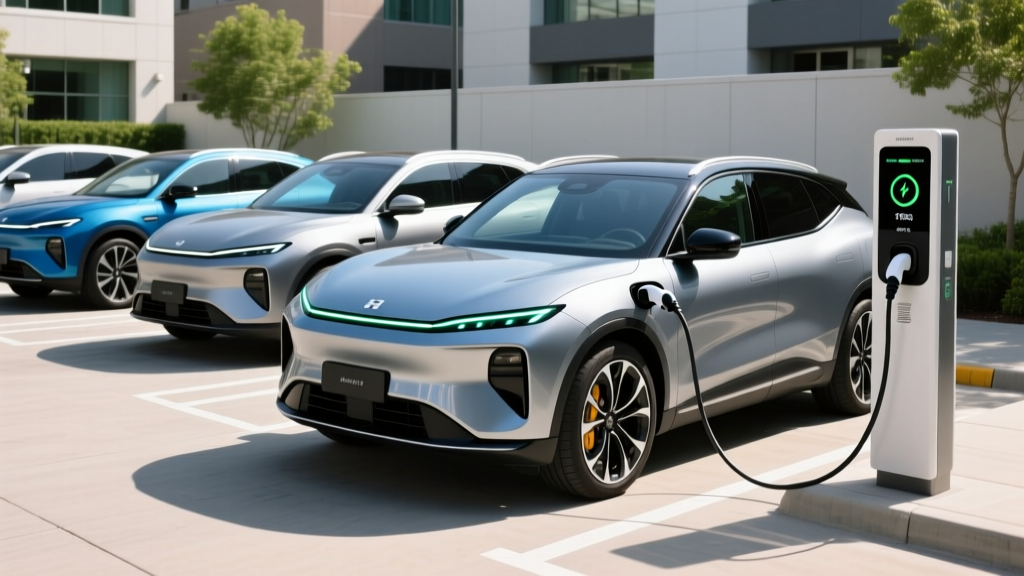
Plug-in Hybrid Electric Vehicle (PHEV): A larger battery (13–18+ kWh) that you can plug in to recharge. It delivers a meaningful electric-only range (30–44 miles in Toyota's 2026 PHEVs) before seamlessly switching to hybrid operation. Think: Prius Prime, RAV4 Prime. PHEVs qualify for the federal §30D tax credit; HEVs do not.
Every 2026 Hybrid Toyota: MPG, Range, and Price
The table below consolidates the full 2026 hybrid Toyota lineup with EPA figures from fueleconomy.gov and MSRP data from Toyota's official specifications. Real-world notes follow the table.
| Model | Type | EPA MPG (City / Hwy / Comb) | EV Range (PHEV) | Battery (kWh) | Combined HP | Base MSRP |
|---|---|---|---|---|---|---|
| Prius | HEV | 57 / 56 / 57 | — | ~1.0 | 196 | $29,445 |
| Prius Prime | PHEV | 52 / 48 / 50 (hybrid) · 127 MPGe | 44 mi | 13.6 | 220 | $34,445 |
| Corolla Hybrid | HEV | 53 / 46 / 50 | — | ~1.0 | 138 | $24,595 |
| Camry Hybrid | HEV | 53 / 50 / 51 | — | ~1.1 | 225 | $30,090 |
| Crown | HEV | 42 / 41 / 41 | — | ~1.6 | 236 | $42,390 |
| RAV4 Hybrid | HEV | 41 / 38 / 39 | — | ~1.6 | 219 | $33,690 |
| RAV4 Prime (PHEV) | PHEV | 40 / 36 / 38 (hybrid) · 94 MPGe | 42 mi | 18.1 | 302 | $45,190 |
| Venza | HEV | 40 / 37 / 39 | — | ~1.6 | 219 | $36,520 |
| Highlander Hybrid | HEV | 36 / 35 / 35 | — | ~1.9 | 243 | $42,090 |
| Grand Highlander Hybrid | HEV | 36 / 34 / 35 | — | ~1.9 | 243 | $45,740 |
| Sienna | HEV | 36 / 36 / 36 | — | ~1.9 | 245 | $39,485 |
| Tacoma i-FORCE MAX | HEV | 23 / 24 / 23 | — | ~1.9 | 326 | $48,600 |
| Sequoia i-FORCE MAX | HEV | 22 / 22 / 22 | — | ~1.9 | 437 | $63,355 |
Real-World MPG: Where Toyota Hybrids Beat (and Miss) the Sticker
EPA MPG tests include a heavy city-weighting that favors hybrids, because regenerative braking recaptures energy every time you slow down. In practice, most Toyota HEV owners see city MPG that matches or exceeds the EPA number—a 2026 Camry Hybrid easily returns 54–56 MPG in urban driving. Highway efficiency is a different story: at sustained 70–80 mph speeds, aerodynamic drag dominates and the electric motor contributes less. Expect highway MPG to fall 3–6 MPG below the sticker on most Toyota hybrids. The Prius, with its exceptionally low drag coefficient (~0.24), holds up better than boxier models like the RAV4 Hybrid, which can dip into the low 30s on long interstate runs at 80 mph.
Toyota Hybrid Battery Warranty — What's Covered
Every 2026 Toyota hybrid and PHEV carries a 10-year / 150,000-mile hybrid battery warranty (whichever comes first), up from the previous 8-year / 100,000-mile term. This covers capacity loss and defects on the traction battery. Toyota also includes 10-year/150,000-mile coverage on hybrid system components (inverter, transaxle, control module). Out-of-warranty replacement costs range from roughly $2,500–$4,000 for a Prius-class pack to $4,000–$6,000 for the larger RAV4 Prime battery, based on dealer parts pricing and aftermarket options.
PHEV Deep Dive: Prius Prime and RAV4 Prime
Toyota offers exactly two plug-in hybrids for 2026, and they serve very different buyers. The Prius Prime uses a 13.6 kWh lithium-ion battery paired with a 2.0-liter four-cylinder to deliver 44 miles of electric-only range and 127 MPGe when the battery is full. Total combined range exceeds 500 miles. The RAV4 Prime packs a larger 18.1 kWh battery and a combined 302 horsepower—making it the quickest RAV4 Toyota sells (0–60 mph in 5.7 seconds)—with 42 miles of electric-only range and 94 MPGe.
| PHEV Model | EV Range | MPGe (EV mode) | MPG (hybrid mode) | Total Range | L2 Charge Time (240V) |
|---|---|---|---|---|---|
| Prius Prime | 44 mi | 127 MPGe | 50 combined | ~510 mi | ~4 hours (3.3 kW onboard) |
| RAV4 Prime | 42 mi | 94 MPGe | 38 combined | ~600 mi | ~2.5 hours (6.6 kW onboard) |
DC fast charging: Neither Toyota PHEV supports DC fast charging. This is typical for PHEVs—the batteries are small enough that a Level 2 (240V) home charger refills them overnight, and the added cost/weight of DC hardware isn't justified. If you need rapid public charging, you're looking at a full BEV, not a PHEV.
Tax Credits and Incentives for Hybrid Toyotas
Under current IRS §30D rules, only plug-in hybrids with at least 7 kWh of battery capacity qualify for the federal clean vehicle credit. That means:
- Prius Prime (13.6 kWh): Eligible for up to $7,500, subject to the buyer's income cap ($150K single / $300K joint), the $55,000 MSRP cap for sedans (Prius Prime qualifies), and battery critical-mineral and component sourcing requirements that shift annually.
- RAV4 Prime (18.1 kWh): Eligible for up to $7,500, subject to the $80,000 MSRP cap for SUVs/pickups and the same income and sourcing rules.
- All Toyota HEVs (Prius, Camry Hybrid, RAV4 Hybrid, Sienna, etc.): Do NOT qualify for the federal §30D credit. They are not plug-in vehicles.
The §30D credit can now be transferred to the dealer at the point of sale as an instant rebate, rather than claimed on your tax return. State incentives vary—check your state energy office or AFDC for local rebates that may apply to both HEVs and PHEVs.
Hybrid vs. PHEV vs. Full EV: Which Fits You?
Choose a Toyota HEV if: You have no access to home or workplace charging, you want maximum simplicity, your budget is under $40K, or you drive mostly city miles where regenerative braking maximizes MPG. The Camry Hybrid and Corolla Hybrid are the lowest-friction entries into electrified driving—no plug, no range anxiety, no behavior change required.
Choose a Toyota PHEV if: You can install a Level 2 charger at home, your daily commute is under 45 miles round-trip (covering most days on electricity alone), and you want the option of long road trips without charging-network dependency. The Prius Prime is arguably the best PHEV value in the U.S. market for this use case.
Choose a full BEV if: You have reliable home charging, your daily driving exceeds 45 miles, you want zero tailpipe emissions, and you're comfortable with public DC fast-charging for road trips. A BEV also eliminates oil changes and spark plugs entirely—something no Toyota hybrid can claim.
Reliability and Long-Term Ownership
Toyota's hybrid synergy drive system is now in its fifth generation and has accumulated over 25 million global hybrid sales. The track record on battery longevity is strong: first-generation Prius packs routinely reach 150,000–200,000 miles before needing replacement, and the 10-year/150,000-mile warranty on 2026 models provides substantial coverage. Toyota's i-FORCE MAX powertrains in the Tacoma and Sequoia use a hybrid system designed for torque and towing rather than maximum MPG—expect the same warranty, but fuel economy in the low 20s reflects the physics of moving 5,000+ pounds.
Pros of Toyota Hybrids
- Class-leading real-world fuel economy across the lineup
- No plug-in required for HEVs—zero infrastructure change
- 10-year / 150,000-mile hybrid battery warranty
- Strong resale value; Toyota hybrids hold pricing better than most EVs
- PHEVs eligible for up to $7,500 federal credit (Prime models)
Cons of Toyota Hybrids
- HEVs do not qualify for federal tax credits
- Highway MPG drops noticeably vs. EPA sticker at 75+ mph
- PHEVs lack DC fast charging—irrelevant for most, limiting for some
- RAV4 Prime and Sequoia i-FORCE MAX carry premium pricing
- Hybrid system adds ~150–250 lbs vs. gas-only equivalent
Frequently Asked Questions
How many MPG do Toyota hybrids actually get?
In real-world mixed driving, expect the 2026 Prius to return 52–58 MPG combined, the Camry Hybrid around 48–53 MPG, and the RAV4 Hybrid around 36–41 MPG. City driving favors hybrids; sustained highway speeds above 70 mph reduce efficiency by 5–10% versus the EPA sticker.
How far can a Toyota PHEV go on electric only?
The 2026 Prius Prime delivers 44 miles of electric-only range; the RAV4 Prime delivers 42 miles. Both are sufficient to cover the average American's daily commute (roughly 35 miles round-trip) entirely on electricity, provided you charge at home overnight.
Is a Toyota hybrid reliable and what does battery replacement cost?
Toyota hybrids rank among the most reliable electrified vehicles in J.D. Power and Consumer Reports data. The hybrid battery is warranted for 10 years / 150,000 miles. Out-of-warranty replacement runs $2,500–$4,000 for standard hybrids and $4,000–$6,000 for the RAV4 Prime's larger pack. Refurbished packs are increasingly available at lower cost.
Do Toyota hybrids qualify for any tax credit?
Only the plug-in hybrid models—Prius Prime and RAV4 Prime—qualify for the federal §30D clean vehicle credit (up to $7,500), subject to income, MSRP, and battery-sourcing requirements. Conventional Toyota HEVs (Prius, Camry Hybrid, RAV4 Hybrid, Sienna, etc.) do not qualify for the federal credit but may be eligible for certain state incentives.
Can I tow with a Toyota hybrid?
Yes. The 2026 Tacoma i-FORCE MAX hybrid tows up to 8,500 lbs; the Sequoia i-FORCE MAX tows up to 9,520 lbs; the Grand Highlander Hybrid tows up to 5,000 lbs. Towing significantly reduces MPG—expect a 30–50% drop versus unloaded driving.