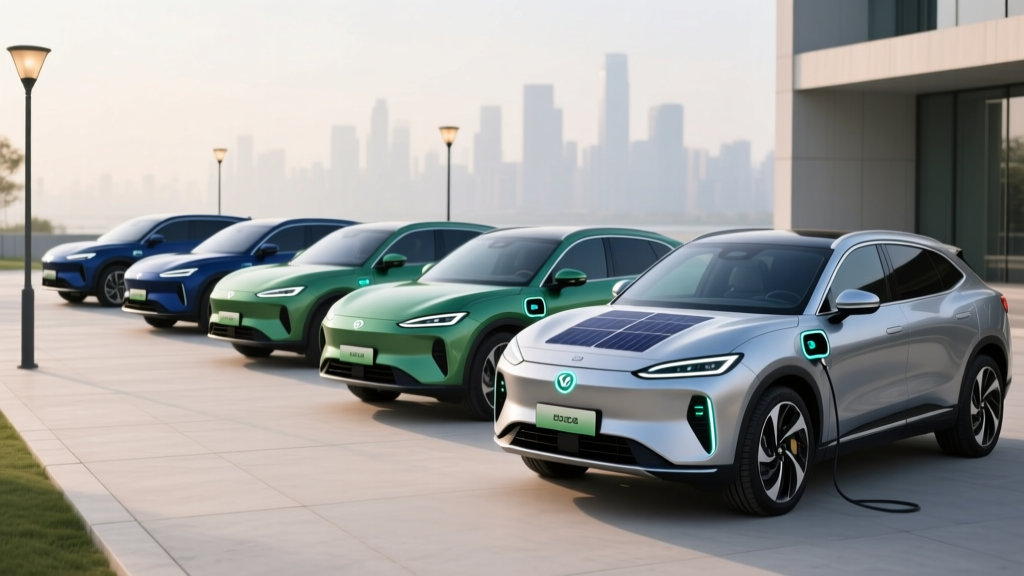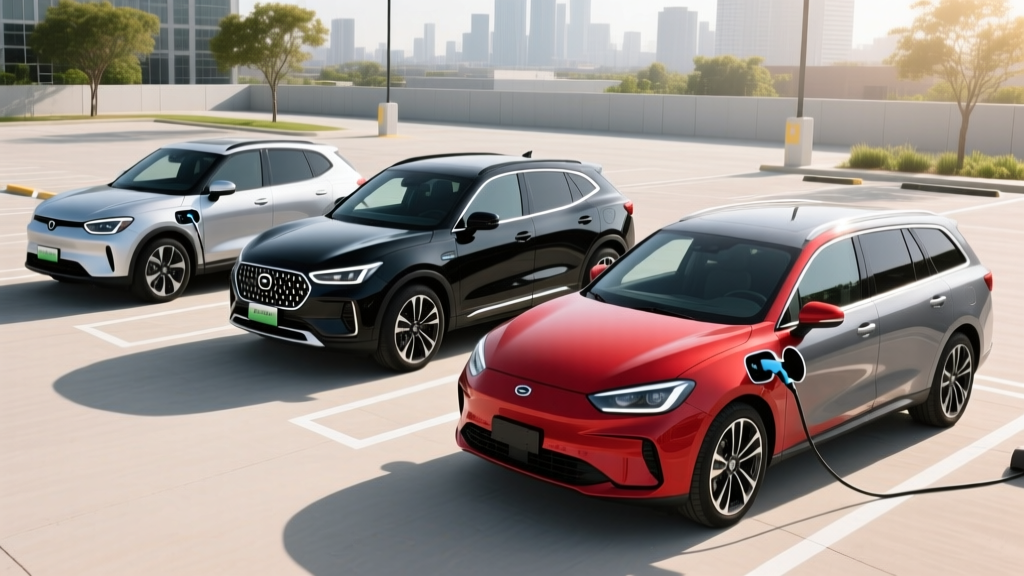
If you want electric commuting without the range-anxiety trade-off, a plug-in hybrid electric vehicle (PHEV) splits the difference. Unlike a conventional hybrid (HEV) that only uses regenerative braking to charge a small battery, a PHEV packs a larger battery you can plug in to recharge, delivering 20–40+ miles of pure electric driving before the gas engine seamlessly takes over for hundreds of additional miles. For 2025, the PHEV market has matured: more models, bigger batteries, and faster charging. But not all plug-in hybrids are created equal. Below, we rank the most compelling 2025 plug-in hybrids by the metrics that matter — electric range, fuel economy, real-world usability, and total cost.
HEV vs PHEV vs EV: Which Powertrain Fits You?
Before ranking models, it's worth clarifying the three electrified options, because confusion here leads to costly purchase mistakes:
| Feature | Conventional Hybrid (HEV) | Plug-In Hybrid (PHEV) | Battery Electric (BEV) |
|---|---|---|---|
| Plug in to charge? | No | Yes | Yes |
| Electric-only range | 0–1 mi at low speed | 20–45 mi typical | 200–400+ mi |
| Battery size | 1–2 kWh | 13–25 kWh | 60–100+ kWh |
| Gas engine? | Yes (primary) | Yes (backup) | No |
| Tailpipe emissions | Reduced | Zero on electric; reduced on gas | Zero |
| Home charging needed? | No | Strongly recommended | Essential |
| Federal tax credit (§30D) | No | Up to $7,500 (varies) | Up to $7,500 (varies) |
Choose a PHEV if: You can charge at home (even a standard 120V outlet works for overnight top-ups), your daily commute is under 40 miles round-trip, and you still want the freedom to road-trip without planning charger stops. A PHEV is essentially an EV for daily driving and a hybrid for everything else.
Top 2025 Plug-In Hybrids: Spec Comparison
We selected five standout 2025 PHEVs spanning compact SUV, midsize SUV, minivan, and sedan segments. All figures are from EPA data and manufacturer specifications for the 2025 model year.
| Model | Battery (kWh) | EV Range (mi) | Combined MPG (gas) | MPGe (elec+gas) | Combined HP | Base MSRP |
|---|---|---|---|---|---|---|
| Toyota RAV4 Prime | 18.1 | 42 | 38 | 94 | 302 | $44,965 |
| Hyundai Tucson PHEV | 13.8 | 33 | 35 | 80 | 261 | $39,460 |
| Chrysler Pacifica PHEV | 16.0 | 32 | 30 | 82 | 260 | $51,095 |
| Toyota Prius Prime | 13.6 | 44 (SE) | 48–52 | 114–127 | 220 | $34,070 |
| Ford Escape PHEV | 14.4 | 37 | 40 | 105 | 210 | $39,980 |
Sources: fueleconomy.gov (EPA), manufacturer press sites. MSRP excludes destination charges.
Real-World MPG and Electric Range: What to Actually Expect
EPA numbers provide a baseline, but PHEV real-world efficiency depends heavily on your driving pattern. Here's the honest breakdown:
- Electric range in cold weather (below 32°F): Expect 20–30% reduction. A PHEV rated at 42 miles EV range may deliver only 28–33 miles in winter. Cabin heating draws heavily from the battery.
- Highway-only electric range: PHEVs are optimized for city speeds. Sustained 70+ mph driving can cut EV range by 15–25% vs. the EPA figure.
- Gas MPG after battery depletion: Once the battery is exhausted, you're driving a conventional hybrid. City MPG often exceeds the EPA sticker because the hybrid system recaptures braking energy efficiently in stop-and-go traffic. Highway MPG may fall slightly below EPA estimates.
- The golden rule: If your daily round-trip is within the EV range and you charge nightly, you may use gas only a handful of times per month. Many PHEV owners report going 2,000+ miles between fill-ups.
For the Toyota Prius Prime SE, the EPA's 44-mile EV estimate is achievable in mild weather at city speeds — we've seen 40–46 miles in 50–65°F conditions. But push it to 75 mph on the interstate in January, and 30 miles is realistic. The gas-only 52 MPG combined is genuinely attainable in mixed driving because the Prius platform is purpose-built for efficiency.
The RAV4 Prime is the performance outlier. Its 302 combined horsepower (2.5L four-cylinder + dual electric motors) delivers a 5.7-second 0–60 mph time — quicker than many sport compacts. The 42-mile EV range holds up well in moderate climates, but its 2,250-lb curb weight penalty means highway gas MPG tends to settle around 34–36 rather than the EPA's 38 combined.
Charging Speed and Home Setup for PHEVs
PHEV batteries are small enough that home charging is straightforward — and most don't support DC fast charging at all. Here's what to expect:
| Charging Level | Power | Typical Full Charge Time (PHEV) | Notes |
|---|---|---|---|
| Level 1 (120V outlet) | 1.2–1.4 kW | 10–14 hours | Works overnight for most PHEVs; included cord |
| Level 2 (240V home/public) | 3.3–7.2 kW | 2–4.5 hours | Recommended for daily use; faster top-ups |
| DC Fast Charge | 50+ kW | N/A for most | Only the Mitsubishi Outlander PHEV supports DCFC among mainstream 2025 models |
Most 2025 PHEVs accept Level 2 charging at 3.3 kW to 7.2 kW. At 7.2 kW (like the RAV4 Prime with its optional onboard charger upgrade), a depleted 18.1 kWh battery refills in about 2.5 hours. At the standard 3.3 kW rate included with most models, plan on 4–5 hours.
Practical tip: A Level 2 home charger (240V, 32A) costs $500–$800 for the unit plus $500–$2,000 for professional installation depending on your electrical panel's proximity to the garage. For PHEV owners, even a standard 120V outlet can suffice if you park for 10+ hours overnight — the small battery will fully recharge by morning. This is one area where PHEVs have a genuine convenience advantage over full EVs.
Federal Tax Credit Eligibility for 2025 PHEVs
Under the IRS §30D Clean Vehicle Credit, qualifying PHEVs are eligible for up to $7,500 — but the rules are strict and model-specific. Key requirements for 2025:
- Battery capacity: At least 7 kWh (all PHEVs above meet this)
- Final assembly: Must be in North America
- Critical minerals & battery components: Must meet escalating sourcing thresholds — this is where many models lose partial or full credit eligibility year to year
- MSRP caps: Vans/SUVs/pickups ≤ $80,000; sedans ≤ $55,000
- Buyer income caps: AGI ≤ $150,000 (single) / $300,000 (joint)
- Point-of-sale transfer: As of 2024+, you can transfer the credit to the dealer for an immediate price reduction rather than waiting to claim it on your tax return
As of the 2025 model year, the Chrysler Pacifica PHEV (assembled in Canada) and Ford Escape PHEV have qualified for partial or full credits depending on the specific battery batch sourcing. The Toyota RAV4 Prime and Prius Prime (assembled in Japan) do not qualify for the federal credit due to the North American assembly requirement. The Hyundai Tucson PHEV is assembled in South Korea and likewise does not qualify for §30D.
Always verify current eligibility on fueleconomy.gov before purchasing — sourcing rules change as automakers shift supply chains. Consult a tax professional for your specific situation.
Battery Reliability, Warranty, and Replacement Costs
Hybrid and PHEV battery longevity is a top buyer concern — and the data is reassuring. Modern PHEV batteries use proven lithium-ion chemistry with robust thermal management, and degradation is modest compared to full EVs because the battery cycles through a shallower depth of discharge.
- Federal mandate: All PHEV batteries carry a minimum 8-year/100,000-mile warranty. In California Air Resources Board (CARB) states, that extends to 10 years/150,000 miles.
- Warranty trigger: Most manufacturers guarantee the battery will retain at least 60–70% of original capacity during the warranty period.
- Real-world lifespan: Toyota and Honda hybrid batteries routinely last 150,000–200,000+ miles with gradual capacity loss. PHEV batteries follow similar patterns.
- Replacement cost (out of warranty): $4,000–$8,000 depending on model, including labor. Refurbished modules are available for $2,000–$4,000 from third-party shops.
- Toyota's track record: The Prius hybrid battery has a 20+ year real-world reliability record. The Prius Prime and RAV4 Prime use similar cell chemistry with added cooling.
Hyundai backs the Tucson PHEV battery with a 10-year/100,000-mile warranty (one of the best in the segment). Chrysler covers the Pacifica PHEV battery at 8 years/100,000 miles with a 70% capacity retention threshold. Ford matches the federal minimum at 8 years/100,000 miles for the Escape PHEV's high-voltage battery.
The honest take: battery failure before 150,000 miles is rare in modern PHEVs. The greater financial risk is not using the EV range — if you never plug in, you're carrying 300+ lbs of battery weight for no efficiency gain, and you'd have been better served by a lighter conventional hybrid.
Pros and Cons: The PHEV Trade-Off
- Electric commute with zero range anxiety on road trips
- No public charger dependency for daily use
- Lower operating cost when charged regularly (electricity ≈ $0.04/mi vs gas ≈ $0.12–$0.18/mi)
- Regenerative braking extends brake pad life
- Some models qualify for HOV lane access and state incentives
- Smoother, quieter city driving in EV mode
- Higher purchase price than equivalent HEV or gas models ($4,000–$10,000 premium)
- Must plug in regularly or you're wasting money and weight
- Two systems to maintain (engine + electric powertrain)
- Smaller cargo space in some models due to battery placement
- Limited DC fast charging — road-trip EV driving is impractical
- Federal tax credit eligibility is inconsistent by model
Decision Framework: Which 2025 PHEV Is Right for You?
- Best overall value & efficiency: Toyota Prius Prime — 44 mi EV range, 114+ MPGe, from $34,070. Ideal for commuters. Trade-off: sedan body, no AWD, no federal tax credit.
- Best SUV with performance: Toyota RAV4 Prime — 42 mi EV range, 302 HP, 5.7s 0–60, available AWD. From $44,965. The most well-rounded PHEV SUV, but long wait times and dealer markups persist.
- Best family hauler: Chrysler Pacifica PHEV — 32 mi EV range, 7-passenger minivan, up to $7,500 tax credit. From $51,095. Nothing else offers three rows plus plug-in electric driving.
- Best compact SUV value: Hyundai Tucson PHEV — 33 mi EV range, AWD standard, strong warranty. From $39,460. Solid all-rounder with no federal credit.
- Best for credit-eligible buyers: Ford Escape PHEV — 37 mi EV range, 40 MPG gas, qualifies for partial/full §30D credit. From $39,980.
Frequently Asked Questions
How many MPG does a plug-in hybrid get?
It depends on whether you're driving on electricity or gas. In EV mode, PHEVs achieve 80–127 MPGe (miles per gallon equivalent). Once the battery depletes, they operate as conventional hybrids, delivering 30–52 MPG combined depending on the model. The Toyota Prius Prime leads at 52 MPG combined on gas alone; the RAV4 Prime returns 38 MPG combined as a hybrid. Real-world city driving often exceeds EPA gas estimates because stop-and-go traffic maximizes regenerative braking.
How far can a 2025 PHEV go on electric only?
Between 28 and 44 miles of EPA-rated electric range, depending on the model. The Prius Prime SE tops the list at 44 miles; the RAV4 Prime delivers 42 miles; the Escape PHEV manages 37 miles. In real-world conditions, expect 15–30% less in cold weather or at sustained highway speeds. Total combined range (electric + full gas tank) typically exceeds 450–600 miles.
Do I have to plug in a PHEV?
You don't have to — the car will operate as a conventional hybrid on gas alone. But if you never plug in, you're paying a premium for battery capacity you never use and carrying extra weight that reduces gas-only MPG. A PHEV only makes financial sense if you can charge at home or work regularly.
Is a PHEV more reliable than a full EV?
Both powertrains are reliable in different ways. PHEVs have more moving parts (engine, transmission, electric motor, battery) but benefit from decades of hybrid reliability data, particularly from Toyota. Full EVs have fewer moving parts but depend on newer, larger batteries and public charging infrastructure. For buyers in areas with unreliable charging networks or extreme cold, a PHEV offers a practical reliability safety net.
What does it cost to replace a PHEV battery?
Out-of-warranty PHEV battery replacement typically costs $4,000–$8,000 including labor, depending on the model. However, modern PHEV batteries rarely need replacement before 150,000+ miles, and all are covered by a minimum 8-year/100,000-mile warranty (10 years/150,000 miles in CARB states). Many owners never face a replacement during typical ownership.
Does a PHEV qualify for the $7,500 federal tax credit?
Some do, but eligibility depends on North American assembly, battery sourcing, MSRP caps, and buyer income limits under IRS §30D rules. For 2025, the Chrysler Pacifica PHEV and Ford Escape PHEV have qualified, while the Toyota RAV4 Prime, Prius Prime, and Hyundai Tucson PHEV have not due to overseas assembly. Always check fueleconomy.gov for the latest eligibility before purchasing.