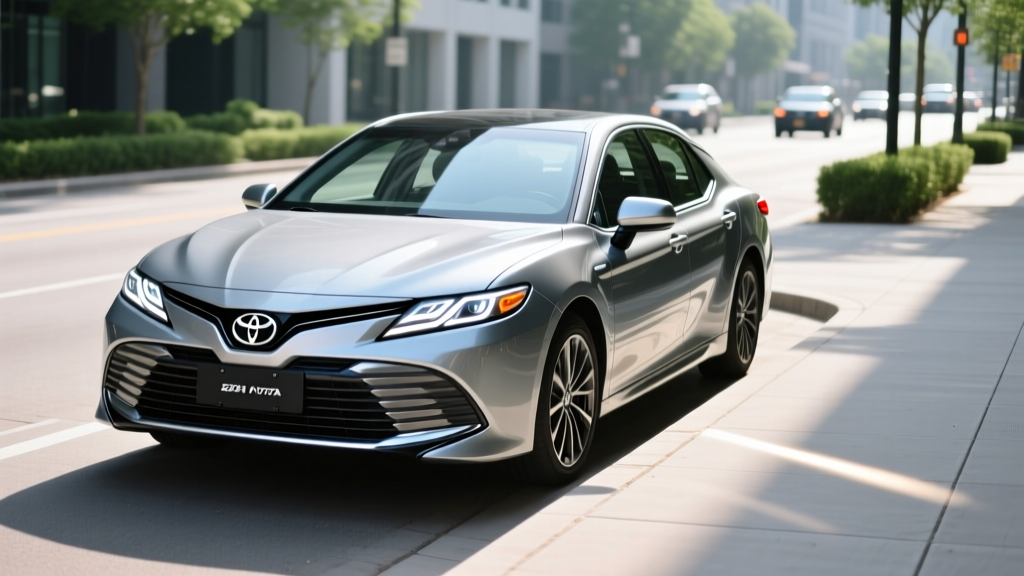
The midsize sedan segment has thinned considerably, but the Toyota Camry Hybrid remains a benchmark for buyers who want electrified efficiency without plugging in. The 2024 model year carries forward a proven fifth-generation hybrid powertrain with all-wheel drive availability and an updated infotainment suite — all while delivering EPA-estimated fuel economy that rivals compact hybrids. With the redesigned ninth-generation Camry (now hybrid-only across all trims) arriving for 2025, the 2024 Camry Hybrid represents the final year of the outgoing generation — and potentially the best value point in the lineup.
This guide covers everything a prospective buyer needs: exact EPA MPG figures, real-world fuel economy expectations, powertrain specifications, battery warranty details, pricing, and how the 2024 Camry Hybrid stacks up against plug-in hybrids and full battery-electric vehicles.
HEV vs PHEV: Where the 2024 Camry Hybrid Fits
Before diving into specs, it is essential to understand what the 2024 Camry Hybrid is — and what it is not. This is a conventional hybrid electric vehicle (HEV), meaning it generates all of its electricity internally through regenerative braking and its gasoline engine. There is no plug, no charging port, and no electric-only driving range to manage.
| Feature | Conventional Hybrid (HEV) | Plug-In Hybrid (PHEV) |
|---|---|---|
| Plug-in charging | No — self-charging via regen + engine | Yes — AC Level 1/2 charging |
| Electric-only range | ~1 mile at very low speeds | 20–45 miles typical |
| Battery size | 1.0–1.6 kWh | 10–20 kWh typical |
| Federal tax credit (§30D) | Not eligible | Up to $7,500 (if requirements met) |
| Driving experience | Seamless gas-electric blend | EV mode for daily commute, gas for trips |
| Example | 2024 Camry Hybrid | Toyota Prius Prime, RAV4 Prime |
The 2024 Camry Hybrid does not qualify for the federal §30D clean vehicle tax credit because that credit is reserved for plug-in vehicles (PHEVs and BEVs) with battery capacities of at least 7 kWh. Some states and utilities offer rebates for conventional hybrids, but these vary widely by jurisdiction — check your local programs and consult a tax professional for eligibility details.
Fuel Economy: EPA Ratings and Real-World MPG
The 2024 Camry Hybrid's headline number is its EPA-estimated fuel economy, which varies by trim and drivetrain configuration. Front-wheel-drive models achieve the highest ratings, while the available electronic all-wheel drive (AWD-e) trims carry a slight penalty.
| Trim / Drivetrain | City MPG | Highway MPG | Combined MPG |
|---|---|---|---|
| LE (FWD) | 51 | 53 | 52 |
| SE / XLE / XSE (FWD) | 44 | 47 | 46 |
| SE / XLE / XSE (AWD-e) | 44 | 43 | 44 |
Source: EPA Fuel Economy
The LE trim's 52 MPG combined is exceptional for a midsize sedan — only the Hyundai Ioniq Hybrid (58 MPG combined) and the Toyota Prius (57 MPG combined) beat it among non-plug-in vehicles. The higher trims drop to 46 MPG combined due to larger 18-inch wheels, sport-tuned suspensions, and additional weight from features like leather-trimmed seats and premium audio systems.
Real-World MPG: What to Actually Expect
Toyota's hybrid system excels in stop-and-go city driving, where regenerative braking and electric-motor assist do the heavy lifting. In real-world use:
- City driving: Many owners report exceeding the EPA city estimate, with 53–56 MPG achievable on the LE trim in moderate-temperature urban commutes. The hybrid system's ability to shut off the engine at stops and creep on electric power makes city MPG genuinely impressive.
- Highway driving: Expect 42–48 MPG on the LE at 70–75 mph. Hybrid advantages diminish at sustained highway speeds where the gasoline engine runs continuously. The Camry Hybrid's 2.5-liter four-cylinder is efficient but not class-leading at constant velocity.
- Cold weather: In sub-40°F conditions, expect a 10–15% reduction in fuel economy. The engine runs more frequently to maintain cabin heat and keep the hybrid battery at optimal temperature. Winter MPG of 38–44 combined is typical for FWD trims in northern climates.
- Hot weather with A/C: Minimal impact — the electric A/C compressor draws from the hybrid battery, and fuel economy typically drops only 2–4 MPG in extreme heat.
Powertrain Specs: 208 Horsepower with Hybrid Efficiency
The 2024 Camry Hybrid pairs a 2.5-liter Dynamic Force inline-four engine with Toyota's Hybrid Synergy Drive system. Here is the complete powertrain breakdown:
| Specification | Detail |
|---|---|
| Engine | 2.5L 4-cylinder DOHC (A25A-FXS) |
| Engine horsepower | 176 hp @ 5,700 rpm |
| Engine torque | 163 lb-ft @ 5,200 rpm |
| Electric motor (FWD) | 88 kW (118 hp) permanent-magnet AC synchronous |
| Electric motor (AWD-e rear) | 40 kW (54 hp) — engages below 43 mph or during slip |
| Net combined horsepower | 208 hp (FWD) / 219 hp (AWD-e) |
| Transmission | Electronically controlled CVT (eCVT) |
| Hybrid battery | Lithium-ion, ~1.6 kWh (sealed, self-charging) |
| 0–60 mph | ~7.2 seconds (FWD) |
| Fuel tank | 13.2 gallons |
| Total driving range | ~686 miles (LE, EPA combined) |
| Drivetrain | FWD standard; electronic AWD-e available |
The eCVT is not a traditional belt-and-pulley CVT — it uses a planetary gearset to blend engine and motor power seamlessly. This design is fundamentally more durable than conventional CVTs, with no belts or cones to wear. The AWD-e system adds a rear-mounted electric motor that activates automatically during acceleration from a stop or when front-wheel slip is detected, then disengages above 43 mph to preserve fuel economy.
Battery Warranty, Lifespan, and Replacement Cost
Hybrid battery longevity is consistently the top concern among first-time hybrid buyers. Toyota addresses this with one of the strongest hybrid battery warranties in the industry.
2024 Camry Hybrid Battery Warranty
- Hybrid battery coverage: 10 years / 150,000 miles (whichever comes first)
- Hybrid system components: 8 years / 100,000 miles (inverter, motor, control module)
- Capacity retention threshold: Toyota covers the battery if it fails to hold sufficient charge to operate the hybrid system normally — there is no fixed percentage threshold as with EV batteries
- Transferability: Fully transferable to subsequent owners at no cost
In practice, Toyota hybrid batteries routinely last 150,000–200,000+ miles before requiring replacement. The lithium-ion pack in the 2024 Camry Hybrid is far smaller (~1.6 kWh) and less stressed than an EV battery because it operates in a narrow state-of-charge window (roughly 40–80%), which dramatically reduces degradation. Toyota's hybrid system never fully charges or fully depletes the battery, preserving long-term health.
Replacement Cost If Out of Warranty
If a hybrid battery does fail outside the warranty window, replacement costs have come down significantly:
- New OEM battery (Toyota dealer): $2,500–$4,000 installed
- Refurbished/remanufactured battery: $1,500–$2,500 installed
- Individual cell/module replacement: $500–$1,200 at a hybrid specialist (often only one or two modules fail, not the entire pack)
For context, a conventional vehicle's transmission replacement typically costs $3,000–$5,000+ — making the hybrid battery cost comparable to a major drivetrain repair on a gas-only car.
Pricing, Trims, and Tax Credit Eligibility
The 2024 Camry Hybrid is offered in four main trims. Pricing below reflects MSRP at launch (destination charge included):
| Trim | MSRP (FWD) | MSRP (AWD-e) | Key Features |
|---|---|---|---|
| LE | $29,490 | $30,890 | Toyota Safety Sense 2.5+, 8" touchscreen, wireless CarPlay/Android Auto |
| SE | $30,990 | $32,390 | Sport suspension, 18" wheels, paddle shifters, SofTex seats |
| XLE | $34,290 | $35,690 | Leather, 9" touchscreen, JBL audio, ambient lighting |
| XSE | $35,490 | $36,890 | Sport styling + XLE luxury, panoramic roof available |
Federal Tax Credit Status
The 2024 Camry Hybrid does not qualify for the IRS §30D Clean Vehicle Credit. This credit applies exclusively to plug-in electric vehicles — battery-electric vehicles (BEVs) and plug-in hybrids (PHEVs) with battery capacities of at least 7 kWh. The Camry Hybrid's ~1.6 kWh battery and lack of a charging port make it ineligible.
However, some states and local utilities offer incentives for conventional hybrids. These programs change frequently and vary by jurisdiction. Check IRS.gov for federal rules and your state energy office for local programs.
Total Cost of Ownership Advantage
Even without a tax credit, the Camry Hybrid's fuel savings are substantial. At 52 MPG combined versus a comparable gas-only midsize sedan at 30 MPG combined, driving 15,000 miles per year at $3.50/gallon:
- Camry Hybrid annual fuel cost: ~$1,010
- Gas-only midsize sedan annual fuel cost: ~$1,750
- Annual savings: ~$740
- 5-year savings: ~$3,700
That fuel savings nearly covers the hybrid premium over a gas-equivalent trim within the first few years of ownership.
Reliability and Safety Ratings
Toyota's hybrid powertrain is among the most proven in the industry, with over 25 years of continuous refinement since the original Prius. The 2024 Camry Hybrid carries strong reliability expectations based on historical data:
- IIHS: 2024 Camry (including Hybrid) earned the Top Safety Pick+ rating — the highest designation — with Good ratings in all crashworthiness tests
- NHTSA: 5-star overall safety rating across all trims
- Toyota Safety Sense 2.5+: Standard on all trims — includes pre-collision system with pedestrian detection, full-speed dynamic radar cruise control, lane departure alert with steering assist, lane tracing assist, and automatic high beams
- Predicted reliability: The Camry Hybrid consistently ranks at or near the top of its segment in long-term reliability surveys. The eCVT planetary gearset, lack of traditional transmission wear components, and regenerative braking (which reduces brake pad wear) contribute to lower-than-average maintenance costs
One maintenance note: hybrid owners should follow Toyota's recommended inverter coolant service interval. The hybrid system's cooling circuit is separate from the engine cooling system and requires periodic attention to prevent inverter overheating.
Camry Hybrid vs PHEV vs EV: Which Is Right for You?
Choosing between a conventional hybrid, plug-in hybrid, and full EV depends on your driving patterns, charging access, and budget. Here is a decision framework:
Choose the 2024 Camry Hybrid (HEV) if:
- You cannot charge at home or work (no garage, apartment living, street parking)
- You want zero change to your fueling routine — just fill up at gas stations
- Your budget is under $37,000 and you want maximum efficiency per dollar
- You regularly take long road trips and do not want to plan around charging stops
- You want a proven, low-risk powertrain with a 10-year battery warranty
Choose a PHEV (like the Toyota Prius Prime or RAV4 Prime) if:
- You can charge at home (Level 1 or Level 2) and your daily commute is under 40 miles
- You want electric-only driving for daily errands but gas-engine flexibility for road trips
- You want to qualify for the §30D federal tax credit (up to $7,500, subject to income and sourcing rules)
- You are willing to pay a higher upfront price for the larger battery and plug-in capability
Choose a full EV (like the Tesla Model 3 or Hyundai Ioniq 6) if:
- You have reliable home Level 2 charging access
- You want the lowest per-mile fuel cost (electricity at $0.12/kWh ≈ $1.20/gallon equivalent)
- You want minimal maintenance (no oil changes, no engine coolant, regenerative braking extends pad life)
- Your daily driving is under 250 miles and you are comfortable with public DC fast charging for road trips
- You want to maximize federal and state incentives
Pros and Cons at a Glance
Pros
- 52 MPG combined (LE) — best-in-class for midsize sedans
- No plug-in required — zero lifestyle change from a gas car
- 208 hp provides confident merging and passing power
- 10-year / 150,000-mile hybrid battery warranty
- AWD-e available for snow-belt buyers
- Standard Toyota Safety Sense 2.5+ on all trims
- ~686 miles of total range — fewer fill-ups than any gas sedan
- Proven reliability with 20+ years of Toyota hybrid refinement
Cons
- No federal tax credit eligibility
- AWD-e models drop to 44 MPG combined
- Outgoing generation — 2025 redesign brings hybrid-only lineup with updated platform
- eCVT drone under hard acceleration (common to all Toyota hybrids)
- SE/XLE/XSE trims lose 6 MPG combined vs LE due to wheels and weight
- No DC fast charging (not applicable to HEVs, but worth noting vs PHEVs/EVs)
- Rear seat does not fold flat on Hybrid trims (battery placement)
Frequently Asked Questions
How many MPG does the 2024 Camry Hybrid get?
The EPA rates the 2024 Camry Hybrid LE at 51 city / 53 highway / 52 combined MPG. SE, XLE, and XSE trims are rated at 44 city / 47 highway / 46 combined (FWD) or 44/43/44 (AWD-e). In real-world city driving, many owners exceed the EPA city estimate by 2–4 MPG thanks to the hybrid system's regenerative braking efficiency.
Does the 2024 Camry Hybrid need to be plugged in?
No. The Camry Hybrid is a conventional hybrid (HEV) that charges its battery entirely through regenerative braking and the gasoline engine. There is no charging port. You fuel it exactly like a conventional gas car.
Does the 2024 Camry Hybrid qualify for any tax credit?
The Camry Hybrid does not qualify for the federal §30D Clean Vehicle Credit, which requires a plug-in vehicle with at least 7 kWh of battery capacity. Some state or utility programs may offer hybrid incentives — check your local jurisdiction. Consult a tax professional for personalized guidance.
How long will the Camry Hybrid battery last?
Toyota's hybrid batteries routinely last 150,000–200,000+ miles. The 2024 model is covered by a 10-year / 150,000-mile hybrid battery warranty. The lithium-ion pack operates in a narrow charge window (never fully charged or fully depleted), which significantly extends cycle life compared to EV batteries.
What does it cost to replace the Camry Hybrid battery?
Out-of-warranty replacement costs $2,500–$4,000 for a new OEM battery at a Toyota dealer, or $1,500–$2,500 for a refurbished unit. In many cases, only individual battery modules need replacement ($500–$1,200 at a hybrid specialist), not the entire pack.
Should I buy the 2024 Camry Hybrid or wait for the 2025 redesign?
The 2025 Camry switches to a hybrid-only lineup on Toyota's updated platform with the fifth-generation hybrid system. If you want the latest technology and can wait, the 2025 is worth considering. However, the 2024 model's proven track record, strong reliability data, and potential dealer discounts on outgoing-generation inventory make it a smart buy — especially if you prioritize value over having the newest platform.
Is the Camry Hybrid good in snow?
The available AWD-e system adds a rear electric motor that engages automatically during low-speed acceleration or when front-wheel slip is detected. It provides meaningful traction improvement over FWD in light snow and rain. For heavy snow and ice, dedicated winter tires on the AWD-e model offer the best combination of hybrid efficiency and cold-weather capability.