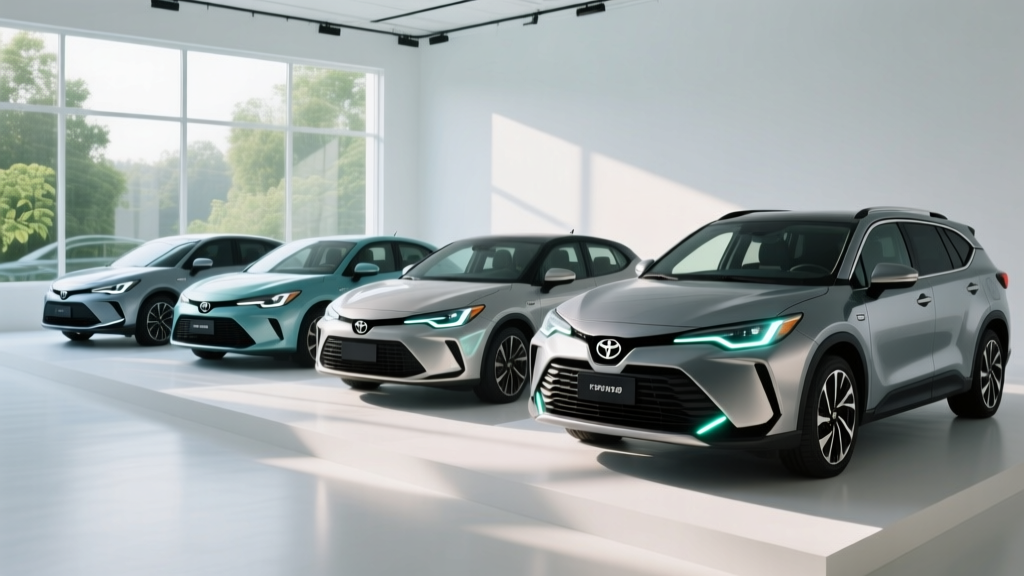
Automakers use 0% APR financing as a powerful incentive to move metal, and in 2026, several hybrid and plug-in hybrid models are benefiting from these promotional rates. But a zero-percent loan only saves you money if the underlying vehicle is a smart buy. This guide breaks down which hybrids and PHEVs currently qualify for 0 APR deals, what you actually get for the money, and how to decide whether a promotional rate beats a cash rebate or federal tax credit.
What 0 APR Hybrid Car Deals Actually Mean for Your Wallet
A 0% APR offer means the automaker's captive finance arm (Toyota Financial Services, Hyundai Motor Finance, etc.) is waiving all interest on your loan. On a $35,000 hybrid financed over 60 months at a market rate of 6.5%, you'd pay roughly $6,100 in interest. At 0% APR, that $6,100 stays in your pocket.
However, 0 APR deals come with strings:
- Credit tier requirements: Most offers require Tier 1 credit (typically a FICO score of 720+).
- Shorter loan terms: Promotional rates often cap at 36 or 48 months, raising your monthly payment versus a 72-month loan at standard rates.
- Rebate trade-offs: Automakers frequently force you to choose between 0% APR and a cash incentive (e.g., $1,500–$3,000 bonus cash). You need to run the math for your specific loan amount and term.
- Model-year specificity: Offers usually target specific model years and trim levels — often the outgoing year's remaining inventory.
Below, we profile the hybrid and PHEV models most frequently featured in 0 APR promotions for the 2026 model year, with full specs to help you evaluate the vehicle itself — not just the financing.
Top Hybrid Models Frequently Offered With 0% APR in 2026
2026 Toyota Camry Hybrid
The Camry Hybrid is now exclusively a hybrid (Toyota dropped the gas-only variant for the current generation), making it one of the most common targets for Toyota's promotional financing. The 2026 Camry Hybrid pairs a 2.5-liter four-cylinder engine with two electric motors for a combined 225 horsepower (232 hp with AWD).
| Spec | Value |
|---|---|
| Powertrain | 2.5L I4 + 2 electric motors (225 hp FWD / 232 hp AWD) |
| EPA MPG (LE FWD) | 53 city / 50 highway / 52 combined |
| EPA MPG (SE/XSE AWD) | 44 city / 43 highway / 44 combined |
| Battery | 1.6 kWh lithium-ion (self-charging HEV — no plug-in required) |
| 0–60 mph | ~7.1 seconds (FWD) |
| Base MSRP (LE) | $29,495 |
| Battery Warranty | 10 years / 150,000 miles |
| Federal Tax Credit | Not eligible (HEV, not a plug-in) |
Real-world MPG note: Toyota hybrids consistently meet or exceed their EPA city estimates in stop-and-go driving because regenerative braking recovers energy that gas-only cars waste as heat. On the highway, expect the LE to deliver 48–51 mpg at 70 mph. The sportier AWD trims trade some efficiency for all-weather traction.
2026 Hyundai Tucson Hybrid
Hyundai frequently includes the Tucson Hybrid in its promotional financing events. The 2026 Tucson Hybrid uses a 1.6-liter turbocharged four-cylinder paired with an electric motor for a combined 232 horsepower and 271 lb-ft of torque, routed through a six-speed automatic.
| Spec | Value |
|---|---|
| Powertrain | 1.6L turbo I4 + electric motor (232 hp combined) |
| EPA MPG | 38 city / 38 highway / 38 combined |
| Battery | 1.49 kWh lithium-ion (HEV — no plug-in) |
| 0–60 mph | ~7.4 seconds |
| Base MSRP (Blue) | $34,590 |
| Battery Warranty | 10 years / 100,000 miles |
| Federal Tax Credit | Not eligible (HEV) |
2026 Honda CR-V Hybrid
The CR-V Hybrid has become Honda's volume seller in the compact SUV segment, and Honda Financial Services periodically offers 0% APR for 36–48 months on select trims. The two-motor hybrid system produces 204 hp and 247 lb-ft of torque.
| Spec | Value |
|---|---|
| Powertrain | 2.0L I4 + 2 electric motors (204 hp combined) |
| EPA MPG (FWD) | 43 city / 36 highway / 40 combined |
| EPA MPG (AWD) | 40 city / 34 highway / 37 combined |
| Battery | 1.06 kWh lithium-ion (HEV) |
| 0–60 mph | ~7.6 seconds |
| Base MSRP (Sport FWD) | $36,395 |
| Battery Warranty | 8 years / 100,000 miles (10 yr/150k in CARB states) |
| Federal Tax Credit | Not eligible (HEV) |
PHEV Models That May Qualify for 0% APR (and Tax Credits)
Plug-in hybrids occupy a unique sweet spot: they're eligible for promotional financing and potentially the federal §30D tax credit (up to $7,500), depending on battery sourcing, MSRP caps, and buyer income limits. Always verify current eligibility on IRS.gov before purchasing.
2026 Toyota RAV4 Prime (PHEV)
The RAV4 Prime remains one of the most sought-after PHEVs in the U.S. Its 42 miles of electric-only range covers most daily commutes, and the 302-hp combined output makes it the quickest RAV4 Toyota sells. Promotional 0% APR offers appear periodically, though high demand often limits incentives.
| Spec | Value |
|---|---|
| Powertrain | 2.5L I4 + 2 electric motors (302 hp combined, AWD standard) |
| EPA Electric-Only Range | 42 miles |
| EPA MPG (gas-only after depletion) | 38 combined (94 MPGe combined gas + electric) |
| Total Combined Range | ~440 miles |
| Battery | 18.1 kWh lithium-ion |
| Level 2 Charge Time (240V) | ~2.5 hours (6.6 kW onboard charger) |
| DC Fast Charging | Not available |
| 0–60 mph | 5.7 seconds |
| Base MSRP (SE) | $44,485 |
| Battery Warranty | 10 years / 150,000 miles |
| Federal Tax Credit (§30D) | Up to $7,500 (subject to sourcing, MSRP, and income limits — verify on IRS.gov) |
2026 Hyundai Tucson PHEV
The Tucson PHEV pairs the same 1.6-liter turbo with a larger electric motor and an 13.8 kWh battery for 33 miles of electric range. Hyundai Motor Finance has offered 0% APR on the Tucson PHEV during select sales events.
| Spec | Value |
|---|---|
| Powertrain | 1.6L turbo I4 + electric motor (261 hp combined, AWD standard) |
| EPA Electric-Only Range | 33 miles |
| EPA MPG (gas-only after depletion) | 35 combined (80 MPGe combined) |
| Total Combined Range | ~380 miles |
| Battery | 13.8 kWh lithium-ion |
| Level 2 Charge Time (240V) | ~2 hours (7.2 kW onboard charger) |
| DC Fast Charging | Not available |
| 0–60 mph | ~6.5 seconds |
| Base MSRP (SEL) | $39,990 |
| Battery Warranty | 10 years / 100,000 miles |
| Federal Tax Credit (§30D) | Up to $7,500 (verify current sourcing eligibility on IRS.gov) |
HEV vs. PHEV: Which Type Fits Your Driving?
Choosing between a conventional hybrid (HEV) and a plug-in hybrid (PHEV) comes down to three factors: charging access, daily mileage, and budget.
HEV vs. PHEV at a Glance
| Factor | Conventional Hybrid (HEV) | Plug-In Hybrid (PHEV) |
|---|---|---|
| Plug-in required? | No — charges via regenerative braking and the engine | Yes — plug in to access electric-only range |
| Electric-only range | ~1 mile or less at low speed | 25–45 miles typically |
| Battery size | 1–2 kWh | 13–20 kWh |
| Fuel cost if you never plug in | Standard hybrid MPG | Worse than HEV (carrying dead battery weight) |
| Fuel cost with daily charging | N/A | Most commutes use $0 gas |
| Upfront premium over gas model | $1,000–$3,000 | $4,000–$8,000 |
| Federal tax credit | Not eligible | Up to $7,500 (§30D, if eligible) |
| Best for | No home charging; long highway commutes | Home/work charging; <40 mi daily commute |
The bottom line: If you can charge at home and your round-trip commute is under 40 miles, a PHEV lets you drive on electricity most days while keeping a gas engine for road trips. If you live in an apartment without charging access or regularly drive 100+ miles per day, a conventional HEV is simpler and still delivers excellent fuel economy without any behavior change.
Hybrid Battery Reliability and Replacement Costs
Battery longevity is the single most common concern among first-time hybrid buyers. The data is reassuring: modern hybrid batteries from Toyota, Honda, and Hyundai rarely fail within the warranty period, and real-world lifespan often exceeds 150,000 miles.
Hybrid Battery Warranty Coverage
- Toyota: 10 years / 150,000 miles (all states) — covers the hybrid battery and all hybrid-system components
- Hyundai / Kia: 10 years / 100,000 miles (original owner); coverage may reduce for subsequent owners
- Honda: 8 years / 100,000 miles (non-CARB states); 10 years / 150,000 miles in CARB states (CA, NY, MA, and others)
- Ford: 8 years / 100,000 miles for hybrid battery components
Source: Manufacturer warranty documentation. Verify specific coverage at fueleconomy.gov or the manufacturer's warranty page.
Replacement cost if out of warranty: A hybrid battery replacement typically runs $2,000–$4,000 for a conventional HEV (the batteries are small, 1–2 kWh) and $4,000–$8,000 for a PHEV (larger 13–20 kWh pack). Third-party refurbishers and independent shops now offer reconditioned hybrid batteries for 40–60% less than OEM pricing. In practice, failure rates before 150,000 miles are well under 5% based on fleet data from Toyota and Hyundai.
0% APR vs. Cash Rebates vs. Federal Tax Credits: The Math
Automakers often make you choose between a 0% APR loan and a cash rebate. Here's how to evaluate which saves more:
Scenario: $38,000 PHEV, 60-month loan, 720+ credit score.
| Option | Interest Rate | Monthly Payment | Total Interest Paid | Effective Savings |
|---|---|---|---|---|
| 0% APR (no rebate) | 0% | $633 | $0 | — |
| $2,500 rebate + 6.5% APR | 6.5% | $695 on $35,500 | $6,200 | Rebate saves $2,500, but interest costs $6,200 — net loss of $3,700 vs. 0% |
| $2,500 rebate + 0% APR | 0% | $592 on $35,500 | $0 | Best case if offered together (rare) |
In most cases with a loan term of 48 months or longer, the 0% APR option saves more than a modest cash rebate because the interest you'd otherwise pay at market rates dwarfs the rebate amount. The exception: if you're paying cash or financing over just 24–36 months, the rebate may edge out the interest savings.
Federal tax credit interaction: The §30D clean vehicle credit (up to $7,500 for qualifying PHEVs) stacks on top of manufacturer incentives. It's a tax credit claimed on your federal return — or, as of 2024, transferable to the dealer at point of sale for an instant price reduction. This credit is independent of the 0% APR offer, meaning you can potentially combine 0% financing with a $7,500 credit. Verify current eligibility requirements — including MSRP caps ($80,000 for SUVs, $55,000 for sedans), buyer income limits ($300,000 joint / $150,000 single), and critical-mineral sourcing rules — at IRS.gov.
Who Should Buy a Hybrid on a 0% APR Deal?
Choose a Hybrid (HEV) on 0% APR If:
- You don't have access to home or workplace charging
- Your daily driving exceeds 50 miles (mostly highway)
- You want maximum simplicity — no plugs, no charging apps, no behavior change
- You plan to keep the car 8+ years (hybrids have proven long-term reliability)
- You want a lower purchase price and aren't eligible for the federal EV/PHEV credit
Choose a PHEV on 0% APR If:
- You can charge at home (even a standard 120V outlet works for overnight)
- Your daily commute is under 40 miles round-trip
- You want electric daily driving but gas flexibility for road trips
- You qualify for the §30D tax credit (income, MSRP, and sourcing requirements met)
- You want to reduce fuel costs significantly without range anxiety
Consider a Full BEV Instead If:
- You have reliable home Level 2 charging (240V)
- Your daily driving is under 250 miles
- You want the lowest per-mile fuel cost (electricity vs. gas)
- You want minimal maintenance (no oil changes, fewer moving parts)
- You qualify for the full $7,500 federal credit on a qualifying BEV
Frequently Asked Questions About 0 APR Hybrid Deals
How many MPG does a hybrid get compared to a gas car?
Conventional hybrids typically achieve 40–53 mpg combined, compared to 25–32 mpg for equivalent gas-only models. In city driving, hybrids often exceed their EPA estimate because regenerative braking recovers energy in stop-and-go traffic. The 2026 Camry Hybrid LE, for example, is EPA-rated at 53 city / 50 highway / 52 combined — real-world city driving of 54–56 mpg is common. See official ratings at fueleconomy.gov.
How far can a PHEV go on electric only?
Current 2026 PHEVs deliver 25–45 miles of electric-only range. The Toyota RAV4 Prime leads at 42 miles; the Hyundai Tucson PHEV delivers 33 miles; the Chrysler Pacifica PHEV offers 32 miles. Once the battery depletes, the gas engine engages seamlessly — total combined range typically exceeds 350–450 miles.
Do conventional hybrids need to be plugged in?
No. Conventional hybrids (HEVs) charge their small battery entirely through regenerative braking and the gasoline engine. You never plug them in. Only plug-in hybrids (PHEVs) require or benefit from external charging.
Is a hybrid battery expensive to replace?
Hybrid battery replacement costs $2,000–$4,000 for an HEV and $4,000–$8,000 for a PHEV if out of warranty. However, failure rates before 150,000 miles are very low (under 5% based on fleet data), and all major manufacturers cover the hybrid battery for 8–10 years / 100,000–150,000 miles. Many original Toyota hybrid batteries from the early 2000s Prius are still in service past 200,000 miles.
Does a hybrid qualify for the federal tax credit?
Conventional hybrids (HEVs) do not qualify for the §30D federal clean vehicle credit — that credit is limited to plug-in vehicles (PHEVs and BEVs) with battery capacity of at least 7 kWh. Qualifying PHEVs can receive up to $7,500, subject to MSRP caps ($80,000 SUVs / $55,000 sedans), buyer income limits, and battery critical-mineral sourcing requirements. Always verify current rules at IRS.gov and consult a tax professional for your specific situation.
Can I combine 0% APR with the federal tax credit?
Yes. The §30D tax credit is a federal incentive administered by the IRS and is completely independent of manufacturer financing offers. You can take a 0% APR loan from the automaker's finance arm and claim the tax credit (or transfer it to the dealer at point of sale for an instant price reduction). The two incentives stack.
How do I find current 0% APR hybrid deals near me?
Check the "Special Offers" or "Current Incentives" pages on Toyota.com, HyundaiUSA.com, Honda.com, and Ford.com. These pages list regional financing promotions updated monthly. Dealerships can also confirm whether a specific VIN qualifies for promotional rates, as offers sometimes exclude certain trims or model-year carryover inventory.