Quick Verdict: The Zeekr MIX Van Is a Modular EV Minivan Ahead of Its Time
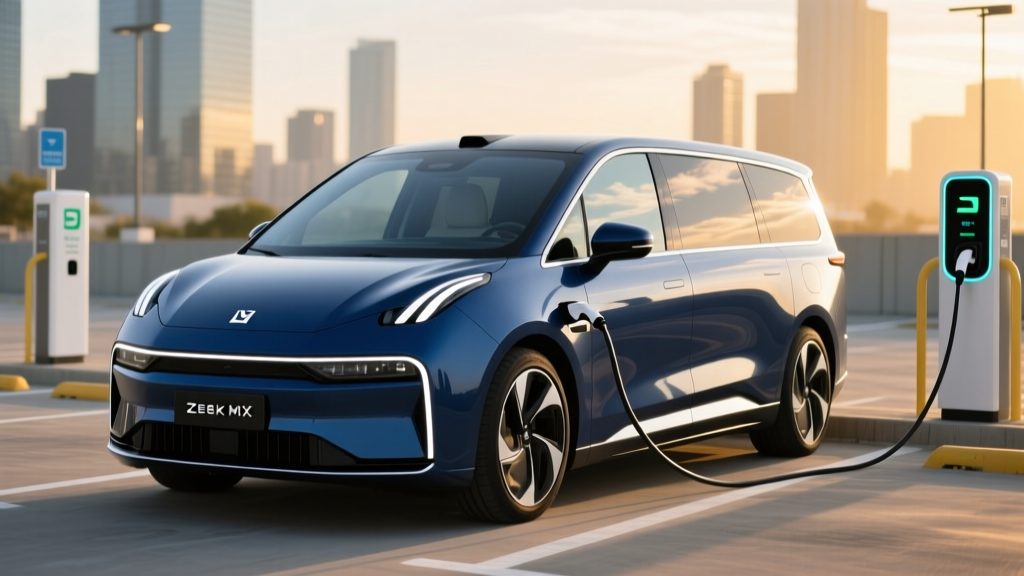
The Zeekr MIX — colloquially called the "Zeekr van" by Western EV enthusiasts — is Geely's premium electric brand taking on the minivan segment with a radical approach. First unveiled in China in late 2024, the MIX slots between a traditional minivan and a lounge-style MPV, featuring pillarless sliding doors, a flat-floor skateboard platform, and a reconfigurable cabin that can transform from a seven-seat family hauler into a mobile living room.
As of early 2026, the Zeekr MIX is available in China and has been confirmed for select international markets, though a definitive US launch date remains unannounced. Zeekr has hinted at North American expansion, but tariff structures and homologation requirements mean American buyers should treat this as an upcoming/anticipated model rather than one you can order today. That said, the specs are compelling enough to warrant a close look — especially if you're cross-shopping the Kia EV9, Chrysler Pacifica Hybrid, or the Volvo EM90 (which shares the same SEA platform).
| Spec | Standard Range | Long Range |
|---|---|---|
| EPA Range (est.) | ~250 mi (est.) | ~310 mi (est.) |
| Battery Capacity | 77 kWh (usable) | 100 kWh (usable) |
| Battery Chemistry | NMC (CATL Qilin) | NMC (CATL Qilin) |
| Max DC Fast Charge | ~220 kW | ~250 kW (800V architecture) |
| 10–80% DC Charge Time | ~22 min | ~18 min |
| Level 2 Home Charging | 11 kW (~30 mi/hr) | 11 kW (~35 mi/hr) |
| 0–60 mph | ~7.2 sec | ~6.8 sec |
| Horsepower | 268 hp (single motor, RWD) | 416 hp (dual motor, AWD) |
| Drivetrain | RWD | AWD |
| MPGe (combined, est.) | ~95 MPGe | ~89 MPGe |
| Efficiency | ~35 kWh/100mi | ~38 kWh/100mi |
| Base MSRP (China) | ¥259,000 (~$35,800) | ¥299,000 (~$41,300) |
| Estimated US MSRP | $48,000–$52,000 | $55,000–$60,000 |
| Battery Warranty | 8 yr / 100,000 mi (expected US spec) | |
| Vehicle Warranty | 4 yr / 50,000 mi (expected) | |
Note: US-spec pricing and range figures are estimates based on China-market data, typical homologation adjustments, and Zeekr's international pricing strategy. Final EPA certification numbers are not yet published. Source: Zeekr official specs and industry analysis.
Range and Efficiency: What the EPA Sticker Won't Tell You
EPA Estimated Range (Long Range, est.): ~310 miles
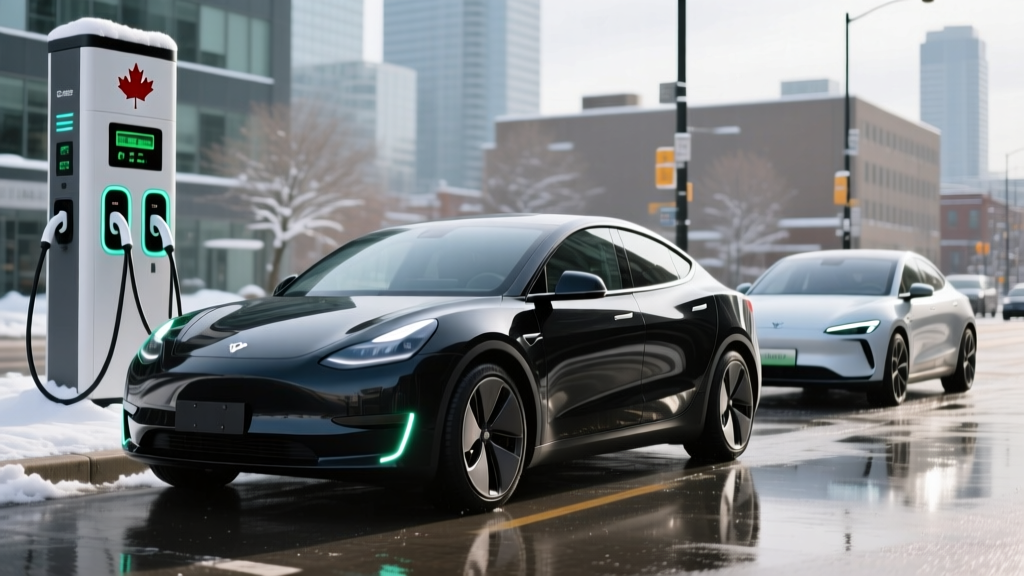
Real-World Expectation: Expect 260–280 miles on mixed highway driving at 70 mph. In cold weather (below 32°F), plan for 200–230 miles due to cabin heating demands and battery chemistry behavior. City driving with regenerative braking can push closer to the EPA sticker or slightly above.
The Zeekr MIX uses CATL's third-generation Qilin NMC (nickel-manganese-cobalt) battery cells, which offer high energy density — essential for a vehicle with the aerodynamic profile of a minivan. The 100 kWh usable pack in the Long Range variant is competitive with the Kia EV9's 99.8 kWh pack, though the MIX's boxier shape means slightly higher energy consumption per mile.
In Chinese CLTC testing, the Long Range MIX achieves a claimed 702 km (~436 miles), but CLTC is notoriously optimistic compared to the US EPA cycle. Based on comparable vehicles on the SEA platform (like the Zeekr 009 and Volvo EM90), a realistic EPA figure lands around 300–315 miles. The Standard Range variant with its 77 kWh pack should deliver roughly 245–260 EPA miles.
The MIX's heat pump system helps mitigate cold-weather range loss compared to vehicles using resistive PTC heaters, but minivan-class EVs inherently consume more energy due to their mass (estimated curb weight: 5,400–5,800 lbs) and frontal area. If your commute is mostly suburban at lower speeds, you'll see better efficiency than the EPA combined number. Sustained 80 mph interstate driving will drop range by 15–20% below the sticker.
Charging Speed: 800V Architecture Makes a Real Difference
The Zeekr MIX is built on Geely's SEA (Sustainable Experience Architecture) platform with native 800-volt electrical architecture — the same foundation underpinning the Hyundai Ioniq 5, Kia EV6, and Porsche Taycan. This is a significant advantage for DC fast charging, allowing higher power delivery without excessive current that would overheat cables and connectors.
| Charging Level | Power | Speed (mi/hr added) | Notes |
|---|---|---|---|
| Level 1 (120V outlet) | ~1.4 kW | ~4 mi/hr | Emergency/trickle only |
| Level 2 (240V, 48A) | 11 kW | ~30–35 mi/hr | Full charge overnight (~9–10 hrs) |
| DC Fast (peak) | 220–250 kW | ~550–650 mi/hr (peak) | 10–80% in ~18–22 min |
| DC Fast (sustained avg.) | ~160–180 kW | ~400 mi/hr (avg.) | Average across 10–80% session |
Understanding the charge curve: Like all EVs, the MIX won't sustain peak kW for the entire session. The 250 kW peak applies roughly between 10–40% state of charge (SoC). From 40–65%, expect a taper to ~180 kW. Above 80%, charging slows dramatically to protect the NMC cells — typically dropping below 50 kW. This is why manufacturers quote 10–80% times rather than 0–100% times. For road-trip planning, budget 20–25 minutes per stop at a 350 kW-capable station.
At home on a Level 2 charger (240V, 48-amp circuit), the MIX's 11 kW onboard charger adds roughly 30–35 miles of range per hour. A full 10–100% charge takes about 9–10 hours, making overnight replenishment practical for daily driving. Home Level 2 installation typically costs $800–$2,000 depending on your electrical panel capacity and run distance — consult a licensed electrician for your specific setup.
Connector note: If the MIX launches in the US, it will almost certainly use the NACS (Tesla-style) connector, as the industry has consolidated around NACS for 2025+ models. In China, it uses the GB/T standard. This means access to the Tesla Supercharger network, which is the most reliable public DC fast-charging network in North America according to J.D. Power EV charging studies.
Performance: Surprisingly Quick for a Family Hauler
The dual-motor AWD Long Range variant produces an estimated 416 hp and ~400 lb-ft of torque, propelling the MIX to 60 mph in approximately 6.8 seconds. That's brisk for a three-row vehicle — comparable to a Kia EV9 GT-Line AWD (6.7 seconds) and significantly quicker than any gasoline minivan on the market (the Toyota Sienna hybrid does 0–60 in about 7.6 seconds).
The single-motor RWD Standard Range model, at 268 hp, posts a 0–60 time around 7.2 seconds — perfectly adequate for merging and passing, though not thrilling. Instant electric torque means both variants feel responsive around town, where the MIX's tight turning circle (estimated ~38 feet) and flat floor make it surprisingly maneuverable for its footprint.
Ride quality benefits from the SEA platform's multi-link rear suspension and air spring availability on higher trims. The low center of gravity from the floor-mounted battery pack reduces body roll compared to ICE minivans. Zeekr has tuned the steering for comfort rather than sportiness — appropriate for the target buyer, but don't expect the engagement of a Tesla Model X.
Interior, Cargo, and the Modular Cabin Concept
The MIX's defining feature is its interior flexibility. Zeekr designed the cabin around a "living space" philosophy:
- Pillarless B-pillar design: Both rear doors are power-sliding, and the absence of a traditional B-pillar creates a massive opening (approximately 57 inches wide) for easy third-row access — a genuine advantage over swing-door SUVs like the EV9.
- Rotating front seats: On select trims, the front seats can swivel 180 degrees to face rear passengers when parked, creating a lounge or meeting configuration.
- Flat floor: The dedicated EV platform means no transmission tunnel, yielding a truly flat floor across all three rows.
- Sliding center console: The front center console can slide rearward to serve second-row passengers or be repositioned forward for a walk-through to the rear seats.
Cargo dimensions (estimated):
- Behind third row: ~18 cu ft
- Behind second row (third row folded): ~45 cu ft
- Behind front seats (all rear rows folded): ~85 cu ft
- Second-row legroom: ~38 inches
- Third-row legroom: ~33 inches
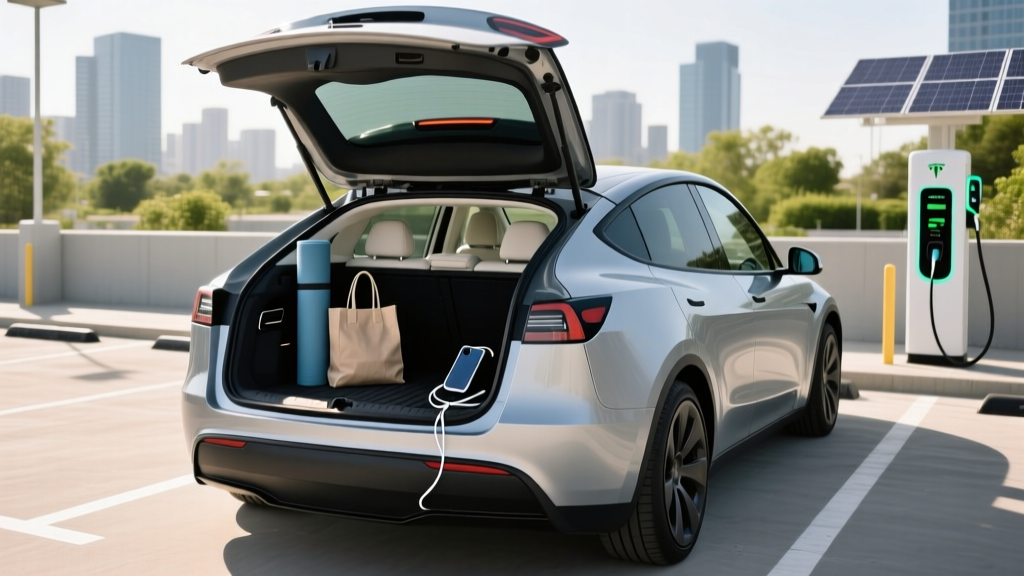
These figures are competitive with the Chrysler Pacifica (140.5 cu ft max cargo) in flat-load scenarios, though the MIX's floor height is slightly elevated due to the battery pack. For comparison, the Kia EV9 offers 81.7 cu ft behind the front row.
The infotainment system runs on a 15.05-inch central touchscreen with Zeekr's latest ZEEKR OS, powered by a Qualcomm Snapdragon 8295 chip. Wireless Apple CarPlay and Android Auto are expected for US-spec models. A 13-speaker Yamaha audio system, head-up display, and a digital instrument cluster round out the tech suite.
Driver Assistance and Safety Technology
SAE Automation Level: Level 2
The Zeekr MIX's driver-assistance suite (branded ZAD — Zeekr Advanced Driving) is a Level 2 system. This means it provides combined steering, acceleration, and braking assistance, but the driver must remain fully engaged with hands on or near the wheel and eyes on the road at all times. It is not self-driving.
The sensor suite includes up to 7 cameras, 5 millimeter-wave radars, and 1 LiDAR unit (on equipped trims), enabling:
- Adaptive cruise control with stop-and-go
- Lane centering with lane-change assist
- Automatic emergency braking with pedestrian/cyclist detection
- Navigate on Pilot (highway on-ramp to off-ramp assisted driving)
- Automated parking assist (parallel and perpendicular)
- Remote parking via smartphone app
Zeekr's Mobileye-based system is competent but not class-leading. It trails Tesla's Autopilot/FSD (Supervised) and GM's Super Cruise in highway lane-change confidence, though it's on par with Ford BlueCruise and Toyota's Safety Sense 3.0 for routine highway cruising. As always, treat it as a fatigue-reducer, not a replacement for attentive driving.
Important: Level 2 driver-assist systems require constant driver supervision. The Zeekr MIX is not an autonomous vehicle. You are legally and operationally responsible for the vehicle at all times. Do not use your phone, close your eyes, or disengage from driving while ZAD is active.
Pricing, Trim Levels, and Federal Tax Credit Eligibility
In China, the Zeekr MIX launched with pricing starting at ¥259,000 (~$35,800 USD) for the Standard Range RWD and climbing to ¥299,000 (~$41,300) for the Long Range AWD. US pricing, should the MIX arrive, will be significantly higher due to import tariffs, homologation costs, and market positioning.
| Trim | Est. MSRP | §30D Credit Eligibility | Effective Price (if eligible) |
|---|---|---|---|
| Standard Range RWD | $48,000–$52,000 | Uncertain — battery sourcing TBD | $40,500–$44,500 |
| Long Range AWD | $55,000–$60,000 | Uncertain — battery sourcing TBD | $47,500–$52,500 |
Federal §30D EV Tax Credit Requirements (2026 rules):
- MSRP cap: Vans/minivans classified as SUVs must be under $80,000; sedans under $55,000. The MIX should qualify under the van/SUV cap.
- Buyer income cap: AGI ≤ $150,000 (single), $225,000 (head of household), $300,000 (married filing jointly).
- Battery sourcing: ≥40% of critical minerals must be sourced from the US or FTA partners (increasing to 50% in 2026). Battery components must be ≥75% manufactured/assembled in North America (2026 threshold).
- Point-of-sale transfer: Eligible buyers can transfer the credit to the dealer for an immediate price reduction at purchase.
- Assembled in North America: Final assembly must occur in the US, Canada, or Mexico.
Source: IRS §30D Clean Vehicle Credits. Eligibility depends on Zeekr's supply chain decisions for US-spec vehicles. The MIX currently uses CATL cells manufactured in China, which would likely disqualify it from the full $7,500 credit under current battery-sourcing rules unless Zeekr shifts to North American or FTA-partner cell suppliers for US-market vehicles.
This is the critical uncertainty for US buyers: Zeekr's current battery supply chain is heavily China-dependent. Unless Geely/Zeekr establishes a North American battery supply partnership (potentially with CATL's rumored US licensing deals or through another cell supplier), the MIX may qualify for $0 or only $3,750 (half-credit for meeting one of the two sourcing requirements). We'll update this analysis as Zeekr confirms US-spec details.
Who Should Consider the Zeekr MIX Van?
Choose the Zeekr MIX if:
- You need three-row seating with genuinely easy third-row access (pillarless doors are a real advantage over SUVs)
- You value interior flexibility and want a cabin that doubles as a lounge/workspace when parked
- You want 800V fast-charging architecture for road-trip viability
- You're willing to wait for US availability and accept early-adopter uncertainty on service networks
Look elsewhere if:
- You need a vehicle you can buy and service today in the US — the Kia EV9, Chrysler Pacifica PHEV, or Toyota Sienna are available now
- Federal tax credit eligibility is a dealbreaker (the MIX's Chinese battery supply chain is a risk)
- You want a sporty driving experience — the MIX prioritizes comfort, not performance
- You tow frequently — the MIX's estimated towing capacity (~3,500 lbs) trails the EV9 (5,000 lbs)
Pros
- Pillarless sliding doors offer unmatched third-row access
- 800V architecture enables 18–22 minute 10–80% DC charges
- Modular cabin with rotating seats and flat floor
- Competitive range (~310 mi est.) for the minivan segment
- Strong value proposition if US pricing lands under $55K
Cons
- Not yet available for US purchase — timeline uncertain
- Chinese battery supply chain likely limits §30D tax credit
- Service/dealer network in the US is unproven
- Higher energy consumption than sleeker EV SUVs
- ADAS system trails Tesla/GM in highway confidence
Competitor Comparison: Zeekr MIX vs. the Alternatives
| Spec | Zeekr MIX (LR AWD) | Kia EV9 (LR AWD) | Chrysler Pacifica PHEV |
|---|---|---|---|
| EPA Range | ~310 mi (est.) | 282 mi | 32 mi electric + 520 mi total |
| Battery | 100 kWh NMC | 99.8 kWh NMC | 16 kWh NMC |
| DC Fast Charge (peak) | ~250 kW | 236 kW | N/A (Level 2 only) |
| 10–80% Time | ~18 min | ~20 min | ~2 hrs (Level 2) |
| 0–60 mph | ~6.8 sec | 8.2 sec | ~7.5 sec |
| Horsepower | 416 hp | 379 hp | 260 hp (combined) |
| Third Row | Yes | Yes | Yes |
| Max Cargo | ~85 cu ft | 81.7 cu ft | 140.5 cu ft |
| Base MSRP | ~$55,000 (est.) | $59,900 | $51,095 |
| §30D Credit | Uncertain | Up to $7,500 | Up to $7,500 |
The Kia EV9 is the most direct US-market competitor and currently the safer buy — it's available now, qualifies for the full §30D credit (bringing effective pricing closer to the MIX's estimated MSRP), and has an established dealer/service network. The MIX's advantages are its pillarless doors, faster peak charging, and more flexible interior, but these must be weighed against availability and support uncertainty.
The Chrysler Pacifica PHEV remains compelling for buyers who need electric-only commuting (32 miles) without range anxiety on road trips. If you can charge at home and rarely drive more than 30 miles daily, the Pacifica PHEV offers a pragmatic bridge — though it lacks the MIX's modern EV architecture, DC fast charging, and performance.
Frequently Asked Questions
When will the Zeekr MIX van be available in the United States?
As of early 2026, Zeekr has not announced a specific US launch date for the MIX. The brand has expressed interest in North American expansion, but tariff implications (including the 100% tariff on Chinese-made EVs enacted in 2024) and homologation requirements present significant hurdles. If Zeekr enters the US, it may do so through local assembly or via a partnership — similar to how Polestar and Volvo leverage Geely's global manufacturing. Realistically, a US launch before 2027–2028 is unlikely unless trade policy shifts.
What is the real-world range of the Zeekr MIX?
Based on the Long Range AWD variant's estimated EPA rating of ~310 miles, expect 260–280 miles in real-world mixed highway driving at moderate temperatures. Cold weather (below freezing) will reduce this to approximately 200–230 miles due to battery chemistry limitations and cabin heating energy draw. City driving with regenerative braking can achieve or slightly exceed the EPA figure.
How fast does the Zeekr MIX charge?
On an 800V-capable DC fast charger (350 kW station), the Long Range MIX peaks at approximately 250 kW and can charge from 10% to 80% in about 18 minutes. The Standard Range variant peaks at ~220 kW with a 10–80% time of approximately 22 minutes. At home on a 240V Level 2 charger (11 kW), a full charge takes roughly 9–10 hours.
Does the Zeekr MIX qualify for the $7,500 federal EV tax credit?
It's uncertain. The §30D credit requires that battery components and critical minerals meet North American/FTA-partner sourcing thresholds. The MIX currently uses CATL cells manufactured in China, which would likely disqualify it from the full credit under 2026 rules. If Zeekr sources cells from a North American or qualifying FTA-partner supplier for US-spec vehicles, partial or full credit eligibility is possible. Always verify current eligibility at fueleconomy.gov before purchasing.
Is the Zeekr MIX worth buying over the Kia EV9?
If you can wait for US availability and the MIX launches with competitive pricing and an adequate service network, it offers genuine advantages in cabin flexibility and charging speed. However, the Kia EV9 is available now, qualifies for the full $7,500 federal tax credit, has a proven dealer network, and offers similar range and three-row practicality. For most US buyers in 2026, the EV9 is the more pragmatic choice — but the MIX is worth watching if you're not in a rush.
What battery chemistry does the Zeekr MIX use?
The MIX uses NMC (nickel-manganese-cobalt) chemistry in CATL's Qilin cell format. NMC offers higher energy density than LFP (lithium iron phosphate), which is important for maximizing range in a large, heavy vehicle. The trade-off is that NMC cells degrade slightly faster over time and are more sensitive to sustained high SoC storage. Zeekr is expected to warranty the battery at 8 years/100,000 miles with a minimum 70% capacity retention threshold — competitive with industry standards.
Can the Zeekr MIX tow?
Estimated towing capacity is approximately 3,500 pounds for the AWD variant — sufficient for a small utility trailer, a couple of jet skis, or a lightweight camper, but not enough for a large boat or travel trailer. This trails the Kia EV9's 5,000-pound rating. If towing is a priority, the EV9 or a truck-based EV like the Rivian R1S would be better choices.
This article will be updated as Zeekr confirms US-market specifications, pricing, and availability. All estimated figures are based on China-market data and comparable SEA-platform vehicles. For the latest on EV tax credits, consult IRS.gov. Range and efficiency data referenced from fueleconomy.gov where EPA-certified data is available.