The Short Answer: Is Zeekr Available in the USA?
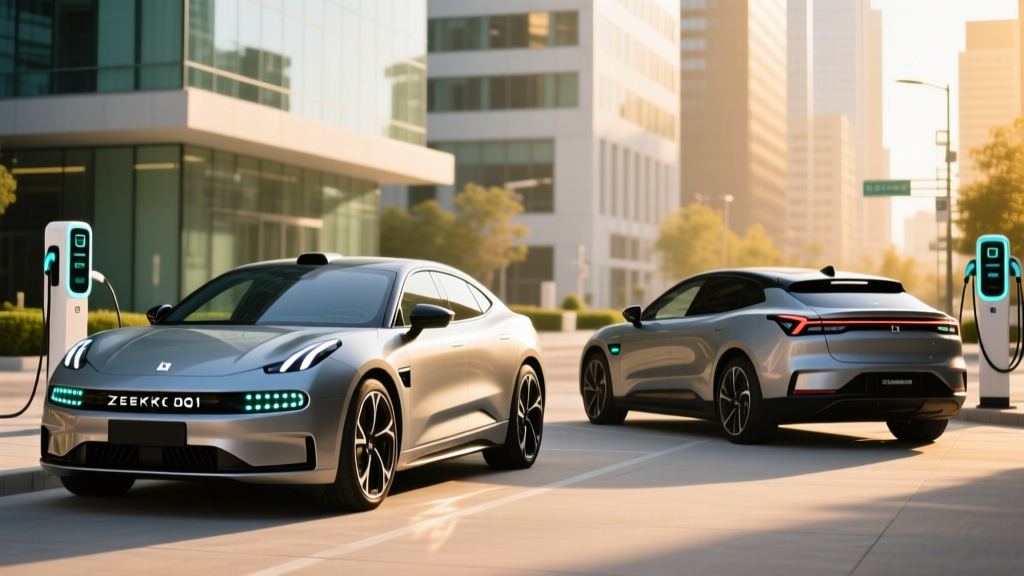
If you've seen the striking Zeekr 001 shooting brake or the boxy Zeekr X crossover on social media and wondered whether you can buy one stateside, the answer requires some nuance. As of early 2026, Zeekr does not sell vehicles directly to US consumers. The brand — a premium EV marque under China's Geely Holding Group — has focused its retail expansion on Europe, the Middle East, and select Asian markets. There is no Zeekr dealership network in the United States, and no models have been submitted for full US homologation (FMVSS compliance).
However, that doesn't mean Zeekr is entirely invisible on American roads. A small number of vehicles have entered the country through the 25-year import rule (not applicable to new models), show-or-display exemptions, or via independent importers who have federalized individual units. More practically, some Zeekr models share platforms with vehicles you can buy in the US — most notably, the Zeekr 001 rides on Geely's Sustainable Experience Architecture (SEA), which also underpins the Polestar 4 (Polestar is also a Geely brand).
This guide breaks down the most popular Zeekr models, their real-world specs, what it would take to own one in the US, and which available alternatives deliver a similar experience with full factory support and tax-credit eligibility.
| Model | Body Style | Battery (kWh) | Chemistry | Range (WLTP) | 0–60 mph | HP |
|---|---|---|---|---|---|---|
| Zeekr 001 (LR AWD) | Shooting Brake | 100 kWh | NMC | ~342 mi | 3.8s | 536 |
| Zeekr 001 (RWD) | Shooting Brake | 86 kWh | LFP | ~335 mi | 6.9s | 268 |
| Zeekr X (AWD) | Subcompact Crossover | 66 kWh | NMC | ~265 mi | 3.7s | 416 |
| Zeekr 009 (Grand) | Minivan / MPV | 140 kWh | NMC (Qilin) | ~380 mi | 4.5s | 536 |
Note: Range figures are WLTP, which tends to overestimate by 15–25% compared to US EPA testing. EPA-equivalent estimates are provided in the real-world section below.
Real-World Range: What WLTP Numbers Mean for US Drivers
⚡ Range Reality Check
WLTP range figures are tested under more favorable conditions than the EPA cycle. For Zeekr models, expect a 15–25% reduction when converting to EPA-equivalent estimates:
- Zeekr 001 LR AWD: WLTP 342 mi → Estimated EPA ~270–290 mi
- Zeekr 001 RWD (LFP): WLTP 335 mi → Estimated EPA ~265–285 mi
- Zeekr X AWD: WLTP 265 mi → Estimated EPA ~210–225 mi
Cold-weather impact: Like all EVs, Zeekr models lose 20–35% of range in sub-freezing temperatures. The 001's heat pump (standard on most trims) helps mitigate cabin-heating energy draw, but battery chemistry still governs cold-weather performance. NMC cells handle cold slightly better than LFP, though LFP offers superior cycle life and thermal stability in warm climates.
Highway driving: At sustained 75+ mph speeds, expect range to drop to roughly 75–80% of the EPA figure due to aerodynamic drag. The 001's shooting-brake profile is less aero-efficient than a sedan, compounding highway losses.
Charging Speed: DC Fast Charging and Home Level 2
Charging infrastructure compatibility is one of the biggest hurdles for grey-market EVs in the US. Zeekr vehicles sold in Europe and China use CCS2 (Europe) or GB/T (China) connectors — neither of which natively plugs into the US CCS1 or NACS (Tesla Supercharger) ecosystem without adapters.
| Model | Max DC Fast Charge | 10–80% Time | Level 2 (AC) | Connector (Origin Market) |
|---|---|---|---|---|
| Zeekr 001 (100 kWh) | 200 kW (peak) | ~30 min | 11 kW (~35 mi/hr) | CCS2 / GB/T |
| Zeekr 001 (86 kWh LFP) | 120 kW (peak) | ~38 min | 11 kW (~32 mi/hr) | CCS2 / GB/T |
| Zeekr X (66 kWh) | 150 kW (peak) | ~28 min | 7.4 kW (~25 mi/hr) | CCS2 / GB/T |
Charging curve reality: The 001's 200 kW peak rate is not sustained across the full session. Like most EVs, charge speed tapers significantly above 80% SoC to protect battery health. A typical 10–80% session at a capable DC fast charger takes roughly 30 minutes, but 80–100% can add another 20–25 minutes. Plan road trips around the 10–80% window for optimal efficiency.
US adapter situation: CCS2-to-CCS1 adapters exist but are not widely certified for high-power DC charging in the US. NACS adapters for CCS2 vehicles are in development from third-party manufacturers, but compatibility and safety certification remain inconsistent. If you import a Zeekr, home Level 2 charging (using a J1772-to-Type 2 adapter for European-spec cars) is more straightforward than public DC fast charging.
Performance and Drivetrain
Zeekr positions itself as a performance-premium brand, and the specs back it up:
- Zeekr 001 LR AWD: Dual-motor all-wheel drive, 536 hp, 524 lb-ft torque, 0–60 mph in 3.8 seconds. Air suspension standard on higher trims, with adjustable ride height and damping.
- Zeekr 001 RWD: Single rear motor, 268 hp, 0–60 in 6.9 seconds. Lighter front end improves efficiency; the LFP battery's lower energy density is offset by the smaller 86 kWh pack.
- Zeekr X AWD: Dual-motor, 416 hp, 0–60 in 3.7 seconds. Quick for its class, though the short wheelbase makes power delivery feel more urgent than the 001's planted surge.
All models feature regenerative braking with adjustable levels, though Zeekr does not offer true one-pedal driving (the car creeps at low speed rather than coming to a full stop). The brake-blending feel is competent but not as seamless as Tesla or Hyundai/Kia's implementations.
Pricing, Tax Credits, and the Import Math
| Model | Europe MSRP (approx.) | US Grey-Market Import Cost (est.) | Federal Tax Credit (§30D) |
|---|---|---|---|
| Zeekr 001 LR AWD | €60,000–€68,000 (~$65,000–$74,000) | $75,000–$90,000 | Not eligible |
| Zeekr X AWD | €40,000–€47,000 (~$43,000–$51,000) | $55,000–$65,000 | Not eligible |
| Zeekr 009 Grand | Not sold in Europe | $100,000+ (China import) | Not eligible |
Federal tax credit eligibility: Under IRS §30D rules, the new clean vehicle credit (up to $7,500) requires that the vehicle be assembled in North America (with limited exceptions for FTA-country battery sourcing). Zeekr vehicles are manufactured in China, making them ineligible for the federal EV tax credit regardless of buyer income or MSRP. They are also ineligible for most state rebates that require a US-spec VIN and dealer sale.
The import cost premium: Beyond the vehicle's base price, grey-market importation adds $10,000–$20,000+ for shipping, customs duties (currently 100% tariff on Chinese-made EVs under 2024–2026 trade policy), DOT/EPA federalization modifications, and registration. This effectively doubles the price in many cases, making Zeekr models far more expensive than US-market competitors with similar specs.
Interior, Tech, and Cargo
The Zeekr 001's interior is where the brand makes its strongest case. The shooting-brake body yields a surprisingly practical cargo area:
- Cargo volume (001): ~30 cu ft behind rear seats, ~60 cu ft with seats folded — comparable to a midsize SUV hatch.
- Legroom: 41.3 inches rear (generous for the wheelbase), aided by the flat floor.
- Infotainment: 15.4-inch center touchscreen running a Qualcomm Snapdragon 8155-based system. Wireless Apple CarPlay and Android Auto are supported on European-spec models; Chinese-spec units use Zeekr's proprietary ecosystem with limited English-language app support.
- Driver assistance: Mobileye SuperVision (on select trims) with up to 7 cameras and 12 ultrasonic sensors. This is an SAE Level 2 system — hands-on-wheel supervision is required at all times. It is not "self-driving."
Notable drawbacks: Software localization is a real issue for grey-market imports. Chinese-spec Zeekr vehicles may have menus, navigation, and voice assistants primarily in Mandarin. European-spec cars fare better but still lack US-specific map data and connected-service support. Over-the-air updates may not function outside the origin market.
Warranty and Long-Term Ownership Risk
In its home markets, Zeekr offers competitive warranty coverage:
- Vehicle warranty: 6 years / 150,000 km (~93,000 miles) in China; varies in Europe.
- Battery warranty: 8 years / 200,000 km (~124,000 miles), covering capacity retention below 70%.
However, none of this warranty coverage applies to grey-market imports in the US. Zeekr has no authorized service centers stateside, and parts availability for body panels, trim pieces, and proprietary electronics is unreliable. A damaged headlight or cracked bumper could mean weeks of waiting for shipments from China — if the part is available at all.
Battery degradation data for Zeekr's NMC and LFP packs is limited compared to Tesla or Hyundai's published fleet data. Early Chinese-market 001 owners report typical degradation curves (~5–8% loss over the first 60,000 miles), but long-term data beyond three years is still emerging.
Zeekr vs US-Market Alternatives: What Should You Buy Instead?
If the Zeekr appeal is the combination of striking design, premium interior, and strong performance, several US-market EVs deliver a comparable — or superior — experience with full warranty, tax-credit eligibility, and reliable charging access:
| Attribute | Zeekr 001 LR AWD | Polestar 4 LR AWD | Tesla Model Y LR AWD | Hyundai Ioniq 5 N |
|---|---|---|---|---|
| EPA Range (est.) | ~275 mi | ~315 mi | ~310 mi | ~220 mi |
| 0–60 mph | 3.8s | 3.8s | 4.8s | 3.4s |
| Battery | 100 kWh NMC | 100 kWh NMC | 75 kWh NMC | 84 kWh NMC |
| Max DC Charge | 200 kW | 200 kW | 250 kW | 240 kW |
| US Price | $75K+ (import) | ~$63,000 | ~$50,000 | ~$68,000 |
| Federal Tax Credit | No | Partial* | Yes (up to $7,500) | No (Korea assembly) |
| US Warranty | None | 4yr/50K + 8yr/100K battery | 4yr/50K + 8yr/120K battery | 5yr/60K + 10yr/100K battery |
*Polestar 4 tax credit eligibility depends on battery-sourcing compliance and buyer income caps under §30D. Verify on IRS.gov before purchasing.
✅ Reasons to Want a Zeekr
- Head-turning shooting-brake design (001) unavailable from any US automaker
- Premium interior materials rivaling Audi/Porsche at a lower origin-market price
- Strong performance across the lineup, especially the 001 AWD and X AWD
- LFP battery option (001 RWD) for buyers prioritizing longevity over range
❌ Reasons to Think Twice
- No US sales, warranty, or service network — total ownership risk is on you
- 100% tariff on Chinese EVs makes import costs prohibitive
- Federal and state tax credits unavailable
- Connector incompatibility (CCS2/GB/T) limits public DC fast charging in the US
- Software localization issues, especially on Chinese-spec units
Who Should (and Shouldn't) Consider a Zeekr?
This EV suits you if: You're an EV enthusiast with grey-market import experience, a dedicated home-charging setup (Level 2 with appropriate adapters), and tolerance for zero warranty support. Zeekr ownership in the US is effectively a collector/enthusiast proposition — think of it like importing a right-hand-drive Nissan Skyline in the 2000s.
Look elsewhere if: You need a daily driver with reliable public charging access, warranty-backed battery coverage, tax-credit savings, and manufacturer service support. The Polestar 4 (same Geely SEA platform), Tesla Model Y, Hyundai Ioniq 5, or Ford Mustang Mach-E all deliver strong range, fast charging, and full US-market support at lower effective cost.
Frequently Asked Questions
Will Zeekr officially launch in the US?
As of 2026, Zeekr has not announced a US market entry timeline. Geely's US strategy currently routes through Polestar and Volvo. Ongoing US-China trade tensions and the 100% tariff on Chinese EVs make near-term entry unlikely. If Zeekr does enter the US, it would likely require a dedicated assembly or partnership arrangement to avoid prohibitive import duties.
Can I charge a Zeekr at Tesla Superchargers?
Not natively. Zeekr vehicles use CCS2 (European-spec) or GB/T (Chinese-spec) connectors. Tesla's NACS connector is incompatible without an adapter, and as of 2026, no certified CCS2-to-NACS adapter supports full DC fast-charge speeds for Zeekr vehicles. Home Level 2 charging with a J1772 adapter is more feasible.
Is the Zeekr 001 the same car as the Polestar 4?
No, but they share the same underlying architecture (Geely SEA platform). The 001 is a larger shooting-brake wagon; the Polestar 4 is a coupe-style SUV with a different body, interior, and software stack. Think of them as siblings, not twins. The Polestar 4 is available in the US with full warranty and potential tax-credit eligibility.
Does a Zeekr qualify for any US state EV rebates?
Generally no. Most state rebate programs (California's CVRP, Colorado's EV tax credit, etc.) require the vehicle to be purchased from a licensed US dealer with a US-spec VIN. Grey-market imports do not qualify. Always check your specific state's program rules.
What's the biggest risk of importing a Zeekr?
Beyond the financial cost (tariffs, shipping, federalization), the biggest risk is service and parts unavailability. A collision, software failure, or battery issue could leave you with an undrivable car and no authorized repair path. Insurance is also more expensive and harder to secure for grey-market vehicles.