Why a YouTuber Tesla Roadster Reservation Cancellation Is Making Headlines
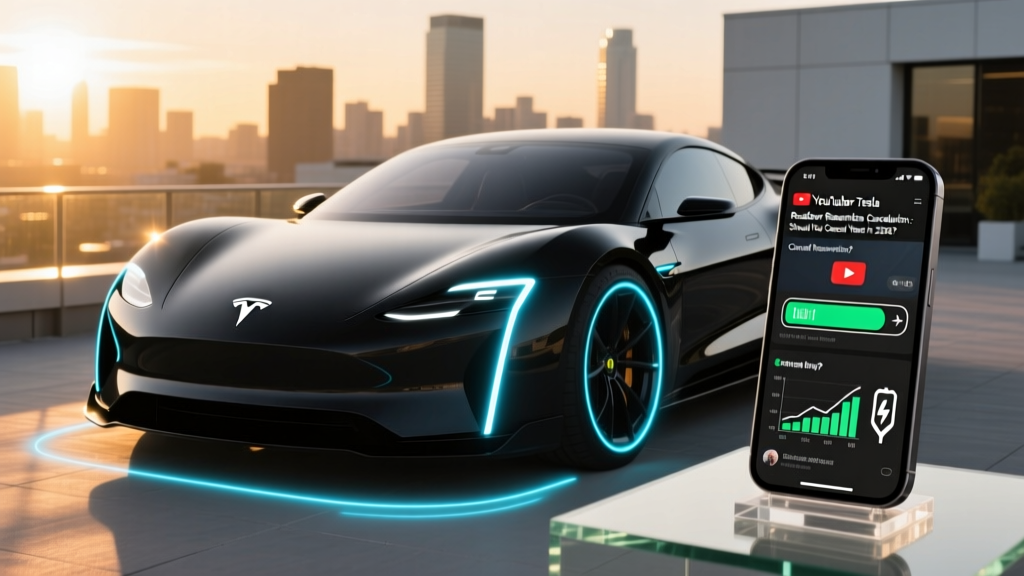
When a prominent EV YouTuber publicly canceled their Tesla Roadster reservation in early 2026, it sent ripples through the reservation-holder community. After nearly a decade of delays since the 2017 unveiling, the second-generation Roadster remains in what Tesla describes as "final engineering validation" — still not available for customer delivery. For the thousands of buyers who put down $50,000 (or $250,000 for the Founder's Series) years ago, the question is no longer "when will it ship?" but "should I cancel my reservation and move on?"
This article examines the Roadster's current status, its preliminary specifications, the economics of holding versus canceling, and whether competing electric supercars make walking away the smarter play. If you've been searching for context around the youtuber tesla roadster reservation cancellation trend, this is the data-driven breakdown you need.
Current Status: Announced, Not Available
Tesla has repeatedly pushed the Roadster timeline. Originally slated for 2020, then 2022, then 2024, the company indicated at its 2025 investor update that low-volume production could begin in late 2026 or 2027. Elon Musk has stated the Roadster is "the last straw" for internal combustion supercars, but the production realities of a low-volume halo car at a company focused on Cybertruck ramp-up, Optimus robotics, and next-gen platform development raise legitimate skepticism.
The YouTuber cancellation trend reflects a growing fatigue among reservation holders who have watched their $50,000 deposits sit interest-free with Tesla for 6–8 years while competing electric performance cars — from the Rimac Nevera to the Lotus Evija — have actually entered production and delivery.
Preliminary Specifications: What Tesla Has Promised
| Attribute | Announced / Estimated Figure |
|---|---|
| EPA Range (announced target) | 620 miles |
| Battery Capacity | 200 kWh (announced) |
| Battery Chemistry | Likely NMC/NCA (high energy density); unconfirmed |
| Drivetrain | Tri-motor AWD (1 front, 2 rear) |
| Horsepower | ~1,000+ hp (wheel torque: 10,000 Nm claimed) |
| 0–60 mph | 1.9 seconds (announced, without SpaceX thruster package) |
| Top Speed | 250+ mph (announced) |
| Max DC Fast Charge | Expected 250–350 kW (unconfirmed; 4680-cell architecture) |
| 10–80% DC Charge Time | Estimated 20–30 minutes (preliminary) |
| Level 2 Home Charge | ~11.5 kW / ~34 mi/hr (estimated at 48A) |
| Seating | 2+2 (4 seats, rear seats extremely limited) |
| Cargo Space | Frunk + rear trunk; ~5 cu ft total (estimated) |
| Base MSRP (announced) | $200,000 |
| Founder's Series MSRP | $250,000 (limited to first 1,000 units) |
| Battery/Powertrain Warranty | Expected 8 yr / 150,000 mi (Tesla standard for high-end models) |
A note on the 200 kWh battery: If Tesla delivers a 200 kWh pack, it would be the largest battery ever installed in a production passenger car. For context, the GMC Hummer EV uses a ~212 kWh pack but weighs over 9,000 lbs. The Roadster's claimed 620-mile target assumes exceptional efficiency — roughly 3.2 miles/kWh — which is aggressive for a performance car with wide tires and all-wheel drive. Real-world highway driving at 75+ mph would likely yield 400–480 miles, and cold-weather operation could reduce that by an additional 15–25%.
Announced target: 620 miles
Realistic highway (70–75 mph, moderate temps): ~420–480 miles
Cold weather (below 32°F, highway): ~340–400 miles
No EPA certification exists yet. These estimates are based on typical EV efficiency loss patterns for performance vehicles with large battery packs. Actual EPA figures may differ significantly upon certification.
Charging: Can a 200 kWh Pack Actually Charge Fast?
The physics of charging a 200 kWh battery present real challenges. Even at a sustained 350 kW peak — the upper limit of current CCS/NACS DC infrastructure — filling from 10% to 80% (140 kWh) would take a theoretical minimum of 24 minutes at full rate. In practice, charge curves taper significantly above 50–60% state of charge, pushing realistic 10–80% times toward 30–40 minutes unless Tesla deploys a radically new cell chemistry or thermal management approach.
| Charging Level | Power (kW) | Miles Added per Hour | Notes |
|---|---|---|---|
| Level 1 (120V) | ~1.4 kW | ~4 mi/hr | Impractical for 200 kWh pack; 140+ hr full charge |
| Level 2 (240V, 48A) | ~11.5 kW | ~34 mi/hr | ~17 hours for full charge; overnight insufficient for 0–100% |
| Level 2 (240V, 80A) | ~19.2 kW | ~57 mi/hr | Requires Tesla Wall Connector + 100A circuit; ~10 hr full charge |
| DC Fast Charge (V3 Supercharger) | Up to 250 kW | ~740 mi/hr (peak) | 10–80% est. 35–45 min due to taper |
| DC Fast Charge (V4 Supercharger) | Up to 350 kW (est.) | ~1,040 mi/hr (peak) | 10–80% est. 25–35 min; depends on cell acceptance rate |
Home charging reality check: A 200 kWh pack changes the overnight-charging calculus entirely. Most EV owners charge overnight on Level 2 and wake up to a full battery. With the Roadster, a standard 48A Level 2 charger adds roughly 34 miles per hour — meaning a full charge from near-empty takes approximately 17 hours. You would need an 80A circuit with Tesla's Wall Connector to approach a 10-hour full charge, which requires a dedicated 100-amp breaker and likely a panel upgrade for most homes. Daily drivers who use 50–80 miles per day will find overnight top-ups perfectly adequate, but road-trip recovery at home is a multi-day affair.
Pricing, Tax Credits, and the Deposit Dilemma
The Tesla Roadster's announced base price of $200,000 places it firmly in supercar territory. The Founder's Series, limited to 1,000 reservation holders who put down the full $250,000 upfront, has already been claimed. For standard reservation holders, the $50,000 deposit has been sitting with Tesla since 2017–2019 depending on when they reserved.
| Item | Amount |
|---|---|
| Base MSRP (announced) | $200,000 |
| Founder's Series MSRP | $250,000 |
| Reservation Deposit (standard) | $50,000 (refundable upon cancellation) |
| Federal §30D Tax Credit Eligibility | Not eligible — MSRP exceeds $55,000 sedan cap (or $80,000 SUV/truck/van cap); Roadster classified as a sports car/sedan |
| Estimated As-Tested Price (with options) | $210,000–$275,000+ (SpaceX thruster package TBD) |
Federal tax credit reality: Under current IRS §30D rules, the Roadster does not qualify for the $7,500 federal EV tax credit. The credit applies only to vehicles with an MSRP at or below $55,000 for sedans (or $80,000 for SUVs, trucks, and vans). At $200,000+, the Roadster exceeds every MSRP cap regardless of body classification. Additionally, buyer income caps ($150,000 single / $300,000 joint AGI) would exclude many buyers independently. There is no path to the §30D credit for this vehicle.
The deposit math: A $50,000 deposit held since 2018 represents approximately 8 years of opportunity cost. Invested in an S&P 500 index fund over that period, that $50,000 would be worth roughly $95,000–$110,000 by early 2026, depending on entry timing. Reservation holders are effectively providing Tesla with an interest-free loan. This is the core economic argument driving high-profile cancellations.
Performance and Technology: What Makes the Roadster Different
If Tesla delivers on its promises, the Roadster's performance specifications would be extraordinary even by 2026 standards:
- 1.9-second 0–60 mph — faster than the Rimac Nevera (1.85s with rollout) and the Pininfarina Battista (1.79s with rollout), though direct comparison depends on rollout methodology and surface conditions
- Tri-motor AWD with torque vectoring — one motor front, two rear, enabling precise cornering dynamics
- SPC (SpaceX Package) cold-gas thrusters — announced as an option for enhanced braking, cornering, and acceleration; details remain sparse and regulatory approval for road-use thrusters is uncertain
- Removable glass roof panel — stored in the trunk, enabling open-air driving
- Tesla's latest infotainment and FSD (Supervised) hardware — expected to ship with HW5 or later, supporting SAE Level 2 driver assistance (not autonomous driving)
Notable drawbacks:
- 2+2 seating means rear seats are essentially unusable for adults — this is a 2-passenger car in practice
- Cargo capacity is minimal (~5 cu ft combined frunk and trunk), making it unsuitable for anything beyond a weekend bag
- The 200 kWh pack adds significant weight; Tesla has not disclosed curb weight, but it likely exceeds 4,800 lbs, affecting tire wear, braking distances, and handling dynamics
- No confirmed production timeline — reservation holders have been waiting 7–9 years
- Service and body repair infrastructure for a low-volume carbon-fiber supercar is uncertain; Tesla's existing service network is strained even for high-volume models
Who Is the Roadster For? (And Who Should Walk Away)
Keep your reservation if:
- You want a collectible halo car and view the $50K deposit as a non-refundable option on a future asset
- You already own a daily driver and the Roadster is a weekend/garage car
- You believe Tesla will deliver within 18 months and you accept the performance-to-price ratio
- You value Tesla's Supercharger network and software ecosystem over traditional supercar brand prestige
- You need a vehicle within the next 12 months — the Roadster timeline remains unconfirmed
- You want a usable daily driver with real cargo space, rear seats, and established service infrastructure
- The opportunity cost of your $50K deposit matters to you financially
- You'd rather drive a proven electric supercar now (Rimac Nevera, Lotus Evija, Porsche Taycan Turbo GT)
- You expected the original 2020 delivery date and have lost confidence in Tesla's timeline
Competitors You Can Actually Buy Today
The strongest argument for canceling a Roadster reservation is that several electric performance cars are available now with verified specs, delivery, and service networks:
- Rimac Nevera — 1,914 hp, 1.85s 0–60, 340-mile WLTP range, ~$2.2M, 150 units produced. Delivered and road-proven.
- Lotus Evija — 1,972 hp, sub-3s 0–60, ~215-mile WLTP range, ~$2.3M. Production underway.
- Porsche Taycan Turbo GT — 1,019 hp (launch control), 2.1s 0–60, EPA 269-mile range, ~$230,000 MSRP. Available now with full Porsche dealer support.
- Lucid Air Sapphire — 1,234 hp, 1.89s 0–60, EPA 427-mile range, ~$250,000 MSRP. The closest practical analog — four doors, real trunk, genuine daily usability.
The Lucid Air Sapphire on fueleconomy.gov shows an EPA-verified 427-mile range and 130 MPGe combined, making it the most efficient hyper-performance EV currently sold. For buyers who want extreme acceleration and daily usability, the Sapphire presents a compelling case against waiting for an unproven Roadster.
Pros, Cons, and the Bottom Line
- Announced 1.9s 0–60 would be among the fastest production cars ever
- 620-mile range target is class-leading for performance EVs
- Access to Tesla's Supercharger network (17,000+ stalls in North America)
- Removable roof panel for open-air driving
- Over-the-air updates and Tesla's software ecosystem
- Potential collector value as a limited-production halo car
- Not available — no confirmed production or delivery date as of 2026
- $200,000+ MSRP with no federal tax credit eligibility
- $50,000 deposit held interest-free for 7–9 years
- 200 kWh pack makes home charging slow (17+ hours on standard Level 2)
- Rear seats unusable for adults; minimal cargo space
- Weight likely exceeds 4,800 lbs, affecting dynamics and tire wear
- Service infrastructure for a low-volume supercar is unproven
- SpaceX thruster package legality and practicality remain unconfirmed
Frequently Asked Questions
What is the real-world range of the Tesla Roadster?
Tesla has announced a 620-mile range target, but the Roadster has not received EPA certification. Based on typical real-world losses for performance EVs (highway speeds, aerodynamic drag from wide tires, climate control), expect approximately 420–480 miles in moderate conditions and 340–400 miles in cold weather. These are estimates; actual figures will depend on final vehicle weight, tire specification, and thermal management efficiency.
How fast does the Roadster charge on DC fast chargers and at home?
Charging specs are preliminary. Tesla is expected to support 250–350 kW DC fast charging via its V3/V4 Supercharger network, with an estimated 10–80% time of 25–40 minutes depending on charge-curve taper. At home on a standard 48A Level 2 charger (~11.5 kW), expect roughly 34 miles of range added per hour — meaning a full charge from near-empty takes approximately 17 hours. An 80A installation (~19.2 kW) reduces this to about 10 hours but requires a significant electrical panel upgrade.
How much does the Tesla Roadster cost after tax credits?
The Roadster does not qualify for the $7,500 federal §30D EV tax credit. Its $200,000+ MSRP far exceeds the $55,000 sedan cap set by the IRS. Buyer income caps and battery-sourcing requirements are moot — the MSRP alone disqualifies it. The effective purchase price is the full MSRP ($200,000 base; $250,000 Founder's Series) plus any options, destination fees, and state registration. Some states may offer separate incentives, but these vary by jurisdiction.
Is the Roadster worth buying versus competitors like the Lucid Air Sapphire or Porsche Taycan Turbo GT?
If you prioritize provable performance, daily usability, and immediate delivery, the Lucid Air Sapphire ($250K, 1,234 hp, 427-mile EPA range, four doors) or Porsche Taycan Turbo GT ($230K, 1,019 hp, established dealer network) are objectively better choices in 2026. The Roadster makes sense only as a speculative collectible for buyers who value Tesla's brand, the Supercharger ecosystem, and the possibility of record-breaking specs — and who are comfortable with an indefinite wait.
Does the Tesla Roadster qualify for the federal EV tax credit?
No. Under current IRS §30D rules, new clean vehicle credits are capped at $55,000 MSRP for sedans and $80,000 for SUVs/trucks/vans. At $200,000+, the Roadster exceeds all MSRP caps. Additionally, buyer modified adjusted gross income must not exceed $150,000 (single) or $300,000 (joint), and the battery must meet critical-mineral and component-sourcing requirements. None of these hurdles matter — the price alone disqualifies the Roadster.
Can I get my $50,000 Roadster deposit back if I cancel?
Tesla's reservation agreement has historically stated that the $50,000 deposit (after the initial $5,000 non-refundable portion from early reservations) is refundable upon cancellation. However, reservation terms have been updated over the years, and you should review your specific reservation agreement or contact Tesla directly for current refund policy details. Multiple YouTubers and reservation holders have reported successful refunds in 2025–2026.
What are the biggest risks of keeping my Roadster reservation?
The primary risks are: (1) further delays — Tesla has pushed the Roadster timeline at least five times since 2017; (2) specification changes — final specs may differ from announcements, particularly the 620-mile range and 1.9s 0–60 claims; (3) opportunity cost — $50,000 tied up for 7–9 years without interest; (4) depreciation risk — by the time the Roadster ships, competing EVs may offer comparable performance at lower prices; (5) service and support uncertainty for a low-volume vehicle.
Sources: Tesla product announcements, IRS §30D Clean Vehicle Credit rules, fueleconomy.gov for competitor EPA data. All Roadster specifications are preliminary and subject to change upon production certification.