Quick Answer: Is the Yamaha Wabash RT Right for You?
The Yamaha Wabash RT is a Class 1 electric gravel bike (pedal-assist up to 20 mph, no throttle) built for mixed-surface riding — pavement, dirt roads, and light trails. It is not an electric car, and it does not qualify for the federal §30D EV tax credit, which applies only to four-wheeled highway-capable vehicles. If you're researching the Wabash RT as a car-replacement commuter or comparing it to a full EV like a Chevy Equinox EV or Nissan Leaf, this guide breaks down where an e-bike ends and an electric vehicle begins — with real numbers for range, cost per mile, charging infrastructure, and total ownership.
What the Yamaha Wabash RT Actually Is (and Isn't)
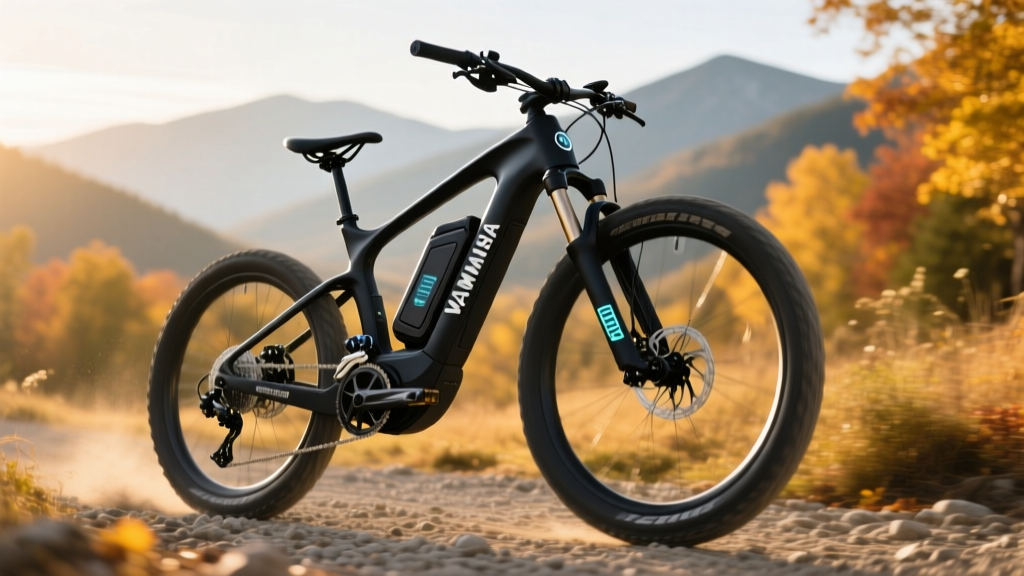
The Yamaha Wabash RT sits in the growing electric gravel bike category — a drop-bar bicycle with a frame-integrated mid-drive motor and wider tires suited for both road and unpaved surfaces. It uses Yamaha's PWSeries TE motor delivering up to 70 Nm of torque, paired with a 500 Wh (watt-hour) lithium-ion battery mounted in the downtube.
Here's what those numbers mean in practice:
- 500 Wh battery — This is the energy capacity, analogous to the kWh figure in an EV. For reference, a Tesla Model Y Long Range carries about 75 kWh (75,000 Wh). The Wabash RT's battery holds roughly 0.5 kWh — enough for 30–60 miles of assisted riding depending on terrain, assist level, rider weight, and wind.
- 70 Nm torque — Mid-drive motors apply torque directly through the drivetrain, leveraging the bike's gears for efficient hill climbing. This feels fundamentally different from a hub motor.
- Class 1 pedal-assist — The motor only engages when you pedal and cuts off at 20 mph. There is no throttle-only mode. This classification determines where you can legally ride (most bike paths allow Class 1; some restrict Class 2/3 throttle-equipped models).
The Wabash RT is best understood as a bicycle with electric assist, not a motor vehicle. That distinction matters for registration, insurance, licensing, and infrastructure access.
Wabash RT Specs vs. Entry-Level EV: The Numbers Side by Side
Many shoppers cross-shop e-bikes and affordable EVs for commuting. Here's a concrete comparison between the Yamaha Wabash RT and a baseline electric vehicle, the 2025 Nissan Leaf S, using EPA data and manufacturer specifications.
| Specification | Yamaha Wabash RT (E-Bike) | 2025 Nissan Leaf S (BEV) | 2025 Honda Civic (Gas Baseline) |
|---|---|---|---|
| Energy Capacity | 500 Wh (0.5 kWh) | 60 kWh (usable) | 12.4 gal fuel tank |
| Range | 30–60 mi (real-world, assist-dependent) | 212 mi (EPA est.) | ~360 mi (33 city / 42 hwy MPG) |
| Top Assisted Speed | 20 mph (Class 1) | ~90 mph (electronically limited) | ~125 mph |
| Charge Time (full) | ~4 hours (standard 120V outlet) | ~10.5 hrs (Level 2, 6.6 kW); 45 min 10–80% (DC fast, 100 kW peak) | ~5 min (gas station) |
| Energy Cost per Mile | ~$0.003 (at $0.16/kWh avg.) | ~$0.04 (at $0.16/kWh, 3.5 mi/kWh) | ~$0.11 (at $3.50/gal, 33 MPG combined) |
| Purchase Price | ~$3,599 MSRP | $28,140 MSRP | $24,250 MSRP |
| Federal Tax Credit (§30D) | Not eligible | Up to $7,500 (subject to IRS income, MSRP, and sourcing rules) | Not eligible |
| Registration / Insurance Required | No (in most states) | Yes (~$1,200–$1,800/yr) | Yes (~$1,000–$1,500/yr) |
| Maintenance (annual est.) | $150–$300 (tires, chain, brake pads) | $300–$600 (tires, cabin filter, brake fluid, wipers) | $600–$1,200 (oil, filters, brakes, belts) |
Key takeaway: The Wabash RT costs roughly 13% of a Leaf before incentives and costs nearly nothing to "fuel." But it can't carry passengers, protect you in a collision at car speeds, handle highway commutes, or operate safely in severe weather.
Real-World Range: What 500 Wh Actually Gets You
E-bike range claims are notoriously variable. Unlike the EPA's standardized test cycle for cars, e-bike range depends heavily on:
- Assist level: Yamaha's PWSeries TE offers Eco, Standard, and High modes. In Eco (lowest assist), expect 50–60 miles. In High mode on hilly terrain, expect 25–35 miles.
- Terrain and surface: The Wabash RT's gravel-bike geometry and 40mm tires roll efficiently on pavement but increase rolling resistance on loose gravel or sand, reducing range by 15–25%.
- Rider weight and cargo: A 180-lb rider with a loaded pannier will see 10–20% less range than a 150-lb rider with no cargo.
- Temperature: Lithium-ion batteries lose capacity in cold weather. Below 40°F, expect 10–20% range reduction — a known issue shared with EVs, though the absolute mile loss is far smaller on a 500 Wh battery.
- Elevation gain: Climbing burns energy fast. A route with 2,000 feet of cumulative ascent can cut range by 30% compared to a flat route.
For a typical 10-mile each-way commute on mixed pavement and hardpack gravel in moderate weather, the Wabash RT's 500 Wh battery provides ample range with reserve — roughly 2–3 round trips before needing a charge.
Charging the Wabash RT: Costs, Speeds, and Practicality
One of the e-bike's biggest ownership advantages over a full EV is charging simplicity. You need no Level 2 home installation, no electrician, and no panel upgrade.
| Charging Method | Power | Full Charge Time | Cost per Full Charge |
|---|---|---|---|
| Standard 120V wall outlet (included charger) | ~125W | ~4 hours (0–100%) | ~$0.08 (at $0.16/kWh) |
| Yamaha fast charger (optional accessory) | ~250W | ~2.5 hours (0–100%) | ~$0.08 |
At roughly eight cents per full charge, a daily commuter riding 20 miles round-trip five days a week spends approximately $1.60 per month on electricity. The same commute in a Nissan Leaf costs about $16/month; in a Honda Civic at $3.50/gallon, about $44/month.
Battery longevity: Yamaha rates its e-bike batteries for approximately 500 full charge cycles before capacity drops to ~80% of original. With typical commuting use (partial charges), most owners see 4–6 years of usable battery life before noticeable range loss. Replacement batteries currently run $600–$800. Compare this to an EV battery, which is warrantied for 8 years/100,000 miles and typically lasts 150,000+ miles before significant degradation.
Ownership Costs Over 5 Years: E-Bike vs. EV vs. Gas
Here's a five-year total cost of ownership projection assuming a 20-mile daily commute (5,000 miles/year), moderate climate, and home charging access.
| Cost Category | Yamaha Wabash RT | Nissan Leaf S (after $7,500 credit) | Honda Civic LX |
|---|---|---|---|
| Purchase Price (net) | $3,599 | $20,640 | $24,250 |
| Energy/Fuel (5 yrs) | $96 | $960 | $2,640 |
| Insurance (5 yrs) | $0–$600 (optional rider insurance) | $7,500 | $6,000 |
| Maintenance (5 yrs) | $1,000 | $2,000 | $4,500 |
| Registration/Taxes (5 yrs) | $0 | $750 | $750 |
| Depreciation (est.) | -$1,800 | -$10,000 | -$10,000 |
| 5-Year Net Cost | ~$2,895–$3,495 | ~$21,850 | ~$28,140 |
The Wabash RT wins on pure economics by a massive margin — but only if it can actually replace the trips you'd otherwise drive. If you need a vehicle for highway commutes, grocery hauling, family transport, or winter driving, the e-bike supplements rather than replaces a car.
Common Misconceptions: Facts vs. Assumptions
| Myth | Fact |
|---|---|
| "The Wabash RT qualifies for the $7,500 EV tax credit." | It does not. The IRS §30D credit applies only to four-wheeled vehicles with a GVWR under 14,000 lbs. E-bikes may qualify for some local utility rebates or employer commuter benefits, but not the federal EV credit. |
| "E-bikes are just toys — they can't handle real commutes." | For commutes under 15 miles each way on bike-friendly routes, a Class 1 e-bike like the Wabash RT is a practical daily driver in fair weather. European and Asian cities demonstrate this at massive scale. |
| "I'll need a special electrical setup to charge it." | The Wabash RT charges from any standard 120V household outlet using the included charger. No electrician, no panel upgrade, no permit needed. |
| "The battery will need replacing every 2 years." | Modern lithium-ion e-bike batteries retain usable capacity for 500+ full cycles. With typical commuting, that's 4–6 years before significant range loss. |
| "An e-bike replaces the need for a car entirely." | For single-person, fair-weather, short-distance commutes — potentially. For families, long commutes, severe weather, or cargo needs — an e-bike complements a car rather than replacing it. |
Decision Framework: E-Bike, EV, Hybrid, or Gas?
Choose the Yamaha Wabash RT (or a similar e-bike) if:
- Your one-way commute is under 15 miles and has bike-lane or trail infrastructure
- You live in a mild-to-moderate climate (or accept seasonal riding limitations)
- You want the lowest possible commuting cost and already own a car for other trips
- You value fitness (pedal-assist still requires pedaling) and outdoor time
- You have secure indoor storage — e-bike theft is a significant concern in urban areas
Choose a full EV (Leaf, Equinox EV, Tesla Model 3) if:
- Your commute exceeds 15 miles each way or involves highways
- You need all-weather capability, passenger seating, and cargo space
- You have access to home Level 2 charging (or can install it — budget $500–$2,000 for a 240V circuit)
- You want to eliminate gasoline spending entirely while retaining full vehicle capability
Choose a plug-in hybrid (PHEV) if:
- You want electric-only commuting for short trips (20–40 miles) but need gas-engine range for road trips
- You lack reliable public DC fast charging in your area
- You want to reduce fuel costs without range-anxiety risk
Stick with a gas car if:
- You have no home charging access and public charging infrastructure is sparse in your area
- Your budget is under $25,000 and you need a full vehicle (the used gas market offers more options at this price point)
- You regularly tow, carry heavy loads, or drive in extreme cold where EV range loss is most pronounced
First-Time E-Bike Buyer Checklist
If you're adding the Wabash RT as a commuter supplement to your existing vehicle, keep these practical considerations in mind:
- Test ride before buying. Drop-bar gravel geometry puts you in a more aggressive (forward-leaning) position than a flat-bar commuter e-bike. Ensure the fit works for your daily ride distance.
- Invest in theft prevention. A $3,600 e-bike is a high-value target. Budget $100–$200 for a quality U-lock or chain, and consider GPS trackers (Apple AirTag or dedicated bike trackers). Homeowners/renters insurance may cover theft — verify with your provider.
- Plan for weather. The Wabash RT's 40mm tires handle light rain and hardpack well, but you'll want fenders (aftermarket), waterproof panniers, and appropriate riding gear for wet conditions.
- Understand local e-bike laws. Class 1 e-bikes are legal on most bike paths and lanes nationwide, but some municipalities and trail systems have specific restrictions. Check your state and local regulations via NHTSA guidelines and local ordinances.
- Budget for consumables. E-bike drivetrains wear faster than unassisted bikes due to higher torque. Expect chain replacement every 1,500–2,500 miles ($25–$50) and tire replacement every 2,000–3,000 miles ($50–$80 per tire).
- Store the battery properly. If you won't ride for extended periods, store the battery at 40–60% charge in a cool, dry place. Never store at 0% or 100% for weeks at a time — this accelerates capacity loss.
Frequently Asked Questions
Does the Yamaha Wabash RT qualify for any federal tax incentives?
No. The IRS §30D New Clean Vehicle Credit applies only to qualifying four-wheeled plug-in vehicles. E-bikes are not eligible. Some state and local programs, utility companies, or employer commuter-benefit plans may offer rebates for e-bike purchases — check your local jurisdiction and employer benefits.
How does the Wabash RT's range compare to an electric car?
The Wabash RT delivers 30–60 real-world miles on a 500 Wh battery, depending on assist level and conditions. A 2025 Nissan Leaf S delivers 212 EPA-rated miles on a 60 kWh battery — roughly 400x more energy capacity. They solve different problems: the e-bike is for short, solo, fair-weather trips; the EV is a full-capability vehicle.
Can I ride the Wabash RT in the rain?
Yes. Yamaha's PWSeries TE motor and battery system are weather-sealed for rain riding. However, wet conditions reduce brake performance (especially with rim brakes — the Wabash RT uses hydraulic disc brakes, which perform better in wet), increase stopping distances, and make painted road surfaces and metal grates slippery. Fenders are recommended to protect both you and the drivetrain.
How long does the e-bike battery last before needing replacement?
Yamaha rates the battery for approximately 500 full charge cycles to 80% capacity. With typical commuting use (partial discharge/recharge), expect 4–6 years before noticeable range reduction. A replacement battery costs $600–$800. This is far less than an EV battery replacement ($5,000–$20,000) but also reflects the far smaller battery capacity.
Is the Wabash RT a good replacement for a second car?
It depends on what that second car does. If it's used primarily for solo commutes under 15 miles in fair weather, yes — the Wabash RT can fill that role at a fraction of the cost. If the second car handles school runs, grocery trips, weekend road trips, or inclement-weather driving, an e-bike complements but doesn't replace it. Many households find the optimal setup is one EV plus one e-bike, covering the full spectrum of daily transportation needs.