If you've searched for Yamaha electric motor technology while researching your next vehicle, you're likely encountering Yamaha's growing role as a tier-one electric powertrain supplier rather than a standalone EV brand. As of 2026, Yamaha Motor Co. supplies compact, high-efficiency electric motors and e-axle components to several OEMs in the light-electric-vehicle, micro-mobility, and specialty-vehicle segments — but Yamaha does not currently sell a highway-capable passenger EV in the U.S. market. This guide explains where Yamaha electric motor technology fits into the broader EV landscape, what real-world ownership looks like for vehicles using similar permanent-magnet synchronous motor (PMSM) architectures, and how to evaluate whether an EV with this class of drivetrain makes financial sense for your driving patterns.
Quick Answer: Yamaha Electric Motors in Vehicles (2026)
Yamaha Motor supplies electric drive units and powertrain components primarily to light-electric-vehicle, UTV/side-by-side, marine, and micro-mobility OEMs. For U.S. buyers looking at a highway-capable passenger car or SUV, Yamaha electric motor technology is found in component form inside select partner vehicles rather than under a Yamaha badge. If your goal is a road-legal EV, focus on models from established automakers that use comparable PMSM or induction motor architectures — and evaluate them on range, charging speed, and total cost of ownership as outlined below.
Where Yamaha Electric Motor Technology Shows Up in 2026
Yamaha Motor's core competency in electrification centers on compact, high-torque-density electric motors used in applications where weight and packaging matter. These include:
- Light electric vehicles (LEVs): Neighborhood Electric Vehicles (NEVs), low-speed utility carts, and compact urban commuters
- Off-road and powersports: Electric UTVs, dirt bikes (e.g., the TY-E platform), and side-by-side concepts
- Marine propulsion: Electric outboard motors and pod-drive systems for small craft
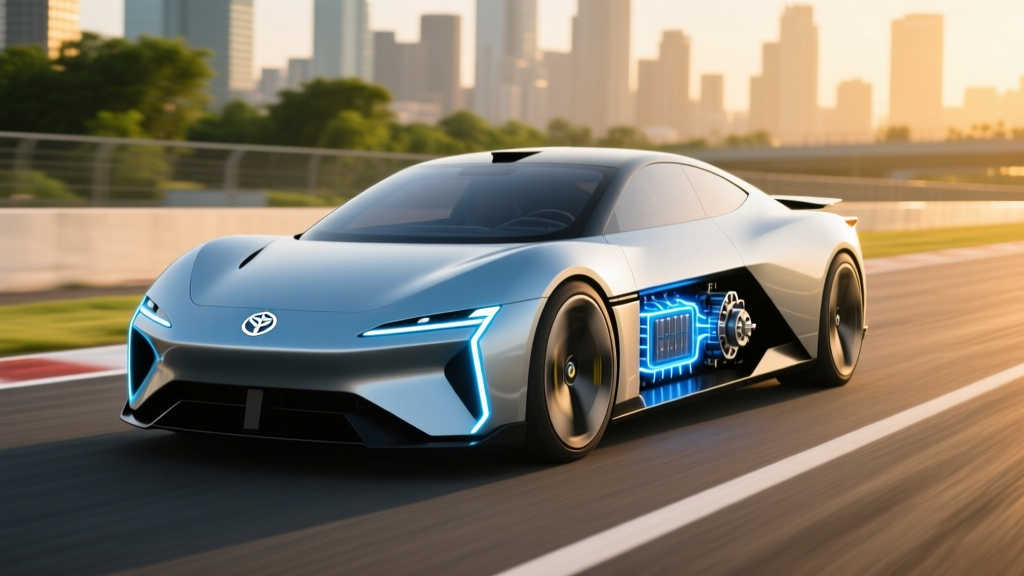
- OEM e-axle supply: Yamaha has developed IPM (interior permanent magnet) motor technology and contributed to joint-venture powertrain projects in Asian and European markets
For the U.S. car buyer, the practical takeaway is this: you won't walk into a Yamaha dealership and drive home a highway-capable EV. But understanding the motor architecture Yamaha engineers — permanent-magnet synchronous, high pole-count, oil-cooled stators — helps you evaluate comparable EVs from mainstream automakers that use nearly identical technology.
How PMSM Motors (Yamaha's Architecture) Compare Across Popular EVs
The electric motor type Yamaha specializes in — the permanent-magnet synchronous motor (PMSM) — is the dominant drivetrain architecture in modern EVs. It offers high efficiency (typically 93–97% peak), strong low-end torque, and compact packaging. Here's how mainstream 2026 EVs using similar motor technology stack up on the specs that matter:
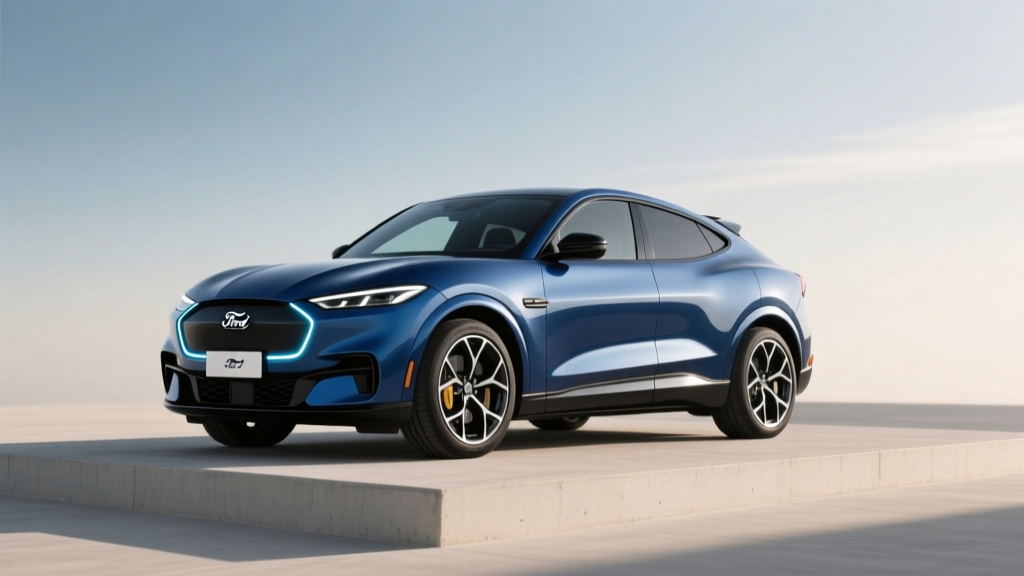
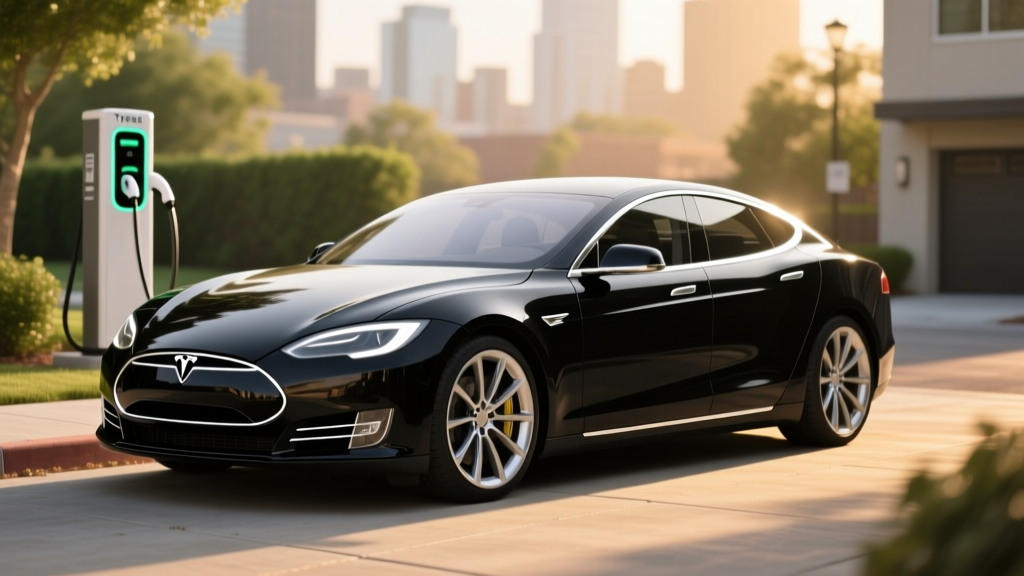
| Spec | 2026 Tesla Model Y LR | 2026 Hyundai Ioniq 5 LR AWD | 2026 Ford Mustang Mach-E ER AWD | 2025 Toyota Camry (Gas Baseline) |
|---|---|---|---|---|
| Motor Type | PMSM (dual) | PMSM (dual) | PMSM (dual) | 2.5L I-4 ICE |
| Horsepower | 384 hp | 320 hp | 346 hp | 203 hp |
| 0-60 mph | 4.8 sec | 4.5 sec | 5.1 sec | 7.6 sec |
| EPA Range / Fuel | 320 mi | 290 mi | 312 mi | ~532 mi (14.5 gal) |
| Efficiency | 122 MPGe | 110 MPGe | 101 MPGe | 32 MPG combined |
| Battery (usable) | 75 kWh (NMC) | 77.4 kWh (NMC) | 91 kWh (NMC) | N/A |
| Peak DC Charge | 250 kW | 240 kW | 150 kW | N/A |
| 10-80% DC Time | ~22 min | ~18 min | ~36 min | N/A |
| Base MSRP | $44,990 | $46,650 | $43,995 | $29,495 |
Sources: EPA fueleconomy.gov, manufacturer spec pages. Real-world highway range typically 10–20% below EPA sticker; cold-weather (below 32°F) can reduce range an additional 15–30% depending on heat pump availability and cabin preconditioning.
Real Costs: EV vs Gas — 5-Year Ownership Breakdown
The single biggest question first-time EV buyers face is whether the higher upfront price pays off. Below is a realistic 5-year / 75,000-mile ownership comparison using a mid-range EV (similar to the Ioniq 5 or Model Y) versus a gas sedan (similar to the Camry). Costs assume a national-average electricity rate of $0.16/kWh and gasoline at $3.40/gallon.
| Cost Category | EV (Mid-Range AWD) | Gas Sedan (FWD) |
|---|---|---|
| Purchase Price (MSRP) | $46,000 | $30,000 |
| Federal Tax Credit (§30D) | -$3,750 to -$7,500* | $0 |
| Effective Purchase | $38,500–$42,250 | $30,000 |
| Fuel/Energy (75k mi) | $3,600 (home L2 avg) | $7,970 |
| Maintenance (5 yr) | $1,200 | $3,500 |
| Insurance (5 yr avg) | $9,500 | $7,200 |
| 5-Year Depreciation (est.) | $18,000 | $12,500 |
| Total 5-Year Cost | $70,800–$74,550 | $61,170 |
*Federal §30D credit eligibility depends on MSRP caps ($55k sedans, $80k SUVs/trucks), buyer income limits ($150k single / $300k joint), battery critical-mineral and component sourcing requirements, and point-of-sale transfer rules. Verify current-year eligibility at IRS.gov or with a tax professional. Credit amount varies by vehicle — not all EVs qualify for the full $7,500.
Where the EV Wins — and Where It Doesn't
The EV's fuel and maintenance savings are substantial: roughly $6,670 saved over 5 years on energy and upkeep combined. But higher insurance premiums (+$2,300) and steeper depreciation (+$5,500) eat into those gains. The tax credit is the swing factor — a full $7,500 credit nearly closes the gap; no credit leaves the EV ~$10,000 more expensive over five years. If you drive more than 15,000 miles/year or have cheap home solar charging, the math shifts strongly in the EV's favor.
Real-World Ownership: What First-Time EV Buyers Must Know
If you're coming from a gas vehicle, EV ownership introduces a new set of variables that spec sheets don't always capture. Here's what matters in practice:
Home Charging Is the Make-or-Break Factor
Over 80% of EV charging happens at home. A Level 2 (240V) home charger adds roughly 25–35 miles of range per hour of charging, which means overnight replenishment covers most daily driving. Installation costs vary widely:
- Best case: Existing 240V outlet near parking spot, 14-50 receptacle — $300–$600 for a quality Level 2 EVSE (e.g., ChargePoint Home Flex, Emporia Level 2)
- Typical case: New 50A circuit, 40-ft run from panel, permit — $1,200–$2,500 including electrician labor
- Worst case: Panel upgrade required (100A → 200A service) — $2,500–$5,000 additional
If you live in an apartment or lack dedicated parking, public charging becomes your primary source — and that changes the cost equation significantly (DC fast charging at $0.35–$0.50/kWh can make EV fuel costs approach or exceed gas).
Cold Weather Reduces Range — Plan for It
Lithium-ion batteries lose efficiency in cold temperatures. Expect 15–30% range reduction at 20°F compared to the EPA sticker, with the worst losses occurring in short-trip, stop-and-go driving where the cabin heater cycles frequently. EVs equipped with a heat pump (standard on many 2026 Hyundai, Tesla, and BMW models) reduce this penalty to ~10–15%. Always precondition your battery and cabin while still plugged in — this draws energy from the grid, not the battery, preserving your range.
Charging Curves Are Not Linear
A "250 kW peak charge rate" doesn't mean you'll charge at 250 kW the entire session. Most EVs peak briefly between 10–30% State of Charge (SoC), then taper progressively. The more useful metric is 10–80% charge time, which captures the practical fast-charging window. Above 80%, charging slows dramatically to protect battery health — an 80–100% top-up can take as long as the 10–80% session. On road trips, plan to charge to 80% and go.
EV vs Hybrid: Decision Framework for Buyers Eyeing Electrification
Not every driver is best served by a full battery-electric vehicle (BEV). Here's how to decide between a BEV, a plug-in hybrid (PHEV), and a conventional hybrid (HEV) based on your real-world situation:
Choose a BEV (Full Electric) If:
- You have reliable home Level 2 charging access
- Your daily commute is under 100 miles round-trip
- You drive 12,000+ miles/year (fuel savings compound)
- You want minimal maintenance (no oil changes, fewer moving parts)
- The vehicle you want qualifies for the federal tax credit
Choose a PHEV (Plug-In Hybrid) If:
- You can charge at home but take frequent long road trips (>300 mi)
- You want 25–45 miles of electric-only range for daily commuting
- You live in an area with sparse DC fast-charging infrastructure
- You want EV-like daily driving without range anxiety on trips
Choose an HEV (Standard Hybrid) If:
- You cannot install a home charger (apartment, street parking)
- You want better fuel economy without any behavior change
- Your budget is tighter (HEVs typically cost $2,000–$5,000 less than PHEVs)
- You drive mostly city miles where regenerative braking maximizes MPG
Common Misconceptions About EV Motors and Ownership
| Myth | Fact |
|---|---|
| "Electric motors wear out like gas engines" | PMSM motors have one primary moving part (the rotor). With no combustion, no valves, and no timing chain, electric motors routinely exceed 300,000 miles. Battery degradation — not motor failure — is the longevity concern. |
| "All EVs qualify for the $7,500 tax credit" | As of 2026, §30D credit eligibility requires meeting MSRP caps, buyer income thresholds, and battery sourcing rules. Many popular EVs qualify for $3,750 or $0 depending on critical-mineral and component compliance. Always verify at fueleconomy.gov. |
| "EV batteries need replacing every 5 years" | Modern NMC and LFP batteries are warrantied for 8 years/100,000 miles at 70%+ capacity retention (NHTSA-monitored). Real-world data from fleet operators shows ~10–15% degradation at 150,000 miles for liquid-cooled packs. |
| "EVs are worse for the environment because of electricity generation" | Even on a coal-heavy U.S. grid mix, EVs produce 50–70% fewer lifecycle emissions than comparable gas cars over 150,000 miles (Union of Concerned Scientists, EPA data). As the grid decarbonizes, the advantage widens. |
| "Regenerative braking eliminates brake wear entirely" | Regen handles 80–95% of deceleration in normal driving, dramatically extending pad life (many EV owners report original brake pads at 80,000+ miles). But friction brakes still exist for emergency stops and are required by safety regulations — they still need periodic inspection. |
What Yamaha's Motor Expertise Means for the EV Market Ahead
Yamaha's investment in compact, high-efficiency electric motors positions the company as a key supplier in the growing light-electric and specialty-vehicle market. For U.S. consumers, this matters indirectly: as Yamaha and similar tier-one suppliers push motor efficiency higher and costs lower, the downstream effect is more affordable, more efficient EVs from the brands you actually buy from.
The broader trend for 2026 includes:
- Axial-flux motor adoption: Lighter, more torque-dense designs entering premium EVs (Mercedes-AMG, YASA acquisition)
- Silicon-carbide (SiC) inverters: Paired with PMSM motors, SiC power electronics reduce switching losses by 5–8%, directly improving highway efficiency
- Oil-cooled stators: Yamaha's specialty — enables sustained high-power output without thermal derating, critical for towing and repeated hard acceleration
- LFP battery pairing: Lower-cost LFP packs (no cobalt, no nickel) paired with efficient PMSM motors are bringing entry-level EV pricing below $30,000 MSRP
If Yamaha eventually enters the U.S. highway-vehicle market directly or through a deeper OEM partnership, expect their powertrain to emphasize compact packaging, thermal management, and efficiency — the same traits that define their marine and powersports electric platforms today.
Frequently Asked Questions
Does Yamaha make a highway-capable electric car?
No. As of 2026, Yamaha Motor does not sell a highway-capable passenger EV in the United States. Yamaha's electric motor technology is used in powersports, marine, light-electric-vehicle, and OEM supply applications. For road-legal EVs, look to established automakers using comparable PMSM drivetrain technology.
What type of electric motor do most EVs use?
Most 2026 EVs use permanent-magnet synchronous motors (PMSM), the same architecture Yamaha specializes in. Some manufacturers (notably Tesla in certain rear-motor applications and older BMW i3 models) use AC induction motors, which avoid rare-earth magnets but sacrifice 2–5% efficiency. The trend is firmly toward PMSM for range optimization.
How much does it cost to charge an EV at home vs. public chargers?
Home Level 2 charging at the U.S. average rate of $0.16/kWh costs roughly $0.04–$0.05 per mile for a typical EV (25–30 kWh/100 mi). Public DC fast charging at $0.35–$0.50/kWh costs $0.09–$0.15 per mile — approaching or exceeding gasoline costs for efficient gas cars. Home charging access is the single biggest factor in EV operating economics.
Will an EV motor last as long as a gas engine?
Yes — typically longer. Electric motors have far fewer wear components than internal combustion engines. The limiting factor in EV longevity is the traction battery, not the motor. Most 2026 EV batteries carry an 8-year/100,000-mile warranty guaranteeing 70%+ capacity retention, and real-world data suggests many packs retain 85–90% capacity at that mileage.
Is a Yamaha electric motor comparable to Tesla or Hyundai EV motors?
In architecture, yes — Yamaha's PMSM designs share the same fundamental principles (interior permanent magnets, three-phase stator, inverter-driven commutation). In application, Yamaha motors are optimized for different duty cycles (lower continuous power, higher torque density for compact platforms). For a full-size passenger EV, motors from Tesla, Hyundai, or Ford are engineered for sustained highway-speed output and 200+ kW regenerative braking — a different set of requirements than Yamaha's target applications.
What should I prioritize when choosing an EV: motor power or battery size?
For most buyers, battery size (kWh) and charging speed (kW) matter more than motor horsepower. A larger battery gives you more real-world range, and a faster charge rate means shorter road-trip stops. Motor power (HP) affects 0–60 times and highway passing confidence, but even modest 200-hp EV motors deliver instant torque that feels quicker than equivalent gas engines. Prioritize battery and charging first, performance second.