The Quick Answer: Yamaha Electric Moto Availability in 2026
Bottom line: As of 2026, Yamaha does not sell a highway-capable, street-legal electric motorcycle in the United States. Yamaha's electric two-wheeler portfolio is limited to low-speed electric scooters (such as the E01, marketed primarily in Japan and parts of Asia) and electric-assist bicycles (the Yamaha Wabash RT and CrossCore RC e-bikes). If you're searching for a "Yamaha electric moto" — meaning a full-size, highway-speed electric motorcycle comparable to a gas-powered Yamaha MT-07 or YZF-R7 — that product does not yet exist for US consumers.
If you want an electric motorcycle today, you'll need to look at brands like Zero Motorcycles, Energica, LiveWire (Harley-Davidson's EV spinoff), or Damon. If you want to stay within the Yamaha ecosystem, your closest options are their e-bikes or the upcoming electric concepts Yamaha has showcased at international shows — none of which have confirmed US availability or pricing.
This guide breaks down exactly what Yamaha offers in the electrified two-wheeler space, what alternatives exist at various price points, and the real ownership economics of electric motorcycles versus their gas counterparts. We'll also address common misconceptions about electric moto range, charging, and longevity.
What Yamaha Actually Offers: Electric Scooters and E-Bikes
Yamaha has been vocal about its electrification ambitions. At the 2023 Tokyo Mobility Show (formerly the Tokyo Motor Show), Yamaha displayed the YED-05 electric sportbike concept and the E01 electric scooter. However, concept vehicles and production models are very different things, and Yamaha's track record shows a cautious, market-specific rollout strategy.
Yamaha E01 Electric Scooter
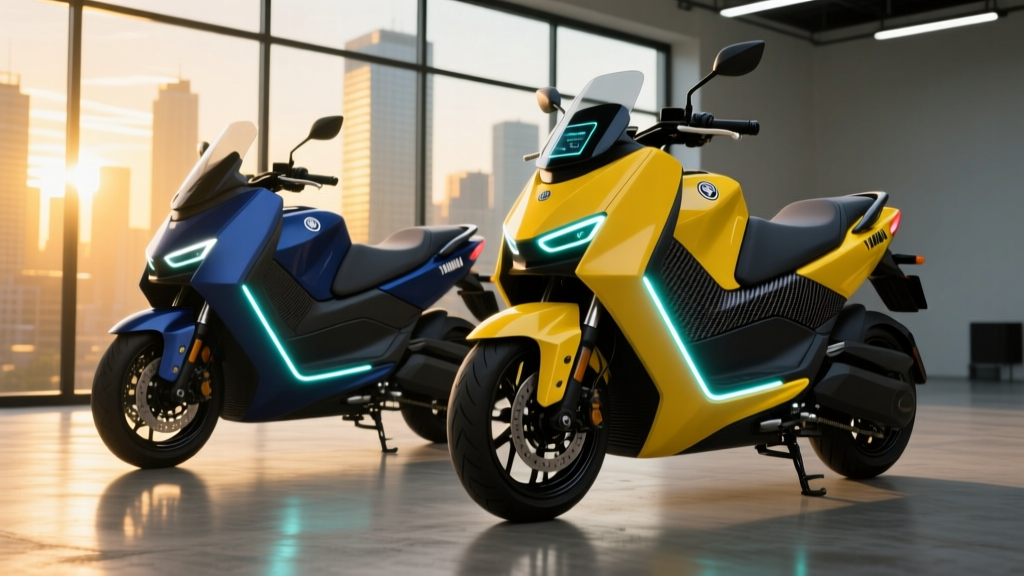
The Yamaha E01 is the closest thing to a "Yamaha electric moto" currently in production, but it's a 125cc-equivalent urban scooter — not a motorcycle. Key specifications based on Yamaha's published data:
| Specification | Yamaha E01 |
|---|---|
| Motor output | 8.1 kW (11 hp)|
| Battery capacity | 4.9 kWh (non-removable)|
| Top speed | ~60 mph (95 km/h)|
| Claimed range | ~65 miles (104 km) at constant 37 mph|
| Charge time (0–100%) | ~5 hours (standard); ~2 hours (fast, where available)|
| Charging connector | Proprietary (not CCS or NACS)|
| Availability | Japan, select Asian/European markets — not US|
| Estimated price (Japan) | ¥998,800 (~$6,800 USD at 2026 exchange rates)
The E01's real-world range in mixed urban riding drops to roughly 40–50 miles, especially at sustained speeds above 45 mph or in cold weather (below 45°F). This is typical for small-battery electric scooters: the EPA does not rate most low-speed electric scooters under its standard testing protocol, so manufacturer claims often overstate real-world performance.
Yamaha E-Bikes (Pedelec)
Yamaha's US-available electric products are pedal-assist e-bikes, which fall outside the scope of this site's core coverage (motorized vehicles). Models like the Wabash RT (~$3,699) and CrossCore RC (~$2,999) use Yamaha's P-series mid-drive motors with 500 Wh batteries, offering 40–80 miles of pedal-assist range. These are bicycles, not motorcycles — no registration, insurance, or license required.
Real Alternatives: Highway-Capable Electric Motorcycles Available in 2026
If you're a Yamaha enthusiast looking for an electric motorcycle that delivers performance in the ballpark of a gas Yamaha (think MT-07, XSR700, or Tenere 700), here's what's actually buyable in the US market:
| Model | Battery (kWh) | EPA Range | Peak Power | 0–60 mph | Base MSRP | DC Fast Charge |
|---|---|---|---|---|---|---|
| Zero SR/S | 17.3 kWh (Z-Force)~161 mi (city) | 82 kW (110 hp) | 3.0 sec | $23,995 | Yes (optional, 6 kW) | |
| Zero DS (Dual Sport) | 17.3 kWh~163 mi (city) | 52 kW (70 hp) | ~3.9 sec | $19,695 | Yes (optional) | |
| LiveWire ONE | 15.4 kWh~146 mi (city) | 78 kW (105 hp) | 3.0 sec | $21,999 | Yes (DC fast, ~28 min 0–80%) | |
| Energica Ego+ | 21.5 kWh~261 mi (city) | 126 kW (169 hp) | 2.6 sec | $28,190 | Yes (CCS, ~30 min 0–80%) | |
| Damon HyperFighter | 20 kWh (announced)~140 mi (est.) | 150 kW (200 hp) | ~2.5 sec (est.) | $25,000 (est.) | Yes (announced) |
Important note on range figures: Electric motorcycle range is highly sensitive to speed. The Zero SR/S, for example, drops from 161 miles in city riding to roughly 82 miles at sustained 70 mph highway speeds. Energica's 261-mile city claim falls to approximately 130 miles at highway pace. This speed-range penalty is far more severe than in electric cars due to smaller battery packs and less aerodynamic rider profiles.
Cost Comparison: Electric Motorcycle vs. Gas Yamaha
To give you a concrete ownership picture, here's a five-year cost breakdown comparing a gas Yamaha MT-07 (a popular midweight naked bike) against the Zero SR/S (the closest electric equivalent in the sport-naked segment):
| Cost Category (5 Years / 30,000 Miles) | Yamaha MT-07 (Gas) | Zero SR/S (Electric) |
|---|---|---|
| Purchase price | $8,399 | $23,995 |
| Fuel / electricity | $2,100 (50 mpg avg, $3.50/gal) | $450 ($0.14/kWh avg) |
| Maintenance (oil, filters, chain, valves) | $2,400 | $600 (brake pads, belt, tires) |
| Insurance (avg annual × 5) | $3,500 | $4,500 |
| Tax credit / incentives | $0 | Up to $2,500 (federal qualified plug-in motorcycle credit*) |
| Estimated resale value (year 5) | -$4,500 | -$10,000 |
| Net 5-year cost | $11,899 | $17,045 |
*The federal plug-in motorcycle tax credit (previously under IRC §30D for two/three-wheelers) has had an uncertain legislative status. As of 2026, check IRS.gov for current eligibility — the credit for electric motorcycles was historically capped at $2,500, not the $7,500 available for four-wheel EVs. State incentives may also apply; California's CVRP, for example, has offered up to $1,000 for electric motorcycles.
The math is clear: Even with dramatically lower fuel and maintenance costs, the electric motorcycle's ~$15,600 higher purchase price means you don't reach cost parity within five years. The breakeven point, assuming 6,000 miles/year and current electricity/gas prices, is approximately 11–13 years — longer than most riders keep a motorcycle.
Common Misconceptions About Electric Motorcycles
| Myth | Fact |
|---|---|
| "Electric motorcycles have no maintenance." | They have less maintenance (no oil changes, no valve adjustments, no air filters), but tires, brake pads, suspension service, belt/chain, and coolant (on liquid-cooled models like the Zero) still require attention. Budget ~$120/year minimum. |
| "The range is the same at any speed." | Electric motorcycle range drops 40–50% at sustained highway speeds (70+ mph) compared to city riding. A bike rated at 160 city miles may deliver only 80–90 highway miles. This is physics — aerodynamic drag scales with the square of velocity, and motorcycle batteries are small (15–22 kWh vs. 60–100 kWh in cars). |
| "I can charge anywhere with a regular outlet." | Level 1 charging (120V, ~1.3 kW) adds roughly 8–12 miles of range per hour on a motorcycle. A full charge from empty takes 10–15 hours. Level 2 (240V) is strongly recommended and cuts this to 2–4 hours. |
| "Electric motorcycle batteries need replacing every few years." | Modern lithium-ion motorcycle batteries (NMC chemistry) are warrantied for 5 years with no mileage limit (Zero) or similar terms. Real-world degradation data from Zero owners shows ~10–15% capacity loss after 50,000+ miles. Replacement cost is $3,000–$5,000 if needed out of warranty. |
| "Yamaha is about to release an electric motorcycle in the US." | Yamaha has shown concepts (YED-05, E01) and filed patents, but as of early 2026, no US-market electric motorcycle has been officially announced with pricing or availability. Yamaha's stated EV strategy targets emerging markets first with low-speed scooters. |
Real-World Ownership Considerations for Electric Motorcycles
Home Charging Access
Electric motorcycles are almost entirely dependent on home charging. Unlike electric cars, which can leverage the growing DC fast-charging network (Electrify America, EVgo, Tesla Superchargers via adapter), public charging infrastructure for motorcycles is sparse. Most DC fast chargers are designed for cars, with cable routing and parking layouts that don't accommodate motorcycles well.
If you have a garage or dedicated parking with a 240V outlet: A Level 2 charger (such as a ChargePoint Home Flex or Emporia Vue, $350–$650 for hardware) will fully charge most electric motorcycles in 2–3 hours. Electrician installation for a dedicated 240V/30A circuit typically runs $500–$1,500 depending on panel proximity and local permit costs.
If you live in an apartment without charging access: An electric motorcycle is impractical as a daily rider. Level 1 (standard 120V) charging is technically possible but painfully slow, and most apartment complexes prohibit running extension cords to parking areas.
Climate and Range Impact
Battery chemistry matters in cold weather. NMC lithium-ion cells (used in Zero, LiveWire, and Energica) lose approximately 15–25% of usable capacity at temperatures below 32°F. Unlike electric cars, most electric motorcycles lack battery preconditioning or active thermal management (heating/cooling), so cold-weather range loss is more pronounced and ride quality (regenerative braking strength) changes noticeably.
If you ride year-round in northern US climates (Chicago, Minneapolis, Boston), expect your 160-mile-rated motorcycle to deliver 110–125 miles in winter conditions. Pair that with heavier riding gear adding aerodynamic drag, and realistic winter range drops further.
Insurance Reality
Electric motorcycles carry higher insurance premiums than comparable gas bikes — typically 20–40% more, based on industry data. The reasons: higher replacement cost, limited repair network for high-voltage components, and a smaller actuarial data pool. Before purchasing, get a quote from a motorcycle-specialist insurer (Progressive, Dairyland, or Markel) to avoid surprises.
Decision Framework: Should You Buy an Electric Motorcycle?
Choose an electric motorcycle (Zero, LiveWire, Energica) if:
- You have reliable home Level 2 charging (garage or dedicated 240V outlet)
- Your typical ride is under 80 miles round-trip (urban or suburban commuting)
- You value near-silent operation and instant torque for city riding
- You want minimal maintenance and don't mind the higher upfront cost
- You ride primarily in moderate climates (above 40°F most of the year)
- You're open to a brand outside the Yamaha ecosystem
Stick with a gas Yamaha (MT-07, Tenere 700, XSR700) if:
- You ride long distances (150+ miles in a day) or tour regularly
- You lack home charging access
- Your budget is under $12,000
- You ride in extreme cold regularly
- You want established dealer support and a deep aftermarket parts ecosystem
- You specifically want a Yamaha — no electric option exists from them in the US as of 2026
Wait and reassess if:
- You're specifically holding out for a Yamaha electric motorcycle — their timeline is unclear and likely 2028+ for a US-market highway model, if it materializes at all
- DC fast-charging infrastructure for motorcycles improves in your area
- Solid-state battery technology delivers the range/density gains that would make electric motorcycles more practical for touring
Frequently Asked Questions
Does Yamaha make an electric motorcycle?
Yamaha makes the E01, a low-speed electric scooter sold in Japan and select international markets, but it is not a highway-capable motorcycle and is not available in the United States. Yamaha has also shown electric motorcycle concepts (YED-05) but has not announced US production plans as of 2026.
What is the best electric motorcycle for commuting in 2026?
For urban commuting under 60 miles round-trip, the Zero S (14.4 kWh, ~125 city miles, $16,495) and LiveWire ONE (15.4 kWh, ~146 city miles, $21,999) are the most practical options. Both offer Level 2 home charging in under 3 hours and optional DC fast charging. The Zero S provides better value per mile of range.
How long do electric motorcycle batteries last?
Based on owner-reported data and manufacturer warranties, modern NMC lithium-ion motorcycle batteries retain 85–90% of original capacity after 5 years or 50,000 miles. Zero Motorcycles warrants their batteries for 5 years (unlimited miles) against defects and capacity loss below 80%. Full battery replacement costs $3,000–$5,000 out of warranty.
Can I get a federal tax credit for an electric motorcycle?
The federal tax credit for electric motorcycles has historically been capped at $2,500 (not $7,500 like four-wheel EVs) under the qualified plug-in electric drive motor vehicle credit. However, legislative changes have affected eligibility. Always verify current rules at IRS.gov before relying on the credit for your purchase decision.
Why is Yamaha so slow to release an electric motorcycle?
Yamaha's motorcycle division prioritizes emerging markets (India, Southeast Asia) where low-cost, low-speed electric scooters have more immediate demand. The company has also invested heavily in hydrogen combustion and synthetic fuel research as alternative decarbonization paths. A full-size electric sportbike for developed markets requires a business case that justifies R&D investment against a niche market — electric motorcycles represent less than 2% of US motorcycle sales as of 2025.
Is it worth buying an electric motorcycle over gas?
For pure economics, no — the purchase premium ($12,000–$18,000 more than a comparable gas bike) takes 10+ years to recoup through fuel and maintenance savings at typical motorcycle mileage (3,000–6,000 miles/year). For riding experience (instant torque, silence, simplicity) and environmental preference, it depends on your values and riding patterns. The numbers favor gas for most riders today.