XPeng X2 at a Glance: An eVTOL, Not a Road Car
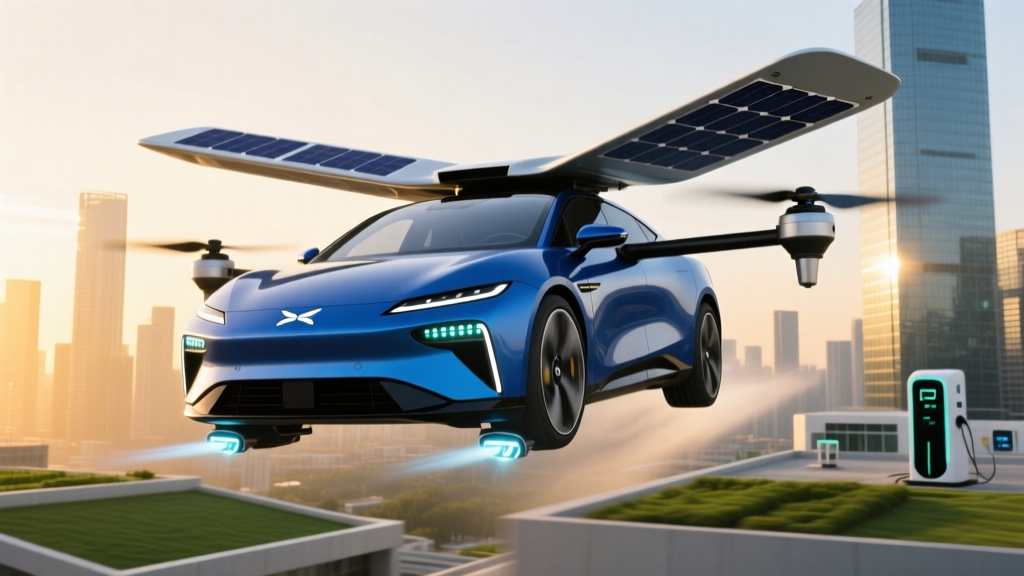
If you've been searching for XPeng X2 specs, range, or pricing, the first thing to understand is that this isn't an electric car in the traditional sense. The XPeng X2 is a two-seat eVTOL (electric vertical takeoff and landing) aircraft — essentially a large passenger drone — developed by XPeng AeroHT, the aviation subsidiary of Chinese EV maker XPeng. As of early 2026, the X2 remains not available for consumer purchase anywhere, including China, Europe, or the United States.
XPeng AeroHT has conducted test flights in Dubai, Guangzhou, and other locations, and the company has signaled ambitions for commercial air-taxi services and eventual private sales. But for US-based EV shoppers researching the X2 as a potential personal vehicle, the honest answer is that this is still a prototype-stage product with no confirmed consumer launch date, no EPA certification, and no path to US road or airspace legality in the near term.
Here's what we do know from XPeng AeroHT's published specifications and demonstration flights — and what remains firmly in the "announced/preliminary" column.
XPeng X2 Preliminary Specifications
| Specification | Value |
|---|---|
| Vehicle Type | Two-seat eVTOL aircraft |
| Seating | 2 passengers |
| Max Takeoff Weight | ~930 kg (2,050 lbs) |
| Battery Capacity | Not officially disclosed (estimated 50-70 kWh, NMC chemistry) |
| Flight Range | ~30 minutes flight time / ~56 miles (90 km) stated max |
| Top Speed | ~80 mph (130 km/h) |
| Propulsion | 8 electric motors, 8 propellers (coaxial configuration) |
| Charging (est.) | DC fast charge; details not published |
| Autonomous Capability | Planned autonomous flight mode (SAE-equivalent Level 4 target) |
| Base MSRP | Not announced (estimated $100,000-$150,000+ for eventual private sales) |
| US Availability | None — no FAA certification timeline announced |
| Federal EV Tax Credit (§30D) | Not eligible — §30D applies to road vehicles only |
Battery, Range, and the Physics Problem of eVTOL Flight
The single biggest limitation of the XPeng X2 — and every current eVTOL — is energy density. Lifting two passengers vertically requires enormous power, and today's lithium-ion batteries simply can't store enough energy per kilogram to make long-range flight practical.
XPeng AeroHT has not officially published the X2's battery capacity in kWh, but based on comparable eVTOL platforms (such as the EHang 216 and Joby S4), the pack is estimated at 50-70 kWh, likely using high-nickel NMC (nickel manganese cobalt) cells optimized for high discharge rates rather than energy density. NMC is the standard choice here because eVTOLs need batteries that can dump power quickly — an LFP chemistry pack would be too heavy for the same power output.
For context, that 30-minute flight envelope means the X2 is designed for short urban hops — think airport transfers or cross-city commutes of 15-25 miles — not intercity travel. And unlike a ground EV where you can limp to the next charger on low battery, an eVTOL must maintain substantial reserve capacity for safe landing, further cutting practical range.
Charging Infrastructure: The Unanswered Question
XPeng AeroHT has demonstrated the X2 with DC fast-charging capability, suggesting the aircraft can recharge between flights relatively quickly. However, the company has not published specific figures for:
- Peak DC charge rate (kW)
- 10-80% charge time (minutes)
- Connector type or charging standard
- Whether the aircraft requires proprietary ground-support charging equipment
Based on comparable eVTOL platforms and the estimated battery size, a reasonable projection would be a 100-150 kW DC fast-charge capability, which could theoretically replenish the pack in roughly 25-40 minutes (10-80%). But this is speculative until XPeng publishes official data.
The bigger infrastructure question is where you'd charge it. The X2 requires a vertiport — a designated takeoff and landing pad with integrated charging — not a standard EV charging station. Vertiport infrastructure is virtually nonexistent in the US outside of a handful of pilot programs. Even if you could buy an X2 tomorrow, you'd have nowhere legal to launch or land it in most American cities.
Performance, Tech, and Flight Characteristics
The X2 uses a coaxial octocopter design — eight motors with eight propellers arranged in four coaxial pairs. This provides redundancy: if one motor fails, the remaining seven can theoretically maintain controlled flight and execute an emergency landing. XPeng AeroHT also equips the X2 with a ballistic parachute system as a last-resort safety measure.
Key performance and technology points from demonstrations:
- Top speed: ~80 mph (130 km/h) — competitive with ground traffic in congested cities but slower than a helicopter
- Autonomous flight: XPeng targets SAE-equivalent Level 4 autonomy, meaning the aircraft would handle all flight operations without pilot input within defined operational domains (specific routes, weather conditions, and airspace corridors)
- Sensors: Multiple cameras, LiDAR, and millimeter-wave radar for obstacle detection and navigation, drawing on XPeng's ADAS experience from its ground vehicles
- Flight planning: Pre-programmed routes with automated takeoff, cruise, and landing — closer to an elevator than a helicopter in intended user experience
Pricing, Tax Credits, and the Ownership Reality
XPeng AeroHT has not announced consumer pricing for the X2. Industry analysts estimate that early-production eVTOLs in this class will cost between $100,000 and $300,000+, placing the X2 firmly in the luxury/experimental aircraft category rather than the EV market.
| Item | Details |
|---|---|
| Estimated Base Price | $100,000 - $150,000+ (unconfirmed) |
| US Availability | Not available — no FAA certification |
| IRS §30D Federal Tax Credit | Not eligible. The §30D credit applies only to qualified plug-in electric road vehicles meeting MSRP caps ($55K sedans / $80K SUVs/trucks/vans), buyer income limits, and battery sourcing requirements per IRS guidelines. An eVTOL aircraft does not qualify. |
| State/Local Incentives | None applicable to aircraft |
| Warranty | Not published |
For buyers drawn to the X2's futuristic appeal, the practical alternative is XPeng's ground-based EV lineup (available in China and expanding to Europe) — vehicles like the XPeng G6 and G9 SUVs, which offer conventional EV specs, road legality, and in some markets, tax incentive eligibility.
Who Is the XPeng X2 Actually For?
Given its current status, the X2 is relevant to three audiences — none of which are typical EV shoppers:
- Air-taxi fleet operators: Companies planning urban air mobility (UAM) services in cities like Dubai, Guangzhou, or potentially Los Angeles are the X2's primary target customer. XPeng AeroHT envisions selling fleets to operators, not individual consumers.
- Aviation technology investors: The X2 represents XPeng's bet on the eVTOL market, which Morgan Stanley projects could reach $1 trillion globally by 2040. Investment interest, not personal ownership, drives most current X2 coverage.
- Early-adopter enthusiasts (future): If and when private sales begin — likely not before 2028-2030 at the earliest — wealthy early adopters with access to private vertiports may be the first individual buyers.
If you're a US-based commuter, family buyer, or road-tripper looking for an electric vehicle, the X2 is not in your decision set. Your best options remain ground-based EVs with proven range, established charging networks, and clear tax-credit pathways.
XPeng X2 vs. Competing eVTOL Platforms
The X2 isn't alone in the eVTOL space. Here's how it compares to other platforms in development or early certification:
| Platform | Seats | Range (est.) | Top Speed | Certification Status (2026) |
|---|---|---|---|---|
| XPeng X2 | 2 | ~56 mi / 30 min | ~80 mph | Test flights complete; no type certificate |
| Joby S4 | 4 + pilot | ~100 mi | ~200 mph | FAA type certification in progress |
| EHang 216-S | 2 | ~22 mi / 25 min | ~62 mph | CAAC certified (China, 2024) |
| Archer Midnight | 4 + pilot | ~60 mi (with reserves) | ~150 mph | FAA type certification in progress |
The Joby S4 and Archer Midnight are further along in FAA certification and target the air-taxi fleet market with higher passenger capacity and speed. The EHang 216-S, certified in China in late 2023, is the closest analog to the X2 in size and mission but has shorter range. None of these platforms are available for US consumer purchase as of 2026.
Frequently Asked Questions
Can I buy the XPeng X2 in the United States?
No. The XPeng X2 is not available for purchase in any market as of 2026. It has not received FAA certification or any US regulatory approval for flight operations. Even in China, where XPeng AeroHT is based, the X2 operates under limited demonstration permits, not full commercial certification.
What is the real-world range of the XPeng X2?
XPeng AeroHT states a maximum range of approximately 56 miles (90 km) or 30 minutes of flight time. Real-world usable range is likely closer to 25-35 miles accounting for wind, payload, temperature, and mandatory battery reserves for safe landing.
How fast does the XPeng X2 charge?
XPeng has demonstrated DC fast-charging capability but has not published specific charge rates in kW or 10-80% charge times. Based on the estimated battery size (50-70 kWh), a 25-40 minute fast charge is plausible, but this is unconfirmed.
Does the XPeng X2 qualify for the federal EV tax credit?
No. The IRS §30D clean vehicle credit applies exclusively to qualified plug-in electric road vehicles — cars, SUVs, trucks, and vans that meet MSRP caps, buyer income limits, and battery component/critical mineral sourcing requirements. Aircraft, including eVTOLs, do not qualify.
Is the XPeng X2 self-flying?
XPeng AeroHT's long-term goal is autonomous (pilotless) flight within defined operational corridors. However, all current demonstrations involve safety oversight, and no aviation authority has approved fully autonomous passenger eVTOL operations. Think of it as targeting SAE Level 4 autonomy — but for aircraft, where the regulatory bar is far higher than for ground vehicles.
Should I wait for the X2 or buy a ground-based EV?
Buy a ground-based EV. The X2 is years away from any consumer availability, requires vertiport infrastructure that doesn't exist in most cities, and will likely cost well over $100,000 when it arrives. If you need an electric vehicle today, proven options like the Tesla Model Y, Hyundai Ioniq 5, or XPeng G6 (in markets where it's sold) offer real range, established charging networks, and available tax credits.
What XPeng vehicles can I actually buy?
In China and select European markets, XPeng sells ground-based EVs including the G6 midsize SUV, G9 flagship SUV, P7 sedan, and MONA M03 compact. None are currently sold in the US. XPeng has indicated US market entry ambitions, but no timeline or model lineup has been confirmed for American buyers.