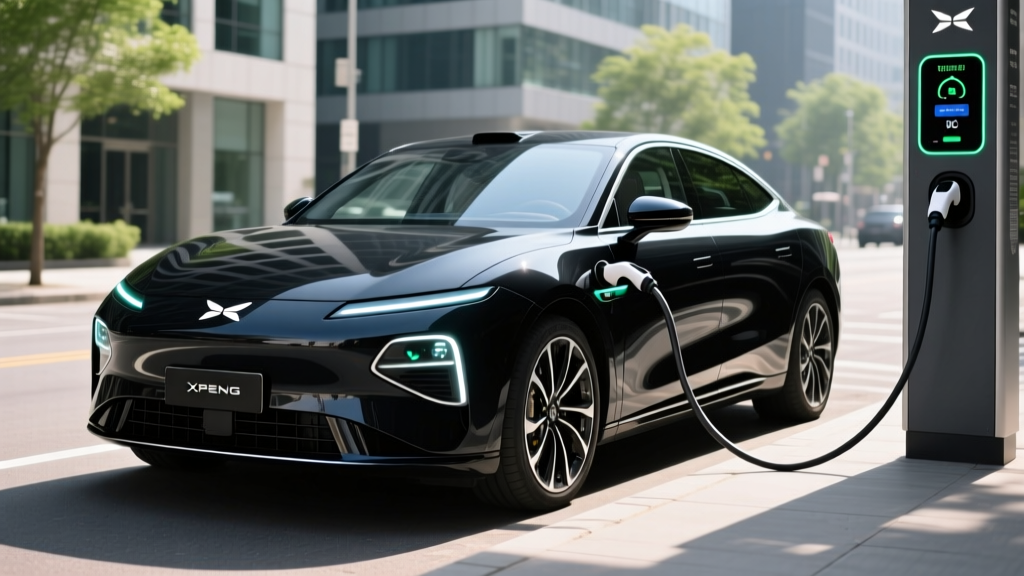
Quick Verdict: The XPeng G9 at a Glance
XPeng entered the European market with the G9 flagship SUV, and while U.S. availability remains limited, the G9 (sometimes searched as the XPeng GX in early listings) represents the brand's most ambitious electric platform yet. Built on an 800-volt silicon-carbide architecture, the G9 delivers class-leading DC fast-charge speeds, a spacious premium cabin, and advanced XNGP driver-assistance technology. For buyers in markets where it's sold, it undercuts European luxury EVs on price while matching or exceeding them on charging performance.
This review covers the G9's confirmed specifications, real-world range expectations, charging behavior, and ownership economics based on available data. U.S. buyers should note that XPeng has not yet launched retail sales in the United States as of early 2026, so pricing and tax-credit details below reflect announced plans and European-market equivalents converted for reference.
| Spec | Standard Range (RWD) | Long Range (RWD) | Performance (AWD) |
|---|---|---|---|
| EPA-est. Range | ~230 mi (est.) | ~290 mi (est.) | ~265 mi (est.) |
| Battery (usable) | 78.2 kWh (LFP) | 98.0 kWh (NMC) | 98.0 kWh (NMC) |
| Horsepower | 308 hp | 308 hp | 543 hp |
| 0–60 mph | 6.4 sec | 6.4 sec | 3.9 sec |
| Drivetrain | RWD | RWD | AWD (dual-motor) |
| Max DC Charge Rate | ~250 kW (peak) | ~300 kW (peak) | ~300 kW (peak) |
| 10–80% DC Time | ~20 min | ~20 min | ~20 min |
| Level 2 AC Rate | 11 kW | 11 kW | 11 kW |
| Base MSRP (Europe, €) | €54,990 | €62,990 | €69,990 |
Note: EPA range figures are estimates based on WLTP-to-EPA conversion ratios (~15–20% reduction from WLTP). XPeng has not published official EPA numbers as the G9 is not currently sold in the U.S. Source: XPeng Europe.
Range and Efficiency: EPA Estimates vs. Real-World Driving
EPA-est. range (Long Range RWD): ~290 miles
Real-world highway (70 mph, mild weather): ~245–260 miles
Real-world cold weather (30°F, highway): ~200–220 miles
City/commute (mixed, mild weather): ~275–290 miles
The G9 Long Range's 98.0 kWh NMC battery pack delivers an estimated WLTP range of 570 km (~354 miles). Converting to EPA testing cycles—which include higher speeds, more aggressive acceleration profiles, and climate-load assumptions—yields approximately 290 miles. In real-world highway driving at sustained 70+ mph speeds, expect 245–260 miles before needing to charge, consistent with most large electric SUVs in this battery-size class.
Cold weather significantly impacts range. At 30°F with cabin heating active, lithium-ion chemistry experiences increased internal resistance, and the thermal management system draws additional energy. Expect a 20–30% reduction from the EPA figure, landing around 200–220 miles of usable range on a full charge. The G9 includes a heat pump as standard equipment on most trims, which mitigates some cold-weather loss compared to resistive heating systems.
The Standard Range RWD model uses a 78.2 kWh LFP (lithium iron phosphate) battery. LFP chemistry offers excellent cycle life and can be charged to 100% regularly without degradation concerns, but it trades energy density for longevity—hence the shorter range. LFP batteries also lose more capacity in extreme cold than NMC cells, so northern-climate buyers should weigh this carefully.
Efficiency-wise, the Long Range RWD achieves roughly 34 kWh/100 mi in mixed driving, translating to approximately 98 MPGe. The AWD Performance variant consumes closer to 38–40 kWh/100 mi (~84 MPGe) due to the second motor's parasitic losses and higher performance tuning.
Charging Speed: 800V Architecture Delivers Real Gains
The G9's standout feature is its 800-volt silicon-carbide (SiC) electrical architecture. While most competitors still use 400V systems, the higher voltage allows the G9 to accept DC fast-charge power with lower current, reducing heat generation and enabling sustained high charge rates.
| Charging Level | Power / Rate | Miles Added per Hour | Notes |
|---|---|---|---|
| Level 1 (120V household) | ~1.4 kW | ~4 mi/hr | Emergency only; full charge takes days |
| Level 2 (240V home/public) | 11 kW | ~32 mi/hr | Full charge in ~9–10 hours (Long Range) |
| DC Fast Charge (peak) | ~300 kW (Long Range/Perf) ~250 kW (Standard Range) | ~600+ mi/hr (at peak) | 10–80% in ~20 min on 350 kW charger |
On a 350 kW-capable DC fast charger (such as Electrify America's latest stations or Ionity in Europe), the Long Range and Performance G9 models peak near 300 kW. However, peak rate is not sustained rate. The charge curve follows a typical taper pattern:
- 10–30% SoC: Sustains near 280–300 kW
- 30–60% SoC: Gradually tapers to ~220–250 kW
- 60–80% SoC: Further taper to ~150–180 kW
- Above 80% SoC: Drops sharply to ~50–80 kW (charging above 80% is slow and generally unnecessary for road trips)
The 10–80% charge time of approximately 20 minutes is among the fastest in the segment, rivaling the Hyundai Ioniq 5 and Porsche Taycan. This assumes preconditioning is active (the G9 will precondition the battery when a DC fast charger is set as the navigation destination) and ambient temperatures are moderate (50–85°F).
For home charging, the onboard 11 kW AC charger adds roughly 32 miles of range per hour. A full overnight charge from 20% to 100% takes approximately 8–9 hours on a Level 2 home station. Most owners will charge between 20–80% daily, which takes roughly 5 hours—easily accomplished overnight.
Performance and Driving Dynamics
The G9 Performance AWD pairs dual electric motors for a combined 543 horsepower and an estimated 3.9-second 0–60 mph time. That places it in quick territory—faster than a Tesla Model Y Long Range but a tick behind the Model Y Performance. The single-motor RWD variants produce 308 hp with a 6.4-second 0–60 time, which is adequate for daily driving and highway merging but not thrilling.
Ride quality benefits from standard adaptive air suspension on Long Range and Performance trims (not available on Standard Range). The system adjusts damping and ride height based on driving mode, offering a compliant comfort setting for city driving and a firmer sport mode for canyon roads. Ground clearance adjusts by approximately 50 mm between lowest and highest settings, useful for rough driveways or light trail access.
Regenerative braking offers multiple levels, including a one-pedal driving mode that brings the G9 to a complete stop without touching the brake pedal. The blending between regen and friction brakes is smooth, avoiding the abrupt transitions that plague some competitors.
Interior, Cargo, and Technology
The G9 is a midsize-to-large electric SUV, measuring approximately 190 inches long on a 114-inch wheelbase. Interior space is generous:
- Front headroom: ~40.2 inches
- Rear legroom: ~39.5 inches
- Cargo volume (rear seats up): ~23.5 cu ft
- Cargo volume (rear seats folded): ~60.5 cu ft
- Frunk (front trunk): ~2.5 cu ft (small; fits a charging cable bag)
The cabin features a dual-screen layout: a 14.96-inch central infotainment touchscreen running XPeng's Xmart OS and a 10.25-inch digital instrument cluster. A head-up display projects speed and navigation onto the windshield. The infotainment system supports wireless Apple CarPlay and Android Auto, over-the-air updates, and voice control with natural-language processing.
A standout feature is the available 5D Music Experience, which integrates seat vibrations, ambient lighting, and the 18-speaker Dynaudio sound system to create an immersive audio environment while parked. It's a novelty, but one that demonstrates XPeng's tech-forward approach.
XNGP Driver Assistance
The XNGP system is a Level 2 driver-assistance feature per SAE International classification. The driver must remain fully engaged, keep hands on or near the steering wheel, and monitor the road at all times. This is not self-driving.
XNGP (XPeng Navigation Guided Pilot) includes adaptive cruise control, lane-centering assist, automatic lane changes, on-ramp/off-ramp assistance, and traffic-light recognition. In European-market testing, the system performs comparably to Tesla Autopilot and Ford BlueCruise on divided highways, with smooth lane-keeping and reasonable following-distance logic. However, it requires periodic steering-wheel torque input and will disengage if the driver does not respond to attention prompts.
City-level XNGP (navigation-guided driving on urban streets) is available in select Chinese cities but has not been approved for European or U.S. deployment. Even where available, it remains a Level 2 system requiring full driver supervision.
Pricing, Tax Credits, and Ownership Costs
As of early 2026, XPeng has not established a U.S. retail presence, and the G9 is not available for purchase in the United States. The pricing below reflects European-market MSRPs converted to USD for reference, alongside an analysis of what U.S. pricing and incentives might look like if XPeng enters the market.
| Trim | EU MSRP (€) | Approx. USD Equivalent | U.S. §30D Credit Eligibility |
|---|---|---|---|
| Standard Range RWD | €54,990 | ~$59,500 | Unknown — not yet U.S.-certified |
| Long Range RWD | €62,990 | ~$68,000 | Unknown — not yet U.S.-certified |
| Performance AWD | €69,990 | ~$75,500 | Unknown — not yet U.S.-certified |
Federal Tax Credit Analysis (If U.S. Sales Begin)
Should XPeng begin U.S. sales, §30D tax credit eligibility would depend on several factors governed by current IRS rules:
- MSRP cap: SUVs must have an MSRP at or below $80,000. All three G9 trims would likely qualify based on converted pricing.
- Buyer income cap: Modified adjusted gross income must not exceed $150,000 (single), $225,000 (head of household), or $300,000 (joint).
- Battery sourcing: At least 60% of critical minerals and 50% of battery components must be sourced from the U.S. or free-trade-agreement partners (as of 2025 requirements, increasing annually). As a Chinese-manufactured vehicle with CATL-supplied batteries, the G9 would face significant challenges meeting these thresholds without localized supply-chain adjustments.
- Final assembly: Must occur in North America. The G9 is currently assembled in Zhaoqing, China, which would disqualify it from the credit unless production is relocated.
Bottom line: Unless XPeng establishes North American assembly and restructures its battery supply chain, the G9 would not qualify for the $7,500 federal tax credit. Buyers should not factor this credit into purchase decisions for Chinese-manufactured EVs until official IRS certification is confirmed.
Warranty and Long-Term Ownership
XPeng offers the following warranty coverage in European markets (U.S. terms would likely be similar if sales commence):
- Vehicle limited warranty: 5 years / 120,000 km (~75,000 miles)
- Battery warranty: 8 years / 160,000 km (~100,000 miles), guaranteeing at least 70% state-of-health (SoH) retention
- Roadside assistance: 5 years, unlimited mileage
The 70% SoH battery warranty threshold is standard for the industry. Based on available degradation data for similar NMC and LFP packs from CATL, owners can expect approximately 8–12% capacity loss over the first 100,000 miles under normal use, well within the warranty floor. LFP packs in the Standard Range model typically show slower degradation than NMC, often retaining 90%+ SoH at 100,000 miles.
Battery replacement cost out of warranty is not yet published for the G9. For comparable 98 kWh NMC packs, industry replacement costs range from $12,000 to $18,000 including labor. LFP replacement costs tend to be 10–20% lower due to cheaper raw materials.
Who Should Buy the XPeng G9?
- Tech-forward buyers in European or Asian markets who want flagship-level charging speed without paying Porsche or Mercedes prices
- Families needing a spacious 5-seat SUV with strong highway range and air-suspension comfort
- Commuters with access to home Level 2 charging who can take advantage of overnight top-ups
- You're a U.S. buyer — the G9 is not currently available, and service/parts infrastructure does not exist
- You need a third row — the G9 seats only five
- You require towing capability — the G9 is not rated for trailer towing in most markets
- You want proven long-term resale value — XPeng is a young brand with limited depreciation data
Pros and Cons
- Class-leading 800V DC fast charging (~20 min, 10–80%)
- Standard heat pump for cold-weather efficiency
- Air suspension on Long Range and Performance trims
- Spacious rear seat with ~39.5" legroom
- Comprehensive XNGP driver-assist suite
- Competitive pricing vs. European luxury rivals
- Not available in the U.S. market (as of 2026)
- No federal tax credit eligibility without North American assembly
- Limited service/parts network outside China and select EU countries
- Small frunk (~2.5 cu ft) — barely fits a cable bag
- Brand-new marque with unproven long-term reliability and resale
- XNGP city-level features geofenced to China
XPeng G9 vs. Key Competitors
For buyers in markets where the G9 is available, its primary competitors include:
- Tesla Model Y Long Range: More established Supercharger network, better resale, but slower peak charging (~250 kW vs. G9's ~300 kW) and no air suspension.
- Hyundai Ioniq 5 (Long Range AWD): Similar 800V architecture and ~18 min 10–80% charging. Smaller interior, lower price, but less cargo space.
- BMW iX xDrive50: Premium badge, excellent ride quality, similar range, but significantly more expensive (~$87,000 USD).
- Porsche Macan Electric: Superior driving dynamics and brand cachet, but costs nearly double and offers less range.
The G9 occupies a value-luxury position: it delivers 80–90% of the premium experience at 60–70% of the price of German rivals. The trade-off is brand cachet, dealer infrastructure, and long-term residual value uncertainty.
Frequently Asked Questions
What is the real-world range of the XPeng G9?
The Long Range RWD model achieves an estimated EPA-equivalent range of ~290 miles. In real-world highway driving at 70 mph in mild weather, expect 245–260 miles. In cold weather (30°F), range drops to approximately 200–220 miles due to battery chemistry limitations and cabin heating demands.
How fast does the XPeng G9 charge?
On a 350 kW DC fast charger, the Long Range and Performance models peak at ~300 kW and charge from 10–80% in approximately 20 minutes with battery preconditioning active. At home on a Level 2 (240V, 11 kW) charger, the G9 adds about 32 miles of range per hour, with a full charge taking 8–10 hours depending on battery size.
Is the XPeng G9 available in the United States?
No. As of early 2026, XPeng does not sell vehicles in the U.S. market. The G9 is available in China, select European countries (Norway, Netherlands, Germany, Sweden, Denmark), and several Middle Eastern and Southeast Asian markets. U.S. entry has been discussed but not confirmed with a timeline.
Does the XPeng G9 qualify for the $7,500 federal EV tax credit?
Currently, no. Even if the G9 were sold in the U.S., its Chinese final assembly and CATL-sourced battery would likely disqualify it from the IRS §30D credit, which requires North American assembly and specific battery-sourcing thresholds. Always consult a tax professional for your specific situation.
What battery chemistry does the G9 use?
The Standard Range RWD uses a 78.2 kWh LFP (lithium iron phosphate) battery, which offers longer cycle life and can be charged to 100% regularly. The Long Range and Performance models use a 98.0 kWh NMC (nickel manganese cobalt) battery, which provides higher energy density but benefits from daily charging limits of 80–90% for longevity.
Is XNGP self-driving?
No. XNGP is an SAE Level 2 driver-assistance system. The driver must remain fully attentive, keep hands on or near the wheel, and be prepared to take over at any moment. No production vehicle sold to consumers is self-driving; only Level 4 robotaxi services like Waymo operate without a driver.
How does the G9 compare to the Tesla Model Y?
The G9 offers faster peak DC charging, standard air suspension, and a more premium interior at a comparable price point. The Model Y counters with the Supercharger network, stronger brand recognition, better software integration, and proven long-term reliability data. In markets where both are available, the choice depends on whether you prioritize charging speed and ride comfort (G9) or ecosystem maturity and resale value (Model Y).