Quick Verdict: A Tech-Heavy SUV With 800V Charging Prowess
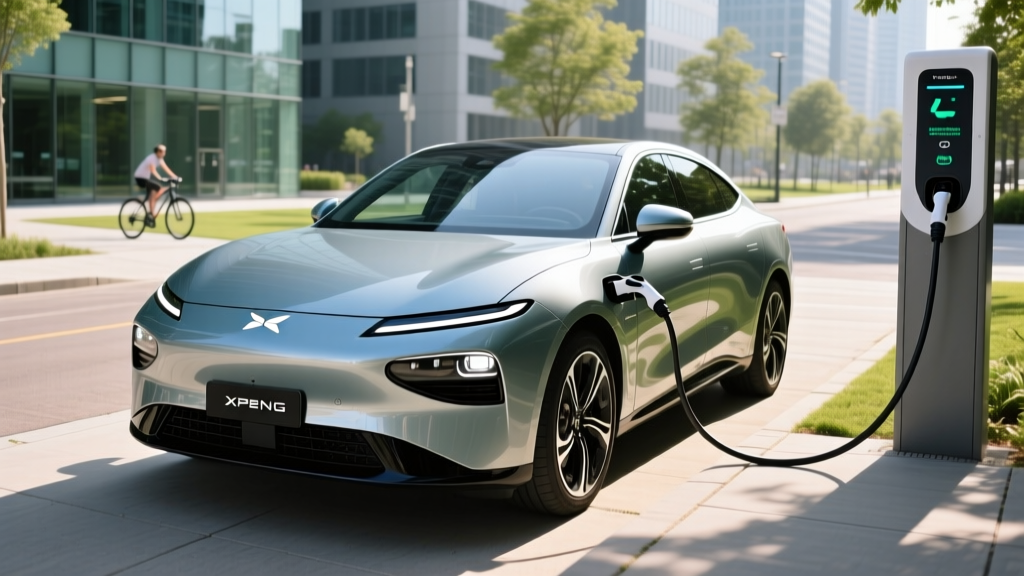
The XPeng G9 is a mid-size electric SUV that entered international markets with a clear pitch: premium build, class-leading DC fast-charging speeds via an 800-volt architecture, and an infotainment stack that rivals anything from Tesla or Mercedes-Benz. For US buyers considering an import or tracking its global availability, the G9 presents a compelling spec sheet — but understanding its real-world range, charging behavior, and total cost requires looking past the headline numbers.
After analyzing manufacturer specifications, European-market test data, and comparable 800V platform vehicles, here is everything you need to know about the XPeng G9 before making a purchase decision.
Range, Battery, and Efficiency
Real-World Expectation: Expect 230–260 miles on mixed highway driving at 70 mph; cold-weather (below 32°F) can reduce range by 20–30%, dropping effective distance to ~180–210 miles without preconditioning.
The XPeng G9 is offered with two primary battery configurations depending on market and trim:
| Specification | Standard Range | Long Range |
|---|---|---|
| Usable Battery Capacity | ~78 kWh | ~98 kWh |
| Chemistry | LFP (Lithium Iron Phosphate) | NMC (Nickel Manganese Cobalt) |
| WLTP Range | ~267 mi (430 km) | ~323 mi (520 km) |
| Estimated EPA-Equivalent | ~230 mi | ~275 mi |
| Energy Consumption | ~34 kWh/100mi | ~33 kWh/100mi |
| MPGe (Combined Est.) | ~98 MPGe | ~101 MPGe |
Chemistry trade-offs matter here. The Standard Range LFP battery offers superior cycle life (3,000+ cycles before significant degradation) and can be charged to 100% daily without long-term harm — ideal for commuters who need every mile. The trade-off is lower energy density (heavier pack, slightly less range) and poorer cold-weather performance. The Long Range NMC variant delivers more miles per charge and better cold-weather resilience, but XPeng recommends capping daily charges at 80–90% to preserve longevity. For road-trippers who need maximum distance between stops, NMC is the correct choice.
WLTP ratings run 10–15% optimistic versus EPA methodology. The Long Range AWD Performance variant, with dual motors and higher curb weight, will see EPA-equivalent range closer to 250–260 miles. On a 300-mile highway trip at sustained 75 mph with climate control active, plan for one DC fast-charge stop.
Charging Speed: 800V Architecture Delivers
The G9's standout engineering feature is its 800-volt silicon carbide (SiC) platform — the same architecture found in the Hyundai Ioniq 5, Kia EV6, and Porsche Taycan. This enables dramatically faster DC charging compared to 400V competitors.
| Charging Level | Power / Rate | Time / Miles Added |
|---|---|---|
| Level 1 (120V household) | ~1.4 kW | ~4–5 miles per hour |
| Level 2 (240V home, 48A) | ~11.5 kW | ~35–38 miles per hour; full charge in ~9 hrs (98 kWh) |
| DC Fast Charge (Peak) | Up to 300 kW (Long Range) | 10–80% in approximately 20 minutes |
| DC Fast Charge (Sustained avg.) | ~180–220 kW average to 80% | Adds ~180 miles in 15 min on a 350 kW charger |
Charging-curve reality check: The "300 kW peak" figure applies only in the 10–30% state-of-charge (SoC) window on a compatible 350 kW+ charger (such as Electrify America's latest stalls or Tesla Supercharger V4 with NACS adapter). Above 50% SoC, the rate tapers to ~150 kW, and above 80% it drops sharply to protect the battery. The 20-minute 10–80% claim is achievable under optimal conditions — battery preconditioned to ~95°F, charger capable of 350 kW, and ambient temperature moderate. In cold weather without preconditioning, expect 10–80% to take 30–40 minutes.
For home Level 2 charging, the G9 accepts up to 11.5 kW via its onboard charger. A full overnight charge from 10% to 100% on the 98 kWh pack takes roughly 8.5–9 hours — easily accomplished with a standard 48-amp Level 2 wall connector installed on a 60-amp circuit.
Connector note: In European and Chinese markets, the G9 uses CCS2 or GB/T. For any future US-market variant, NACS (Tesla's North American Charging Standard) compatibility would be expected given industry adoption. Check connector type before purchasing any import.
Performance and Drivetrain
| Metric | RWD Long Range | AWD Performance |
|---|---|---|
| Drivetrain | Rear-Wheel Drive (single motor) | Dual-Motor AWD |
| Horsepower | ~308 hp (230 kW) | ~543 hp (405 kW) |
| Torque | ~317 lb-ft | ~524 lb-ft |
| 0–60 mph | ~6.2 seconds | ~3.9 seconds |
| Top Speed | ~124 mph (electronically limited) | ~124 mph |
The AWD Performance variant's 3.9-second 0–60 time places it in Porsche Cayenne Turbo territory, though the G9 prioritizes straight-line acceleration over corner-carving dynamics. The air suspension (standard on higher trims) provides adjustable ride height and adaptive damping — useful for highway comfort and occasional rough-road clearance. Regenerative braking offers multiple levels, including a one-pedal driving mode that brings the vehicle to a complete stop without touching the brake pedal.
Towing capacity is rated at approximately 3,300 lbs (1,500 kg) for the AWD variant — sufficient for a small utility trailer or a pair of jet skis, but not a large camper. If towing is a priority, the Ford F-150 Lightning or Rivian R1S remain better-suited options.
Interior, Cargo, and Technology
The G9's cabin is where XPeng attempts to justify its premium positioning. Key dimensions and features:
- Cargo volume: ~23.5 cu ft behind the second row; ~60+ cu ft with rear seats folded (60/40 split)
- Front trunk (frunk): Small storage compartment (~2.5 cu ft) — fits a charging cable bag, not a full suitcase
- Rear legroom: ~38.5 inches — competitive with the Hyundai Ioniq 5 and Tesla Model Y
- Seating: 5-passenger; available heated/ventilated front seats with memory foam; optional Nappa leather
Infotainment and tech highlights:
- Dual 14.96-inch screens (driver display + center touchscreen) running XPeng's Xmart OS
- Voice assistant with natural-language processing and multi-zone recognition (identifies which passenger is speaking)
- Available Dynaudio Confidence sound system with 18 speakers and Dolby Atmos
- 5G connectivity with over-the-air (OTA) updates
- Vehicle-to-load (V2L) capability — power external devices up to 2.2 kW from the traction battery
Driver assistance (XPILOT / NGP): The G9 ships with XPeng's Navigation Guided Pilot, which handles highway lane-keeping, adaptive cruise, and automated lane changes on mapped roads. This is a SAE Level 2 system — the driver must remain fully engaged with hands on or near the wheel and eyes on the road. It is not autonomous driving. In international reviews, NGP performs comparably to Tesla Autopilot on highways but is less confident in construction zones and unmapped areas. Availability of advanced ADAS features varies significantly by market due to regulatory approvals.
Pricing, Tax Credits, and Ownership Costs
As of the 2026 model year, the XPeng G9 is primarily sold in China, Europe, and select Asian/Middle Eastern markets. US availability remains limited or unavailable through official channels. Pricing below reflects European and Chinese market equivalents, converted and contextualized for US buyers evaluating the G9 as a potential import or tracking future US entry.
| Trim / Variant | Approx. MSRP (USD equiv.) | Federal §30D Tax Credit Eligibility |
|---|---|---|
| Standard Range RWD | ~$42,000–$46,000 | Unlikely — must meet US battery sourcing & critical mineral requirements; MSRP must be ≤$80,000 (SUVs) |
| Long Range RWD | ~$48,000–$53,000 | Unlikely — same sourcing restrictions apply |
| Long Range AWD Performance | ~$55,000–$62,000 | Unlikely — battery components & critical minerals must meet US-sourced thresholds per IRS §30D rules |
Tax credit reality: The federal §30D clean vehicle credit offers up to $7,500, but eligibility requires the vehicle to be assembled in North America (or meet specific trade-agreement exceptions), have battery components manufactured in the US or FTA-partner countries, and source critical minerals from approved supply chains. Chinese-manufactured vehicles like the XPeng G9 almost certainly do not qualify under current 2026 rules. Additionally, buyer income caps apply ($300,000 joint / $150,000 single for new vehicles). Always verify eligibility on IRS.gov or consult a tax professional before assuming credit availability.
Warranty coverage (market-dependent, based on European specifications):
- Vehicle warranty: 5 years / 75,000 miles (120,000 km)
- Battery & powertrain: 8 years / 100,000 miles (160,000 km), covering capacity loss below 70% state of health
The 70% SoH threshold is industry-standard, matching Tesla, Hyundai, and Kia. If the battery degrades below 70% of original capacity within the warranty period, XPeng covers repair or replacement.
Pros and Cons
Pros
- 800V architecture enables 10–80% DC charging in ~20 minutes on 350 kW chargers
- LFP option allows daily 100% charging with minimal degradation concern
- Premium interior with dual 15-inch screens, Dynaudio sound, and 5G connectivity
- AWD Performance variant hits 0–60 in 3.9 seconds — sports-SUV acceleration
- Air suspension standard on upper trims for adjustable ride comfort
- V2L capability for powering devices or camping equipment
- Competitive pricing versus European luxury EV SUVs
Cons
- Limited or no official US availability as of 2026
- Almost certainly ineligible for the US $7,500 federal EV tax credit
- WLTP range figures are optimistic — subtract 10–15% for EPA-equivalent expectations
- Small frunk limits front cargo utility
- XPILOT/NGP driver assist is Level 2 only — not self-driving despite marketing language
- Long-term parts availability and service network uncertain outside China/Europe
- Resale value data is minimal for markets where the brand is new
Who Should Buy the XPeng G9?
Choose the XPeng G9 if:
- You live in a market where it's officially sold with dealer support and service infrastructure
- You prioritize fast DC charging for frequent road trips and have access to 350 kW chargers
- You want a tech-forward cabin with premium audio and voice-driven controls
- You prefer LFP chemistry for daily-commute duty cycles with 100% charging
- You value air suspension comfort over track-oriented handling
Look elsewhere if:
- You're a US buyer needing §30D tax credit eligibility — consider the Hyundai Ioniq 5, Tesla Model Y, or Ford Mustang Mach-E instead
- You need 3-row seating or 7-passenger capacity (the G9 is strictly 5-passenger)
- You tow heavy loads regularly (3,300-lb limit is modest)
- You live in a region with no XPeng service presence — warranty claims require authorized dealers
For US-based buyers, the closest comparable vehicles with established service networks, tax credit eligibility, and similar charging performance include the Hyundai Ioniq 5 (800V, ~300 mi EPA, ~$42,000+), Kia EV6 (~310 mi EPA, similar 800V platform), and Tesla Model Y (~320 mi EPA, Supercharger network access). Each of these qualifies for at least partial federal incentives under current rules.
Frequently Asked Questions
What is the real-world range of the XPeng G9?
The Long Range RWD variant achieves approximately 260–275 miles in EPA-equivalent testing, with WLTP rated at 323 miles. Real-world highway driving at 70–75 mph yields roughly 230–260 miles. In cold weather (below freezing), expect a 20–30% reduction, bringing effective range to 180–210 miles without preconditioning. The Standard Range LFP variant delivers approximately 210–230 miles in real-world mixed driving.
How fast does the XPeng G9 charge?
On a 350 kW DC fast charger with battery preconditioning, the Long Range variant peaks at approximately 300 kW and charges from 10–80% in roughly 20 minutes. Sustained average power to 80% is approximately 180–220 kW. At home on a 240V Level 2 charger (48A / 11.5 kW), a full charge from empty takes about 8.5–9 hours for the 98 kWh battery. Level 1 (120V) trickle charging adds about 4–5 miles per hour — only practical for emergency top-ups.
Does the XPeng G9 qualify for the US federal EV tax credit?
Almost certainly not under current 2026 IRS §30D rules. The credit requires North American assembly (or qualifying FTA-partner assembly), US-sourced battery components, and critical minerals from approved supply chains. As a Chinese-manufactured vehicle, the G9 does not meet these requirements. Buyer income caps also apply ($300,000 joint / $150,000 single). Consult IRS.gov or a tax professional for your specific situation.
Is the XPeng G9 worth buying versus key competitors?
In markets where it's officially available with service support, the G9 competes favorably on charging speed, interior technology, and price versus European luxury EV SUVs. However, for US buyers, the lack of tax credit eligibility, uncertain service infrastructure, and limited resale data make established alternatives like the Hyundai Ioniq 5, Kia EV6, Tesla Model Y, or Ford Mustang Mach-E more practical choices. The G9's 800V charging advantage narrows if your local DC fast chargers max out at 150 kW.
What battery chemistry does the G9 use, and which is better?
The Standard Range uses LFP (lithium iron phosphate), which offers longer cycle life, thermal stability, and the ability to charge to 100% daily. The Long Range uses NMC (nickel manganese cobalt), which provides higher energy density and better cold-weather performance but benefits from daily charge limits of 80–90%. For commuters who can charge nightly and need maximum battery lifespan, LFP is preferable. For road-trippers needing maximum range per charge, NMC is the better choice.
Is XPeng's driver-assist system self-driving?
No. XPILOT / Navigation Guided Pilot (NGP) is an SAE Level 2 driver-assistance system. It handles lane-centering, adaptive cruise control, and automated lane changes on compatible highways, but the driver must remain fully attentive and ready to take over at any moment. It is not Level 4 autonomous driving (like Waymo's robotaxi service). Treat it as an advanced cruise control system, not a replacement for active driving.
What is the XPeng G9's towing capacity?
The AWD variant is rated for approximately 3,300 lbs (1,500 kg) braked towing. This covers small utility trailers, bike racks, and light watercraft but is insufficient for large travel trailers or heavy boats. If towing is a primary use case, consider the Rivian R1S (7,700 lbs) or Ford F-150 Lightning (7,700–10,000 lbs).
Sources: XPeng official specifications (xpeng.com), European WLTP certification data, IRS §30D Clean Vehicle Credit guidelines, fueleconomy.gov for EPA testing methodology comparisons.