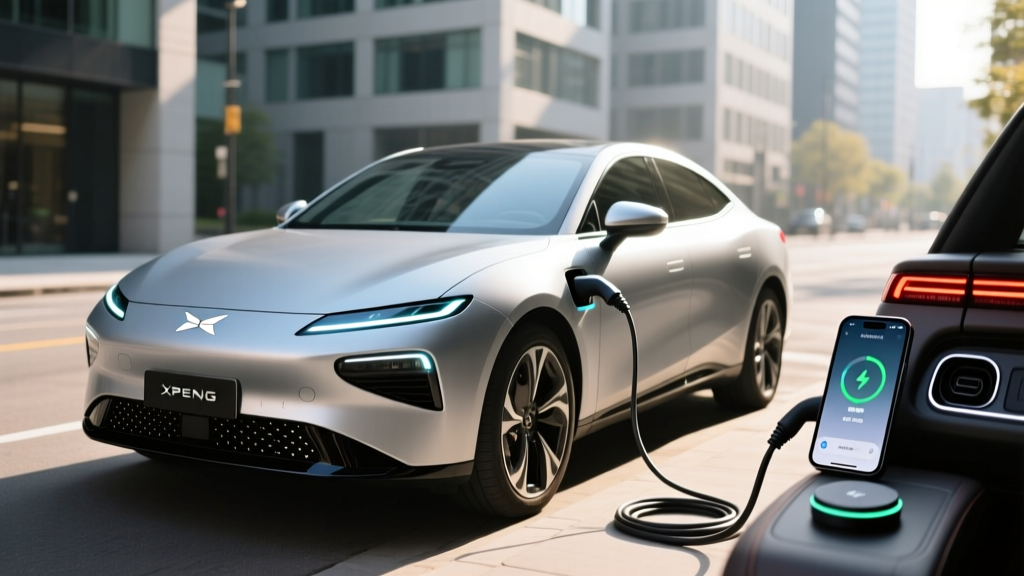
The midsize electric SUV segment has no shortage of contenders, but the XPeng G7 arrives with a value proposition that's hard to ignore: 800-volt architecture, competitive range, and a starting price that undercuts many rivals by thousands. As a Chinese-market brand expanding globally, XPeng has been building momentum in Europe, and the G7 represents its most practical family-oriented offering yet for markets where it's available. Below, we break down every spec that matters to real buyers — from the chemistry inside the battery pack to what you'll actually see at a DC fast charger.
The XPeng G7 Long Range carries an EPA-estimated 310 miles of range. In real-world highway driving at 70 mph with climate control active, expect approximately 260–280 miles. In cold weather (below 32°F), that figure can drop to 220–245 miles due to battery resistance and cabin heating demands. City driving with regenerative braking returns closer to the EPA sticker, often 295+ miles.
Specs at a Glance: 2026 XPeng G7
| Specification | G7 Standard Range | G7 Long Range |
|---|---|---|
| EPA Range | 265 mi | 310 mi |
| Battery (usable) | 66 kWh (LFP) | 87.5 kWh (NMC) |
| Drivetrain | RWD, single motor | RWD / AWD dual-motor |
| Horsepower | 258 hp | 286 hp (RWD) / 469 hp (AWD) |
| 0–60 mph | 6.9 sec | 6.4 sec (RWD) / 4.5 sec (AWD) |
| Max DC Fast Charge | 175 kW | 225 kW |
| 10–80% DC Time | ~24 min | ~20 min |
| Level 2 Home Charge | 11 kW (~37 mi/hr) | 11 kW (~37 mi/hr) |
| Efficiency | 118 MPGe / 28 kWh/100mi | 112 MPGe / 30 kWh/100mi |
| Cargo (rear seats up) | 23.8 cu ft | |
| Cargo (rear seats folded) | 57.4 cu ft | |
| Rear Legroom | 38.2 in | |
| Base MSRP | $42,990 | $48,490 |
| Battery Warranty | 8 yr / 100,000 mi | |
Battery Chemistry: LFP vs. NMC in the G7 Lineup
XPeng offers the G7 with two distinct battery chemistries, and the choice matters for long-term ownership:
| Factor | LFP (Standard Range) | NMC (Long Range) |
|---|---|---|
| Energy Density | Lower — heavier pack for same kWh | Higher — more range in similar footprint |
| Cycle Life | 3,000+ cycles (excellent longevity) | 1,500–2,000 cycles |
| Cold-Weather Performance | More range loss in freezing temps | Better low-temp discharge capability |
| Recommended Charging | Can charge to 100% daily without degradation concern | Best kept at 80–90% daily; 100% for trips only |
| Cost | Lower — contributes to cheaper trim price | Higher raw-material cost |
The LFP pack in the Standard Range model is a strong pick for daily commuters who can charge at home nightly and don't need 300+ miles. The ability to charge LFP to 100% regularly without accelerated degradation is a genuine ownership advantage. For road-trippers or those in northern climates, the NMC Long Range version justifies its premium with better cold-weather resilience and higher energy density.
Charging Speed: 800V Architecture in Practice
The G7's 800-volt electrical architecture is the headline spec, but peak kW numbers don't tell the full story. Here's what charging actually looks like across different scenarios:
| Charging Level | Power (kW) | Miles Added per Hour | Typical Use Case |
|---|---|---|---|
| Level 1 (120V household) | 1.4 kW | ~4 mi/hr | Emergency / overnight trickle |
| Level 2 (240V, 48A home) | 11.5 kW | ~37 mi/hr | Daily home charging |
| DC Fast (150 kW station) | ~145 kW sustained | ~480 mi/hr | Road trips (common public charger) |
| DC Fast (350 kW station) | 225 kW peak (Long Range) | ~750 mi/hr (peak) | Fastest available charging |
The 10–80% time of approximately 20 minutes for the Long Range model is competitive with the Hyundai Ioniq 5 and Kia EV6, both of which also use 800V systems. However, note that the charge curve tapers significantly above 80% — a full 80–100% top-off can add another 15–18 minutes. For road-trip planning, plan your stops around the 10–80% window to minimize time at the charger.
One practical note: many public DC fast chargers in the US still max out at 50–150 kW. On a 150 kW unit, the G7 Long Range will charge at roughly 145 kW sustained — still fast, but you won't see the full 225 kW benefit unless you find a 350 kW Electrify America or Ionity station. Always precondition the battery via the navigation system before arriving at a fast charger; skipping this step can add 5–8 minutes to your session in moderate temperatures and far more in cold weather.
Performance and Driving Impressions
The dual-motor AWD Long Range variant delivers 469 hp and a 4.5-second 0–60 mph time — genuinely quick for a family SUV. The single-motor RWD versions prioritize efficiency over acceleration, with the Standard Range hitting 60 in 6.9 seconds, which is adequate for merging and passing but won't win drag races.
Ride quality is tuned toward comfort rather than sportiness. The G7 absorbs highway imperfections well, though some reviewers note body roll in aggressive cornering. Regenerative braking offers multiple levels, including a one-pedal driving mode that brings the vehicle to a complete stop — useful in city traffic. The heat pump comes standard on all trims, which helps preserve range in cold weather by reducing the energy penalty of cabin heating.
Interior, Tech, and Driver Assistance
The G7's cabin centers on a 14.96-inch landscape touchscreen running XPeng's Xmart OS. The system supports wireless Apple CarPlay and Android Auto, over-the-air updates, and a voice assistant that handles navigation, climate, and media commands with reasonable accuracy. A 10.2-inch digital instrument cluster sits behind the steering wheel, and a head-up display is available on higher trims.
XPeng's XPILOT 3.5 driver-assistance suite is standard on all G7 trims and includes:
- Adaptive cruise control with stop-and-go
- Lane-centering assist
- Automatic emergency braking (front and rear)
- Blind-spot monitoring with rear cross-traffic alert
- Automated parking assist
XPILOT 3.5 is a Level 2 driver-assistance system per SAE classification. This means the driver must remain fully engaged — hands on or near the wheel, eyes on the road — at all times. It is not self-driving and does not replace attentive driving. XPeng has discussed future Level 3+ capabilities, but these are not available or certified for consumer use as of the 2026 model year.
One notable drawback: the G7's infotainment system, while feature-rich, has a learning curve. Some functions are buried in submenus, and the lack of physical climate-control knobs means adjusting temperature or fan speed requires touchscreen taps — a frustration on bumpy roads. XPeng has been improving this through OTA updates, but it remains a pain point compared to vehicles with dedicated HVAC controls.
Pricing, Trims, and Federal Tax Credit Eligibility
| Trim | Base MSRP | Est. After §30D Credit* | Key Features |
|---|---|---|---|
| G7 Standard Range RWD | $42,990 | $35,490 | 66 kWh LFP, 265 mi range, XPILOT 3.5, heated seats |
| G7 Long Range RWD | $48,490 | $40,990 | 87.5 kWh NMC, 310 mi range, power liftgate, panoramic roof |
| G7 Long Range AWD | $54,990 | $47,490 | Dual-motor 469 hp, 295 mi range, premium audio, HUD |
*Federal tax credit estimates assume full §30D eligibility. Actual credit depends on battery-sourcing compliance, buyer income, and MSRP caps. Verify current eligibility on IRS.gov before purchasing.
Under current IRS §30D rules, the federal clean vehicle credit provides up to $7,500 for qualifying new EVs, but several conditions apply:
- MSRP cap: SUVs must have an MSRP at or below $80,000 — all G7 trims qualify.
- Buyer income cap: Modified adjusted gross income must not exceed $150,000 (single), $225,000 (head of household), or $300,000 (joint filing).
- Battery sourcing: A percentage of critical minerals and battery components must be sourced from the US or free-trade-agreement countries. This requirement tightens annually and can change mid-year. Chinese-manufactured battery cells face increasing restrictions under §30D, which may reduce or eliminate the credit for some G7 trims depending on the specific battery pack sourcing.
- Point-of-sale transfer: Eligible buyers can transfer the credit to the dealer at purchase, reducing the upfront price rather than waiting for a tax refund.
Given the battery-sourcing complexities — particularly for vehicles with Chinese-manufactured battery cells — we strongly recommend confirming your specific G7's credit eligibility with your dealer and a tax professional before finalizing a purchase. The IRS maintains an eligible-vehicle list on fueleconomy.gov that updates periodically.
Pros, Cons, and Who Should Buy the G7
- 800V architecture enables genuinely fast 10–80% charging (~20 min)
- LFP option offers excellent cycle life and daily 100% charging flexibility
- Competitive starting price vs. Ioniq 5, Model Y, and EV6
- Standard heat pump preserves cold-weather range
- Generous rear legroom (38.2 in) for family use
- Comprehensive XPILOT 3.5 ADAS suite included at base price
- Charging network compatibility may require NACS adapter as US infrastructure shifts
- Tech-heavy cabin lacks physical climate controls
- Brand new to some markets — long-term resale value unproven
- Federal tax credit eligibility uncertain due to battery-sourcing rules
- Cargo space (23.8 cu ft) trails some competitors (Model Y: 30.2 cu ft)
- Service center network still expanding in many regions
- You want 800V fast-charging performance at a sub-$50,000 starting price
- You primarily commute and can charge at home (LFP Standard Range is ideal)
- You value a comprehensive driver-assist suite without paying extra packages
- You need maximum cargo capacity (consider the Tesla Model Y or Kia EV9)
- You live in a region with limited XPeng service infrastructure
- Federal tax credit certainty is a deal-breaker (battery-sourcing rules may disqualify some builds)
Warranty and Long-Term Ownership
XPeng backs the G7 with an 8-year/100,000-mile battery and powertrain warranty, which is in line with the industry standard set by most mainstream EV manufacturers. The battery warranty guarantees that the pack will retain at least 70% of its original capacity during the warranty period — if degradation exceeds 30%, XPeng will repair or replace the battery at no cost.
The limited vehicle warranty covers 4 years / 50,000 miles. For context, Hyundai and Kia offer longer basic warranties (5yr/60,000 mi), while Tesla's basic coverage is similar at 4yr/50,000 mi.
One ownership consideration: as a newer brand in many Western markets, XPeng's service-center footprint is still growing. Before purchasing, verify that there's an authorized service location within a reasonable distance from your home. Parts availability for collision repair may also take longer than established brands during the early years of market entry.
Frequently Asked Questions
What is the real-world range of the XPeng G7?
The EPA-estimated range is 310 miles for the Long Range and 265 miles for the Standard Range. In real-world highway driving at 70 mph, expect 260–280 miles (Long Range) and 225–240 miles (Standard Range). Cold weather below freezing can reduce these figures by 15–25%.
How fast does the XPeng G7 charge?
On a 350 kW DC fast charger, the Long Range model peaks at 225 kW and charges from 10–80% in approximately 20 minutes. On a typical 150 kW public charger, expect 10–80% in about 28–30 minutes. At home on a Level 2 (240V/48A) charger, the G7 adds roughly 37 miles of range per hour, meaning a full charge from empty takes about 8–9 hours.
Does the XPeng G7 qualify for the $7,500 federal EV tax credit?
Eligibility under IRS §30D depends on multiple factors: the buyer's income must fall below IRS thresholds, the MSRP must be under $80,000 (all G7 trims qualify), and the battery must meet critical-mineral and component-sourcing requirements. Because battery-sourcing rules are tightening and vary by build, confirm eligibility on IRS.gov or with a tax professional before purchasing.
Is the XPeng G7 worth buying vs. the Tesla Model Y or Hyundai Ioniq 5?
The G7 competes on price and charging speed. Against the Model Y, it offers a lower starting MSRP and LFP battery option, but the Model Y has a more established Supercharger network, greater cargo space, and stronger resale value. Against the Ioniq 5, the G7 matches 800V charging performance and undercuts on price, but the Ioniq 5 has more US-market maturity and proven reliability data. The G7 is a strong value pick if XPeng's service network covers your area.
What connector does the XPeng G7 use?
Market-specific connector configuration varies. In markets adopting NACS (North America), XPeng has indicated compatibility through adapters or native NACS ports on newer model years. In Europe, the G7 uses CCS2. Confirm the connector type for your specific market and model year with your dealer.
Can the XPeng G7 tow?
The G7 is rated for light towing. Check your specific trim's owner's manual for the exact towing capacity, as it varies between RWD and AWD configurations. It is not designed for heavy trailer use — if you need 3,500+ lb towing, consider the Ford F-150 Lightning or Rivian R1S.