Can You Buy a Xiaomi EV in the United States?
As of 2026, Xiaomi does not sell the SU7 or any other EV in the United States. The Xiaomi SU7 sedan and SU7 Ultra are available exclusively in China, with no announced plans for US or European market entry. If you are a US-based buyer researching the Xiaomi EV, the vehicle cannot currently be purchased, registered, or serviced in America. This guide covers what Xiaomi's EVs offer on paper, how they compare to models you can buy stateside, and what to watch for if Xiaomi eventually enters the US market.
Xiaomi SU7: The EV That Started It All
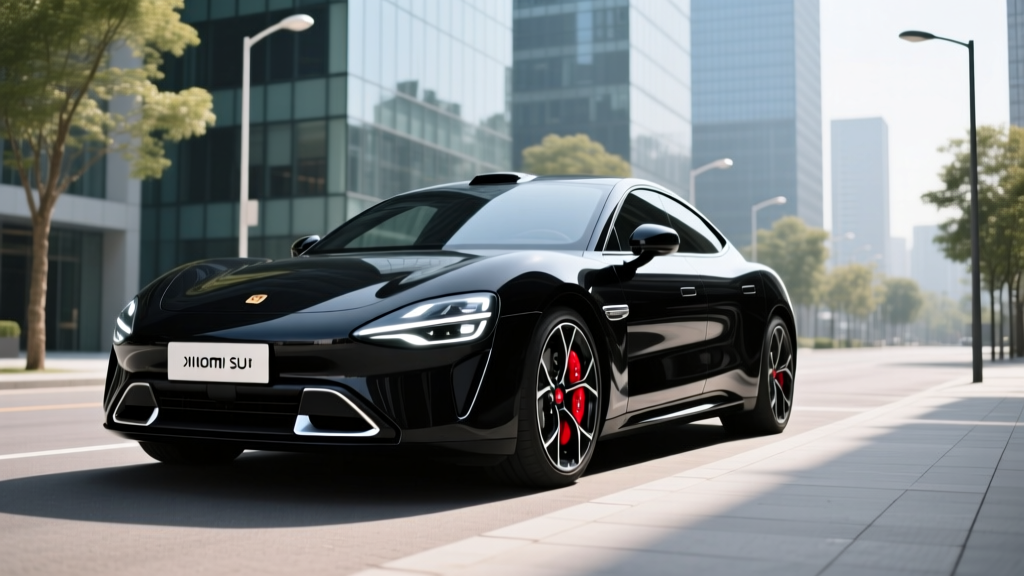
Xiaomi, the Chinese electronics giant known for smartphones and smart home devices, officially entered the automotive market in March 2024 with the SU7 sedan. Built on Xiaomi's self-developed "Modena" platform, the SU7 is a mid-size performance sedan positioned against the Tesla Model 3, Porsche Taycan, and BYD Seal. By early 2026, Xiaomi had expanded the lineup to include the high-performance SU7 Ultra and a soon-to-launch SUV variant called the YU7.
Here is what the core Xiaomi EV lineup looks like based on Xiaomi's official specifications:
| Spec | SU7 Standard | SU7 Pro | SU7 Max | SU7 Ultra |
|---|---|---|---|---|
| Battery (usable) | 73.6 kWh (LFP, BYD Blade) | 94.3 kWh (NMC, CATL Qilin) | 101 kWh (NMC, CATL Qilin) | ~93 kWh (NMC) |
| CLTC Range | 700 km (~435 mi) | 830 km (~516 mi) | 800 km (~497 mi) | ~630 km (~391 mi) |
| Estimated EPA Equiv. | ~340 mi | ~400 mi | ~385 mi | ~300 mi |
| Drivetrain | RWD, 295 hp | RWD, 295 hp | AWD, 664 hp | AWD, 1,527 hp |
| 0-100 km/h (0-62 mph) | 5.28 sec | 5.70 sec | 2.78 sec | 1.98 sec |
| Peak DC Charge Rate | ~180 kW | ~230 kW | ~290 kW (800V) | ~350+ kW (800V) |
| 10-80% DC Charge | ~28 min | ~25 min | ~19 min | ~15 min (est.) |
| China MSRP | ¥215,900 (~$29,800) | ¥245,900 (~$33,900) | ¥299,900 (~$41,400) | ¥814,900 (~$112,500) |
Important caveat on range figures: Xiaomi publishes range using China's CLTC standard, which is significantly more optimistic than the US EPA cycle. As a rule of thumb, multiply CLTC figures by roughly 0.78-0.82 to approximate EPA equivalents. Real-world highway range in the SU7 Max will likely land around 310-340 miles under normal US driving conditions, and closer to 250-280 miles in cold weather or sustained 75+ mph highway driving.
Xiaomi EV vs. US-Available Competitors
Since you cannot buy a Xiaomi SU7 in America, here is how it stacks up against models you can purchase today. This comparison uses the SU7 Max (AWD, long-range) as the benchmark, since it is the variant most likely to compete globally if Xiaomi expands.
| Spec | Xiaomi SU7 Max | Tesla Model 3 LR AWD | Hyundai Ioniq 6 LR AWD | BMW i4 M50 |
|---|---|---|---|---|
| EPA Range (est./actual) | ~385 mi (est.) | 346 mi | 316 mi | 271 mi |
| Battery | 101 kWh NMC | 79 kWh NMC | 77.4 kWh NMC | 81.5 kWh NMC |
| Horsepower | 664 hp | 384 hp | 320 hp | 536 hp |
| 0-60 mph | ~2.6 sec | 4.2 sec | 5.1 sec | 3.7 sec |
| Peak DC Charge | ~290 kW | 250 kW | 235 kW | 205 kW |
| 10-80% Time | ~19 min | ~25 min | ~18 min | ~31 min |
| US MSRP | N/A (not sold) | $47,740 | $46,750 | $67,795 |
| Federal Tax Credit (§30D) | N/A | Up to $7,500 | Up to $7,500 | $0 (MSRP/battery sourcing) |
The SU7 Max's specs are genuinely impressive on paper — its 800-volt architecture enables faster DC charging than the Model 3, and its 101 kWh battery delivers competitive range. However, raw specifications do not account for the infrastructure and ownership ecosystem that US buyers depend on.
Real-World Ownership: What US Buyers Would Face
Even if Xiaomi announced US sales tomorrow, several practical hurdles would shape the ownership experience:
Charging Connector Compatibility
The US market has largely standardized on the NACS (North American Charging Standard) connector, adopted by Tesla, Ford, GM, Rivian, Hyundai, and most major automakers for 2025+ models. Xiaomi's SU7 currently uses China's GB/T connector. A US-spec Xiaomi would need either a native NACS port or a reliable adapter — and access to Tesla's Supercharger network, which now exceeds 30,000 stalls across North America, would be critical for road-trip viability.
Service and Parts Network
Chinese automakers have struggled to build service networks outside their home market. Unlike Tesla (200+ US service centers), Hyundai (800+ dealers), or BMW (350+ dealers), Xiaomi would need to establish a parts distribution and certified repair network from scratch. For a first-year brand, that means long waits for collision repairs and limited service locations — a real concern for daily drivers.
Federal Tax Credit Eligibility
Under current IRS §30D rules, a new EV qualifies for up to $7,500 in federal tax credits only if it meets strict requirements:
- Final assembly in North America — a Xiaomi built in China would not qualify
- Battery component sourcing — a percentage of battery components must be manufactured or assembled in the US or a free-trade-agreement country
- Critical minerals sourcing — a percentage of critical minerals must be sourced from the US or FTA partners
- MSRP caps — sedans must be under $55,000; SUVs/trucks under $80,000
- Buyer income caps — AGI limits apply ($150K single / $300K joint)
A China-built Xiaomi EV would almost certainly fail the assembly requirement, disqualifying it from the federal credit. This immediately adds $7,500 to the effective purchase price versus a qualifying competitor.
Insurance and Depreciation
EV insurance premiums in the US average 15-25% higher than comparable gas vehicles, driven by costly battery repairs and specialized labor. A new brand with no US crash-test data from NHTSA or IIHS would likely face even steeper premiums until insurers accumulate claims data. Depreciation is another wildcard — brands without established resale markets (see: Fisker, VinFast) can lose 50-60% of value in three years.
Cost Comparison: Xiaomi SU7 vs. US Gas and EV Alternatives
For US buyers considering what the Xiaomi SU7 would cost if it were available — and comparing it to what you can actually buy — here is a 5-year total cost of ownership estimate. We use the SU7 Max's China pricing converted to USD, plus a hypothetical import markup of 30% (tariffs, shipping, dealer margin), versus a Tesla Model 3 and a Toyota Camry (gas baseline).
| Cost Category | Xiaomi SU7 Max (hypothetical US) | Tesla Model 3 LR AWD | Toyota Camry SE (Gas) |
|---|---|---|---|
| Purchase Price (est.) | ~$54,000 | $47,740 | $31,495 |
| Federal Tax Credit | $0 | -$7,500 | $0 |
| Net Purchase | $54,000 | $40,240 | $31,495 |
| Fuel/Energy (5 yr) | $5,100 (est. $0.14/kWh avg) | $4,800 | $9,400 ($3.50/gal, 32 MPG) |
| Maintenance (5 yr) | $2,200 (est.) | $2,000 | $4,500 |
| Insurance (5 yr) | $12,000 (est., new brand premium) | $9,500 | $7,200 |
| Est. Resale Value (5 yr) | -$22,000 (est. 40% retention) | -$18,000 (~55% retention) | -$15,000 (~52% retention) |
| Net 5-Year Cost | ~$51,300 | ~$38,540 | ~$37,595 |
This table illustrates a critical point: even with aggressive pricing, a China-built Xiaomi EV without tax-credit eligibility and with uncertain resale value would be significantly more expensive to own over five years than a qualifying US-market EV like the Model 3. The gas Camry remains competitive on pure cost, though it lacks the performance, tech, and driving refinement of either EV.
Xiaomi's Technology Edge: What Sets the SU7 Apart
The SU7 is not just competitive on numbers — Xiaomi has integrated several technology differentiators drawn from its consumer electronics expertise:
HyperOS Vehicle Integration
The SU7 runs Xiaomi's HyperOS, the same operating system powering its phones, tablets, and smart home devices. This creates a seamless ecosystem: your phone's navigation transfers to the car's 16.1-inch center display, smart home controls are accessible from the dashboard, and over-the-air updates flow through Xiaomi's established software pipeline. For existing Xiaomi ecosystem users, the integration is more cohesive than Apple CarPlay or Android Auto.
ADAS and Autonomous Driving
The SU7 Max includes Xiaomi Pilot Max, an advanced driver-assistance system using LiDAR, cameras, and NVIDIA Orin processing. It supports highway and urban navigated-on-autopilot features. However, this is an SAE Level 2 system — the driver must remain engaged and supervise at all times. It is not "self-driving" in the Level 4 sense that Waymo robotaxis operate. Xiaomi has not published independent safety validation for Pilot Max from US agencies, and its performance on US roads, signage, and driving norms remains untested.
800V Architecture Benefits
The SU7 Max and Ultra use an 800-volt electrical architecture (compared to the 400V systems in most competitors). This enables higher peak charging power with lower current, reducing heat and cable weight. In practice, the 800V system is what allows the SU7 Max to sustain ~290 kW at a DC fast charger — a meaningful advantage on road trips where 10-80% charge times translate directly to shorter stops. For context, at 290 kW peak, the SU7 Max can theoretically add roughly 150 miles of range in about 8 minutes of charging near the bottom of the curve, though sustained rates taper significantly above 60% SoC.
Common Misconceptions About the Xiaomi EV
| Claim | Reality |
|---|---|
| "The SU7 has 500+ miles of range" | CLTC figures are inflated vs. EPA. Real-world US highway range for the SU7 Max is likely 310-340 miles. |
| "It's way cheaper than a Tesla" | China pricing is low, but US import costs, tariffs (currently 100% on Chinese EVs as of 2024), and no tax credit would push the effective price near or above a Model 3. |
| "Xiaomi's ADAS is self-driving" | Pilot Max is SAE Level 2 — hands-on, eyes-on driver supervision is required at all times. |
| "I can import one myself" | Federal vehicle import regulations require EPA and DOT compliance certification. Grey-market imports of non-compliant vehicles are effectively impossible for daily use. |
| "The 15-minute charge time means 15 minutes to full" | The 10-80% figure applies to the fast portion of the curve. Charging from 80-100% slows dramatically and can add another 20-30 minutes. |
One additional misconception worth addressing: the 100% US tariff on Chinese-made EVs, enacted in 2024 and still in effect as of 2026, effectively doubles the base price of any Chinese-manufactured electric vehicle imported to the United States. This alone makes the Xiaomi SU7's attractive China pricing irrelevant for US buyers. Even if Xiaomi wanted to sell here, the tariff structure makes it economically unviable without building a North American factory — a multi-year, multi-billion-dollar undertaking.
Decision Framework: What Should You Do?
If You're Interested in the Xiaomi EV...
- If you live in the US and need a car now: Look at the Tesla Model 3 (best charging network, $7,500 credit eligible), Hyundai Ioniq 6 (fastest charging in its class, strong credit eligibility), or BMW i4 (premium option, but no credit). All offer proven US service networks and verified EPA range.
- If you want maximum range per dollar: The Lucid Air Pure (419 mi EPA, ~$69,900) or Tesla Model 3 Long Range (346 mi EPA, ~$40,240 after credit) deliver verified US range that matches or approaches the SU7's estimated figures.
- If you want 800V fast charging now: The Hyundai Ioniq 5 and Ioniq 6 (E-GMP platform), Kia EV6, and Porsche Taycan all offer 800V architecture with proven US charging compatibility.
- If you're outside the US (Europe/SE Asia): Xiaomi may expand to select markets by late 2026 or 2027. Monitor official announcements, but verify local homologation, service availability, and charging connector compatibility before committing.
- If you're an investor or industry watcher: Xiaomi's EV ambitions are real — the company has committed over $10 billion to automotive development and has demonstrated rapid execution. The SU7's sales volume in China (over 100,000 units delivered in its first year) validates the product. US market entry remains unlikely before 2028-2030 given tariff barriers and geopolitical friction.
Frequently Asked Questions
Is the Xiaomi SU7 available in the United States?
No. As of 2026, Xiaomi sells the SU7 only in China. There is no announced timeline for US market entry, and the current 100% US tariff on Chinese-made EVs makes near-term entry economically impractical.
What is the real-world range of the Xiaomi SU7?
Xiaomi publishes CLTC range figures (700-830 km depending on trim), which are optimistic. Estimated EPA-equivalent range is approximately 340 miles (Standard), 400 miles (Pro), and 385 miles (Max). Expect real-world highway driving to yield 310-340 miles in the Max, dropping to 250-280 miles in cold weather or at sustained high speeds.
How fast does the Xiaomi SU7 charge?
The SU7 Max, with its 800V architecture, peaks at approximately 290 kW on a DC fast charger, achieving a 10-80% charge in roughly 19 minutes. The Standard trim (400V platform) peaks around 180 kW with a 10-80% time of about 28 minutes. These are peak rates — sustained charging power tapers significantly above 60% state of charge.
Could I import a Xiaomi SU7 myself?
Practically, no. US federal regulations require vehicles to meet EPA emissions and DOT safety standards, including crash testing. Importing a non-certified vehicle for road use is not feasible for consumers. Additionally, the 100% tariff on Chinese EVs would apply.
How does the Xiaomi SU7 compare to the Tesla Model 3?
On paper, the SU7 Max offers more horsepower (664 vs. 384), a larger battery (101 vs. 79 kWh), and faster peak charging (~290 vs. 250 kW) than the Model 3 Long Range AWD. However, the Model 3 has verified EPA range (346 mi), access to 30,000+ Supercharger stalls, an established US service network, and eligibility for the $7,500 federal tax credit — advantages the SU7 cannot match for US buyers.
Will Xiaomi eventually sell cars in America?
Xiaomi CEO Lei Jun has expressed long-term global ambitions for the automotive division, but no US-specific plans have been announced. Given current trade barriers (100% tariff, battery sourcing rules, geopolitical tensions), US entry before 2028-2030 appears unlikely. Xiaomi is more likely to expand first to Southeast Asia, the Middle East, and potentially Europe.