Quick Answer: Can You Buy the Chinese SU7 Electric Car in the US?
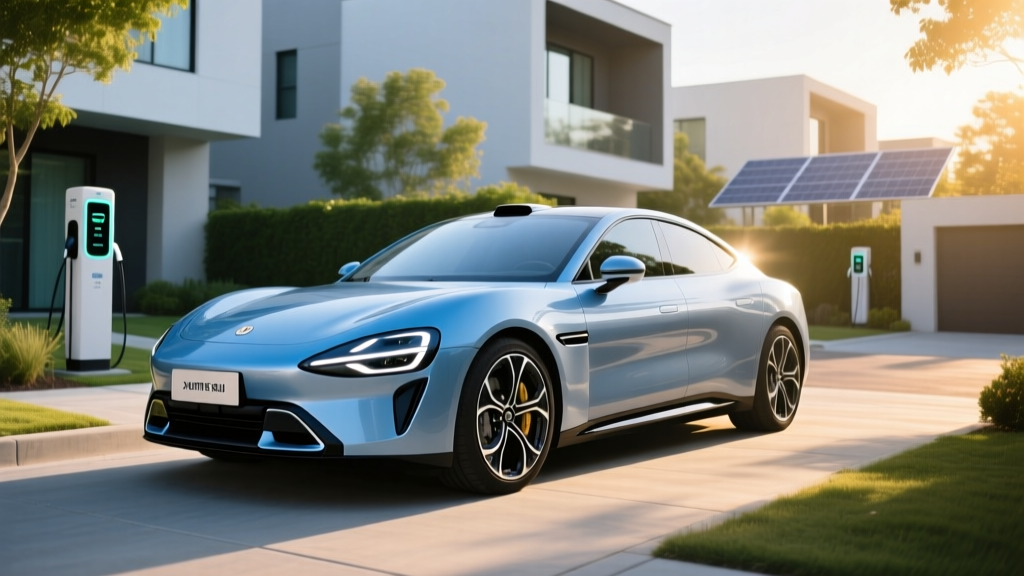
The Xiaomi SU7 — the Chinese electric sedan that has drawn comparisons to the Tesla Model S and Porsche Taycan — is not currently available for sale in the United States as of 2026. Xiaomi has not announced an official US launch, and even if it did, the vehicle would likely face 100%+ combined tariffs on Chinese-made EVs, no federal §30D tax credit eligibility, and no established service or charging-support network. If you're researching the SU7 out of curiosity or considering a gray-market import, this guide covers every spec, cost, and ownership reality you need to know.
What Is the Xiaomi SU7?
Xiaomi, the Beijing-based electronics giant known for smartphones and smart-home devices, launched its first electric vehicle in March 2024. The SU7 is a full-size battery-electric sedan positioned squarely against the Tesla Model S, Porsche Taycan, and NIO ET7. By early 2025, Xiaomi had expanded the lineup with the high-performance SU7 Ultra and the crossover-style SU7 Max, and the brand became one of the fastest-growing EV makers in China.
The SU7 rides on Xiaomi's self-developed "Modena" platform with an 800V electrical architecture (on Max and Ultra trims), enabling some of the fastest DC charging speeds of any production sedan. The vehicle integrates deeply with Xiaomi's HyperOS ecosystem — if you own Xiaomi phones, tablets, or smart-home devices, the cabin acts as a seamless extension of that ecosystem.
Xiaomi SU7 Specs: Range, Battery, Charging, and Performance
Here are the key figures across the 2025–2026 SU7 lineup. Note that Xiaomi reports range using China's CLTC standard, which is significantly more generous than the US EPA cycle. We've included estimated EPA-equivalent figures based on the typical CLTC-to-EPA conversion ratio of roughly 0.70–0.75.
| Spec | SU7 Standard | SU7 Pro | SU7 Max | SU7 Ultra |
|---|---|---|---|---|
| Battery (usable) | 73.6 kWh (LFP) | 94.3 kWh (NMC) | 101 kWh (NMC) | 101 kWh (NMC) |
| CLTC Range | 700 km (435 mi) | 830 km (516 mi) | 800 km (497 mi) | 630 km (391 mi) |
| Est. EPA-Equiv. Range | ~305 mi | ~360 mi | ~350 mi | ~275 mi |
| Architecture | 400V | 800V | 800V | 800V |
| Peak DC Charge Rate | ~150 kW | ~220 kW | ~250 kW | ~350 kW (CATL Shenxing) |
| 10–80% DC Charge | ~28 min | ~22 min | ~19 min | ~12 min (est.) |
| Level 2 AC Charge | 7 kW (11 kW opt.) | 11 kW | 11 kW | 11 kW |
| Drivetrain | RWD | RWD | AWD | AWD (Tri-motor) |
| Horsepower | 295 hp | 295 hp | 664 hp | 1,548 hp |
| 0–100 km/h (0–62 mph) | 5.3 sec | 6.7 sec | 2.78 sec | 1.98 sec |
| China MSRP (approx. USD) | ~$30,000 | ~$35,000 | ~$42,000 | ~$114,000 |
Battery chemistry note: The Standard trim uses an LFP (lithium iron phosphate) battery from BYD, which offers longer cycle life and can be charged to 100% regularly without degradation concerns. The Pro, Max, and Ultra use NMC (nickel manganese cobalt) cells from CATL, which provide higher energy density but benefit from daily charge limits around 80–90% for longevity. The Ultra's CATL Shenxing LFP cells are an exception — they support extreme charge rates while retaining LFP longevity benefits.
Real-World Range Expectations
Xiaomi's CLTC figures are optimistic by US standards. In real-world highway driving at 70–75 mph, expect the SU7 Max to deliver roughly 280–310 miles in mild weather, dropping to 230–260 miles in freezing conditions (32°F and below). The Standard RWD trim's real-world highway range will likely land around 240–270 miles. These estimates are based on the typical 15–20% highway penalty and 20–30% cold-weather loss observed in comparable 800V EVs tested by independent reviewers.
Charging the SU7: Speeds, Connectors, and Infrastructure
The SU7 Max and Ultra's 800V architecture is the headline feature. On a compatible 350 kW DC fast charger (such as an Electrify America or IONITY station), the SU7 Max can recover approximately 200 miles of range in about 15 minutes. The Ultra, with CATL's Shenxing battery, pushes even further — Xiaomi claims a 10–80% charge in roughly 12 minutes under optimal conditions, though real-world charge curves taper significantly above 80%.
| Charging Level | Power (kW) | Miles of Range Added per Hour | Best For |
|---|---|---|---|
| Level 1 (120V household) | ~1.4 kW | ~4–5 mi/hr | Emergency / overnight trickle |
| Level 2 (240V home) | 7–11 kW | ~25–40 mi/hr | Daily home charging |
| DC Fast (400V station) | ~150 kW | ~500+ mi/hr (peak) | Road trips (Standard trim) |
| DC Fast (800V station) | 220–350 kW | ~800+ mi/hr (peak) | Road trips (Max/Ultra) |
Connector caveat for US buyers: The SU7 sold in China uses the GB/T charging standard. If Xiaomi were to bring the car to the US, it would need to adopt either the NACS (Tesla) connector or CCS1. As of 2026, the North American market has overwhelmingly shifted to NACS, with nearly all major automakers adopting it. Any US-spec SU7 would almost certainly need a NACS port, and Xiaomi has not confirmed this adaptation.
How Does the SU7 Compare to US-Available EVs?
Since the SU7 isn't available stateside, the practical question is: how does it stack up against sedans you can actually buy?
| Attribute | Xiaomi SU7 Max (China) | Tesla Model S (US) | Porsche Taycan 4S (US) | Hyundai Ioniq 6 Limited (US) |
|---|---|---|---|---|
| Est. EPA-Equiv. Range | ~350 mi | 402 mi (EPA) | 288 mi (EPA) | 316 mi (EPA) |
| Battery (usable) | 101 kWh NMC | ~95 kWh | 83.7 kWh (Performance+) | 77.4 kWh NMC |
| Peak DC Charge | ~250 kW | ~250 kW | ~270 kW | ~240 kW |
| 10–80% DC | ~19 min | ~25 min | ~18 min | ~18 min |
| 0–60 mph | 2.6 sec (est.) | 3.1 sec | 3.8 sec | 5.1 sec |
| Horsepower | 664 hp | 670 hp | 562 hp | 320 hp |
| Base Price (USD) | ~$42,000 (China) | $79,990 | $103,800 | $46,750 |
| US Tax Credit (§30D) | Not eligible | Not eligible (MSRP/income varies) | Not eligible | Up to $7,500 (eligibility varies) |
| US Service Network | None | Nationwide | Nationwide | Nationwide |
The SU7 Max's performance-per-dollar ratio is remarkable — a 2.78-second 0–100 km/h time and 800V charging for roughly $42,000 in China is unmatched. But that price is irrelevant to US buyers. Even if Xiaomi imported the SU7 Max, the current 100% tariff on Chinese-made EVs (effective since 2024) would push the landed price above $84,000 before dealer markups, eliminating any value advantage over a Tesla Model S or a well-equipped Hyundai Ioniq 6.
Cost Breakdown: What Would SU7 Ownership Actually Cost?
Let's model a hypothetical scenario where the SU7 Max is imported to the US, alongside real numbers for its closest US-available rival, the Tesla Model S.
| Cost Factor | Xiaomi SU7 Max (Hypothetical US) | Tesla Model S (Actual US) |
|---|---|---|
| Estimated Purchase Price | ~$84,000+ (after 100% tariff) | $79,990 MSRP |
| Federal §30D Tax Credit | $0 (Chinese battery/minerals) | Varies — check IRS §30D rules |
| Annual Electricity (12,000 mi @ $0.16/kWh) | ~$610 (est. 32 kWh/100mi) | ~$580 (EPA 30 kWh/100mi) |
| Annual Insurance (est.) | ~$3,000–$3,800 (no US claims data) | ~$2,800–$3,400 |
| Annual Maintenance | Unknown (no US parts network) | ~$300–$500 |
| Battery Warranty | 8 yr / 160,000 km (China terms) | 8 yr / 150,000 mi |
| 5-Year Total Cost (est.) | ~$110,000–$120,000 | ~$100,000–$110,000 |
Key takeaway: The tariff wall alone makes the SU7 uneconomical in the US. Additionally, Chinese-market EVs use battery cells and critical minerals that do not meet the §30D domestic-sourcing requirements outlined by the IRS, so no federal tax credit would apply regardless.
Common Misconceptions About the SU7
| Myth | Fact |
|---|---|
| "The SU7 gets 500+ miles of range." | That's the CLTC figure for the Pro trim. The realistic EPA-equivalent is ~360 miles, and highway/cold-weather driving reduces that further to ~290–310 miles. |
| "I can import one to the US myself." | Federal Motor Vehicle Safety Standards (FMVSS) compliance is required for road registration. The SU7 has not been crash-tested by NHTSA or IIHS, and individual importation for road use is effectively prohibited without manufacturer certification. |
| "It charges faster than any other EV." | The Ultra's ~350 kW peak is among the fastest, but sustained rates matter more. Real-world 10–80% times depend on station capability, battery temperature, and preconditioning. The Hyundai Ioniq 5 and Kia EV6 also achieve sub-18-minute 10–80% charges on 800V architecture. |
| "Xiaomi will launch in the US soon." | As of 2026, Xiaomi has signaled focus on China, Southeast Asia, and select European markets. US entry is complicated by tariffs, regulatory requirements, and geopolitical tensions. No official timeline exists. |
| "The SU7 is self-driving." | Xiaomi's "Pilot" ADAS is a Level 2 driver-assistance system per SAE classification. The driver must remain attentive and hands-on or eyes-on at all times. It is not autonomous. |
First-Time EV Buyer Considerations
If you're drawn to the SU7's specs and wondering whether to wait for a US launch or buy something available now, here are the practical realities of EV ownership to weigh:
Home charging access is essential. Unless you have reliable Level 2 (240V) charging at home or work, EV ownership becomes significantly less convenient. A home Level 2 installation typically costs $500–$2,500 depending on panel capacity and wiring distance. Without it, you'll rely on public DC fast charging, which costs 2–3× more per kWh and adds 20–40 minute stops to longer trips.
Cold weather cuts range 20–30%. The SU7 Max's 800V heat pump (standard on higher trims) helps, but physics is physics. If you live in Minnesota or upstate New York, budget for meaningful winter range loss on any EV.
Insurance costs are higher. EVs generally carry 15–25% higher insurance premiums than comparable gas cars due to battery replacement costs and specialized repair requirements. For a high-performance sedan like the SU7 Max, expect premiums similar to a Tesla Model S.
Maintenance is lower, but repair risk is higher. EVs skip oil changes, spark plugs, and transmission fluid. But if something goes wrong with the battery or power electronics out of warranty, replacement costs can exceed $15,000–$25,000. For a Chinese-market vehicle with no US parts supply chain, this risk is magnified enormously.
Decision Framework: Should You Wait, Import, or Buy Available?
Choose Based on Your Situation
- Choose the Tesla Model S if: You want a US-available performance EV sedan with a proven Supercharger network, nationwide service centers, and 402 miles of EPA range — and you can absorb the ~$80K price.
- Choose the Hyundai Ioniq 6 if: You want 800V fast charging (10–80% in ~18 min), 316 miles of EPA range, and a sub-$47K starting price with potential §30D tax credit eligibility. It's the closest US-available analog to the SU7's value proposition.
- Choose the Porsche Taycan if: Build quality, driving dynamics, and brand prestige matter more than range-per-dollar, and you're comfortable with ~288 EPA miles and a $100K+ price.
- Wait for Xiaomi if: You live in a market where the SU7 is actually sold (China, parts of Europe/SE Asia), or you're willing to wait 3–5+ years for a hypothetical US launch that may never come.
- Do NOT attempt a gray-market import: FMVSS non-compliance, zero US service infrastructure, no crash-test data from NHTSA, and tariff costs make this financially and legally impractical.
Frequently Asked Questions
Is the Xiaomi SU7 available in the United States in 2026?
No. Xiaomi has not launched the SU7 in the US market, and there is no confirmed timeline for a US debut. The vehicle is currently sold in China with limited exports to select international markets.
How much would the Xiaomi SU7 cost in the US if imported?
After the current 100% tariff on Chinese-made electric vehicles, the SU7 Max (priced around $42,000 in China) would likely cost $84,000 or more before any dealer fees, registration, or compliance modifications. The SU7 Ultra would exceed $200,000.
Does the SU7 qualify for the $7,500 federal EV tax credit?
No. Under IRS §30D rules, the vehicle must meet battery component and critical mineral sourcing requirements tied to US free-trade partners. Chinese-manufactured batteries and supply chains do not meet these criteria. Additionally, the vehicle must be assembled in North America for the new-vehicle credit.
What is the real-world range of the Xiaomi SU7 Max?
Xiaomi claims 800 km (497 mi) under China's CLTC test cycle. The realistic EPA-equivalent estimate is approximately 350 miles, with real-world highway driving yielding roughly 280–310 miles in mild weather and 230–260 miles in freezing temperatures.
How fast does the SU7 charge?
The SU7 Max (800V architecture) peaks at approximately 250 kW on a compatible DC fast charger, achieving a 10–80% charge in roughly 19 minutes. The SU7 Ultra with CATL Shenxing cells can peak near 350 kW, with a claimed 10–80% time around 12 minutes. Actual charge times vary based on station output, battery temperature, and state of charge — charging slows significantly above 80% to protect battery health.
Is the Xiaomi SU7 self-driving?
No. Xiaomi's Pilot system is an SAE Level 2 driver-assistance feature, meaning the driver must remain fully engaged and supervise the vehicle at all times. It supports adaptive cruise control, lane-centering, and automated parking, but it does not replace the driver. Only Level 4 services like Waymo operate without a human driver, and those are limited to geofenced urban areas.
What battery chemistry does the SU7 use?
The SU7 Standard uses a BYD Blade LFP (lithium iron phosphate) battery — known for excellent cycle life, thermal stability, and the ability to charge to 100% regularly. The Pro and Max trims use CATL NMC (nickel manganese cobalt) cells for higher energy density. The Ultra uses CATL's Shenxing LFP cells, which combine LFP longevity with ultra-fast charging capability.