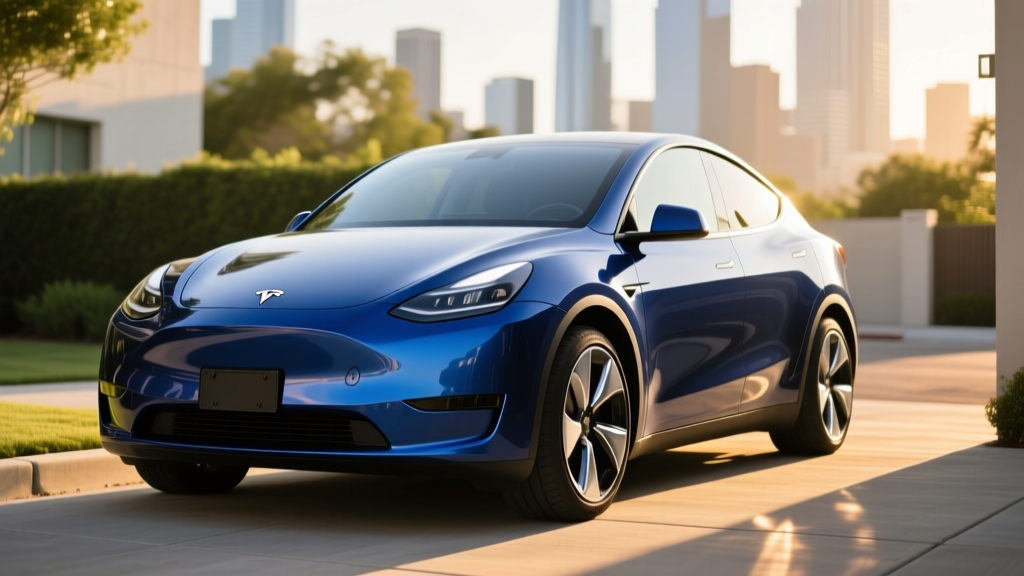
If you own a Tesla or are about to buy one, you've likely encountered the question of what happens when the factory warranty expires. XCare EV Protection is a third-party extended warranty (technically a vehicle service contract) offered by XCover that specifically targets Tesla models. Plans typically start around $2,500–$4,500 depending on your model, mileage, and coverage tier, and they cover major components like the drive unit, touchscreen, air suspension, and HVAC system after Tesla's Basic Vehicle Limited Warranty (4 years/50,000 miles) runs out.
The Quick Answer
XCare EV Protection can be a solid hedge against costly out-of-warranty Tesla repairs — a single air suspension replacement can run $2,500–$3,500, and a touchscreen failure can exceed $2,000. However, it does not cover the high-voltage battery or drive unit beyond Tesla's existing 8-year/100,000–150,000-mile battery warranty. For most owners, XCare fills the gap on everything else that Tesla's warranty leaves exposed after year four. Whether it's worth it depends on your model, how long you plan to keep the car, and your tolerance for surprise four-figure repair bills.
What XCare EV Protection Actually Covers
XCare, underwritten by XCover, offers vehicle protection plans designed specifically for electric vehicles — with Tesla models being the primary focus. Unlike generic extended warranties from dealership finance offices, XCare's plans are built around the unique failure points of EVs.
Here's what a typical XCare EV Protection plan includes:
- Drive unit (motor) — covered after Tesla's own warranty expires (note: Tesla covers this for 8 years/100k–150k miles depending on model)
- Touchscreen / MCU — a known failure point on Model S and Model X (MCU1 and MCU2 units)
- Air suspension — common wear item on Model S and Model X; single corner replacement runs $2,500+
- HVAC / heat pump system — the octovalve and heat pump assembly in Model Y and refreshed Model 3 have documented failure modes
- Power electronics — DC-DC converter, onboard charger, PTC heater
- Windows, sunroof, and glass — panoramic roof panels on Model S/X are expensive to replace
- Door handles and window regulators — especially on Model S/X
- Steering rack and column
Coverage tiers generally range from a powertrain-focused plan to a comprehensive exclusionary plan that covers everything except a short list of excluded wear items (tires, brake pads, wiper blades, 12V battery, cosmetic damage).
XCare Pricing and Cost Breakdown
Pricing varies based on your Tesla model, current mileage, deductible choice, and coverage tier. Based on recent owner reports and available plan information, here's a representative breakdown:
| Factor | Details |
|---|---|
| Model 3 / Model Y (comprehensive) | $2,500 – $3,800 |
| Model S / Model X (comprehensive) | $3,500 – $5,200 |
| Deductible options | $0, $100, or $250 per visit |
| Payment plans | Available — typically 12 or 24 monthly installments |
| Cancellation | Pro-rated refund within the first 60 days; after that, pro-rated minus admin fee |
| Transferable | Yes — can transfer to a new owner (adds resale value) |
For context, a single out-of-warranty air suspension corner replacement on a Model S costs between $2,500 and $3,500 at a Tesla Service Center. A full set of four corners can exceed $10,000. A touchscreen/MCU replacement on older Model S vehicles has been quoted at $2,000–$3,500. The heat pump assembly on a Model Y, if it fails out of warranty, has been reported at $1,800–$2,800 including labor.
So the math is straightforward: if you experience even one major component failure, the plan pays for itself on a Model S or Model X. On a Model 3 or Model Y, you'd likely need two significant repairs to break even.
XCare vs. Tesla's Extended Service Agreement
Tesla historically offered its own Extended Service Agreement (ESA), but availability has been inconsistent — it was discontinued for new purchases in some regions and reintroduced in others. Where available, Tesla's ESA typically covers a similar scope but at a higher price point (often $4,000–$7,000+ depending on model and term).
| Feature | XCare EV Protection | Tesla Extended Service Agreement |
|---|---|---|
| Price range (Model Y) | $2,500 – $3,800 | $4,500 – $6,500 (where available) |
| Price range (Model S/X) | $3,500 – $5,200 | $5,500 – $7,500+ |
| Deductible | $0 / $100 / $250 | $0 (Tesla ESA) |
| Repair facility | Tesla Service Centers + approved independent EV shops | Tesla Service Centers only |
| Battery/drive unit | Not covered (Tesla's 8-yr warranty applies) | Not covered (Tesla's 8-yr warranty applies) |
| Transferable to new owner | Yes | Yes |
| Underwriter | XCover (specialty EV insurer) | Tesla directly |
The key practical difference: XCare is usually 30–50% cheaper than Tesla's own ESA for equivalent coverage, and it allows repairs at approved independent EV shops — which can matter if you live far from a Tesla Service Center. The trade-off is that Tesla's ESA guarantees OEM parts at Tesla facilities, while third-party plans may have more claim-approval friction.
What XCare Does NOT Cover — The Fine Print
This is where buyer education matters most. Common exclusions in XCare-style EV protection plans include:
- High-voltage battery degradation — Tesla's battery warranty covers this for 8 years and 100,000–150,000 miles (varies by model) with a minimum 70% capacity retention threshold. XCare does not duplicate this.
- Software and firmware issues — OTA update bugs, Autopilot/FSD software behavior, and infotainment glitches are not "mechanical failures."
- Cosmetic damage — paint chips, interior wear, seat bolster cracking.
- 12V auxiliary battery — treated as a consumable; replacement runs $300–$500.
- Tires, brake pads, and wiper blades — standard wear items excluded from virtually all service contracts.
- Pre-existing conditions — if your Tesla already has a known issue (e.g., a clicking steering rack), it won't be covered.
- Damage from accidents, flooding, or misuse — this is what your auto insurance is for.
- Aftermarket modifications — aftermarket suspension, wraps that cause damage, or non-OEM charging equipment damage may void coverage.
Myths vs. Facts
| Myth | Fact |
|---|---|
| "XCare covers the Tesla battery" | No. The HV battery is covered by Tesla's 8-year warranty (min 70% retention). XCare covers other components. |
| "EVs don't break, so I don't need a warranty" | EVs have fewer moving parts than gas cars, but touchscreens, air suspension, heat pumps, and power electronics absolutely fail — and repairs are expensive. |
| "Any extended warranty works for my Tesla" | Most generic VSC providers don't understand EV-specific components. XCare is purpose-built for EVs, which matters for claim approvals. |
| "I can buy XCare anytime" | Eligibility windows apply. Typically, you must enroll before your Tesla's factory warranty expires or within a set mileage window. |
EV Repair Costs vs. Gas Car Maintenance: The Bigger Picture
To evaluate whether XCare makes financial sense, it helps to compare the ownership cost structure of an EV versus a comparable gas vehicle.
According to fueleconomy.gov, EVs have significantly fewer drivetrain components than internal combustion vehicles — no oil changes, no spark plugs, no timing belts, no transmission fluid, and far less brake wear thanks to regenerative braking. The U.S. Department of Energy estimates that EV maintenance costs average roughly $0.061 per mile compared to $0.101 per mile for gas vehicles.
However, when EV components do fail, the repair bills can be steep because of specialized parts and limited independent repair options. Here's a representative comparison:
| Repair / Maintenance Item | EV (Tesla Model Y) | Gas (Toyota RAV4) |
|---|---|---|
| Annual routine maintenance | $200–$400 (cabin filter, fluid top-off, tire rotation) | $500–$900 (oil changes, filters, belts) |
| Brake job (pads + rotors) | $400–$700 (less frequent due to regen) | $500–$800 (every 30k–50k miles) |
| Major component failure (avg) | $2,000–$5,000 (touchscreen, suspension, heat pump) | $1,200–$3,000 (transmission, head gasket, AC compressor) |
| Fuel / electricity (annual, 12k mi) | $500–$750 (home charging at $0.14/kWh) | $1,500–$2,100 (gasoline at $3.40/gal, 28 MPG combined) |
| 5-year total maintenance + fuel | $3,500–$5,750 | $10,000–$15,000 |
The takeaway: EVs save substantially on routine maintenance and fuel, but the risk profile shifts toward infrequent but expensive component failures. That's exactly the risk profile that an extended protection plan like XCare is designed to address.
Who Should Buy XCare EV Protection — and Who Should Skip It
Decision Framework
Buy XCare if:
- You own a Model S or Model X — these vehicles have air suspension, complex HVAC systems, and expensive glass panels. The repair-cost exposure is high.
- You plan to keep your Tesla beyond 60,000 miles or past the 4-year factory warranty window.
- You live far from a Tesla Service Center and want the flexibility to use approved independent EV repair shops.
- You purchased a used Tesla that is approaching or has passed the 50,000-mile mark and still has time on the 8-year battery warranty but no basic vehicle coverage.
- You want a transferable warranty to boost resale value — XCare plans can transfer to the next owner.
Skip XCare if:
- You own a Model 3 Standard Range and plan to sell or trade before 60,000 miles — the factory warranty covers you, and repair costs on the simpler Model 3 are generally lower.
- You lease your Tesla — the lease term almost always falls within the factory warranty period.
- You're comfortable self-insuring — setting aside $3,000–$4,000 in a dedicated "repair fund" may be more cost-effective if you're a disciplined saver.
- Your Tesla is already showing known issues — pre-existing conditions won't be covered, so get them fixed under the factory warranty first.
How XCare Fits Into the Federal Tax Credit and Total Ownership Picture
When budgeting for Tesla ownership, factor in the full financial picture. Under current IRS §30D rules, new clean vehicle credits of up to $7,500 are available for qualifying EVs, subject to MSRP caps ($55,000 for sedans, $80,000 for SUVs/trucks), buyer income limits ($150k single / $300k joint AGI), and critical mineral and battery component sourcing requirements. Note that Tesla Model 3 Rear-Wheel Drive and certain Long Range configurations have periodically qualified, but eligibility shifts as battery sourcing changes — always verify on the IRS clean vehicle credit page before purchasing.
The XCare plan cost is not eligible for any federal tax credit or deduction — it's a personal vehicle expense. However, if you use your Tesla for business (rideshare, deliveries, client travel), the plan cost may be partially deductible as a business vehicle expense. Consult a tax professional for your specific situation.
For a complete ownership cost picture over five years on a 2025 Tesla Model Y Long Range (MSRP ~$48,990, EPA 320 miles, 75 kWh usable battery):
- Purchase price (after potential credit): ~$41,490 (if $7,500 credit applies)
- 5-year electricity cost: ~$3,000 (at $0.14/kWh, 3.5 mi/kWh, 12,000 mi/yr)
- 5-year insurance: ~$12,000–$16,000 (Teslas carry higher premiums — IIHS data shows Tesla insurance costs 20–40% above segment average)
- 5-year maintenance: ~$1,500–$2,500
- XCare plan: ~$3,200 (Model Y comprehensive)
- Estimated 5-year total: ~$61,000–$67,000
Frequently Asked Questions
Is XCare the same as car insurance?
No. XCare is a vehicle service contract (extended warranty) that covers mechanical and electrical component failures. It does not cover accident damage, theft, liability, or glass damage from road debris — that's what your auto insurance policy handles.
Can I buy XCare for a non-Tesla EV?
XCare's primary focus has been Tesla models (Model 3, Model Y, Model S, Model X). Coverage for other EV brands may be limited or unavailable. Check directly with XCare/XCover for current eligibility on non-Tesla vehicles like the Hyundai Ioniq 5, Ford Mustang Mach-E, or Rivian R1T.
Does XCare cover Tesla's Full Self-Driving (FSD) hardware?
Typically, XCare covers the hardware associated with Autopilot/FSD (cameras, sensors, the FSD computer) if they fail mechanically. It does not cover software issues, subscription fees, or the FSD purchase price itself. Note that FSD (Supervised) is an SAE Level 2 driver-assist system — the driver must remain fully engaged at all times.
What happens if Tesla goes out of business or stops supporting my model?
This is a common concern but currently hypothetical. Tesla remains the world's most valuable automaker by market cap. That said, XCare plans allow repairs at approved independent EV shops, which provides some insulation if Tesla service availability changes in your area.
How do I file a claim with XCare?
The standard process: (1) Contact XCare/XCover before authorizing any repairs. (2) Take your Tesla to a Tesla Service Center or an XCare-approved independent shop. (3) The shop diagnoses the issue and submits the estimate to XCare. (4) XCare approves or denies based on your plan terms. (5) You pay your deductible (if applicable), and XCare covers the rest directly with the shop. Turnaround on approvals is typically 1–3 business days.
Is the XCare plan worth it for a Tesla Model 3?
It depends on your ownership timeline. If you plan to keep your Model 3 beyond 60,000 miles, the protection can be worthwhile — particularly for the touchscreen, onboard charger, and HVAC components. But if you trade in every 3–4 years, the factory warranty covers you, and the plan cost may not be recouped. Model 3 repair costs are generally lower than Model S/X, so the break-even point requires more failures.
The Bottom Line on XCare EV Protection
XCare EV Protection fills a real gap in Tesla ownership: the period after the 4-year/50,000-mile factory warranty expires but before you sell the car. For Model S and Model X owners, the value proposition is strong — these vehicles have expensive failure points (air suspension, panoramic glass, MCU screens) that make the plan cost look modest in comparison. For Model 3 and Model Y owners, the calculus is tighter, but a single heat pump or touchscreen failure can still justify the investment.
The plan is not a substitute for Tesla's battery and drive unit warranty, and it won't cover wear items or software issues. But as a targeted hedge against the specific, expensive component failures that plague out-of-warranty Teslas, XCare is one of the more EV-literate options on the market — and usually significantly cheaper than Tesla's own extended service agreement.