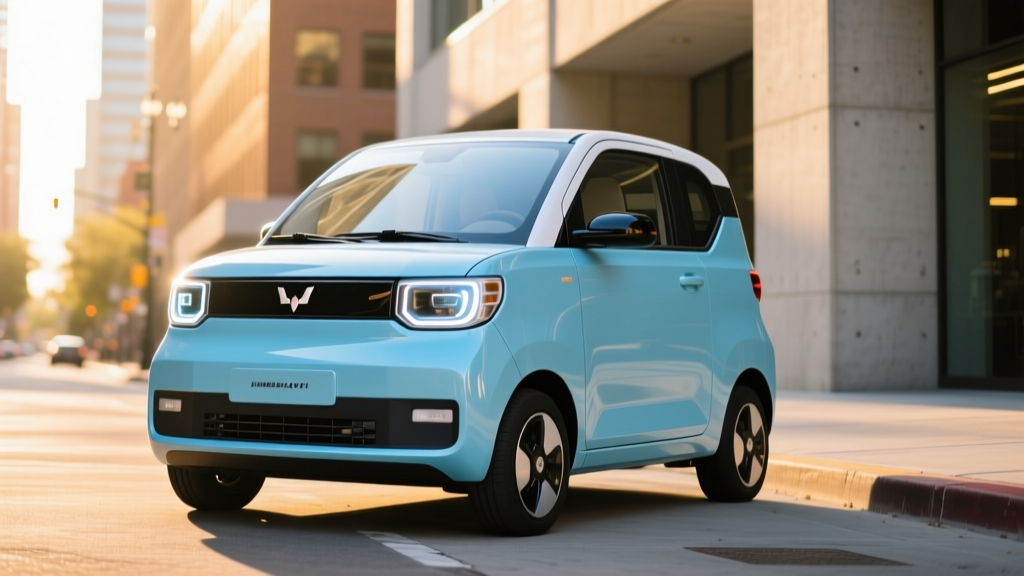
The short answer: The Wuling Hongguang Mini EV is a micro electric car sold exclusively in China (and a few Southeast Asian markets) starting at roughly ¥32,800 (~$4,500 USD). With an EPA-equivalent range of approximately 75–106 miles depending on the variant, a 9.3–13.9 kWh LFP battery, and Level 1/2 AC charging only, it is purpose-built for low-speed urban commuting. As of 2026, the Wuling Mini EV is not available for sale in the United States and has not been submitted for NHTSA certification or FMVSS compliance. Here's what the vehicle actually offers, why it dominates China's micro-EV segment, and what US buyers can look to instead.
What Is the Wuling Mini EV?
Produced by SAIC-GM-Wuling — a joint venture between China's SAIC Motor, General Motors, and Liuzhou Wuling Motors — the Hongguang Mini EV launched in July 2020 and quickly became China's best-selling electric vehicle by volume. By 2024, cumulative sales exceeded 1.2 million units. The vehicle's formula is simple: a four-seat (tight fit), two-door microcar with a rear-mounted electric motor, an LFP (lithium iron phosphate) battery pack, and a top speed around 62 mph (100 km/h).
The Mini EV targets a specific use case: short urban commutes, grocery runs, and neighborhood driving in Chinese cities where parking is scarce and speeds rarely exceed 50 km/h. It competes in a segment that simply doesn't exist in the US market — sub-$10,000 electric microcars — which is precisely why it generates so much curiosity among American EV enthusiasts.
Wuling Mini EV Specs: Range, Battery, and Charging
Understanding the Mini EV's specifications requires translating Chinese testing standards (CLTC) to something US buyers can contextualize. CLTC range figures tend to run 15–25% higher than EPA estimates under comparable conditions.
| Specification | Base (Easy) | Macaron | Gameboy / GB 300 |
|---|---|---|---|
| Battery Capacity (usable) | 9.3 kWh | 9.3 kWh | 13.9 kWh |
| Battery Chemistry | LFP | LFP | LFP |
| CLTC Range | 120 km (~75 mi) | 120 km (~75 mi) | 200–300 km (~124–186 mi) |
| Estimated EPA-Equivalent Range | ~55–60 mi | ~55–60 mi | ~95–150 mi |
| Motor Power | 20 kW (27 hp) | 20 kW (27 hp) | 30 kW (40 hp) |
| Top Speed | 62 mph (100 km/h) | 62 mph | 62 mph |
| 0–50 km/h (0–31 mph) | ~7.5 sec | ~7.5 sec | ~6.0 sec |
| DC Fast Charging | No | No | No |
| AC Charging (Level 1/2) | ~3.5 hours (full) | ~3.5 hours | ~5.5 hours |
| Weight (curb) | ~665 kg (1,466 lb) | ~700 kg | ~840 kg |
| Starting Price (China) | ~¥32,800 (~$4,500) | ~¥43,800 (~$6,000) | ~¥55,800 (~$7,700) |
Real-world range reality: The base Mini EV's 9.3 kWh LFP battery delivers roughly 55–60 miles of usable range in moderate conditions. In cold weather (below 40°F / 4°C), expect a 25–40% reduction — meaning 35–45 effective miles. There is no active thermal management system; the battery relies on passive cooling. Highway driving at the car's 62 mph top speed will also significantly reduce range compared to city use, where regenerative braking recaptures energy. This is strictly a city car.
Why the Wuling Mini EV Isn't Sold in the United States
The absence of the Mini EV from the US market isn't an oversight — it's a regulatory and economic wall that would cost SAIC-GM-Wuling hundreds of millions to breach:
- FMVSS Compliance: Every vehicle sold in the US must meet Federal Motor Vehicle Safety Standards, including crash-test performance (frontal, side, rollover), airbag systems, electronic stability control, and bumper standards. The Mini EV's lightweight construction and minimal safety equipment would require extensive — and expensive — structural redesign.
- Tariff Barriers: Chinese-manufactured vehicles face a 100% tariff under current US trade policy (raised in 2024 from 25%). A $4,500 car becomes a $9,000+ car before shipping, compliance, and dealer markup.
- No US Dealer Network: SAIC-GM-Wuling has no retail presence in the US. Building one from scratch requires billions in investment for a vehicle with razor-thin margins.
- Liability and Insurance: US tort law and insurance requirements add substantial per-unit costs that don't exist in the Chinese domestic market.
- Consumer Expectations: American buyers expect vehicles capable of 70+ mph highway speeds, 200+ mile range, and robust crash safety — none of which the Mini EV delivers.
General Motors, despite its stake in the joint venture, has shown no interest in importing the Mini EV badge or platform to the US. The economics simply don't work.
Cost Comparison: Wuling Mini EV vs. Affordable US EVs
Since the Mini EV isn't available stateside, here's how its theoretical US-equivalent cost would compare to the cheapest electric vehicles American buyers can actually purchase in 2026:
| Metric | Wuling Mini EV (China) | Nissan Leaf S | Chevrolet Bolt EV (if available used) | Gas Baseline (Mitsubishi Mirage) |
|---|---|---|---|---|
| Base MSRP / Price | ~$4,500 (China) | $29,135 | $18,000–$24,000 (used) | $18,590 |
| Federal Tax Credit (§30D) | N/A (not US-sold) | Up to $3,750 | Up to $4,000 (used EV credit) | $0 |
| Effective Price After Credit | N/A | ~$25,385 | ~$14,000–$20,000 | $18,590 |
| EPA Range | ~55–60 mi (est.) | 212 mi | 259 mi | N/A (290 mi tank) |
| Battery Capacity | 9.3 kWh | 40 kWh | 65 kWh | N/A |
| Fuel/Energy Cost Per Mile | ~$0.03–0.04 | ~$0.04 | ~$0.04 | ~$0.13 (at $3.50/gal, 36 MPG) |
| Annual Fuel/Energy (12K mi) | ~$360–$480 | ~$480 | ~$480 | ~$1,560 |
| Top Speed | 62 mph | 90 mph | 93 mph | 115 mph |
| DC Fast Charging | No | Yes (50 kW) | Yes (55 kW) | N/A |
The math is stark: even the cheapest US-available EV costs 5–6× what a Wuling Mini EV sells for in China. But those US vehicles deliver 4× the range, highway capability, crash safety, and infrastructure compatibility. The Mini EV's price advantage evaporates once you add US compliance costs, tariffs, and shipping.
Real-World Ownership: What Driving a Micro EV Actually Looks Like
For readers intrigued by the micro-EV concept — whether it's a Wuling, a Chinese-market BYD Seagull, or a neighborhood electric vehicle (NEV) — here's what daily ownership demands:
Charging at Home Is Mandatory
The Mini EV charges exclusively via AC — a standard household outlet in China (220V). In the US (120V standard), charging a 9.3 kWh battery from empty would take roughly 8–10 hours on a Level 1 outlet, or about 3 hours on a Level 2 (240V) home charger. Without home charging access, a micro-EV becomes impractical — public Level 2 chargers cost $0.25–$0.50/kWh, negating the cost-per-mile advantage.
Climate Kills Range
LFP batteries handle heat well but lose significant capacity in cold weather. Without an active battery thermal management system (heat pump or resistive heater), the Mini EV's 55-mile range can drop to 35 miles or fewer in freezing temperatures. Cabin heating draws directly from the traction battery, compounding the loss. This car is viable only in mild-climate cities.
Highway Driving Is Off the Table
A 62 mph top speed means the Mini EV cannot safely merge onto US interstates where traffic flows at 70–80 mph. This limits the vehicle to surface streets, suburban roads, and neighborhoods — a fundamentally different use case than what most American drivers need from their primary vehicle.
Insurance and Registration
Even if a Mini EV could be imported and registered, US auto insurance premiums for an uncertified, no-crash-test-data vehicle would likely exceed the car's purchase price annually. Insurers price risk based on safety ratings (IIHS/NHTSA), repair costs, and liability exposure — all unknowns for this vehicle.
Myths vs. Facts About the Wuling Mini EV
| Myth | Fact |
|---|---|
| "You can import one to the US for $5,000" | Importing a non-FMVSS-compliant vehicle for road use is illegal. The 25-year import exemption doesn't apply to new vehicles. Tariffs alone would double the price. |
| "It's basically a golf cart" | It's a fully enclosed, four-seat vehicle with a 62 mph top speed — faster than any street-legal golf cart, but far below US highway standards. It sits between a NEV and a full-size car. |
| "GM could just sell it here" | GM would need to redesign the structure for crash compliance, add airbags and ESC, build a US supply chain, and price it at $15,000+ minimum — at which point it competes with used Bolts and Leafs that offer 4× the range. |
| "The battery will degrade quickly" | LFP chemistry is among the most durable available — typically retaining 80%+ capacity after 2,000+ charge cycles. The limiting factor is the small pack size, not degradation. |
| "It qualifies for the US $7,500 tax credit" | The vehicle is not sold in the US and is manufactured entirely in China, making it ineligible for the IRS §30D credit regardless of specifications. |
What US Buyers Can Choose Instead
If the Wuling Mini EV's appeal is ultra-low-cost electric commuting, here's the decision framework for US buyers:
Choose a used Chevrolet Bolt EV/EUV ($14K–$22K) if: You want the cheapest path to 250+ miles of EPA range, DC fast charging, full crash safety, and eligibility for the up-to-$4,000 used EV tax credit. This is the closest US analog to "affordable electric commuting."
Choose a Nissan Leaf ($29K new, ~$15K used) if: You want a new vehicle with a warranty, 212 miles of range, and don't need DC fast charging for daily use (the Leaf uses CHAdeMO, increasingly rare on US networks).
Choose a neighborhood electric vehicle (NEV) like a GEM or Arcimoto if: You literally only need to drive under 25 mph on local roads, accept that it's not a real car, and live in a community that permits NEVs. Expect to pay $10,000–$20,000.
Wait for a US-market micro-EV if: You're hoping a manufacturer cracks the sub-$20K EV code for American roads. The upcoming Slate Auto concept and other startups are attempting this, but none have reached production as of 2026. Check fueleconomy.gov for certified listings when they arrive.
Don't try to import a Wuling Mini EV: It will be seized at the port, or if somehow cleared, it cannot be legally registered for road use in any US state.
Bottom Line: The Wuling Mini EV Is a China-Market Phenomenon — Not a US Option
The Wuling Hongguang Mini EV proves that electric vehicles can be built and sold at astonishingly low prices when you strip away everything non-essential. For Chinese urban commuters with short trips, home charging, and no highway needs, it's a rational purchase at $4,500. But the US market operates under fundamentally different regulatory, geographic, and consumer-expectation constraints. The cheapest way for American drivers to access electric commuting in 2026 remains a used Chevrolet Bolt EV at roughly $14,000–$18,000 after the used-EV tax credit — delivering 259 miles of range, full safety equipment, and access to the national charging network. That's 4× the price of a Mini EV, but it's a real car for real American roads.
Frequently Asked Questions
Can I legally buy a Wuling Mini EV in the United States?
No. The Wuling Mini EV has not been certified for US sale under FMVSS standards. Importing one for road use is not legal, and no US dealer network exists. Even if privately imported under narrow exemptions, it could not be registered for street driving.
What is the real-world range of the Wuling Mini EV?
The base 9.3 kWh variant delivers roughly 55–60 miles in moderate city driving. In cold weather (below 40°F), expect 35–45 miles. The larger 13.9 kWh Gameboy variant achieves approximately 95–150 miles depending on conditions. These are estimates based on CLTC-to-EPA conversion — the vehicle has never been EPA-certified.
Does the Wuling Mini EV have DC fast charging?
No. All Mini EV variants charge via AC only — either a standard household outlet or a Level 2 (240V) charger. A full charge on the base 9.3 kWh battery takes approximately 3.5 hours on Level 2 or 8–10 hours on a US 120V Level 1 outlet. There is no CCS, NACS, or CHAdeMO port.
How much would the Wuling Mini EV cost if it were sold in the US?
After accounting for the 100% tariff on Chinese vehicles, FMVSS compliance redesign, shipping, dealer markup, insurance certification, and US-spec safety equipment, industry analysts estimate the Mini EV would need to be priced at $15,000–$20,000 minimum — at which point it competes directly with used Bolts and Leafs offering far more capability.
Is the Wuling Mini EV safe?
By Chinese standards, it includes basic safety features (ABS, a driver airbag on higher trims). By US standards, it lacks the structural mass, crumple zones, multiple airbags, electronic stability control, and crash-test validation that NHTSA and IIHS require. It would almost certainly perform poorly in US crash testing.
What's the closest alternative to the Wuling Mini EV available in the US?
The closest in spirit — ultra-affordable electric commuting — is a used Chevrolet Bolt EV (2017–2023), purchasable for $14,000–$22,000 and eligible for the up-to-$4,000 federal used-EV tax credit under IRS §25E. For neighborhood-only use, a street-legal NEV (neighborhood electric vehicle) like a Polaris GEM offers similar urban utility at $10,000–$20,000.