The Short Answer on the Wuling Hongguang Mini EV
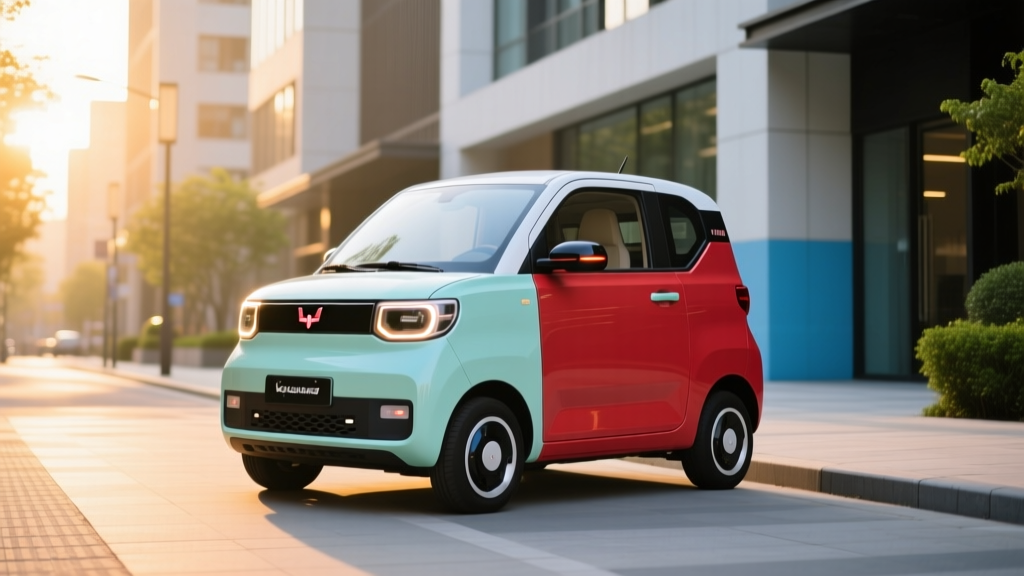
The Wuling Hongguang Mini EV is a battery-electric microcar built by SAIC-GM-Wuling, a joint venture headquartered in China. It sells for roughly ¥29,800–¥53,800 (approximately $4,100–$7,400 USD at current exchange rates) depending on trim and battery size. However, US buyers cannot legally import and register a new Hongguang Mini EV for street use in 2026. The vehicle was never submitted for EPA certification, does not meet Federal Motor Vehicle Safety Standards (FMVSS), and has not been crash-tested by NHTSA or IIHS. The only legal pathway is the 25-year import rule — which won't apply to any production model until the late 2040s at the earliest.
If you're researching this car because you want an ultra-cheap EV for neighborhood errands, this guide breaks down exactly what the Hongguang Mini EV offers, why it can't come to the US, and which legal alternatives deliver similar economics.
Specs at a Glance: What the Hongguang Mini EV Actually Offers
The Hongguang Mini EV has gone through several iterations since its 2020 launch. Here are the key specs for the most recent variants still in production for the Chinese domestic market:
| Specification | Base (120 km) | Mid (170 km) | Gameboy / Macaron (200–300 km) |
|---|---|---|---|
| EPA-equivalent range | ~75 mi (CLTC 120 km) | ~105 mi (CLTC 170 km) | ~125–186 mi (CLTC 200–300 km) |
| Battery capacity (usable) | 9.3 kWh (LFP) | 13.9 kWh (LFP) | 17.3–26.7 kWh (LFP) |
| Motor output | 27 hp (20 kW) | 27 hp (20 kW) | 41 hp (30 kW) |
| Top speed | 62 mph (100 km/h) | 62 mph (100 km/h) | 62 mph (100 km/h) |
| 0–30 mph (est.) | ~7 sec | ~7 sec | ~5.5 sec |
| AC charge (Level 2) | ~1.5 kW (6–7 hr) | ~1.5 kW (9–10 hr) | ~3.3 kW (5–8 hr) |
| DC fast charging | Not available | Not available | Not available |
| Curb weight | ~1,455 lb (660 kg) | ~1,543 lb (700 kg) | ~1,720 lb (780 kg) |
| Seating | 4 (2+2 tight) | 4 (2+2 tight) | 4 (2+2 tight) |
| Price (China MSRP) | ~$4,100 | ~$5,200 | ~$6,000–$7,400 |
Real-world range caveat: CLTC (China Light-Duty Vehicle Test Cycle) range figures are notoriously optimistic — even more so than the US EPA cycle. Expect real-world range to be roughly 65–75% of the CLTC sticker in mixed driving, and as low as 50% in cold weather (below 32°F / 0°C). A "170 km" model realistically delivers about 60–75 miles on a full charge in moderate temperatures.
Why You Can't Buy One in the United States
This is the single most important point for American readers. Three regulatory barriers block the Hongguang Mini EV from US roads:
- FMVSS compliance: Every vehicle sold or imported for street use in the US must meet Federal Motor Vehicle Safety Standards covering crashworthiness, airbags, lighting, mirrors, seat belts, and more. The Hongguang Mini EV was engineered for Chinese GB standards, which differ substantially. Retrofitting compliance would cost SAIC-GM-Wuling tens of millions of dollars for a vehicle with virtually no US dealer infrastructure.
- EPA certification: The vehicle's powertrain and battery system have never been submitted to the EPA for emissions and efficiency certification, a prerequisite for legal sale.
- The 25-year import rule: NHTSA allows vehicles not originally compliant with FMVSS to be imported once they are at least 25 years old. The earliest Hongguang Mini EVs were built in 2020, meaning the first legal imports under this rule would be possible around 2045.
Some gray-market importers have discussed bringing in units under NHTSA's "show or display" exemption, but that pathway requires the vehicle to be of "historical or technological significance" and limits driving to 2,500 miles per year — hardly practical for a daily commuter car.
Hongguang Mini EV vs. Gas Car vs. US-Legal EV: Cost Comparison
Let's compare the economics of the Hongguang Mini EV (hypothetically, if you could register it) against a cheap used gas car and the closest US-legal electric alternatives available in 2026.
| Factor | Wuling Hongguang Mini EV (170 km, hypothetical) | Used Gas Car (e.g., 2019 Honda Fit, ~$12K) | 2026 Chevrolet Equinox EV LT (~$33,000) |
|---|---|---|---|
| Purchase price | ~$5,200 | ~$12,000 | ~$33,600 (before credits) |
| Federal tax credit (§30D) | $0 (not eligible) | N/A | Up to $7,500 (if eligible) |
| Effective price after credit | ~$5,200 | ~$12,000 | ~$26,100 |
| Fuel/energy cost per mile | ~$0.03 (home L1/L2 at $0.14/kWh) | ~$0.14 (33 MPG, $3.50/gal) | ~$0.04 (home L2 at $0.14/kWh) |
| Annual fuel/energy (10K mi) | ~$300 | ~$1,400 | ~$400 |
| Annual maintenance (est.) | ~$150 | ~$800 | ~$300 |
| 5-year total operating cost | ~$2,250 | ~$11,000 | ~$3,500 |
| Insurance (annual avg.) | Unknown / likely $600–$900 | ~$1,200 | ~$1,500 |
| Crash-test rating | None (NHTSA/IIHS) | Good (IIHS) | Top Safety Pick (IIHS) |
| DC fast charging | No | N/A | Yes (up to 150 kW) |
The bottom line: Even if you could import the Hongguang Mini EV, the per-mile energy savings over gas are real (~$0.11/mile), but the total 5-year operating savings of roughly $8,750 over the used gas car still leave you in a vehicle with zero crash-test data, no airbags (on base trims), no DC fast charging, and a 62-mph top speed that makes highway driving dangerous or illegal.
Real-World Ownership Considerations
Home Charging Access
The Hongguang Mini EV charges exclusively via AC — typically at 1.5 kW to 3.3 kW depending on trim. That's essentially Level 1 (standard 120V outlet) to low-end Level 2 territory. A full charge on the 13.9 kWh battery takes 9–10 hours on a standard household outlet. For most US households, this is workable overnight if you have a garage or dedicated parking spot with outlet access. However, apartment dwellers without dedicated parking will find this a significant barrier — the same problem that affects all EV ownership without home charging.
Cold-Weather Range Loss
LFP (lithium iron phosphate) batteries, which the Hongguang Mini EV uses across all trims, experience more pronounced capacity loss in cold temperatures than NMC chemistry. Without an active thermal management system (the Mini EV uses passive air cooling), expect 30–50% range reduction when ambient temperatures drop below freezing. A "105-mile" CLTC-equivalent model could realistically deliver just 35–50 miles in a Midwestern or Northeastern winter. This is the single biggest ownership surprise for first-time EV buyers in cold climates.
Driving Patterns and Safety
At 62 mph top speed and 27 hp on the base model, this is a city-only vehicle. It is not designed for highway merging, rural two-lane roads with 55-mph speed limits, or any environment where you need to accelerate quickly to avoid danger. In China, it thrives in dense urban cores with low speed limits and short trip distances. Transplanting that use case to most American cities — where 35–45 mph arterials are common and highway on-ramps demand 55+ mph merging — reveals a fundamental mismatch.
Common Misconceptions: Myth vs. Fact
| Myth | Fact |
|---|---|
| "I can import one through a broker and register it in my state." | Federal law prohibits importing non-FMVSS-compliant vehicles for street use. State DMVs cannot override this. Any broker claiming otherwise is likely referring to off-road or private-property use only. |
| "It qualifies for the $7,500 federal EV tax credit." | The IRS §30D credit applies only to vehicles from manufacturers that have submitted for certification and meet MSRP, income, battery-sourcing, and final-assembly requirements. The Hongguang Mini EV meets none of these. |
| "LFP batteries are inferior." | LFP chemistry actually offers longer cycle life (2,000–5,000 cycles vs. 1,000–2,000 for NMC), better thermal stability, and lower cost. The trade-off is lower energy density and worse cold-weather performance — a meaningful compromise in a tiny battery pack. |
| "It's basically a golf cart." | Golf carts are limited to 20–25 mph and are classified as Low-Speed Vehicles (LSVs) under FMVSS 500. The Hongguang Mini EV targets 62 mph and is a full passenger car in China — it simply doesn't meet US passenger-car safety standards. |
| "If it's street-legal in China, it should be fine here." | China's GB safety standards and US FMVSS are fundamentally different regulatory frameworks. Many vehicles legal in one market are not legal in the other without costly redesigns. |
Legal US Alternatives That Deliver Similar Value
If the Hongguang Mini EV's appeal is rock-bottom price and ultra-low running costs, here are vehicles you can actually buy and register in the US in 2026:
| Vehicle | Type | Price (2026) | EPA Range / MPGe | Top Speed | Crash Tested? |
|---|---|---|---|---|---|
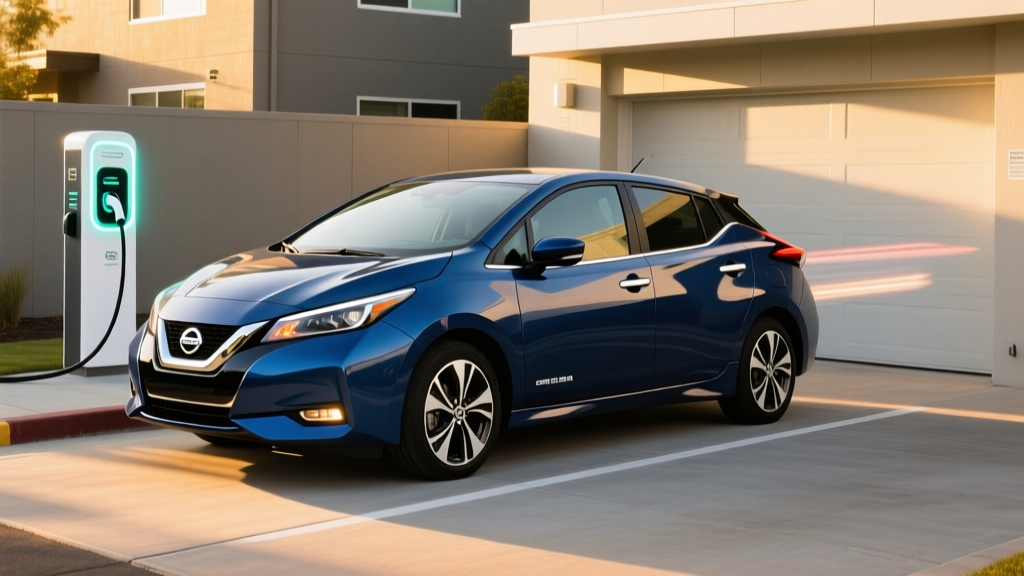
| Used Nissan Leaf (2019–2021) | BEV | $10,000–$15,000 | 149–226 mi / 111–114 MPGe | 90+ mph | Yes (NHTSA 5-star) |
| Used Chevrolet Bolt EV (2020–2023) | BEV | $12,000–$18,000 | 259 mi / 120 MPGe | 93 mph | Yes (IIHS Good) |
| 2026 Chevrolet Equinox EV LT | BEV | ~$33,600 ($26,100 after credit) | 319 mi / 117 MPGe | 112 mph | Yes |
| 2026 Hyundai Kona Electric SE | BEV | ~$32,975 | 261 mi / 129 MPGe | 104 mph | Yes (IIHS Top Safety Pick) |
| Neighborhood Electric Vehicle (LSV, e.g., GEM e2) | BEV (LSV) | $12,000–$15,000 | 30–60 mi | 25 mph | FMVSS 500 (LSV standard) |
A used Chevrolet Bolt EV stands out as the closest US-legal equivalent to the Hongguang Mini EV's value proposition: low purchase price, low running costs, and genuine highway capability — with full crash-test protection and DC fast charging (up to 55 kW on 2020+ models, 10–80% in roughly 45 minutes).
Decision Framework: Should You Keep Waiting or Buy Something Else?
Choose a used Bolt EV or Leaf if:
- You want a sub-$15,000 EV that is fully street-legal, crash-tested, and highway-capable
- You need more than 60 miles of real-world range
- You drive on roads with speed limits above 35 mph
- You want DC fast-charging capability for occasional longer trips
Choose a new budget EV (Equinox EV, Kona Electric) if:
- You qualify for the §30D federal tax credit (income ≤ $150K single / $300K joint; MSRP ≤ $55K for cars)
- You want a full battery and powertrain warranty (8 years / 100,000 miles)
- You need modern ADAS features like automatic emergency braking and lane-keeping assist
Choose a street-legal LSV (GEM, Arcimoto) if:
- You live in a community with speed limits ≤ 35 mph and state laws permitting LSV operation
- Your trips are under 20 miles round-trip
- You prioritize lowest possible purchase price over safety and range
Wait for the Hongguang Mini EV if:
- You're planning to live in China or Southeast Asia where it is sold
- You're willing to wait until ~2045 for 25-year import eligibility
- You want one strictly for private-property use (large farms, gated communities with private roads)
Frequently Asked Questions
Can I buy a Wuling Hongguang Mini EV in the US in 2026?
No. The vehicle has not been certified by the EPA or NHTSA for US street use, does not meet FMVSS safety standards, and no authorized US dealer network exists. The 25-year import exemption will not apply until approximately 2045.
What is the real-world range of the Hongguang Mini EV?
Expect roughly 45–75 miles depending on trim, temperature, and driving style. The CLTC-rated 170 km (105 mi) model realistically delivers about 60–75 miles in moderate weather and as few as 35–50 miles in freezing temperatures due to LFP chemistry limitations without active battery heating.
Does the Wuling Hongguang Mini EV have DC fast charging?
No. All trims charge exclusively via AC at 1.5 kW to 3.3 kW. A full charge takes 5–10 hours depending on battery size. There is no CCS, NACS, or CHAdeMO port.
What battery chemistry does it use?
All variants use LFP (lithium iron phosphate) cells, typically supplied by CATL or Guoxuan High-Tech. LFP offers excellent cycle life and thermal safety but lower energy density and worse cold-weather performance than NMC.
How does the Hongguang Mini EV compare to a Smart EQ Fortwo?
The Smart EQ Fortwo (discontinued in the US after 2019) offered 58 miles of EPA range, a 60-mph top speed, and full crash-test compliance at roughly $24,000 new. The Hongguang Mini EV is far cheaper but lacks the safety certification and dealer support the Smart had. On the used market, a Smart EQ Fortwo at $8,000–$12,000 is a legal alternative with similar city-car dynamics.
What would it cost to charge a Hongguang Mini EV at home?
At the US average residential electricity rate of ~$0.14/kWh, fully charging the 13.9 kWh battery costs approximately $1.95. Over 10,000 miles of annual driving (at roughly 3.5 miles/kWh efficiency), annual electricity cost would be around $400 — compared to $1,400 in gasoline for a 33-MPG gas car at $3.50/gallon.