Quick Verdict: Is the Wuling Hong Guang Mini EV Right for You?
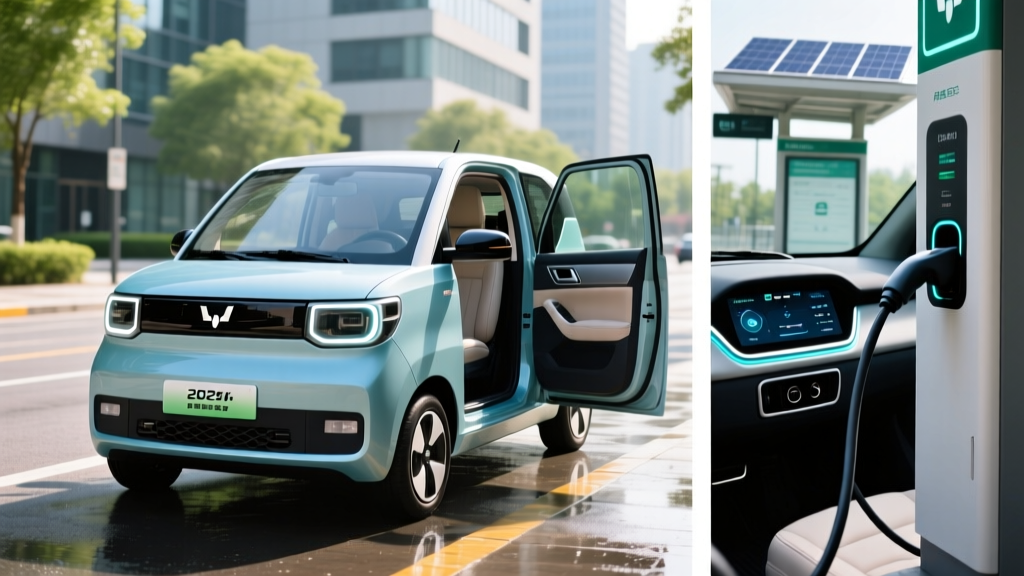
The Wuling Hong Guang Mini EV is a sub-$5,000 micro electric vehicle built for dense urban commuting in China. It offers roughly 75–106 miles of range (CLTC), a 9.3–13.9 kWh LFP battery, and AC-only charging. It is not sold in the United States and does not meet US federal crash-test (NHTSA) or EPA certification requirements. For US buyers seeking an ultra-affordable city EV, the closest legal alternatives are the used Chevrolet Bolt EV (~$15,000–$20,000 pre-owned), the upcoming slate of compact EVs, or a neighborhood electric vehicle (NEV/LSV) like the Polaris GEM if your local roads permit it. This guide breaks down what the Hong Guang Mini EV actually delivers, what ownership looks like, and how it compares to the EVs you can actually buy in America.
Wuling Hong Guang Mini EV: Core Specs at a Glance
Produced by SAIC-GM-Wuling, a joint venture headquartered in Liuzhou, China, the Hong Guang Mini EV has been China's best-selling EV by volume since its 2020 launch, with over 1.2 million units sold through 2025. The 2025–2026 model year introduces the Macaron third-generation and GameBoy editions with modest range and feature upgrades.
| Specification | Base / Easy | Macaron | GameBoy |
|---|---|---|---|
| Battery (usable kWh) | 9.3 kWh (LFP) | 13.9 kWh (LFP) | 26.5 kWh (LFP) |
| Range (CLTC) | 120 km / ~75 mi | 170 km / ~106 mi | 300 km / ~186 mi |
| Est. Real-World Range (US conditions) | ~50–60 mi | ~70–85 mi | ~120–145 mi |
| Motor Output | 20 kW (27 hp) | 20 kW (27 hp) | 30 kW (40 hp) |
| Top Speed | 100 km/h (62 mph) | 100 km/h (62 mph) | 100 km/h (62 mph) |
| 0–50 km/h (0–31 mph) | ~7.5 sec | ~7.5 sec | ~5.8 sec |
| Charging (AC only) | 1.5 kW / ~6 hr (10–100%) | 2.0 kW / ~7 hr (10–100%) | 3.3 kW / ~8 hr (10–100%) |
| DC Fast Charging | Not available | Not available | Not available |
| Curb Weight | ~660 kg (1,455 lb) | ~710 kg (1,565 lb) | ~830 kg (1,830 lb) |
| Seating | 4 (tight rear) | 4 (tight rear) | 4 |
| Price (China MSRP) | ¥32,800 (~$4,500) | ¥43,800 (~$6,000) | ¥63,800 (~$8,800) |
Important range caveat: CLTC (China Light-Duty Vehicle Test Cycle) tends to overstate range compared to the US EPA cycle by roughly 20–30%. A CLTC-rated 170 km vehicle will typically achieve closer to 120–135 km (75–85 miles) under mixed US driving conditions, and significantly less in cold weather or at sustained highway speeds. The Hong Guang Mini EV has no active thermal management system for the battery, meaning cold-weather range loss can exceed 35% in sub-freezing temperatures.
Why the Wuling Hong Guang Mini EV Isn't Available in the US
Despite its enormous popularity in China, the Hong Guang Mini EV cannot be legally sold or registered for road use in the United States. The reasons are structural, not cosmetic:
- Federal Motor Vehicle Safety Standards (FMVSS): The vehicle has not been crash-tested or certified to NHTSA standards. Its lightweight construction and minimal crumple zones would likely struggle to meet US frontal, side-impact, and rollover requirements. Per NHTSA import rules, non-conforming vehicles cannot be permanently imported for road use.
- EPA Certification: The powertrain and emissions systems (including any auxiliary equipment) lack EPA certification required for sale in the US market.
- No US Service Infrastructure: SAIC-GM-Wuling has no US dealer network, parts supply chain, or certified service centers. A battery failure or collision repair would have no authorized resolution path.
- Tariff Exposure: Even if imported through a grey-market channel, Chinese-manufactured EVs currently face a combined tariff of up to 100% under Section 301 trade actions as of 2025–2026, effectively doubling the already-thin import economics.
The bottom line: there is no legal, practical pathway for an American consumer to buy and drive a Hong Guang Mini EV on public roads.
What the Hong Guang Mini EV Costs to Own (If You Could)
To understand the appeal — and the limitations — of this micro-EV, here's a projected annual ownership cost breakdown compared against a typical subcompact gas car and a US-market affordable EV (the Chevrolet Bolt EV, discontinued but widely available used, and the Nissan Leaf).
| Cost Category | Wuling Mini EV (est.) | Honda Fit (gas, 2020) | Used Chevy Bolt EV (2022) |
|---|---|---|---|
| Purchase Price | $4,500–$8,800 | $18,000 (used) | $16,000–$20,000 |
| Annual Fuel/Energy (8,000 mi/yr) | $140–$210 (home L1) | $1,050 (33 MPG, $3.50/gal) | $280–$400 (home L2) |
| Annual Maintenance | ~$100 | ~$550 | ~$200 |
| Insurance (annual) | N/A (uninsurable in US) | ~$1,200 | ~$1,500 |
| Battery Warranty | 8 yr / 120,000 km (China) | N/A | 8 yr / 100,000 mi |
| Federal Tax Credit (§30D) | Not eligible | Not eligible | Not eligible (used credit up to $4,000 if qualified) |
| 5-Year Total Cost (est.) | ~$7,700–$12,350* | ~$27,250 | ~$25,500–$29,500** |
*Assumes purchase price only; excludes insurance, which is unavailable in the US. **Assumes $4,000 used-EV credit eligibility under IRS §25E.
The energy cost story is compelling: at an estimated efficiency of 10–12 kWh/100 km (roughly 170–200 Wh/mi — aided by the sub-800 kg weight), the Mini EV sips electricity at about $0.015–$0.025 per mile on US-average residential rates ($0.16/kWh). That's roughly one-eighth the per-mile fuel cost of a 33 MPG gas car at $3.50/gallon.
Charging Reality: AC-Only and Slow
The Hong Guang Mini EV's charging setup reflects its price point and urban-use design intent. There is no DC fast charging capability on any trim — no CCS, no NACS, no CHAdeMO port. All charging is AC via a standard Chinese GB/T connector (equivalent to a J1772 in concept, but physically incompatible without an adapter not readily available in the US).
| Level | Power (kW) | 0–100% Time | Miles Added per Hour |
|---|---|---|---|
| Level 1 (120V household) | ~1.0–1.5 kW | 8–10 hours (13.9 kWh battery) | ~8–10 mi/hr |
| Level 2 (240V) | 2.0–3.3 kW (onboard-limited) | 5–7 hours | ~14–20 mi/hr |
| DC Fast Charge | N/A | N/A | N/A |
The onboard charger limits AC input to between 1.5 kW and 3.3 kW depending on trim. Even if you plugged it into a 48-amp Level 2 home charger capable of delivering 11.5 kW, the car can only accept its rated maximum. For a city commuter driving 20–30 miles per day, an overnight charge from a standard 120V wall outlet is sufficient — a genuine advantage for apartment dwellers who lack dedicated EV charging infrastructure.
However, the absence of DC fast charging means road trips are impractical. A 100-mile journey at 55 mph would consume most or all of the Macaron's real-world range, and recharging would require 5+ hours at a destination.
How Does It Compare to US-Market Affordable EVs?
If the Hong Guang Mini EV's concept appeals to you — ultra-low-cost electric city commuting — here's how it stacks up against the cheapest legitimate alternatives available to US buyers in 2026.
| Attribute | Wuling Mini EV | Used Chevy Bolt EV (2022) | Nissan Leaf S (2025) | Polaris GEM (NEV/LSV) |
|---|---|---|---|---|
| Price | $4,500–$8,800 (China) | $16,000–$20,000 | $28,140 MSRP | $12,000–$16,000 |
| EPA Range | N/A (est. 50–85 mi) | 259 mi | 149 mi | ~30 mi (LSV class) |
| Battery (kWh) | 9.3–26.5 LFP | 65 kWh NMC | 40 kWh LMO/NMC | ~6–12 kWh (lead-acid or lithium) |
| DC Fast Charge | No | Yes (55 kW CCS) | Yes (50 kW CHAdeMO) | No |
| Top Speed | 62 mph | 93 mph | 90 mph | 25 mph (LSV legal limit) |
| Highway-Capable | Technically, barely | Yes | Yes | No (roads ≤35 mph only) |
| US Legal | No | Yes | Yes | Yes (restricted roads) |
| Federal Tax Credit | None | Up to $4,000 (used §25E) | Eligibility varies (§30D) | None |
| Safety Ratings | None (no NHTSA/IIHS test) | NHTSA 5-star | NHTSA 4-star | None (exempt from FMVSS) |
The Bolt EV stands out as the pragmatic answer for anyone drawn to the Mini EV's affordability thesis. A 2022 Bolt EV with 259 miles of EPA range, DC fast charging, full safety certification, and eligibility for the up-to-$4,000 used EV credit under IRS §25E (income caps apply: $75,000 single / $150,000 joint) delivers dramatically more capability for roughly 3–4× the Mini EV's China price.
Common Misconceptions About the Wuling Mini EV
| Myth | Fact |
|---|---|
| "I can import one and register it in my state." | Federal law prohibits permanent importation of non-FMVSS-conforming vehicles for road use. Some states may issue titles to grey-market imports, but this does not make them federally legal and creates severe liability and insurance issues. |
| "It qualifies for the $7,500 federal EV tax credit." | It does not. The §30D credit requires the vehicle to be assembled in North America, meet battery critical-mineral and component sourcing thresholds, fall under MSRP caps ($55,000 cars / $80,000 SUVs/trucks), and the buyer must meet income limits. The Mini EV satisfies none of these criteria. |
| "LFP batteries don't degrade." | LFP (lithium iron phosphate) chemistry degrades more slowly than NMC and tolerates 100% state-of-charge storage better, but it still loses capacity over time. Typical LFP cells retain 80–90% capacity after 2,000–3,000 full charge cycles — excellent, but not zero degradation. |
| "It's basically a golf cart." | The Mini EV is a full (if micro) passenger vehicle designed for China's vehicle classification system, with a metal unibody, four seats, climate control, and a top speed of 62 mph. Golf carts and LSVs like the Polaris GEM are far more limited in speed, construction, and road legality. |
| "Cold weather won't affect it much." | LFP batteries suffer more cold-weather capacity loss than NMC in some conditions. Without active battery thermal management (the Mini EV uses passive air cooling), expect 30–40% range reduction at 20°F (-7°C) and below. A 106-mile CLTC rating could drop to 40–50 real-world miles in a Midwest winter. |
Decision Framework: What Should You Actually Buy?
Choose Your Path Based on Your Situation
IF you live in a US city, commute under 30 miles/day, and want the cheapest possible EV:
→ Look for a used 2020–2022 Chevrolet Bolt EV ($15,000–$20,000). It delivers 259 miles EPA range, DC fast charging, full NHTSA 5-star safety, and may qualify for the $4,000 used-EV credit under §25E. Check eligibility at IRS.gov.
IF you need a neighborhood runabout for roads with speed limits of 35 mph or less:
→ A low-speed vehicle (LSV) like the Polaris GEM or a used neighborhood electric vehicle may be street-legal in your jurisdiction. These top out at 25 mph and offer 20–40 miles of range. Check your state DMV for LSV registration rules.
IF you're considering importing a Hong Guang Mini EV from China:
→ Don't. The vehicle is not FMVSS-compliant, cannot be insured through any major US carrier, has no parts or service support, and faces 100% import tariffs. The total landed cost after shipping, duties, and attempted compliance modifications would exceed the price of a far more capable used Bolt EV or Nissan Leaf.
IF you want a new, affordable EV in 2026:
→ The Nissan Leaf S starts at $28,140, offers 149 miles of EPA range, and includes CHAdeMO DC fast charging. The Hyundai Kona Electric starts around $33,000 with 261 miles of range and CCS/NACS charging. Both are fully legal, warrantied, insurable, and serviceable in the US.
IF you live outside the US (Southeast Asia, Latin America, parts of Africa):
→ The Hong Guang Mini EV or its rebadged variants (sold in Indonesia, India, and other markets) may be a legitimate ultra-budget EV option. Verify local crash-test requirements, warranty support, and charging infrastructure compatibility before purchasing.
What First-Time EV Buyers Should Know (US Market)
If the Wuling Hong Guang Mini EV brought you here, you're likely attracted to the idea of ultra-affordable electric transportation. That instinct is sound — EVs deliver genuine per-mile savings — but the US market requires a different calculus:
- Home charging is the foundation. Roughly 80% of US EV charging happens at home. If you have access to a 240V outlet (or can install one for $500–$2,000 including a Level 2 charger and electrician), even a modest-range EV becomes practical for daily use. Without home charging, your experience depends entirely on public infrastructure reliability.
- EPA range is a ceiling, not a guarantee. Highway driving at 70+ mph, cold weather below 40°F, and aggressive acceleration all reduce range by 15–40%. Buy for your worst-case day, not your best.
- Federal tax credits have strings. The §30D new-vehicle credit (up to $7,500) requires North American assembly, battery sourcing compliance, MSRP caps, and buyer income limits. The §25E used-vehicle credit (up to $4,000) has its own income caps and applies to vehicles priced at $25,000 or less. Always verify current-year rules at IRS.gov or consult a tax professional.
- Insurance costs more for EVs. On average, EV insurance premiums run 15–25% higher than equivalent gas cars due to higher repair costs and battery replacement risk. Get quotes before committing.
- Battery degradation is real but manageable. Most modern EV batteries retain 85–92% capacity after 100,000 miles. LFP chemistry (used in the Mini EV and increasingly in US-market vehicles like the Tesla Model 3 Standard Range) tends toward the higher end of that range and tolerates regular 100% charges without accelerated degradation.
Frequently Asked Questions
Can I legally import a Wuling Hong Guang Mini EV to the United States?
No. The vehicle does not comply with Federal Motor Vehicle Safety Standards (FMVSS) and has not been EPA-certified. NHTSA regulations prohibit permanent importation of non-conforming vehicles for road use. Temporary importation for shows or testing is possible under a bond, but this does not permit daily driving or registration.
How much does the Wuling Hong Guang Mini EV cost in China?
As of the 2025–2026 model year, the base Easy trim starts at ¥32,800 (approximately $4,500 USD), the Macaron trim is priced around ¥43,800 (~$6,000), and the GameBoy edition with the larger 26.5 kWh battery starts at ¥63,800 (~$8,800). These prices reflect Chinese government subsidies and a market ecosystem that supports the vehicle.
What is the real-world range of the Hong Guang Mini EV?
Under CLTC testing, the trims rate at 75, 106, and 186 miles. Real-world expectations under mixed driving conditions are approximately 50–60 miles (base), 70–85 miles (Macaron), and 120–145 miles (GameBoy). In cold weather (below 32°F / 0°C), reduce these figures by 30–40% due to the lack of active battery thermal management.
Does the Wuling Mini EV support DC fast charging?
No. All trims charge exclusively via AC power at a maximum rate of 1.5–3.3 kW depending on the model. A full charge takes 6–10 hours. There is no DC fast-charging port on any variant.
What is the cheapest EV I can legally buy in the US in 2026?
The cheapest new EV is the Nissan Leaf S at $28,140 MSRP (149 mi EPA). On the used market, a 2020–2022 Chevrolet Bolt EV can be found for $15,000–$20,000 with 259 miles of range and may qualify for the up-to-$4,000 used clean vehicle credit under IRS §25E. For neighborhood-only use on roads with speed limits of 35 mph or less, a low-speed vehicle like the Polaris GEM starts around $12,000.
Is the Wuling Mini EV safe?
The vehicle has not been tested by NHTSA or IIHS. Chinese domestic-market crash testing by C-NCAP awarded earlier versions a modest rating. Its extremely light weight (~660–830 kg) and short crumple zones present inherent disadvantages in collisions with larger vehicles. It would almost certainly not meet US frontal and side-impact crash standards without significant structural redesign.