The Short Answer on Wuling EVs
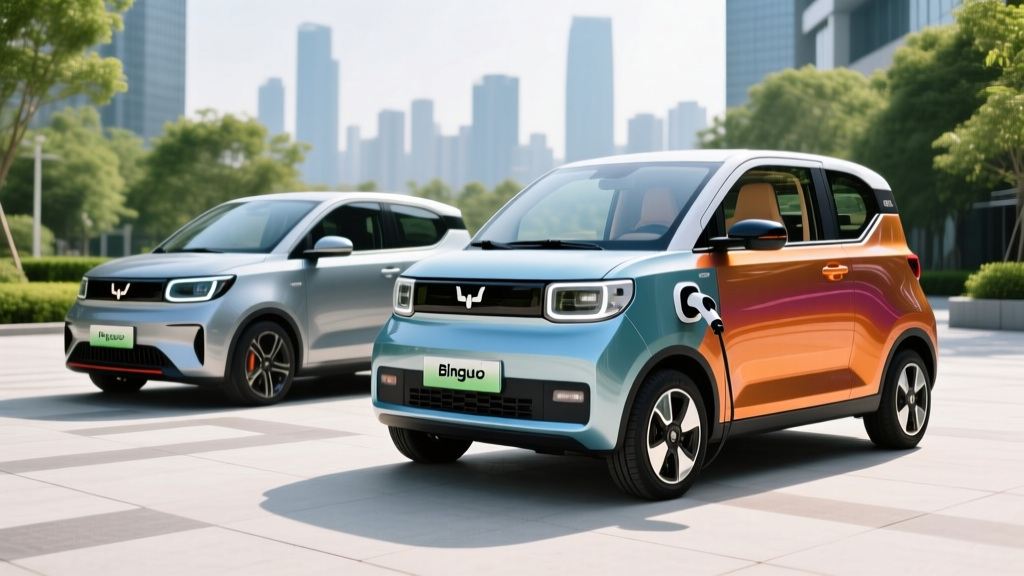
Wuling Motors (a SAIC-GM-Wuling joint venture) produces ultra-affordable city electric vehicles, primarily the Wuling Air EV (2-seat microcar, ~200-300 km CLTC range, ~$8,000-$12,000 equivalent) and the Wuling BinguoEV (4-seat hatchback, ~333-410 km CLTC range, ~$12,000-$18,000 equivalent). These are among the cheapest new EVs sold globally, but as of early 2026, Wuling does not officially sell vehicles in the United States. They are available in Indonesia, India (badged as MG Comet EV), and select Southeast Asian and Latin American markets. If you're in a market where Wuling sells, these EVs excel as low-cost urban commuters with minimal operating expenses — but they sacrifice highway capability, fast-charging speed, and advanced safety tech to hit their price targets.
Wuling EV Lineup: What's Actually Available
Wuling's electrified portfolio centers on two battery-electric models designed for dense urban environments where short trips, tight parking, and low running costs matter more than interstate range or 0-60 times.
| Spec | Wuling Air EV (2026) | Wuling BinguoEV (2026) |
|---|---|---|
| Body Style | 2-seat microcar | 4-seat hatchback |
| Battery (usable) | ~17.3 kWh (LFP) | ~31.9 kWh (LFP) |
| Range (CLTC) | ~200-300 km (124-186 mi) | ~333-410 km (207-255 mi) |
| Estimated EPA-Equivalent Range | ~80-120 mi | ~140-180 mi |
| Motor Output | ~30 kW (40 hp) | ~50 kW (67 hp) |
| Top Speed | ~100 km/h (62 mph) | ~130 km/h (81 mph) |
| DC Fast Charge (peak) | Not available (AC only) | ~30 kW (CCS2 in select markets) |
| AC Level 2 Charge | ~6.6 kW (~3 hrs full) | ~6.6 kW (~5 hrs full) |
| Level 1 (120V/220V) | ~2 kW (~9-10 hrs) | ~2 kW (~16 hrs) |
| 0-50 km/h | ~5.0 sec | ~4.5 sec |
| Length | ~2,974 mm (117 in) | ~3,950 mm (155 in) |
| Cargo Volume | Minimal (behind seats only) | ~310 L rear seats up |
| Price (local market equiv.) | $8,000–$12,000 | $12,000–$18,000 |
| Battery Warranty | 8 yr / 120,000 km | 8 yr / 150,000 km |
Critical range note: Wuling publishes range under China's CLTC standard, which is significantly more generous than the US EPA cycle. As a rule of thumb, multiply CLTC figures by roughly 0.65-0.75 to approximate EPA-equivalent range. Real-world highway driving or hot-climate AC use will reduce that further. A BinguoEV rated at 410 km CLTC will likely deliver 150-170 real-world miles in mixed urban/suburban use — adequate for city commuting but limiting for intercity travel.
Real-World Ownership: Charging, Costs, and Practical Limits
The value proposition of a Wuling EV hinges almost entirely on your access to cheap home electricity and your driving patterns. Here's what ownership actually looks like.
Home Charging Is Essential
Neither the Air EV nor the base BinguoEV supports DC fast charging at rates competitive with mainstream EVs. The Air EV is AC-only, meaning a full charge from a standard household outlet (Level 1) takes 9-10 hours. The BinguoEV's optional DC fast charging tops out around 30 kW, delivering a 30-80% charge in roughly 35 minutes — usable for topping up but not for rapid road-trip turnaround.
For most owners, overnight Level 2 home charging (6.6 kW) is the practical backbone: plug in after your commute, wake up to a full battery. If you lack home charging access — no garage, no driveway, apartment living without EV infrastructure — a Wuling EV becomes significantly harder to live with because public charging at these slow rates is impractical.
Operating Cost Breakdown
| Cost Factor | Wuling BinguoEV | Comparable Gas Hatchback (e.g., Honda Brio) |
|---|---|---|
| Purchase Price (equiv.) | $14,000–$18,000 | $16,000–$22,000 |
| Energy Cost per km | ~$0.01–$0.02 (home charging at $0.10/kWh) | ~$0.07–$0.10 (gas at $3.50/gal, 35 MPG) |
| Annual Fuel/Energy (12,000 km/yr) | ~$120–$240 | ~$840–$1,200 |
| Annual Maintenance | ~$100–$200 (no oil, minimal brake wear) | ~$400–$700 |
| Insurance (annual est.) | ~$400–$700 (market-dependent) | ~$500–$800 |
| 5-Year Energy + Maintenance | ~$1,100–$2,200 | ~$6,200–$9,500 |
The savings are real but proportional to the vehicle's low price. You're saving $1,000-$1,500 per year in fuel and maintenance versus a gas equivalent, which means the BinguoEV pays back its purchase premium (if any) within 1-2 years for a typical commuter. The Air EV, being even cheaper, has an even faster payback against any gas alternative.
Battery Chemistry: LFP Advantages and Trade-Offs
Both Wuling models use lithium iron phosphate (LFP) cells. LFP chemistry offers significant longevity benefits — typically 2,000-3,000+ full charge cycles before meaningful degradation, versus 1,000-1,500 for NMC chemistries. This means you can charge to 100% daily without the accelerated degradation concerns that NMC owners face. LFP also eliminates cobalt and nickel, reducing supply-chain and ethical concerns.
The trade-off: LFP has lower energy density than NMC, which is why these vehicles have modest range despite physically large battery packs relative to their size. LFP also performs worse in extreme cold — expect 25-40% range reduction in sub-freezing temperatures, more than the 15-25% loss typical of NMC-equipped EVs with active thermal management. Wuling's thermal management in these budget vehicles is relatively basic, which amplifies cold-weather losses.
Wuling EV vs. Gas Car vs. Hybrid: The Honest Comparison
If you're cross-shopping a Wuling EV against a conventional gas car or a hybrid in a market where all are available, here's how the numbers stack up for a typical urban commuter driving 12,000 km (7,500 miles) per year.
| Metric | Wuling BinguoEV | Toyota Yaris Hybrid (HEV) | Honda Brio (Gas) |
|---|---|---|---|
| Purchase Price (equiv.) | $15,000 | $20,000 | $17,000 |
| Combined Efficiency | ~10 kWh/100km | ~3.5 L/100km (67 MPG) | ~5.5 L/100km (43 MPG) |
| Annual Energy Cost | ~$180 | ~$500 | ~$920 |
| 5-Year Total Cost (purchase + energy + maint.) | ~$17,100 | ~$24,000 | ~$24,600 |
| CO₂ per km (tailpipe) | 0 g | ~80 g | ~130 g |
| Highway Capability | Limited (81 mph top speed, short range) | Excellent | Excellent |
| Refueling/Recharge Time | 5-10 hrs (AC home) | 5 min (gas station) | 5 min (gas station) |
The Wuling EV dominates on operating cost and wins the 5-year total-cost calculation by a wide margin — but only if your driving stays within its range and speed envelope. If you regularly drive highways at 100+ km/h, need to carry more than one passenger plus cargo, or take trips beyond 150 km without convenient charging, the hybrid or gas car remains the practical choice.
Should You Buy a Wuling EV?
Choose the Wuling Air EV if: You need a second car strictly for solo urban errands under 50 km/day, have reliable home charging, live in a warm climate, and want the absolute lowest purchase price and operating cost possible.
Choose the Wuling BinguoEV if: You need 4 seats and modest cargo space for a primary city commuter, drive under 120 km/day with home charging, and prioritize low running costs over highway performance or fast-charging capability.
Choose a hybrid or gas car instead if: You regularly drive highways at speed, take intercity trips, live in a cold climate, lack home charging access, need to carry 4+ adults comfortably, or require advanced safety features (AEB, lane-keeping, adaptive cruise) that Wuling does not offer at this price point.
US Market Reality: Can You Even Buy a Wuling EV?
As of early 2026, Wuling-branded vehicles are not sold in the United States. The parent joint venture (SAIC-GM-Wuling) has focused on China, Indonesia, India (where the Air EV is rebadged as the MG Comet EV), and select emerging markets. GM's involvement in the joint venture does not translate to Wuling imports reaching American dealers.
For US-based buyers seeking an ultra-affordable EV, the closest current-market alternatives include:
- Chevrolet Bolt EV/EUV (discontinued after 2025 but available used, ~$15,000-$22,000 with 259 mi EPA range)
- Nissan LEAF S (~$28,000 new, 149 mi EPA range, CHAdeMO)
- Used Tesla Model 3 (~$20,000-$25,000, 250+ mi range, NACS Supercharger access)
- Hyundai Kona Electric (~$33,000 new, 261 mi EPA range)
None of these approach Wuling's sub-$15,000 price point, but all offer EPA-certified range, US safety compliance, and access to established charging networks — advantages that matter enormously in daily ownership.
For buyers in Indonesia, India, or other Wuling markets, the official Wuling site lists current pricing and dealer networks. Check local government EV incentive programs, as many Southeast Asian nations offer purchase subsidies, tax exemptions, or reduced registration fees for battery-electric vehicles.
Common Misconceptions About Ultra-Budget EVs
| Myth | Fact |
|---|---|
| "The range is 410 km so I can drive 410 km." | That's CLTC-rated. Real-world mixed driving yields ~65-75% of that figure — expect 260-300 km (160-185 mi) in favorable conditions, less on highways or in cold. |
| "LFP batteries degrade quickly." | The opposite: LFP cells typically outlast NMC cells, sustaining 80%+ capacity after 2,000+ cycles. Daily 100% charging is fine. |
| "It's so cheap, something must be dangerously wrong." | Wuling EVs meet the safety standards of their target markets, but they lack the advanced crash structures, airbag counts, and active safety systems of vehicles 2-3x the price. They are safe for low-speed urban use but are not equivalent to a global-market compact in crash protection. |
| "I can fast-charge it on road trips." | The Air EV has no DC fast charging at all. The BinguoEV's ~30 kW peak is far below the 100-250 kW common on mainstream EVs, meaning 30-80% takes ~35 minutes minimum — and many public chargers won't negotiate properly with low-power vehicles. |
| "It qualifies for the US $7,500 tax credit." | Wuling vehicles are not sold in the US and would not qualify for the IRS §30D credit even if imported, as they do not meet North American final assembly, battery sourcing, or MSRP cap requirements. |
First-Time EV Buyer Checklist for Wuling
If you're considering a Wuling EV in a market where it's available, work through these practical questions before committing:
- Do I have home charging? A dedicated 220V outlet (or 120V for the Air EV at slower speeds) is nearly mandatory. Without it, you'll rely on public infrastructure that may not support low-power AC charging efficiently.
- What's my actual daily distance? Track your odometer for two weeks. If your 95th-percentile daily drive is under 80 km, the Air EV suffices. Under 150 km, the BinguoEV works. Beyond that, you need more range or a second vehicle.
- What's my climate? If temperatures regularly drop below 5°C (41°F), budget 30-40% range loss in winter. In tropical climates, heavy AC use cuts range 10-15%.
- What safety features am I giving up? Wuling EVs at this price typically include basic ABS and dual airbags but lack automatic emergency braking, blind-spot monitoring, or lane-departure warning. Understand the safety trade-off versus a more expensive vehicle.
- What's the dealer/service network like? In Indonesia, Wuling has a growing network. In newer markets, parts availability and technician training may be limited. Confirm service access before purchase.
- What's the resale outlook? Ultra-budget EVs from Chinese manufacturers face uncertain depreciation in markets where brand recognition is low. Expect steeper resale loss than established brands — plan to keep the vehicle 5+ years to amortize the purchase.
Frequently Asked Questions
Is Wuling made by GM?
Wuling Motors operates as SAIC-GM-Wuling, a joint venture between China's SAIC Motor, General Motors, and Wuling Automobile. GM holds a significant stake and the vehicles use some GM-derived platforms and components, but Wuling operates as a distinct brand focused on affordable vehicles for emerging markets. GM does not sell Wuling-badged vehicles in North America.
How long does a Wuling EV battery last?
Wuling warranties its LFP traction batteries for 8 years or 120,000-150,000 km (depending on model and market), typically guaranteeing 70%+ capacity retention over that period. In practice, LFP chemistry's cycle-life advantage means most owners will see 85-90%+ capacity after 5 years of daily charging. Replacement cost data is limited outside Indonesia, but LFP packs in this size class typically run $3,000-$6,000 equivalent for a full replacement — a significant fraction of the vehicle's purchase price.
Can I drive a Wuling EV on the highway?
Technically yes, but with major caveats. The Air EV tops out around 100 km/h (62 mph), making it unsuitable for highways with 100+ km/h speed limits. The BinguoEV reaches ~130 km/h (81 mph), which is marginal for fast-flowing highways. Range also drops sharply at sustained high speeds — expect 40-50% less than the CLTC sticker figure at 110 km/h constant. These vehicles are engineered primarily for urban and suburban roads.
Will Wuling come to the US?
There is no announced plan as of early 2026 for Wuling to enter the US market. Tariffs on Chinese-manufactured vehicles (currently 100% under Section 301), safety homologation costs, and the need to establish a dealer and service network make a US launch unlikely in the near term. The MG Comet EV (rebadged Air EV) is available in India through MG Motor India, which is also SAIC-owned, but MG's US presence is nonexistent.
How does the Wuling BinguoEV compare to a used Nissan LEAF or Chevy Bolt?
A used 2022-2024 LEAF or Bolt typically costs $15,000-$22,000 — overlapping with or slightly above the BinguoEV's new price in its home markets. The used American/Japanese EVs offer far more range (149-259 mi EPA), DC fast charging (50-55 kW LEAF CHAdeMO, 55 kW Bolt CCS), full highway capability, comprehensive safety suites, and established service networks. If you have access to these used vehicles, they are objectively more capable — but in markets where they aren't available or are prohibitively expensive due to import duties, the BinguoEV fills a genuine affordability gap.
What charger do I need for a Wuling EV at home?
For the Air EV, a standard household outlet (220V in most Wuling markets, 120V in others) provides adequate overnight charging at ~2 kW. For the BinguoEV, a dedicated 6.6 kW Level 2 wallbox reduces full-charge time to approximately 5 hours. Installation costs vary widely by market — budget $300-$800 equivalent for a basic Level 2 installation if your electrical panel has capacity. Always use a licensed electrician and ensure the circuit is rated for continuous EV charging loads.