Why the Wrapped Cybertruck Is Dominating EV Customization in 2026
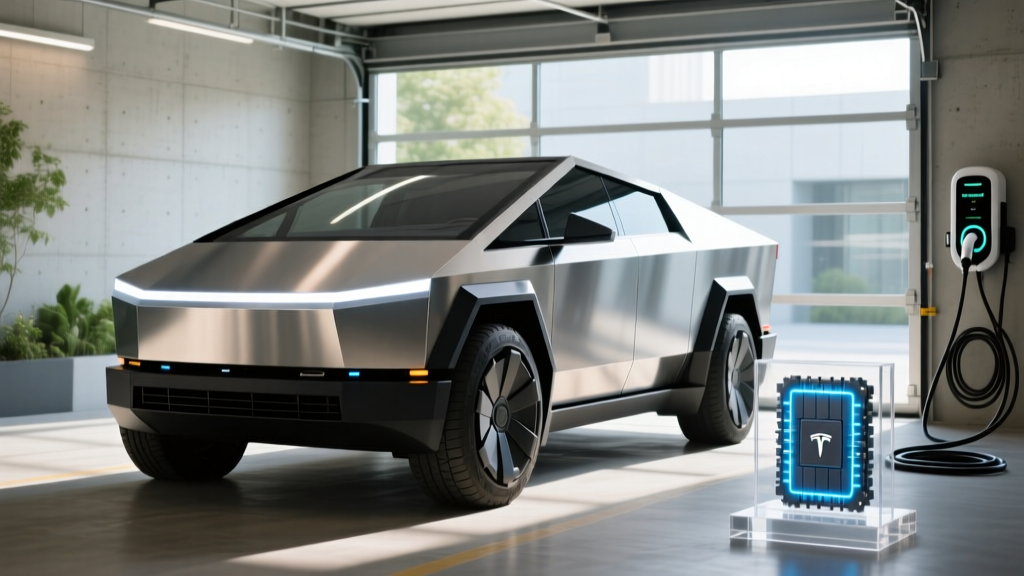
The Tesla Cybertruck's angular stainless-steel exoskeleton was designed to be left bare, but a growing wave of owners is opting to wrap theirs in vinyl. A wrapped Cybertruck isn't just an aesthetic choice — it solves real ownership problems: protecting the raw steel from fingerprints and micro-scratches, adding a layer of thermal insulation that slightly improves cabin preconditioning efficiency, and allowing resale-friendly color changes without voiding the body warranty. In 2026, wrap shops report that the Cybertruck is their single most-requested vehicle, surpassing even the Porsche Taycan and Rivian R1T.
This review covers the 2026 Tesla Cybertruck lineup — AWD, Cyberbeast, and the newly available Long Range AWD — with practical ownership data that matters whether your truck is bare steel or wrapped in satin chrome.
| Spec | AWD | Cyberbeast | Long Range AWD |
|---|---|---|---|
| EPA Range | 340 mi | 320 mi | 470 mi (w/ range extender) |
| Battery (usable) | ~123 kWh (NMC) | ~123 kWh (NMC) | ~123 kWh + 50 kWh extender |
| 0–60 mph | 4.1 sec | 2.6 sec | 4.3 sec |
| Horsepower | 600 hp | 845 hp | 600 hp |
| Drivetrain | Dual-motor AWD | Tri-motor AWD | Dual-motor AWD |
| Max DC Charge | 350 kW | 350 kW | 350 kW |
| 10–80% DC Time | ~18 min | ~18 min | ~22 min (main pack) |
| Level 2 Rate | 11.5 kW (~44 mi/hr) | 11.5 kW (~44 mi/hr) | 11.5 kW (~44 mi/hr) |
| MPGe (combined) | 79 MPGe | 74 MPGe | 82 MPGe |
| Towing Capacity | 11,000 lb | 11,000 lb | 11,000 lb |
| Base MSRP | $79,990 | $99,990 | $99,990 |
Real-World Range: What the EPA Sticker Doesn't Tell You
The AWD's 340-mile EPA estimate assumes a mix of city regen-heavy driving and moderate-speed highway cruising. In real-world testing at sustained 75 mph highway speeds in 70°F conditions, expect ~280–300 miles. In cold weather (below 32°F), range drops an additional 20–30%, putting winter highway range closer to 220–250 miles on the AWD. The Cyberbeast's higher power draw and stickier tires reduce its real-world highway range to roughly 260–275 miles in fair conditions.
The Cybertruck's brick-like aerodynamic profile (drag coefficient estimated around 0.38–0.40 despite Tesla's claims of optimization) is the primary culprit for highway range loss. Unlike sleeker sedans, the truck's flat bed and sharp angles create substantial drag above 65 mph. Wrapping the Cybertruck adds negligible aerodynamic penalty — vinyl film is approximately 3–5 mils thick and conforms to the existing body panels — but owners report that lighter-colored wraps (white, silver) keep the cabin 5–8°F cooler in summer sun compared to bare steel, marginally reducing A/C energy draw.
Efficiency measured in kWh per 100 miles tells the full story: the AWD consumes approximately 42–48 kWh/100mi on the highway, making it one of the least efficient EVs in its class. For comparison, the Rivian R1T Dual-Motor sits around 38–42 kWh/100mi, and the Ford F-150 Lightning Extended Range averages 41–45 kWh/100mi. According to fueleconomy.gov, the Cybertruck AWD's combined rating is 79 MPGe (43 kWh/100mi combined).
Charging Speed: 350 kW Peak, But the Curve Matters
| Charging Level | Max Power | Speed | Notes |
|---|---|---|---|
| Level 1 (120V) | 1.4 kW | ~5 mi/hr | Emergency/trickle only |
| Level 2 (240V, 48A) | 11.5 kW | ~44 mi/hr | Full charge in ~12 hr |
| DC Fast (V4 Supercharger) | 350 kW (peak) | 10–80% in ~18 min | Peak sustained only to ~50% SoC |
| DC Fast (CCS adapter) | ~150–250 kW | 10–80% in ~30 min | Depends on station hardware |
The Cybertruck uses an NACS connector natively and accesses Tesla's Supercharger network, which in 2026 includes over 6,000 V4 stalls capable of 350 kW. However, peak charge rate is not sustained rate. The 4680-format NMC cells in the Cybertruck's ~123 kWh battery pack hit 350 kW only between approximately 10–50% state of charge (SoC). From 50–80%, the charge curve tapers to roughly 150–200 kW. This means the 10–80% time of ~18 minutes is achievable only with proper battery preconditioning — initiated automatically when you navigate to a Supercharger in the vehicle's navigation system.
For home Level 2 charging, Tesla's Wall Connector at 48 amps on a 60-amp circuit delivers the full 11.5 kW. This is critical for a battery this large: at 11.5 kW, recharging from 10% to 100% takes roughly 12 hours. Home charging installation typically costs $800–$2,500 depending on whether your electrical panel needs a service upgrade. Always consult a licensed electrician for final specifications.
A note on the CCS adapter: Tesla sells an official NACS-to-CCS adapter (~$250) that enables access to Electrify America, EVgo, and other CCS networks. On these stations, the Cybertruck typically charges at 150–250 kW depending on the charger's rated output. Reliability on non-Tesla networks remains a common owner complaint, so plan road trips around Supercharger routes when possible.
Performance and Drivetrain: Tri-Motor Cyberbeast vs. Dual-Motor AWD
The 2026 Cybertruck lineup offers two powertrain configurations:
- AWD (Dual-Motor): 600 horsepower, 0–60 mph in 4.1 seconds, single-speed reduction gear. Adequate for most buyers and offers the best range of the non-extender trims.
- Cyberbeast (Tri-Motor): 845 horsepower, 0–60 mph in 2.6 seconds. One of the quickest production vehicles ever sold. The rear axle uses two independent motors with torque vectoring. Trade-off: roughly 20–30 miles less range and higher tire wear.
Both trims feature adaptive air suspension with up to 17 inches of ground clearance in Extract mode, a 6.5-foot composite bed with a powered tonneau cover, and steer-by-wire steering. The steer-by-wire system eliminates the mechanical connection between the steering yoke and the wheels, enabling the Cybertruck's tight 35-foot turning circle despite its 223.7-inch overall length. Some drivers find the yoke takes 1–2 weeks of adaptation, particularly in parking lots.
Towing capacity is rated at 11,000 pounds across all trims, but real-world towing at maximum weight reduces range by 40–60%. If you're towing a 7,000-pound trailer on the highway, plan for approximately 170–200 miles of range on the AWD before needing to charge.
Pricing, Tax Credits, and Total Cost
| Trim | Base MSRP | As-Tested (typical) | §30D Credit Eligible? |
|---|---|---|---|
| AWD | $79,990 | $85,000–$90,000 | No — exceeds $80,000 truck MSRP cap |
| Cyberbeast | $99,990 | $105,000–$115,000 | No — exceeds $80,000 truck MSRP cap |
| Long Range AWD | $99,990 | $105,000+ | No — exceeds $80,000 truck MSRP cap |
Under IRS §30D rules, the federal EV tax credit for new trucks is capped at vehicles with an MSRP of $80,000 or less. Since every 2026 Cybertruck trim starts at $79,990 or above — and the AWD's destination and mandatory options push it over — no Cybertruck currently qualifies for the $7,500 federal tax credit. Additionally, buyer income caps ($300,000 joint / $150,000 single) and battery critical-mineral sourcing requirements further limit eligibility even if the MSRP cap were met.
The point-of-sale transfer option (allowing dealers to apply the credit as an immediate discount) is irrelevant here since the vehicle itself does not qualify. Some buyers have explored the used EV credit (§25E), which offers up to $4,000 on pre-owned EVs priced under $25,000 — but Cybertrucks will not reach that price point on the used market for years.
For total cost of ownership, factor in:
- Insurance: $3,000–$4,500/year depending on state and driving record (the Cybertruck's stainless-steel body panels are expensive to repair)
- Home charger installation: $800–$2,500 one-time
- Electricity cost: ~$0.13–$0.18/kWh national average = ~$1,200–$1,800/year for 12,000 miles of driving
- Tire replacement: 35-inch all-terrain tires run $400–$600 each; Cyberbeast owners report needing replacements every 15,000–20,000 miles under spirited driving
Wrapping the Cybertruck: Costs, Benefits, and What to Know
A professional full-body vinyl wrap on the Cybertruck typically costs $4,000–$7,500 depending on material quality (cast vs. calendared vinyl), finish (gloss, satin, matte, color-shift), and shop reputation. The Cybertruck's flat panels and sharp edges actually make it one of the easier vehicles to wrap — fewer complex curves mean less material waste and fewer seams. However, the sharp creases at the A-pillar and bed corners require an experienced installer to avoid lifting over time.
Key considerations for a wrapped Cybertruck:
- Paint protection: The Cybertruck's cold-rolled stainless steel doesn't have traditional paint, but it does show fingerprints, water spots, and fine scratches. A wrap eliminates all of these concerns and adds a layer of protection against door dings and light debris.
- Thermal effect: White or light-colored wraps reflect solar radiation more effectively than bare steel, reducing cabin heat soak. Owners in Arizona and Texas report 5–8°F lower interior temperatures after wrapping in white.
- Warranty implications: Tesla has not issued a blanket statement voiding body warranty for wraps, but any corrosion or panel issue discovered under a wrap may be disputed. Document the body condition with photos before wrapping.
- Resale value: A removable wrap preserves the original steel finish underneath, which can be a selling point. However, poorly installed wraps that leave adhesive residue can hurt resale.
- Wrap lifespan: Premium cast vinyl (3M, Avery Dennison) lasts 5–7 years with proper care. Avoid automated car washes with stiff brushes — touchless or hand wash only.
Interior, Tech, and Daily Livability
The Cybertruck seats five (a front bench option was discontinued after 2024) with 41.1 inches of front legroom and 38.4 inches of rear legroom. Rear headroom is constrained by the sloping roofline — taller passengers (6'2"+) will find it tight. The bed offers approximately 74 cubic feet of volume with the tonneau closed, and the lockable frunk adds another 7.1 cubic feet.
The 18.5-inch center touchscreen runs Tesla's latest software with integrated navigation, streaming, and a customizable instrument cluster. A rear 9.4-inch touchscreen for passengers controls climate and entertainment. Notably, the Cybertruck includes:
- Steer-by-wire: No mechanical linkage; enables the yoke and tight turning circle but removes traditional steering feedback
- 48-volt electrical architecture: Reduces wiring harness weight and enables higher-power accessories
- Bioweapon Defense Mode: HEPA filtration system with positive cabin pressure
- Powershare (V2L/V2H): Up to 11.5 kW of bidirectional power output — enough to run power tools at a job site or provide limited home backup during outages
- Autopilot: Standard adaptive cruise and lane-keeping. Full Self-Driving (Supervised) remains a $8,000 add-on and is classified as SAE Level 2 — the driver must remain fully engaged at all times. It is not autonomous driving.
Tesla's Autopilot and FSD (Supervised) are SAE Level 2 driver-assistance systems. They require continuous driver supervision, hands-on-wheel (or torque) monitoring, and do not make the Cybertruck self-driving. The driver is legally responsible for all vehicle actions at all times. For true driverless (Level 4) services, see Waymo or Zoox in limited metro areas.
Warranty and Long-Term Battery Outlook
Tesla covers the Cybertruck with:
- Basic vehicle warranty: 4 years / 50,000 miles
- Battery and drive unit warranty: 8 years / 150,000 miles, with a minimum 70% capacity retention guarantee
The 4680-format NMC cells used in the Cybertruck are Tesla's in-house design, manufactured at Giga Texas. Long-term degradation data on 4680 cells is still maturing compared to the older 2170 format, but early data from Model Y vehicles equipped with 4680 structural packs suggests 8–12% degradation over the first 100,000 miles — well within the warranty threshold. The Cybertruck's large 123 kWh pack means that even 12% degradation leaves ~108 kWh usable, or roughly 295 miles of EPA range on the AWD.
For maximum battery longevity, Tesla recommends daily charging to 80–90% for NMC chemistry and only charging to 100% when needed for long trips. Unlike LFP (lithium iron phosphate) batteries found in the base Model 3, NMC cells degrade faster when held at 100% SoC for extended periods.
Pros, Cons, and the Verdict
- Class-leading 350 kW DC fast-charging speed
- 11,000-lb towing capacity with V2L/V2H bidirectional power
- Stainless-steel body is dent- and corrosion-resistant (ideal for wrap protection)
- Tri-motor Cyberbeast offers supercar-level acceleration in a truck
- Access to Tesla Supercharger network — the most reliable DC fast-charging network in the US
- Air suspension with Extract mode provides serious off-road clearance
- No federal tax credit eligibility (all trims above $80K MSRP cap)
- Highway efficiency is poor (~42–48 kWh/100mi) — real-world range significantly below EPA
- Steer-by-wire yoke requires adaptation and eliminates traditional steering feel
- Rear headroom is tight for tall passengers
- Insurance premiums are among the highest of any EV due to repair costs
- Cyberbeast tire wear is aggressive and costly to replace
- Bed is shorter than full-size truck competitors (6.5 ft vs. 8 ft on F-150)
Who Should Buy a Cybertruck (Wrapped or Bare)?
Buy the Cybertruck if: You want a high-performance electric truck with best-in-class charging speed, need V2L/V2H capability for job-site or emergency power, value the Supercharger network for road trips, and appreciate the head-turning design — especially with a custom wrap that makes it truly one-of-one.
Consider alternatives if: You need maximum highway range (Rivian R1T Max Pack offers ~400+ miles EPA), you want a traditional steering wheel, you need a full 8-foot bed for work use (Ford F-150 Lightning), or you're counting on the $7,500 federal tax credit to make the numbers work.
Frequently Asked Questions
What is the real-world range of the Cybertruck?
The AWD's EPA rating is 340 miles, but real-world highway driving at 75 mph yields approximately 280–300 miles. In cold weather below freezing, expect 220–250 miles. The Cyberbeast's real-world highway range is roughly 260–275 miles.
How fast does the Cybertruck charge at home and on DC fast chargers?
On a Level 2 home charger (11.5 kW), the Cybertruck adds approximately 44 miles of range per hour, with a full 10–100% charge taking about 12 hours. On a V4 Supercharger, it peaks at 350 kW and charges from 10–80% in approximately 18 minutes with proper preconditioning.
Does the Cybertruck qualify for the federal EV tax credit?
No. Under IRS §30D rules, trucks must have an MSRP of $80,000 or less to qualify for the $7,500 credit. Every 2026 Cybertruck trim exceeds this cap, especially after destination fees and options. Always verify current rules at irs.gov, as regulations can change.
How much does it cost to wrap a Cybertruck?
A professional full-body vinyl wrap costs $4,000–$7,500 depending on material and finish. The Cybertruck's flat panels make it relatively wrap-friendly, but sharp creases require an experienced installer. Premium cast vinyl lasts 5–7 years.
Is the Cybertruck worth buying vs. the Rivian R1T or F-150 Lightning?
It depends on your priorities. The Cybertruck wins on DC fast-charging speed (350 kW vs. ~200 kW for the R1T and ~150 kW for the Lightning), Supercharger network access, and raw acceleration (Cyberbeast). The Rivian R1T offers better highway range, a more refined interior, and a conventional steering wheel. The F-150 Lightning offers a familiar truck experience, an 8-foot bed option, and lower starting prices with tax credit eligibility on some trims.
Does wrapping the Cybertruck void the warranty?
Tesla has not explicitly voided warranties for wraps, but any body or corrosion issue found under a wrap could be disputed. Photograph the body thoroughly before wrapping and use a reputable installer. The wrap itself does not affect the battery or powertrain warranty.
What is the Cybertruck's battery chemistry and will it last?
The Cybertruck uses NMC (nickel-manganese-cobalt) 4680-format cells with approximately 123 kWh of usable capacity. Tesla warrants the battery for 8 years / 150,000 miles with at least 70% capacity retention. Early 4680 degradation data suggests 8–12% loss over 100,000 miles, which is within warranty.