The World's First Electric Flying Car: What Buyers Actually Need to Know
Quick Answer
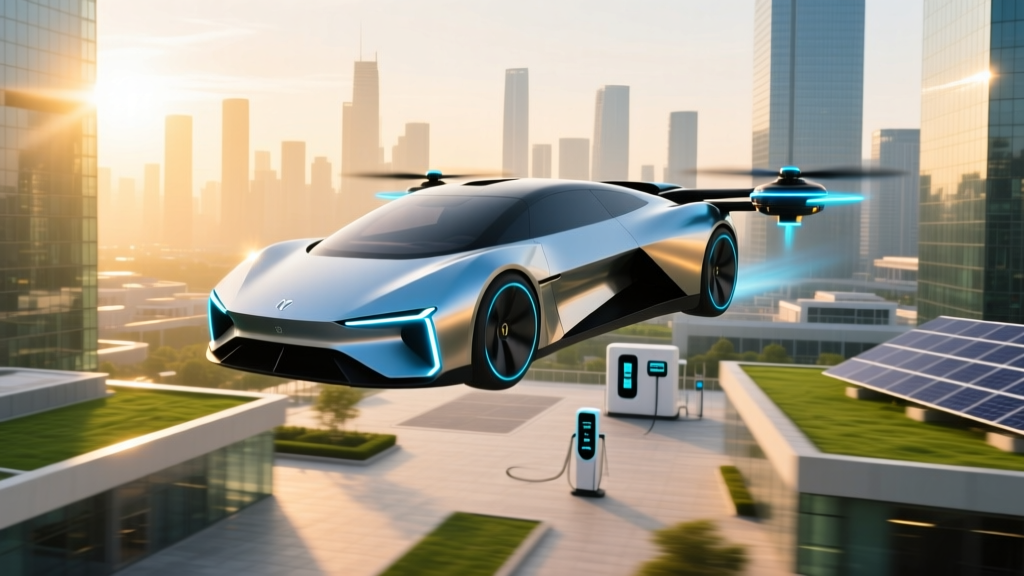
The "world's first electric flying car" most buyers search for refers to eVTOL (electric vertical takeoff and landing) aircraft like the Alef Aeronautics Model A and the Samson Sky Switchblade. As of 2026, neither is available for consumer purchase or legal road/air use. Alef's Model A holds a Special Airworthiness Certification from the FAA for limited testing, with projected deliveries no earlier than 2027. Samson Sky's Switchblade requires a pilot's license and remains in the prototype/reservation stage. For buyers seeking practical electric transportation today, ground-based EVs like the Tesla Model Y (EPA 320 mi, ~$44,990) or Chevrolet Equinox EV (EPA 319 mi, ~$33,600) deliver proven, legal, and incentivized electrified mobility.
The concept of an electric flying car has captivated headlines for years, and search interest continues to grow. But separating marketing spectacle from transportation reality requires a hard look at certification timelines, energy density limitations, cost structures, and the regulatory frameworks governing both airspace and roadways. This guide breaks down the current state of electric flying car development and provides a practical decision framework for buyers evaluating electrified transportation options in 2026.
Current State of Electric Flying Car Development
Several companies claim the title of "world's first electric flying car," but the two most prominent in consumer-facing marketing are:
| Attribute | Alef Model A | Samson Sky Switchblade | Joby S4 (Air Taxi) |
|---|---|---|---|
| Type | Roadable eVTOL | Three-wheeled flying motorcycle | eVTOL air taxi |
| Status (2026) | FAA Special Airworthiness Cert (testing only) | Prototype / reservation list | FAA type certification in progress |
| Claimed Air Range | ~110 miles | ~450 miles | ~100 miles (per sortie) |
| Claimed Road Range | ~200 miles (EV) | ~700 miles (gas hybrid) | N/A (not road-legal) |
| Estimated Price | ~$300,000 | ~$170,000 | N/A (ride-service model) |
| Pilot License Required | Yes (expected) | Yes (sport pilot + motorcycle) | No (operator-flown) |
| Consumer Delivery | 2027+ (announced) | 2026-2027 (announced) | 2025-2026 (select markets) |
The critical distinction: none of these vehicles can currently be purchased and legally operated by consumers for personal transportation. FAA type certification for eVTOL aircraft is a multi-year process, and road-legal status adds an additional layer of NHTSA and state-level compliance. According to the FAA's own announcements, Alef received a Special Airworthiness Certification in mid-2023, but this permits only flight testing — not commercial sale or personal use.
Meanwhile, companies like Joby Aviation and Archer Aviation are pursuing the air-taxi model rather than personal ownership. Joby has partnered with Toyota and Delta Air Lines, targeting limited commercial operations in cities like Los Angeles and New York by late 2025 or 2026. These are ride-service vehicles — you'll book a seat, not buy the aircraft.
Energy Density: Why Flying EVs Face a Physics Problem
The fundamental challenge for any electric flying car is energy density. Current lithium-ion battery packs (NMC chemistry) deliver roughly 250-280 Wh/kg at the cell level. Jet-A fuel, by comparison, packs approximately 12,000 Wh/kg — nearly 50x more energy per unit mass.
This matters enormously for flight:
- Vertical takeoff requires enormous instantaneous power — typically 2-3x what cruise flight demands.
- Battery weight compounds: adding range means adding batteries, which means more weight to lift, which means more energy consumed per mile.
- Safety reserves: aviation regulations require reserve energy for diversions, holding patterns, and emergencies — typically 30-45 minutes of additional flight capacity.
The practical result: eVTOL aircraft like Joby's S4 carry roughly 70-80 kWh of usable battery capacity (comparable to a Tesla Model S) but achieve only ~100 miles of range in flight versus the Model S's EPA-rated 402 miles on the ground. The physics of lifting a vehicle vertically simply consumes far more energy per mile than rolling on pavement.
Energy Consumption: Ground EV vs. eVTOL vs. Gas Car
| Vehicle Type | Energy per Mile | Energy Source | Cost per Mile (est.) |
|---|---|---|---|
| Tesla Model Y (AWD, 2026) | ~0.28 kWh/mi (280 Wh/mi) | Electricity | $0.04-$0.07 |
| Toyota Camry (gas, 2026) | ~1.2 kWh/mi equivalent | Gasoline | $0.11-$0.14 |
| eVTOL (Joby S4 class) | ~0.70-0.85 kWh/mi (estimated) | Electricity | $0.09-$0.15 |
| Roadable Flying Car (Alef) | ~1.5-2.0 kWh/mi (estimated, flight) | Electricity | $0.20-$0.30 |
Sources: EPA fueleconomy.gov, Joby Aviation public disclosures. eVTOL estimates based on disclosed battery capacity and claimed range.
Cost Breakdown: Flying Car vs. Ground EV Ownership
Even if you could buy an Alef Model A today at its announced ~$300,000 price, the total cost of ownership would dwarf any ground-based EV. Here's a five-year comparison:
| Cost Factor | Alef Model A (announced) | Tesla Model Y LR (2026) | Toyota Camry Hybrid (2026) |
|---|---|---|---|
| Purchase Price | ~$300,000 | ~$44,990 | ~$30,000 |
| Federal Tax Credit (§30D) | $0 (not a road vehicle for credit purposes) | Up to $7,500 (if eligible per IRS §30D rules) | $0 (HEV, not eligible) |
| Insurance (annual est.) | $15,000-$30,000+ (aviation policies) | $1,800-$2,800 | $1,200-$1,800 |
| Maintenance (5-yr est.) | $50,000+ (aviation-grade inspections) | $2,500-$4,000 | $4,000-$6,000 |
| Fuel/Energy (5-yr, 15k mi/yr) | $15,000-$22,500 (flight) | $3,000-$5,250 | $8,250-$10,500 |
| Pilot License / Training | $15,000-$25,000 | $0 | $0 |
| Hangar/Storage (annual) | $6,000-$18,000 | $0 (home garage) | $0 (home garage) |
| 5-Year Total (est.) | $460,000-$600,000+ | $50,000-$65,000 | $55,000-$70,000 |
The numbers make clear: even the most expensive ground-based EV costs a fraction of what a personal flying car would demand. Aviation insurance alone — which covers both hull damage and liability in three-dimensional airspace — runs 5-10% of the aircraft's value annually. For a $300,000 vehicle, that's $15,000-$30,000 per year before you fly a single mile.
Regulatory Reality: Why You Can't Just Fly Away
The regulatory barriers to personal electric flying car ownership are not minor footnotes — they are fundamental blockers:
- FAA Type Certification: Every new aircraft design must complete a rigorous type certification process proving structural integrity, systems redundancy, and flight safety. As of 2026, no roadable eVTOL has completed this process for production consumer sale.
- Pilot Licensing: Operating any eVTOL in U.S. airspace will require at minimum a Sport Pilot certificate (~$8,000-$12,000 in training, 20+ hours of flight time). More complex aircraft may require a Private Pilot certificate ($15,000-$25,000, 40+ hours).
- Airspace Restrictions: Most urban and suburban areas sit within controlled airspace (Class B, C, or D) requiring ATC clearance. You cannot simply take off from your driveway.
- NHTSA Road Compliance: A roadable aircraft must also meet Federal Motor Vehicle Safety Standards (FMVSS) — crash testing, lighting, bumper standards — which add years of development and millions in testing costs.
- Local Zoning: Even if federally legal, local noise ordinances, zoning laws, and HOA restrictions would likely prohibit residential takeoff and landing in most communities.
For context, the National Highway Traffic Safety Administration (NHTSA) and FAA operate under entirely separate regulatory frameworks. A vehicle that satisfies one agency's requirements has no automatic path to approval from the other.
Myths vs. Facts: Electric Flying Cars in 2026
| Myth | Fact |
|---|---|
| "You can buy and fly an electric flying car today." | No consumer-purchasable, FAA-certified, road-legal electric flying car exists as of 2026. Reservations are not purchases. |
| "It will replace my daily commute car." | Airspace restrictions, weather minimums, and pilot licensing make eVTOLs impractical for daily commuting for the foreseeable future. |
| "Electric flight is cheaper than driving." | Energy consumption per mile for eVTOL flight is 3-5x higher than ground EV driving due to the physics of vertical lift. |
| "It charges like a normal EV." | eVTOL battery packs require specialized high-power charging infrastructure (typically 150-350 kW DC) not available at residential properties or standard public chargers. |
| "Self-flying means no pilot license needed." | Current eVTOL designs targeting personal use require pilot certification. Autonomous (Level 4/5) passenger eVTOLs are a separate category years from consumer availability. |
| "The $7,500 EV tax credit applies." | The §30D federal credit applies to qualified plug-in electric vehicles meeting MSRP caps, income limits, and battery sourcing rules — not aircraft. Check IRS guidelines. |
Decision Framework: What Should You Actually Buy?
If You Want Electrified Transportation in 2026
If your priority is daily commuting under 60 miles round-trip:
→ Buy a battery EV with 250+ miles EPA range (e.g., Hyundai Ioniq 6 SE, EPA 361 mi, ~$37,500) or a PHEV like the Toyota RAV4 Prime (42 mi electric-only, 38 mpg combined, ~$44,500). Install a Level 2 home charger ($500-$1,500 equipment + $500-$2,000 electrician).
If you take frequent road trips over 300 miles:
→ Choose a BEV with DC fast charging over 200 kW (e.g., Kia EV6 GT-Line, peak 240 kW, 10-80% in ~18 min, ~$49,500) or a PHEV for unlimited range with gas backup.
If you're fascinated by eVTOL technology:
→ Follow Joby Aviation or Archer Aviation's commercial air-taxi launches in select cities (expected late 2025-2026). Book a ride when available rather than attempting personal ownership. Monitor FAA's Advanced Air Mobility initiatives for regulatory updates.
If you genuinely want a flying car:
→ Obtain a Sport Pilot or Private Pilot certificate ($8,000-$25,000) and purchase a conventional light sport aircraft ($100,000-$200,000) while eVTOL certification matures. This gives you real flight capability today.
Real-World Ownership Considerations for Ground EVs (What Actually Works Now)
While the world's first electric flying car remains a future promise, ground-based EV ownership in 2026 is a mature, practical reality — provided you account for these factors:
Home Charging Access: The single biggest determinant of EV satisfaction. A Level 2 home charger (240V, 32-48 amps, 7.7-11.5 kW) adds 25-44 miles of range per hour of charging and costs $1,000-$3,500 installed (equipment + electrician + permit). If your home has a 200-amp electrical panel, installation is straightforward. Older panels (100-amp) may require a $2,000-$5,000 upgrade.
Climate Impact on Range: Cold weather (below 32°F) reduces EV range by 15-30% due to cabin heating demands and reduced battery efficiency. An EV with an EPA-rated 300 miles may deliver 210-255 real-world miles in freezing conditions. Heat pumps (standard on Hyundai/Kia, Tesla, and others) mitigate this loss to ~15-20%.
Charging Deserts: Rural areas and some apartment complexes still lack adequate public or shared charging. Before buying, map your typical routes against charging station locations (U.S. DOE Alternative Fuels Data Center).
Tax Credit Eligibility: The federal §30D credit of up to $7,500 in 2026 requires: vehicle MSRP under $55,000 (sedans) or $80,000 (SUVs/trucks/vans), buyer AGI under $150,000 (single) / $300,000 (joint), and compliance with battery component and critical mineral sourcing rules. Point-of-sale transfer is available — the dealer applies the credit at purchase. Always verify current eligibility on IRS.gov before committing.
Insurance: EV insurance premiums run 10-25% higher than equivalent gas vehicles due to higher repair costs (battery replacement, specialized body work). Shop quotes before purchasing.
The Bottom Line
The world's first electric flying car makes compelling headlines but remains years away from consumer reality. Energy density limitations, regulatory complexity, six-figure pricing, and pilot licensing requirements mean that personal eVTOL ownership is not a 2026 purchase decision — it's a 2030s possibility at the earliest.
For buyers seeking practical, affordable, and proven electric transportation today, the market offers outstanding ground-based options: BEVs with 300+ mile range, sub-$35,000 pricing (after incentives), and DC fast charging under 20 minutes to 80%. The smart move is to electrify your daily commute now and revisit flying cars when the FAA, physics, and pricing align.
Frequently Asked Questions
Can I legally buy an electric flying car in 2026?
No. As of 2026, no electric flying car has received both FAA type certification for consumer sale and NHTSA road-legal compliance. Companies like Alef Aeronautics and Samson Sky accept reservations, but these are not binding purchases, and delivery timelines remain speculative.
How much would an electric flying car cost?
Announced prices range from ~$170,000 (Samson Sky Switchblade) to ~$300,000 (Alef Model A). Total 5-year ownership, including aviation insurance, maintenance, pilot training, and hangar storage, could exceed $460,000-$600,000.
Will electric flying cars need charging stations?
Yes, but not standard EV chargers. eVTOL aircraft require specialized high-power DC charging infrastructure (150-350 kW) typically installed at vertiports or airports — not residential garages or public charging networks like Electrify America or Tesla Superchargers.
Are air taxis (Joby, Archer) the same as personal flying cars?
No. Air taxis are operated by trained pilots within a commercial ride-service model — similar to Uber but in the air. You book a seat; you don't own or fly the aircraft. This model is expected to launch in select U.S. cities by late 2025 or 2026.
What's the best EV to buy right now instead?
For value and range: Chevrolet Equinox EV (EPA 319 mi, ~$33,600). For efficiency: Hyundai Ioniq 6 SE (EPA 361 mi, ~$37,500). For families: Tesla Model Y Long Range (EPA 320 mi, ~$44,990). For road-trippers who want gas backup: Toyota RAV4 Prime PHEV (42 mi electric-only, ~$44,500).
Do I qualify for the $7,500 EV tax credit?
Eligibility depends on your income (AGI under $150K single / $300K joint), the vehicle's MSRP (under $55K sedans / $80K SUVs), and battery sourcing compliance. The credit can be transferred to the dealer at point of sale. Verify your specific situation at IRS.gov or consult a tax professional.