Plug in, charge up. That's the EV routine most owners know. But the promise of wireless electric vehicle charging — parking over a pad and letting energy flow inductively, no cable required — has lingered on the horizon for years. In 2026, the technology is finally moving from concept to limited consumer availability, though significant caveats remain around cost, efficiency, and infrastructure readiness.
This guide separates the marketing from the physics. We'll cover how wireless EV charging actually works today, what it costs to install, how its power delivery compares to conventional Level 2 and DC fast charging, and whether it's worth considering for your next EV setup — or whether a high-quality plug-in charger remains the smarter investment.
How Wireless Electric Vehicle Charging Works (and What It Costs You)
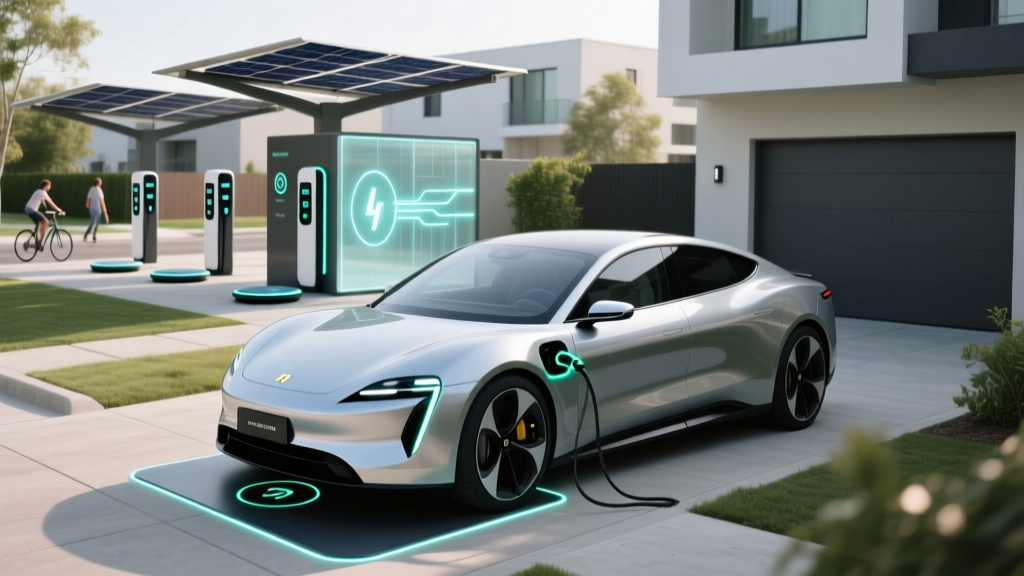
Wireless EV charging uses electromagnetic induction — the same principle as a Qi phone charger, scaled up dramatically. A ground-mounted transmitter pad (installed on your garage floor or driveway) creates an alternating magnetic field. A receiver pad on the underside of your vehicle picks up that field and converts it back to electrical current to charge the battery.
The critical trade-off is efficiency. While a hardwired Level 2 plug-in charger delivers energy at roughly 94–97% efficiency (wall to battery), wireless systems in 2026 typically operate at 88–93% efficiency depending on pad alignment, ground clearance, and ambient temperature. That 5–10 percentage-point gap means you're paying for electricity that becomes waste heat rather than stored energy.
kW (kilowatts) measures power — the rate at which energy flows. Think of it as the width of a pipe.
kWh (kilowatt-hours) measures energy — the total amount stored or consumed. Think of it as the volume of water that passed through.
A 19.2 kW charger running for one hour delivers roughly 19.2 kWh of energy (minus efficiency losses). Never use these interchangeably.
The leading consumer-facing wireless system as of 2026 is WiTricity's Halo platform, licensed to several automakers and aftermarket integrators. BMW offered a factory-installed wireless charging option on the 530e PHEV in select markets (3.2 kW), and several OEMs have announced or piloted higher-power systems. The SAE J2954 standard governs light-duty wireless charging interoperability, with power classes up to 11 kW defined — though most consumer-available systems cluster around 6.6–11 kW.
Charging Levels and Speeds: Wireless vs Plug-In Compared
To understand where wireless fits, you need the full charging-speed landscape. Here's how each level adds range, whether via cable or inductive pad:
| Level | Power (kW) | Voltage / Amps | Miles of Range Added per Hour | Typical Use Case |
|---|---|---|---|---|
| Level 1 (120V plug-in) | 1.2–1.4 kW | 120V / 12A | 3–5 mi/hr | Overnight trickle, PHEVs, emergencies |
| Level 2 Plug-In (hardwired or NEMA 14-50) | 7.2–19.2 kW | 240V / 30–80A | 23–60 mi/hr | Daily home charging (the standard) |
| Level 2 Wireless (inductive pad) | 6.6–11 kW | 240V / 30–50A (to pad) | 18–35 mi/hr | Premium home convenience, fleet depots |
| DC Fast Charging (Level 3) | 50–350 kW | 400–900V DC | 150–1,000+ mi/hr (peak) | Road trips, rapid top-ups |
Wireless charging at 11 kW adds roughly 30–35 miles of range per hour for an efficient EV like the Tesla Model 3 or Hyundai Ioniq 6 — adequate for overnight replenishment of a daily commute. But a hardwired 48A Level 2 charger at 11.5 kW delivers the same range in less time, at higher wall-to-battery efficiency, and at a fraction of the equipment cost.
Home Wireless Charger Installation: Costs, Electrical Requirements, and Gotchas
Installing a wireless charging pad at home involves the same electrical circuit work as a plug-in Level 2 charger, plus the additional hardware of the ground transmitter pad and (on the vehicle side) the receiver pad — which may require aftermarket retrofitting if your EV didn't ship with one factory-installed.
Electrical Requirements
- Circuit: Dedicated 240V circuit, typically 40A or 50A breaker (for 11 kW wireless systems drawing ~48A continuous at the pad)
- Wire gauge: 6 AWG copper for 50A circuits; 8 AWG for 40A
- Panel capacity: Your main service panel must have spare capacity — typically 200A total service is sufficient, but older 100A panels often require a panel upgrade ($1,500–$3,000+)
- Permit: Required in virtually all US jurisdictions for new 240V circuits; inspection ensures code compliance
- GFCI protection: NEC 2023 (Article 625.54) requires GFCI protection for EV supply equipment; wireless pad controllers typically integrate this
- Outdoor rating: Ground pads must be rated for outdoor/wet-location use (NEMA 4 or IP65 minimum); verify with manufacturer specs
Installation Cost Breakdown
| Cost Component | Wireless (11 kW Pad System) | Plug-In Level 2 (48A Hardwired) |
|---|---|---|
| Equipment (charger/pad) | $2,500–$5,500 | $400–$750 |
| Vehicle receiver pad (if aftermarket) | $1,500–$3,000 | $0 |
| Electrician labor (circuit + mount) | $800–$2,000 | $500–$1,500 |
| Electrical permit | $50–$200 | $50–$200 |
| Panel upgrade (if needed, ~30% of homes) | $1,500–$3,000 | $1,500–$3,000 |
| Total (no panel upgrade) | $4,800–$10,500 | $950–$2,450 |
| Total (with panel upgrade) | $6,300–$13,500 | $2,450–$5,450 |
The cost gap is substantial. A wireless system costs 3–5x more than an equivalent plug-in Level 2 setup, driven primarily by the pad hardware and potential vehicle-side receiver costs. For most homeowners, the convenience of not plugging in does not justify a $4,000–$8,000 premium — but for fleet operators, luxury builds, or drivers with mobility limitations, the value proposition shifts.
Connector Compatibility: Where Wireless Fits in the NACS/CCS/CHAdeMO Landscape
Wireless charging sidesteps the connector question entirely — there's no physical plug. But your EV still needs a plug-in port for DC fast charging on road trips and as a backup. Here's the 2026 connector landscape:
| Connector | Brands Using It (2026) | Max DC Fast Charge kW | Wireless Compatible? |
|---|---|---|---|
| NACS (Tesla / SAE J3400) | Tesla, Ford, GM, Rivian, Volvo, Polestar, Hyundai, Kia, and most legacy OEMs transitioning | Up to 350 kW (V4 Supercharger) | N/A — wireless is connector-independent |
| CCS1 | Legacy VW ID.4, older BMW iX, some Stellantis models; rapidly declining | Up to 350 kW | N/A |
| CHAdeMO | Nissan Leaf (legacy only); effectively discontinued for new models | Up to 100 kW | N/A |
The key point: wireless charging is a Level 2 home/fleet solution only. You will always need your vehicle's NACS or CCS port for DC fast charging during road trips. No wireless DC fast-charging system is commercially available for consumer vehicles in 2026, though pilot programs for commercial trucking (up to 500 kW inductive) are underway in Europe and Japan.
If you're considering a wireless pad for home, verify that your specific EV model has a factory-available or aftermarket-compatible receiver pad. As of 2026, vehicles with confirmed or announced wireless charging receiver compatibility include select BMW, Mercedes-Benz, and Genesis models, plus aftermarket kits from WiTricity licensees for popular platforms like the Tesla Model Y and Hyundai Ioniq 5.
Cost to Charge: Wireless vs Plug-In vs Gas per Mile
Wireless charging's efficiency penalty directly affects your per-mile operating cost. Here's a realistic comparison using a midsize EV averaging 3.5 miles per kWh (e.g., Tesla Model 3 RWD, Hyundai Ioniq 6 SE):
| Charging Scenario | Effective $/kWh | Cost per Mile (3.5 mi/kWh EV) | Annual Cost (12,000 mi) |
|---|---|---|---|
| Home plug-in Level 2 (off-peak, 97% eff.) | $0.14 | $0.041 | $492 |
| Home wireless Level 2 (off-peak, 90% eff.) | $0.14 | $0.046 | $547 |
| Public Level 2 (e.g., ChargePoint, workplace) | $0.25–$0.35 | $0.071–$0.100 | $857–$1,200 |
| DC Fast Charging (Electrify America, Tesla Supercharger) | $0.30–$0.48 | $0.086–$0.137 | $1,029–$1,646 |
| Gas vehicle (27 MPG avg, $3.40/gal) | — | $0.126 | $1,511 |
Even with the wireless efficiency penalty, home wireless charging still costs roughly one-third what gasoline does per mile. The incremental cost over plug-in Level 2 is modest in absolute dollars (~$55/year) but compounds with the higher upfront equipment investment.
According to fueleconomy.gov, the average 2026 EV achieves 100–140 MPGe combined, translating to 2.5–4.5 miles per kWh depending on vehicle size and efficiency. Your actual per-mile cost will vary with your local utility rates and vehicle efficiency.
Equipment Recommendations: Wireless Pads and Plug-In Alternatives
If you're committed to wireless, your options in 2026 are still limited but growing. If you're open to plug-in alternatives that offer superior value, the market is mature and competitive.
Wireless Charging Systems (2026 Availability)
Power: 11 kW (ground pad)
Connector: N/A (inductive; J2954-compliant)
Smart features: App monitoring, alignment assist, scheduling
Price: ~$3,500–$4,500 (ground pad only; vehicle receiver sold separately)
Best for: Fleet depots, luxury builds, accessibility-focused installs
Power: 7.2 kW
Connector: N/A (inductive)
Smart features: Basic LED status, auto-start on park
Price: ~$2,500–$3,200 (ground + vehicle adapter kit)
Best for: Earlier-adopter aftermarket retrofit; limited vehicle compatibility
Plug-In Level 2 Alternatives (Superior Value for Most Buyers)
Power: Up to 11.5 kW (48A, 240V)
Connector: NACS or CCS1 (configurable)
Cable: 23 ft
Smart features: Wi-Fi, app scheduling, Alexa, load management
Price: ~$549–$649
Best all-around home charger; UL-listed, ENERGY STAR certified
Power: Up to 11.5 kW (48A, 240V)
Connector: NACS native
Cable: 24 ft
Smart features: Wi-Fi, OTA updates, power sharing (multiple units)
Price: ~$475
Best for Tesla owners and NACS-equipped EVs
Power: Up to 19.2 kW (80A, 240V)
Connector: NACS or J1772
Cable: 24 ft
Smart features: Energy monitoring, solar integration, load management
Price: ~$699–$799
Best for high-power needs and solar-home integration
Charging Time Examples: What to Expect by Battery Size
Charge times depend on battery capacity (kWh), charger power (kW), and the charge curve — the reality that charging slows significantly above ~80% State of Charge (SoC) to protect battery health. Here are realistic 10–80% times for common EV battery sizes:
| Battery Size (usable kWh) | Example Vehicles | 11 kW Wireless (90% eff.) | 11.5 kW Plug-In (97% eff.) | 150 kW DC Fast |
|---|---|---|---|---|
| 58 kWh | VW ID.4 Standard, base Model 3 | ~5 hr 10 min | ~4 hr 15 min | ~25 min |
| 75 kWh | Model Y LR, Ioniq 5 (77.4 kWh) | ~6 hr 30 min | ~5 hr 25 min | ~28 min |
| 84–100 kWh | F-150 Lightning Ext., Rivian R1S, Lucid Air | ~8 hr 15 min | ~6 hr 50 min | ~35–42 min |
For overnight charging, the difference between 5 hours (wireless) and 4 hours (plug-in) is largely academic — both finish well before morning. The gap matters more for mid-day top-ups or multi-vehicle households sharing a single circuit.
Is Wireless EV Charging Worth It? A Decision Framework
- You have mobility limitations that make handling cables difficult
- You're outfitting a luxury garage where aesthetics and convenience trump cost efficiency
- You operate a fleet depot where automated, hands-free charging reduces labor and wear
- Your EV came with a factory-installed wireless receiver (no retrofit cost)
- You value the "park and forget" experience enough to pay a $4,000+ premium
Choose a plug-in Level 2 charger if:
- You want maximum charging efficiency (94–97% vs 88–93%)
- You want to minimize upfront cost ($950–$2,450 total install vs $4,800–$10,500+)
- Your EV doesn't have a factory wireless receiver and aftermarket kits aren't available
- You want the widest vehicle compatibility (any EV with a charge port works)
- You prioritize future-proofing — plug-in chargers work with every EV you'll ever own
The honest assessment for most individual EV owners in 2026: wireless charging is a premium convenience feature, not a practical necessity. The technology works, the SAE J2954 standard ensures basic interoperability, and the experience is genuinely satisfying. But the 3–5x cost premium, 5–10% efficiency loss, and limited vehicle compatibility mean a high-quality plug-in Level 2 charger remains the rational choice for the vast majority of buyers.
That said, wireless charging's trajectory is clear. As OEM adoption broadens, receiver pads become factory-standard, and pad costs decline with scale, the value equation will shift. By 2028–2030, wireless may be a common option on mid-range EVs. In 2026, it's a compelling luxury for those who can justify the premium.
Frequently Asked Questions
How much does it cost to install a home EV charger?
A plug-in Level 2 home charger costs $950–$2,450 fully installed (equipment, electrician, permit) if your electrical panel has sufficient capacity. A wireless Level 2 pad system costs $4,800–$10,500 installed, plus potential vehicle receiver costs. If your home needs a panel upgrade (common in pre-2000 homes with 100A service), add $1,500–$3,000 to either option. Always get a quote from a licensed electrician who will assess your panel, run length, and local code requirements.
How fast will each charging level add range?
Level 1 (120V) adds 3–5 miles per hour. Level 2 plug-in (240V, 7.2–19.2 kW) adds 23–60 miles per hour. Level 2 wireless (6.6–11 kW) adds 18–35 miles per hour. DC fast charging (50–350 kW) adds 150–1,000+ miles per hour at peak rates, though charging curves taper significantly above 80% SoC. Actual rates vary by vehicle efficiency (miles per kWh).
Which connector or charger is compatible with my EV?
For plug-in charging: if your 2025+ EV is a Tesla, Ford, GM, Rivian, Hyundai, Kia, or most other major brands, it uses the NACS connector. Older non-Tesla EVs may use CCS1; the Nissan Leaf uses CHAdeMO. For wireless charging: compatibility depends on whether your EV has a factory or aftermarket receiver pad — check with your OEM or a WiTricity licensee. Adapters exist (CCS-to-NACS, CHAdeMO-to-CCS) but add cost and may reduce charge speed.
How much does charging cost per mile vs gas?
Home Level 2 charging (plug-in) costs roughly $0.04/mile for an efficient EV at average US electricity rates ($0.14/kWh). Home wireless adds ~$0.005/mile due to efficiency losses. Gas at $3.40/gallon and 27 MPG costs ~$0.13/mile. Even public DC fast charging at $0.35–$0.48/kWh ($0.10–$0.14/mile) is competitive with or cheaper than gasoline. Source: fueleconomy.gov.
What electrical upgrades might I need?
Both wireless and plug-in Level 2 chargers require a dedicated 240V circuit (40A or 50A breaker). If your home has a 100A main panel (common in homes built before 2000), you'll likely need a panel upgrade to 200A ($1,500–$3,000). If your panel is already 200A but near capacity, a load-management device ($200–$400) can dynamically share power between the charger and other circuits, avoiding an upgrade. A licensed electrician will perform a load calculation per NEC Article 220 to determine your specific needs. Per the National Electrical Code (NEC), all EV supply equipment installations require permits and inspection.
Can I get a tax credit for installing a home wireless charger?
The federal Alternative Fuel Vehicle Refueling Property Credit (IRC §30C) covers up to 30% of home EV charger installation costs, capped at $1,000, through 2032. This applies to both plug-in and wireless Level 2 systems. However, eligibility depends on your census tract meeting specific low-income or rural criteria per current IRS guidelines. Consult a tax professional to confirm eligibility — rules and qualifying tracts update annually.